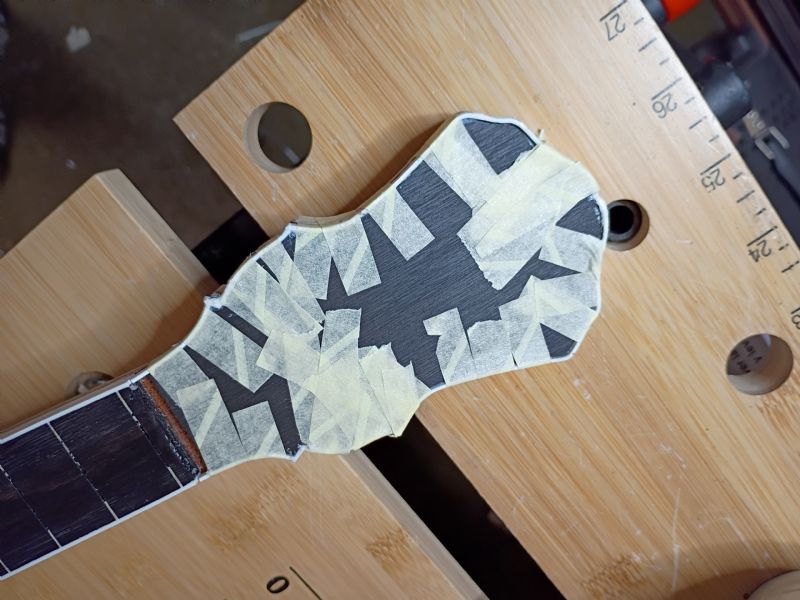
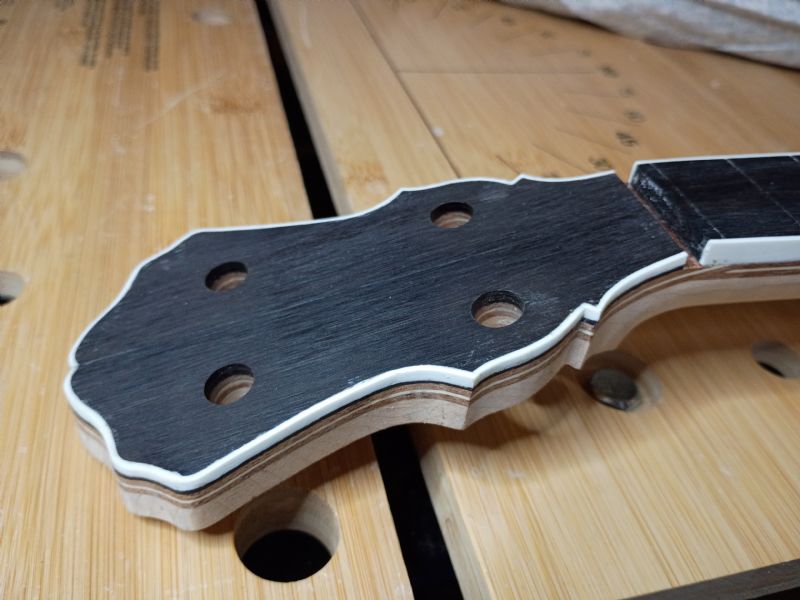
Binding a banjo peghead is a pain because of the angled edge of the side of the peghead, especially if there are multiple curves. I saw a post in the past that talked about using tape along the edges as a dam and using some kind of casting plastic to fill the routed edges, and then smoothing everything out once it's dry. What kind of material is that? Does anyone have any photos of the results?

I have a couple peghead overlays that Wyatt Fawley sold me on Ebay. I will take some photos and post them tomorrow.
It looks like metacrylate epoxy to me.
The appearance is okay. There is, however, something distinctive about trimmed binding. I can appreciate what a pain it is to work with.
tom in maine

Marvin, there is a product called InLace which is a liquid inlay material. I never used it for inlays because I never had the means to make perfect inlay cavities. However, it sounds like what you are wanting to do might not pose a problem. They have a website you can look up but I didn't find much information there. Peachtree woodworking does have it in stock. You can Google them and see if it looks like something you would find useful. A Google search would probably turn up some other sources as well.
A few years ago I was thinking of a personalized Gibson conversion neck with a bound peghead. I asked several of the well known suppliers of conversion necks, and they said they didn't do such work because it simply was not worth their time and aggravation to do it.
I only asked the question because I saw a photo of a 1920s Gibson tenor neck with fiddle-shape peghead with beautiful binding. It was beautiful.
Edited by - The Old Timer on 06/12/2026 09:28:08
I purchased a couple peghead veneers from Wyatt also, look like he lightly glued the veneer down & poured some epoxy or something tinted white around it with a large border, then I tried it myself with great success . I Glue the veneer down on a material that will not stick to epoxy , built a wide border around the veneer (much larger than binding) & poured white tinted epoxy around. That worked great for me, "easy as pie" as they say !
Tommy
The epoxy I get from my local wood shop, & they have a lot of additive colors. I also did a fiongerboard using epoxy & pearly colored powder, I got Wyatt in Arkansas to cut the letters on his CNC for the name of a local paper for the client who ran the paper. It looked very good but not as good a real pearl of course.
Tommy
I remembered to take photos!
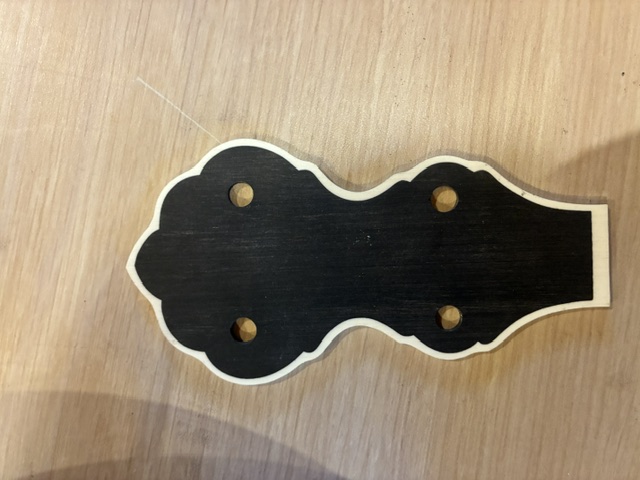
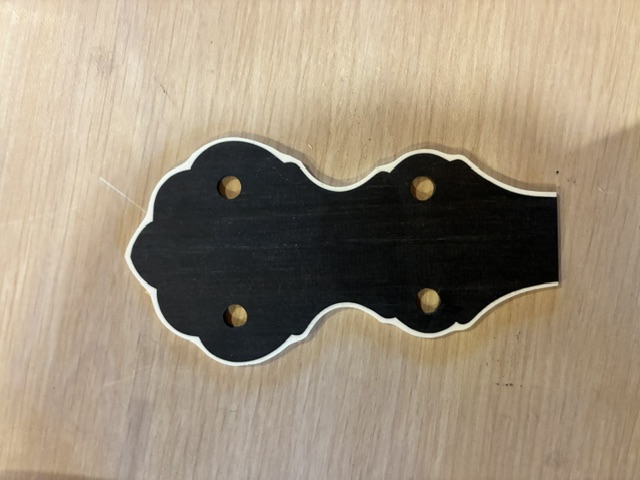
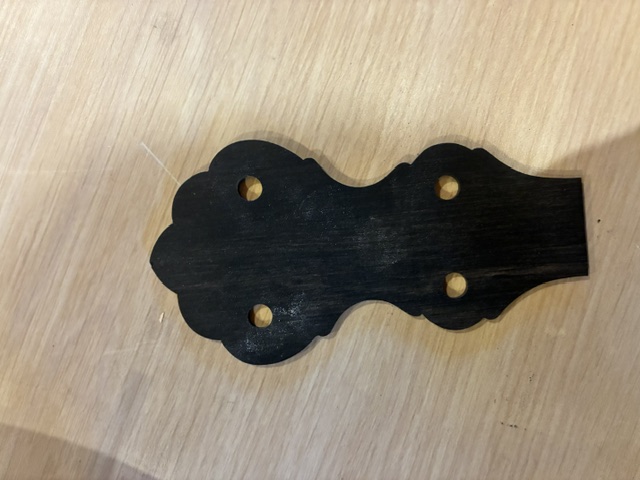
I sawed out a curly maple binding:
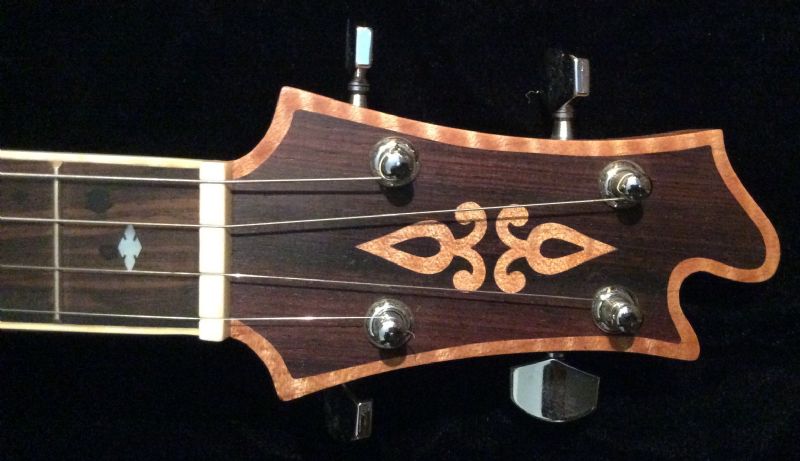
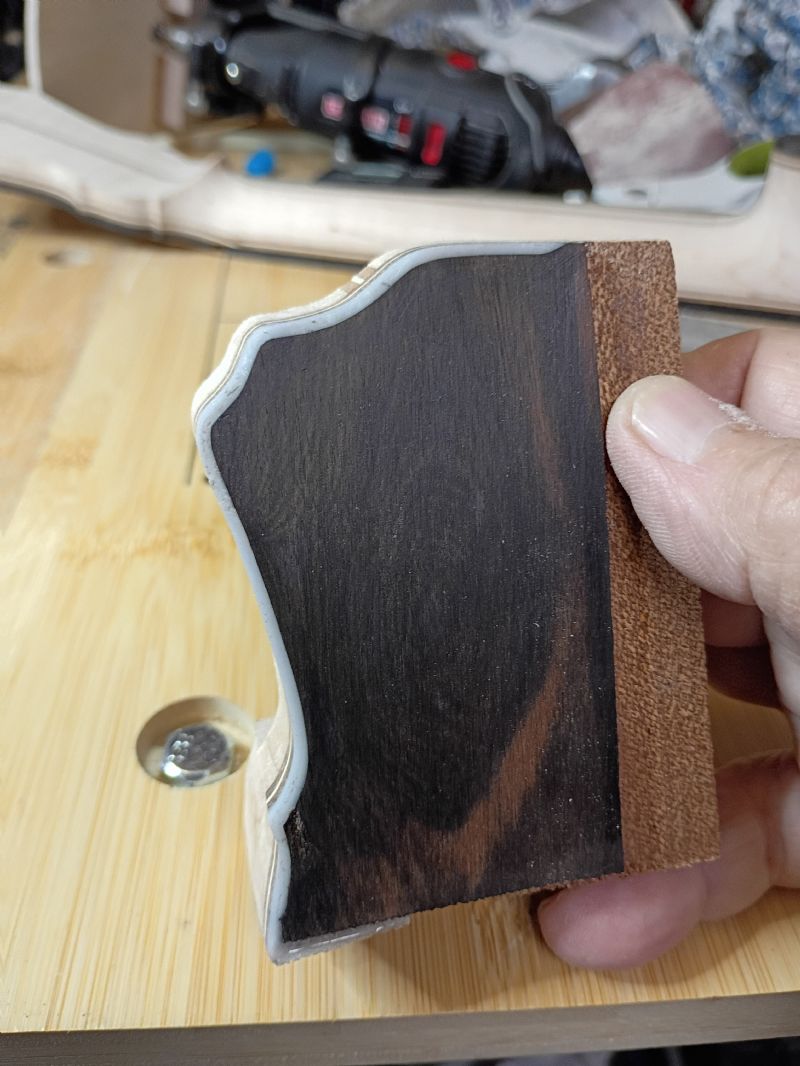
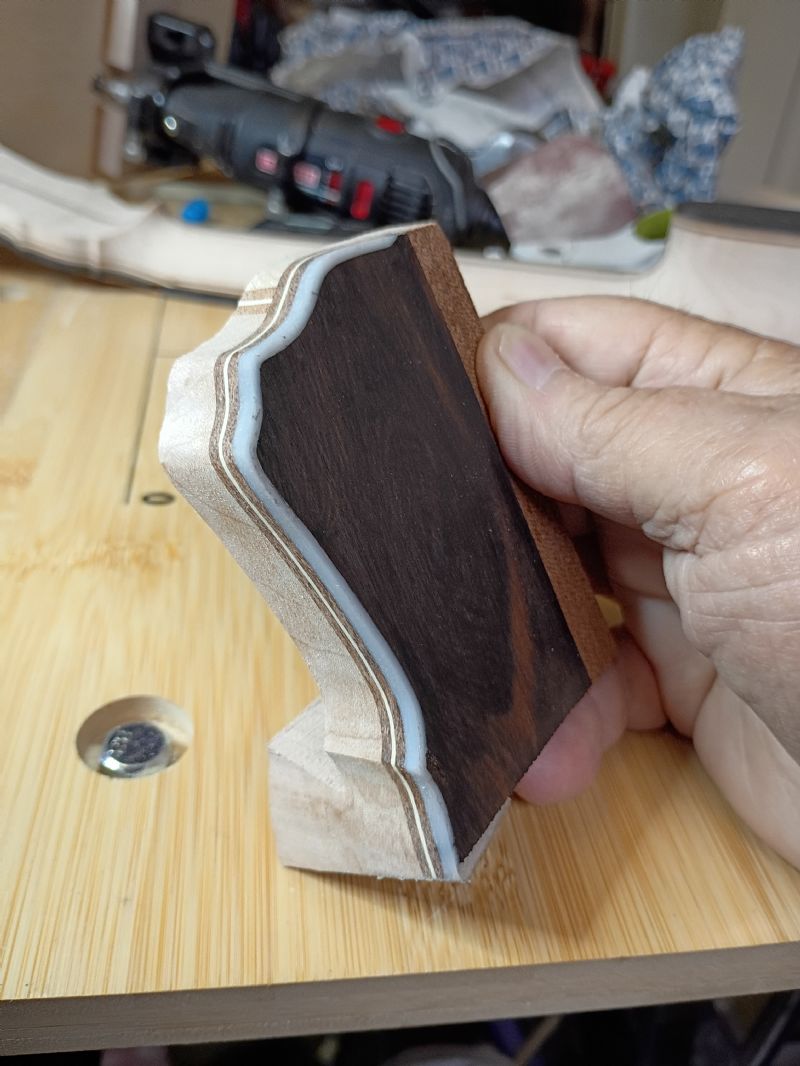
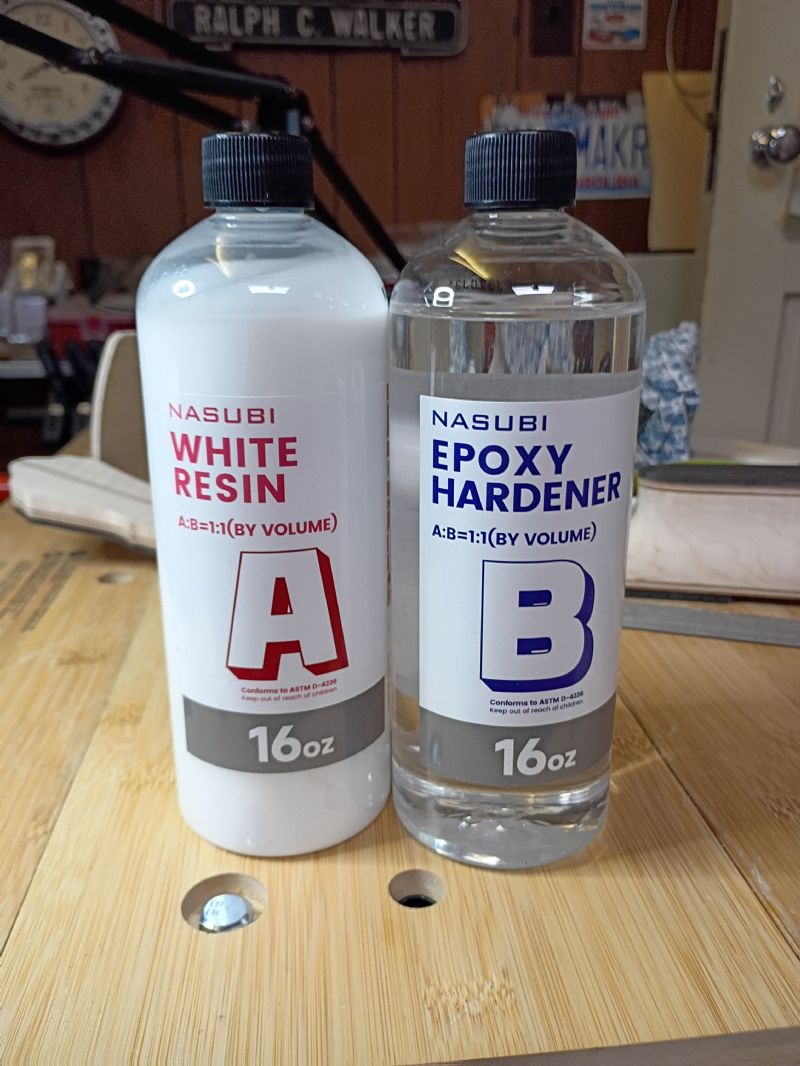
I made a partial peghead mock-up and routed it for binding. I ordered some white epoxy resin from Amazon. I built a dam around the outer routed edge with masking tape, mixed the resin, filled the area, and let it cure. After removing the tape and the excess resin, it looked ok except for one important draw back....It wasn't white. Instead, it was translucent, appears gray against the ebony wood. Is that the way it looks, or did I get the wrong type of resin?
Edited by - BNJOMAKR on 06/16/2026 17:29:19
Marvin,
That looks great.
Not being WHITE is a drawback. I use a white powder mixed with the eopoxy. It's in the shop but I'll get it & post the brand tomorrow.
Tommy
quote:
Originally posted by BNJOMAKRBinding a banjo peghead is a pain because of the angled edge of the side of the peghead, especially if there are multiple curves. I saw a post in the past that talked about using tape along the edges as a dam and using some kind of casting plastic to fill the routed edges, and then smoothing everything out once it's dry. What kind of material is that? Does anyone have any photos of the results?
If you have seen a bound Stelling banjo peghead you have seen poured (cast) binding.
They used a casting resin made by Yale, colored with a bit of pigment to approximate the color of ivoroid.
As for how it was done, the ebony overlay was shaped using the spindle sander and glued to the still-fullsize rectangular neck blank. The peghead was then cut to a rounded shape and a masking tape dam was made around the outside after first being sprayed with contact adhesive to help avoid leaks. The neck blank was set up with the peghead level and casting resin was poured into the space between the overlay and the masking tape dam. After curing, a quick session with the belt sander leveled the binding, inlay and overlay ready fot the peghead to be cut using the bandsaw.
Edited by - sunburst on 06/17/2026 07:16:51
I got the idea of poured binding from Wyatt Fawley when I bought 2 of his pegheads that he did by the pouring procedd, thanks Wyatt.
I used 2 part "ecopoxie" & WHITE "ecopoxie" color with great results, my binding came out white.
It was several months to a year ago when I did that. As I remember, I trimed out the pehead I wanted, slight smaller for binding, made a larger cutout around the peghead materal, tacked the peghead materal on another board & tacked the larger cutout around the peghead materal on the board, mixed up the ecopoxie with the color & poured it in, basicly that was the process. I possibly put wax paper or very thin plastic before I tacked the peghead on the board, as I remember so the epoxie would not glue down.
I have done lots of binding pegheads, mostly ODEs & Baldwins & Trap Doors & the ecopoxie is much much easier with great results.
Tommy
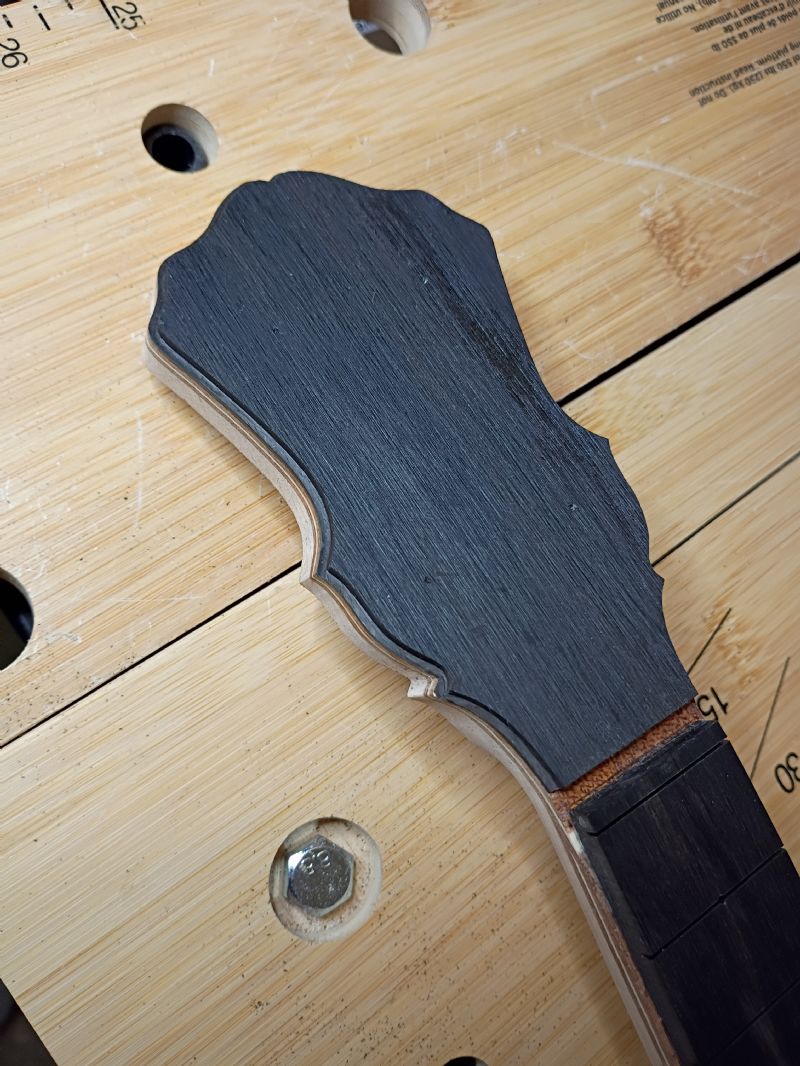
This is the second most complicated peghead that I've attempted to bind. The edge of a guitar peghead is cut at 90° relative to its surface, and because of this, is easier to bind. The thing about a banjo peghead is that it's cut at an approximate 15° angle which results in the edges being at the same angle... difficult to bind! The binding strips don't follow the angle when installing it around a 15° routed, curved peghead. Since I hadn't found the right color resin to use the masking tape created dam, I did it the old fashioned way. It was a VERY time consuming process, but it came out acceptable. If I can find resin that is pure white, I will try it again.
As it looks like you knew, TT pegheads are complicated by having the upper part cut at 90 degrees while the lower part is cut at some other angle. I've done at least 2 or 3 of them, and as I remember it, I might have poured the binding for one of them.
Edited by - sunburst on 06/19/2026 19:10:06
Terms of Use | Privacy Policy | Privacy Consent (EU/GDPR Only)
Copyright 2026 Banjo Hangout. All Rights Reserved.