


Hello!
I was interesting in selling my Whyte Laydie but was having a hard time estimating a fair market price. Any insight would be much appreciated. All original (vintage planet tuners installed, Newer Renaissance head. )
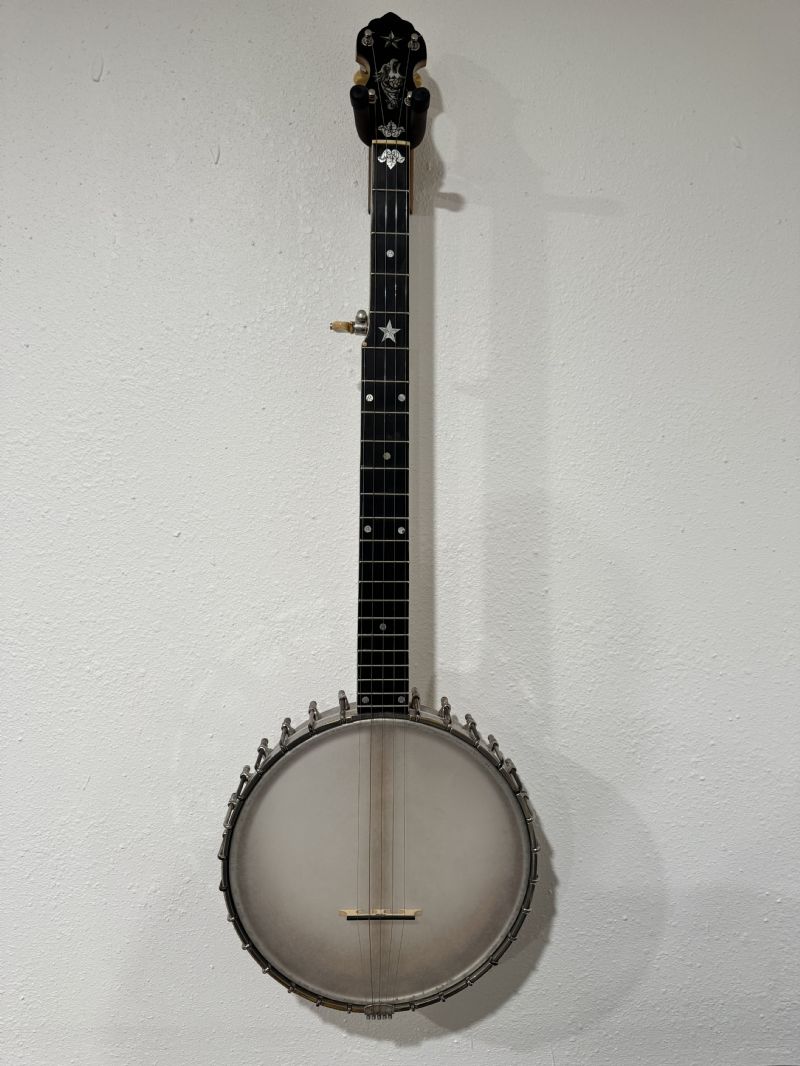
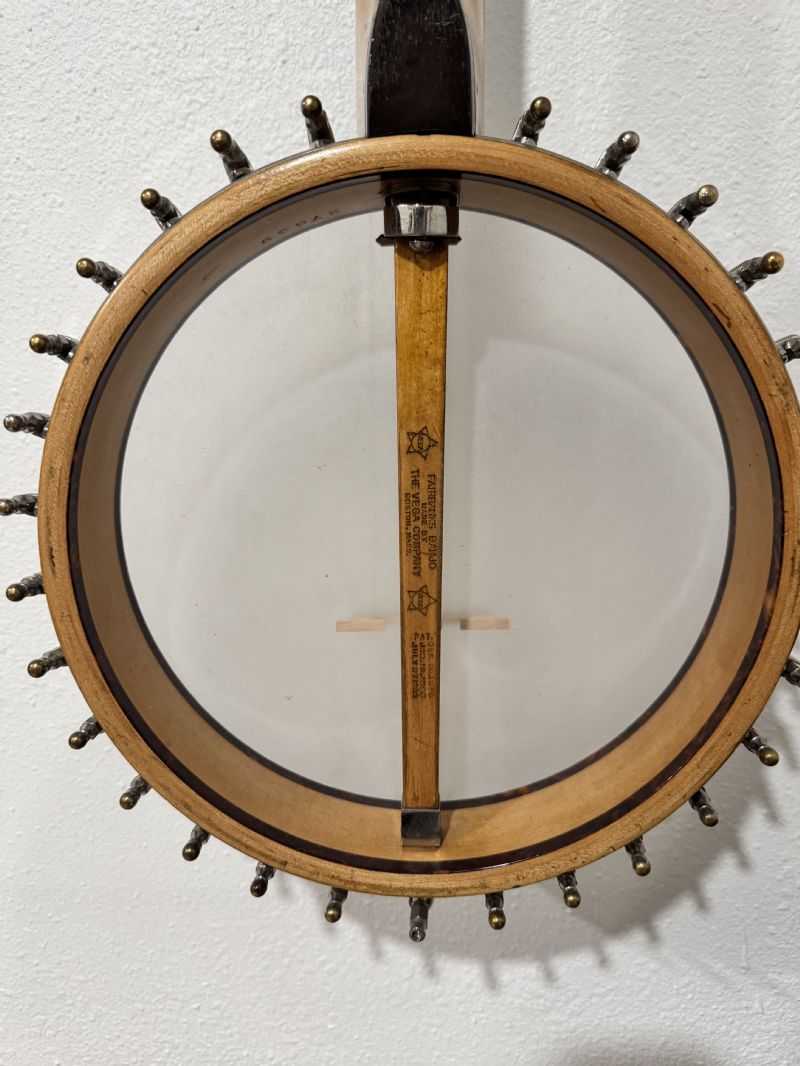
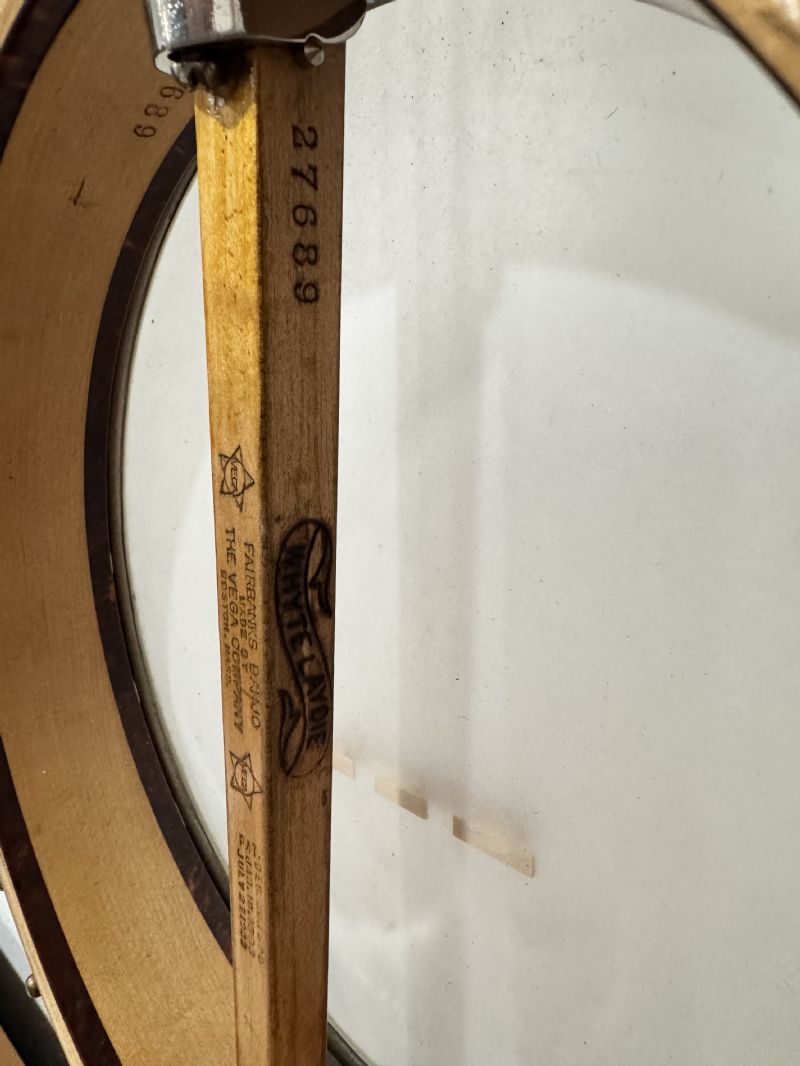

A few more photos
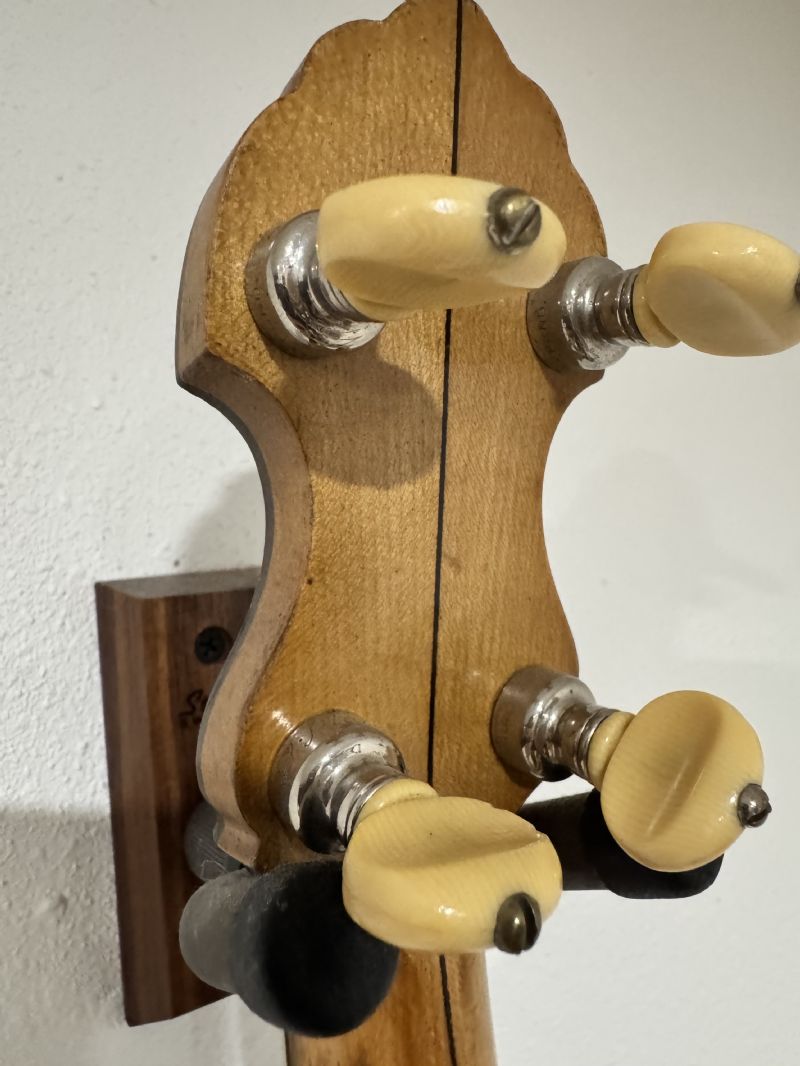
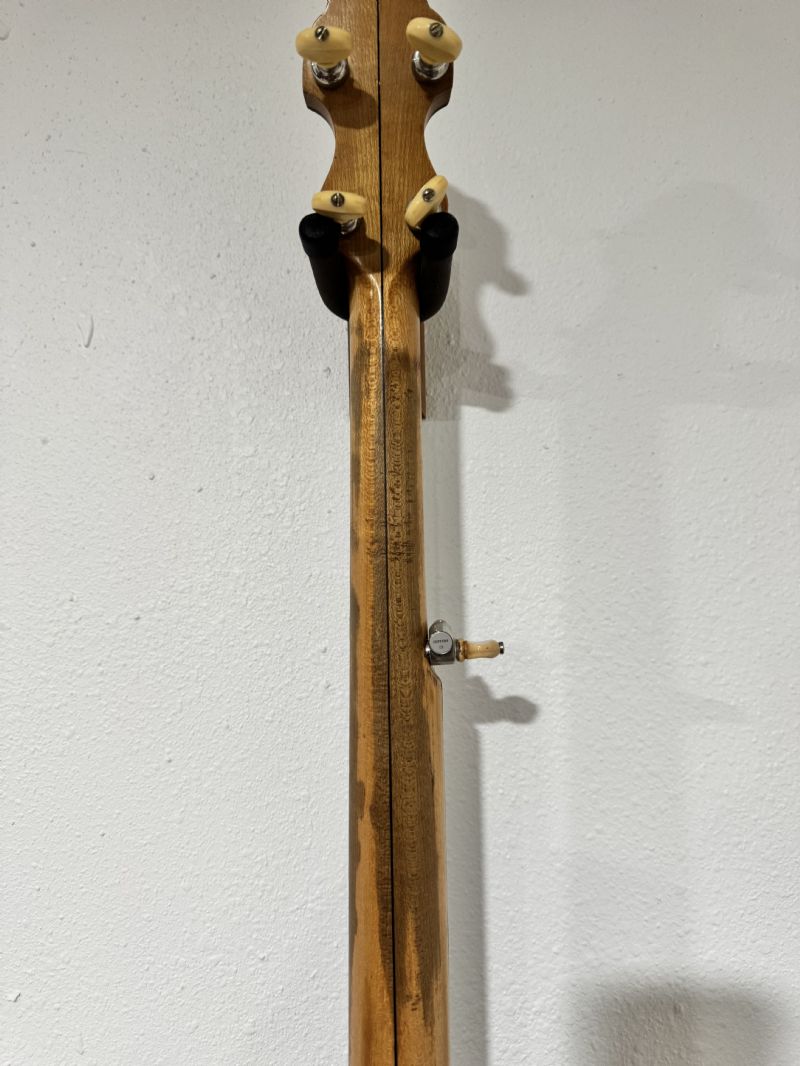
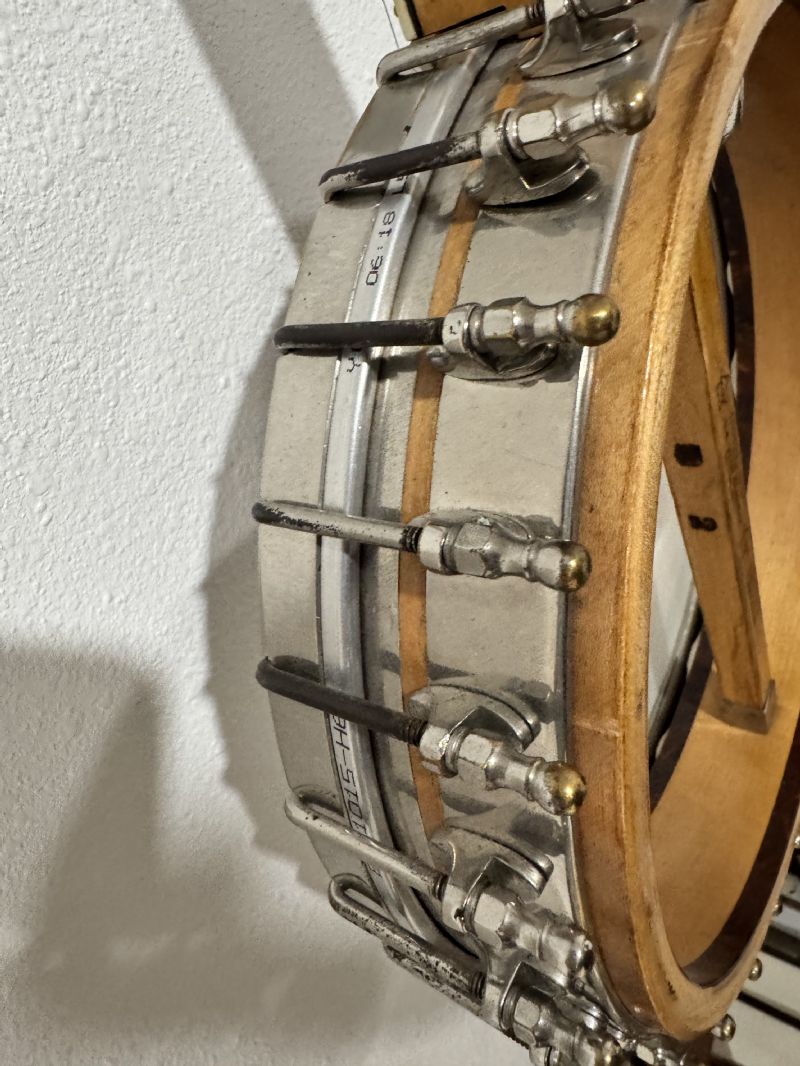

$2500 - $4000
Looks like a nice early thick rim with the lesser engraver who did most of 1905-1910. I think the market on these has tanked considerably...I cannot imagine one getting more than $3000 and I'd imagine if you wanted to sell it quick, you might not even find a ready buyer at $1500. It's sad and strange given how nice these banjos are but tastes have migrated HARD away from the best old stuff.
This is a player's grade banjo showing significant playing wear on the neck.
Its value varies based somewhat on geography but less so because it is player's grade.
Big vintage dealers with world-wide buyers can often obtain the highest prices, but they will also want the instrument to be in near-perfect structural and playing condition. They also have long running records (often 40 years) of prices obtained. In a large vintage music store, the banjo would also be displayed next to other banjos of its quality and pedigree allowing potential customers to compare it to the latest new plastic-dipped looking banjos.
Because it has been many years since I was involved in the daily dealings in vintage instruments, I do not know its current value.
I'd estimate $2000+, with a couple of notes.
Is the 5th string pip original? People buying old Fairbanks by Vegas are positively hogs about wanting an original pip. It looks like a little bowler hat with a flat flange or rim on the bottom, and a globe above that. Before I knew about this, years ago I sold a similar banjo to a buyer and he about had a cat when he found out the pip wasn't original. He was so disappointed I had to refund $50 to soothe him. Now I know to look.
To sell it you should report the head diameter (just inside the tension hoop where the hooks attach) and the neck scale length. Most common head diameter would be 10 15/16". For the neck scale measure from the face of the nut up on the end of the fingerboard, to the top of the 12the fret in inches, then double that number. 27" would be typical, but they did vary. Buyers want to know these facts.
If you have a case of any kind it will help as long as it's not junk or grossly wrong-sized. If you still have the original tuners mention that too, it will help. Are ALL the hooks and nuts original or at least matching? That helps. Is the tailpiece original or at least stamped with it's maker's name like "No Knot" or the like. That helps. Oh, you should give the serial # to date it accurately. The serial number is stamped twice in the rim and on the stick and they should match.
I've seen cleaner/prettier (also earlier date) Whyte Laydies sell for $3000+. Yours might be attractive to a "player" who finds the dirt and missing finish to be a sign of character and "relative bargain status compared to a pristine collector's piece.
These banjos are popular, relatively "available", and solid performers. Also, in the world of Whyte Laydies, yours is prettier (inlay) than some of the production that came a few years later than yours (no gryphon in the peghead, for instance). Yours looks very desirable, if not a collector piece.
Good luck.
Edited by - The Old Timer on 05/30/2026 10:46:00
If the serial number inside the rim (only partially visible in the photos) matches the number on the dowel, your banjo was made in 1911, according to the serial number list on the Deering site. deeringbanjos.com/en-ca/pages/...l-numbers
I just bought a beautiful early example for 1750 - from a well respected dealer.
I was shocked as the last time I looked at buying one, not too long ago, a similar banjo was 4,000.
It bewilders me the number of (apparently younger) players who choose a more expensive Electric-style banjo (no bracket band) over such Whyte Laydie, seemingly only because it’s new.
I paid over 5k for mine in 2012, but it's a pre fire from 1901. You can see photos of it on my page.
Edited by - JMalmsteen on 07/02/2026 16:20:38
Different values for players and collectors. Me, I'd love to own it!
Gruhn has a similar "Fairbanks by Vega", in "pretty condition" at $2500 with a hard case. That probably represents top of market asking price.
guitars.com/inventory/ja7047-1...-5-string
That's a rather poor photo selection from Gruhn IMO.
Terms of Use | Privacy Policy | Privacy Consent (EU/GDPR Only)
Copyright 2026 Banjo Hangout. All Rights Reserved.

