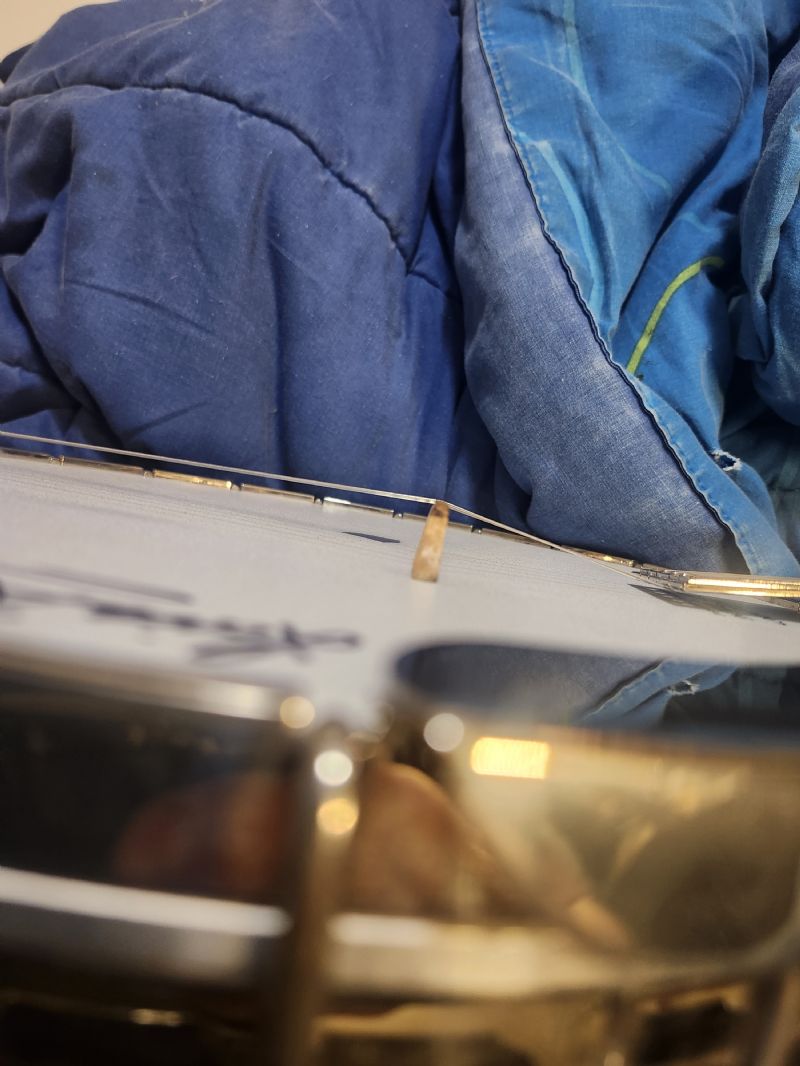
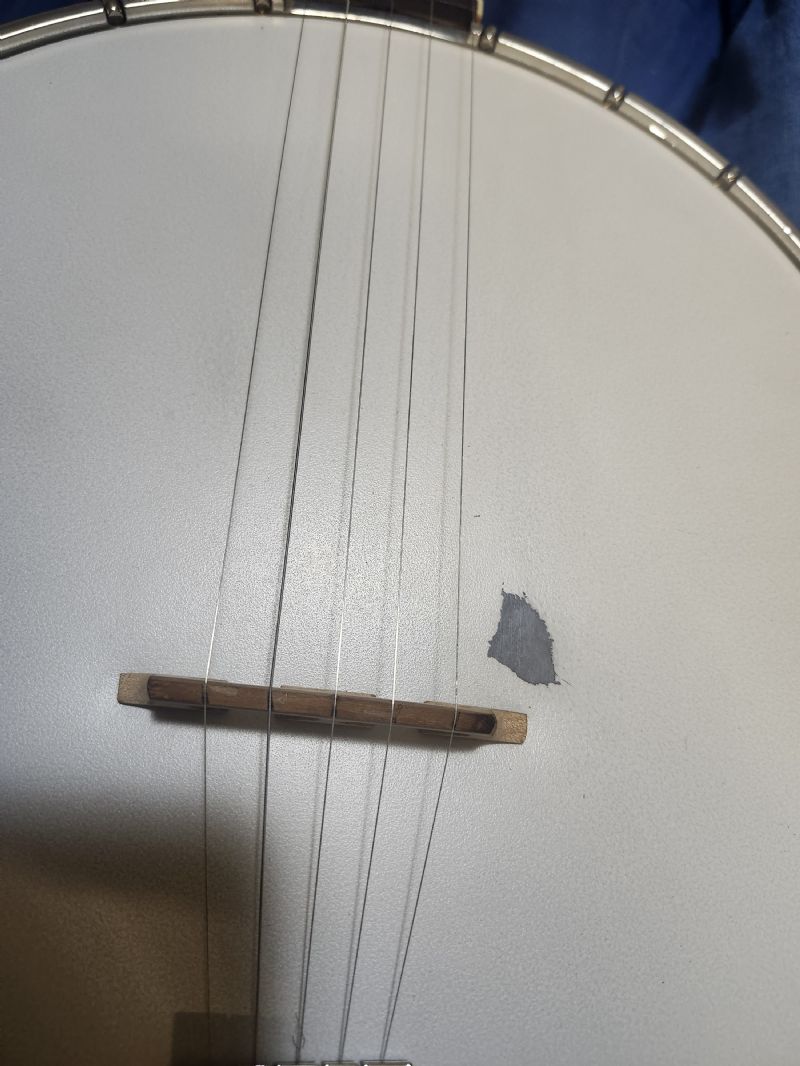
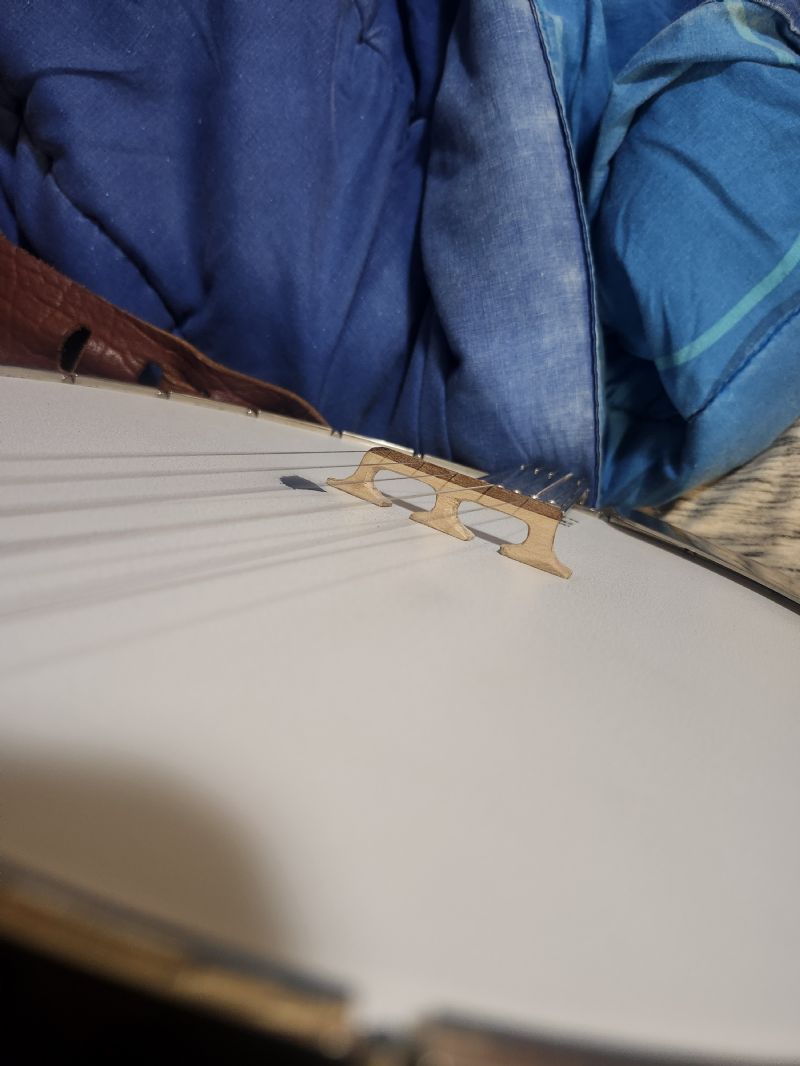
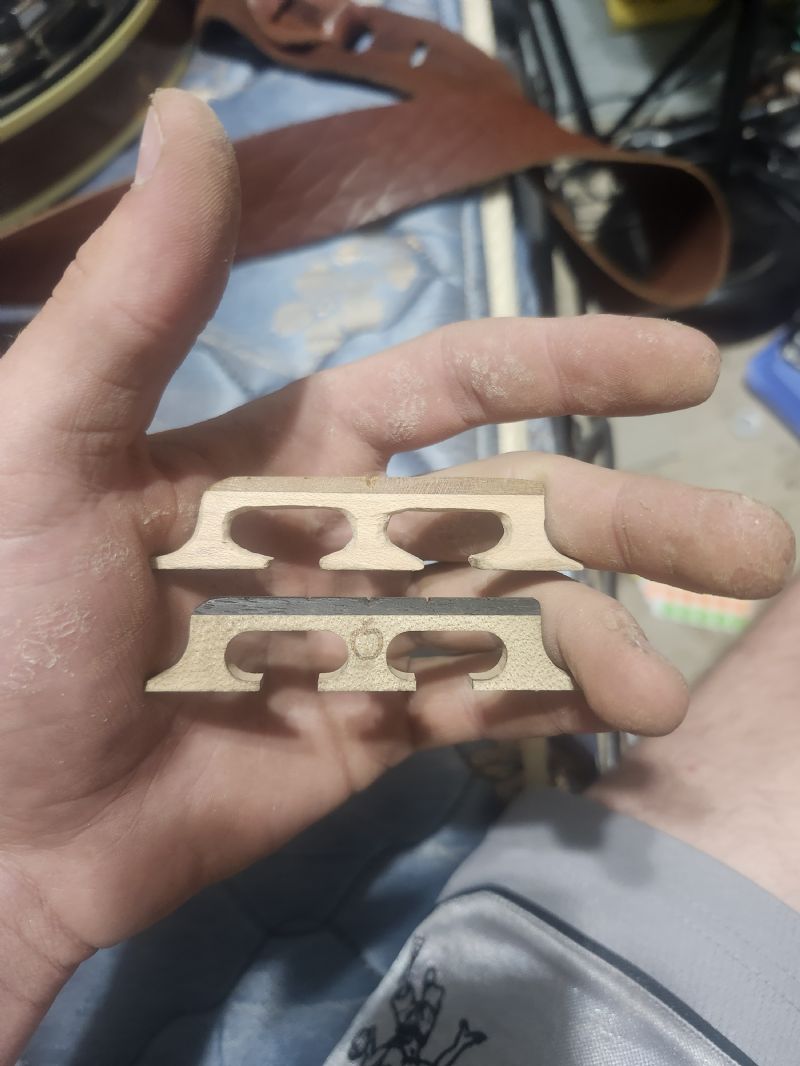
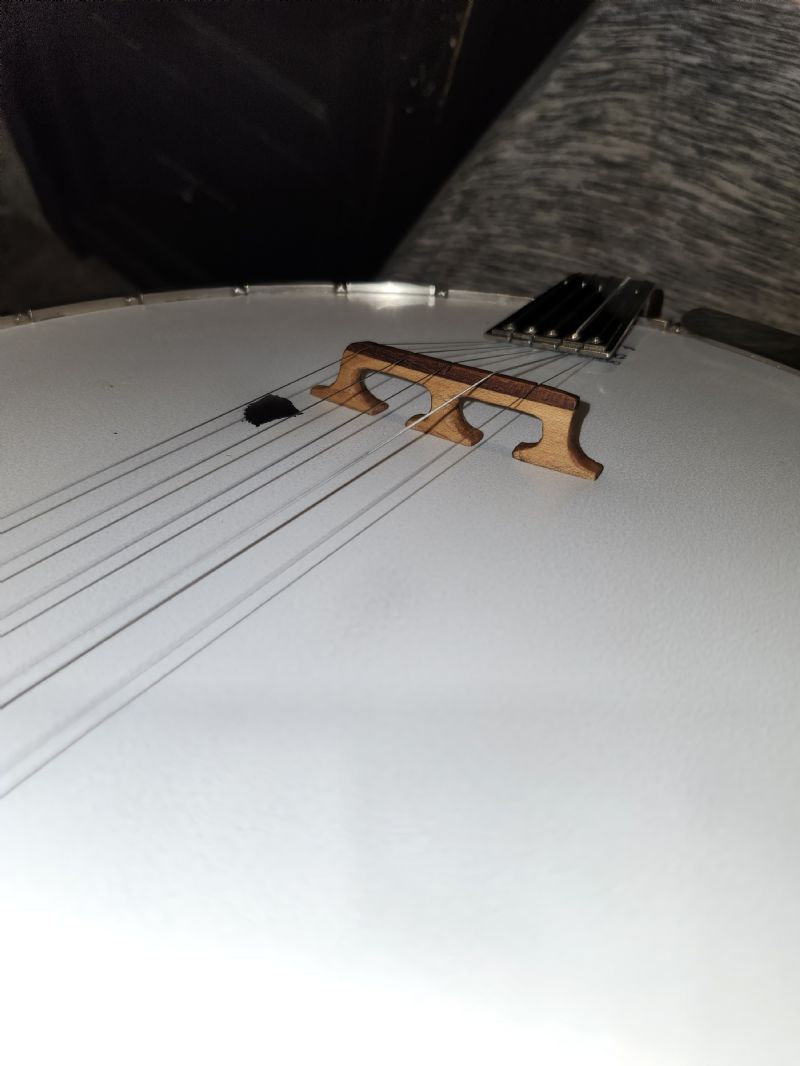
I recently carved my first bridge out after contemplating it for a few months. It is 5/8s tall, standard spacing, maple base/hedge cap, and made entirely by hand without any power tools! It looks pretty rough as a result, but it definitely has a unique sound. I'll see if I can upload some photos and audio. I would also weigh it, but I don't have a scale.

I carved it very carefully with an X-ACTO knife, I even broke the blade once!

Dadgum son. That’s not bad at all or as we say ..a-tall . Exacto knife you say ? A little sanding and it’ll look like a nice boutique bridge . Good job and , at a boy ! Keep it up !
quote:
Originally posted by Will FradyDadgum son. That’s not bad at all or as we say ..a-tall . Exacto knife you say ? A little sanding and it’ll look like a nice boutique bridge . Good job and , at a boy ! Keep it up !
Thanks! How fine should I sand it? I don't want the wood particles to embed in the grain pores.
For being done with a knife, that is impressive work. Well done!
Great job on your very first hand carved bridge! You wouldn't have wanted to see my very first bridge building fiasco. I didn't even finish it. Lol.
I hopped on the internet right away and bought a CNC machine, believe me, it's a whole lot faster & looks a whole lot better!!!
As far as sanding it down, start with 150 or 100 grit. and finish up with 400, it gives it a real smooth buff shine look.
Keep up the good work, there's always more room for more custom bridge makers! 
That's nice work without any power tools. I sand my bridges to 400 grit and then I give them just a minimal coat of oil to bring out the beauty of the wood.
quote:
Originally posted by DSmokeThat's nice work without any power tools. I sand my bridges to 400 grit and then I give them just a minimal coat of oil to bring out the beauty of the wood.
What kind of oil should I use? Also, how would you design a bridge to give more bass response but keep it very responsive? This is the most responsive bridge I have ever used. The notes jump out and decay instantly, but the bass response and sweetness are a little lacking. The volume and up the neck clarity are exceptional!
I work in the tenor banjo world of Irish trad. I can not offer any advice outside of that. I have been experimenting with 12 or so different woods. As for the oil, F1 oil is what I'm using.
The way it looks now:
Shape-sanding with 220, finish sanding with 400
Oil is not required but will make the wood and its grain look awesome. I use furniture oil.
If you can't dial in the 4th string to your liking:
use welding tip cleaners or nut files for string slots
What you got so far: atta boy!
The weight has a lot to do with treble/bass response.
A bridge that weighs 2 grams or less will have a tebly (Stanley) tone.
As bridge weight exceeds 2 grams the tone starts to fill out with more low end presence.
A bridge weighing 2.3 grams or more starts taking away from the treble favoring the bass.
For bluegrass applications I have received the most orders for 2.24 grams.
Clawhammer players (Sycamore w/rosewood top) are happier with 2.7 grams.
I use weight to control the final tone.
The scale used must read grams to 2 decimal places as with a "Pro-Scale LC-50" which costs less than $20.
Hello, great looking bridge. I made some from beech, Oak, Ash, cherry, chestnut but with no cap and they all sound crap What wood is is "Hedge cap"?quote:
Originally posted by RK-FenderPartsBanjo07I recently carved my first bridge out after contemplating it for a few months. It is 5/8s tall, standard spacing, maple base/hedge cap, and made entirely by hand without any power tools! It looks pretty rough as a result, but it definitely has a unique sound. I'll see if I can upload some photos and audio. I would also weigh it, but I don't have a scale.
I could never get a good sounding bridge from cherry,either.
quote:
Originally posted by conicHello, great looking bridge. I made some from beech, Oak, Ash, cherry, chestnut but with no cap and they all sound crap What wood is is "Hedge cap"?quote:
Originally posted by RK-FenderPartsBanjo07I recently carved my first bridge out after contemplating it for a few months. It is 5/8s tall, standard spacing, maple base/hedge cap, and made entirely by hand without any power tools! It looks pretty rough as a result, but it definitely has a unique sound. I'll see if I can upload some photos and audio. I would also weigh it, but I don't have a scale.
Hedge is another name for osage orange, idk why but everyone calls it hedge around here.
I have been in love with the late Don New's big foot and spillway bridges for my styling--The big foot was classic joinery--I hope my supply of those stays consistent-I always redid his slots on both and also under cut the spillway on the treble side--to ease the loudness of the open D
Edited by - Tractor1 on 05/11/2026 12:45:52
A Dremel tool is so much better than a sharp knife.
Jt's easier,faster,more precise and SAFER.
Nice bridge.
Very nice job !!! If you make more you will flatten out that learning curve rather quickly . tools of the trade will help a bunch . Find a bridge of choice and trace out a template and don't dare color outside the lines when making it lol particular sized drill bits can be a game changer for you have fun !!
quote:
Originally posted by kat eyz*Find a bridge of choice and trace out a template
a game changer for you have fun !!
Hugely important advice and don't ever allow yourself to forget this!!!
Don't ever settle on "this is it" cause it isn't and never is and never will be as different instruments and picking styles are guaranteed to keep on changing. Do keep on realizing that there's no such thing as a one-fits-all as every one has different requirements and/or wishes as to what's the ideal bridge for them.
Welcome to "insanity" 
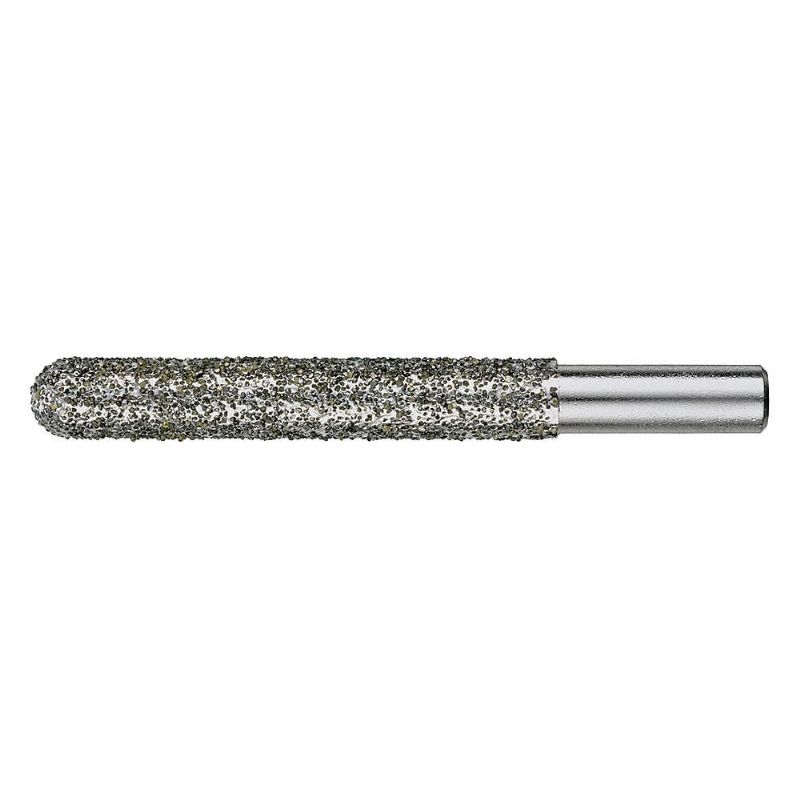
I use the correct sized drill bits to remove wood inside the bridge then use diamond coated rasp bits in coarse and fine to do the shaping. Final sanding is done with a dremel.
quote:
Originally posted by Bart Veermanquote:
Originally posted by kat eyz*Find a bridge of choice and trace out a template
a game changer for you have fun !!
Hugely important advice and don't ever allow yourself to forget this!!!
Don't ever settle on "this is it" cause it isn't and never is and never will be as different instruments and picking styles are guaranteed to keep on changing. Do keep on realizing that there's no such thing as a one-fits-all as every one has different requirements and/or wishes as to what's the ideal bridge for them.
Welcome to "insanity"
That's part of the reason I wanted to make a bridge, I did not want something everyone had I wanted something unique that helped me get the unique sound I wanted with my tequnique. I already have some non-standard desgins I want to try now that I have this "normal" one under my belt.
Question from a novice bridge maker (1 bridge made for the Mountain Banjo I just made!)
I made my bridge out of hard maple... as I understand it, light weight is an asset- as is hardness of the wood.... that being said- wouldn't oiling the bridge add to the weight of it- and prevent it from further drying/aging- with a possible corresponding decrease in weight/increase in responsiveness???
quote:
Originally posted by MarTay6Question from a novice bridge maker (1 bridge made for the Mountain Banjo I just made!)
I made my bridge out of hard maple... as I understand it, light weight is an asset- as is hardness of the wood.... that being said- wouldn't oiling the bridge add to the weight of it- and prevent it from further drying/aging- with a possible corresponding decrease in weight/increase in responsiveness???
Assuming you used a chunk of maple that was properly dried and not from a tree that was just cut down... A quick wipe with a paper towel with a few drops of furniture oil and then dry-wiped and allowed to dry-settle for a couple of days will increase the bridge's weight by approx 0.01~0.02 grams. If your dog is well trained it might notice the diff. Humans? Despite what some may claim, hmmm, well, uh, not so much.
Bridges that are not oil-finished may go up/down about 0.1~0.2 grams with humidity level changes. The human hearing system will easily compensate for that and "even it out."
Terms of Use | Privacy Policy | Privacy Consent (EU/GDPR Only)
Copyright 2026 Banjo Hangout. All Rights Reserved.