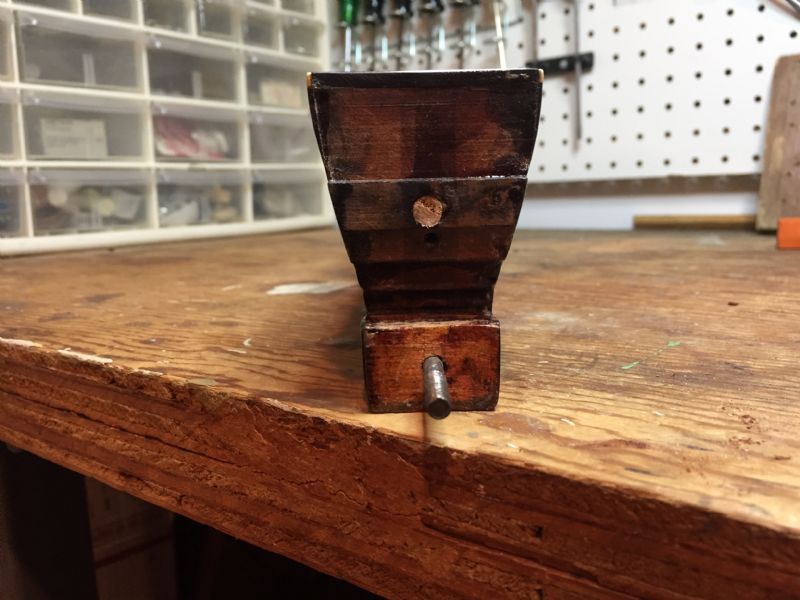
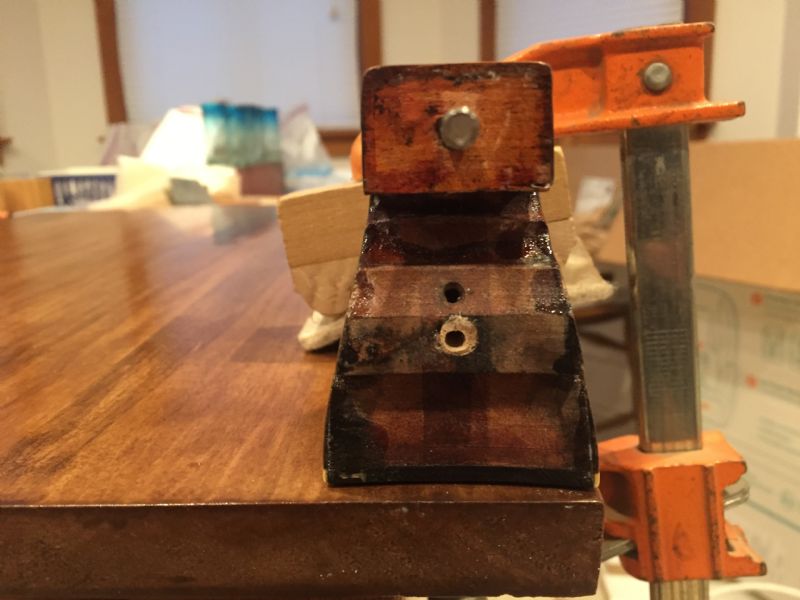
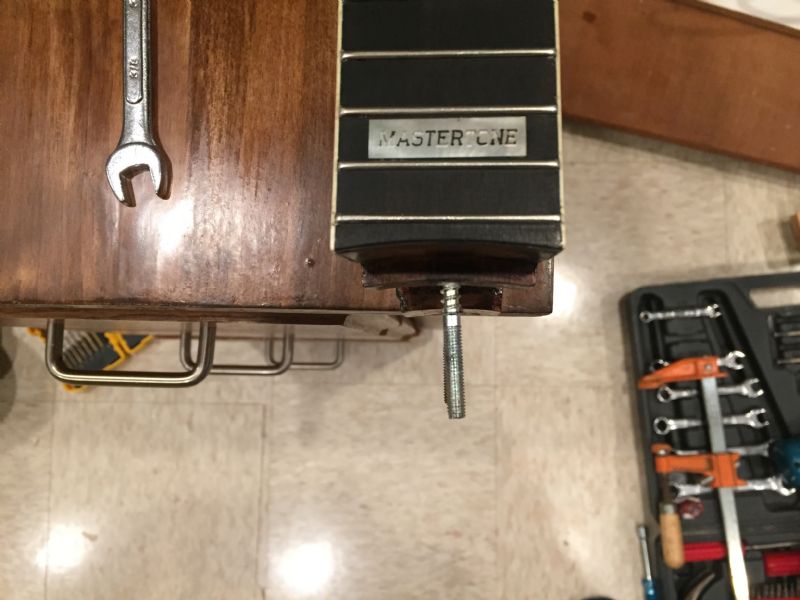
I bought a tired old banjo and have been refurbishing it. Its a 1970s era sega masterclone tenor banjo.
Finally got to the restring stage. Set intonation then realised the action was too high. Was adjusting lower tension rod when the part that screws into the neck (mahogany) stripped. Its a double threaded bolt, one side threaded to mate with the tension rod, the other side a chunky threaded wood screw.
Question: what to do?
I was thinking of coating the wood screw in epoxy and tightening it.
Wood glue is a non-starter right?
Any suggestions appreciated
Thanks

I think you're on the right track with epoxy. I know there are other posts on here about what to do and, iirc, that's the simplest option. But you basically just want to finger tighten that rod once you get the bolt back in the neck. You're not going to be able to significantly lower the action that way no matter how much you tighten, and if you overdo it, it will just pull out again.

Plug and redrill, You May Need To Remove In The Future, Second You Only Make Minute Action Adjustment With The Cordinator Rods, Sounds Like You Were Cranking On It. Neck Refit Or Bridge Are The Two Correct Ways.
Ok so its not designed to be tightened hard. So epoxy screw should work. Then a Wedge at top of neck mating surface to lower action? Not keen on reducing bridge
quote:
Originally posted by scoobykidsOk so its not designed to be tightened hard. So epoxy screw should work (since I originally removed neck with this screw in situ). Then a Wedge at top of neck mating surface to lower action? Not keen on reducing bridge height
Don't epoxy the screw in the neck. Take the screw out, drill out the hole with a 1/4" bit, and glue in a maple dowel. Then, redrill the hole. Maple won't strip as easily as mahogany will.
What are generic dowels made of? Presume its not soft wood. I wouldn’t have a clue where to find a maple dowel here in Berlin.
But yeah, dowel sounds like the best solution. I assumed that since mahogany is dense and heavy, that means its strong. From that you say that isn’t correct?
, i read that someone called deering uses old bamjo head skins as shim?
quote:
Originally posted by scoobykidsI bought a tired old banjo and have been refurbishing it. Its a 1970s era sega masterclone tenor banjo.
Finally got to the restring stage. Set intonation then realised the action was too high. Was adjusting lower tension rod when the part that screws into the neck (mahogany) stripped. Its a double threaded bolt, one side threaded to mate with the tension rod, the other side a chunky threaded wood screw.
Question: what to do?
I was thinking of coating the wood screw in epoxy and tightening it.
Wood glue is a non-starter right?
Any suggestions appreciated
Thanks
Can you post a close up photo of this?
If that’s the banjo in your gallery photo, it’s an aluminum rimmed bottle cap banjo. Those often have slotted rim holes, so that you can raise the neck on the rim, to lower action.
I would plug and redrill. I’ve found solid maple dowels at a local hobby store
quote:
Originally posted by scoobykidsWhat are generic dowels made of? Presume its not soft wood. I wouldn’t have a clue where to find a maple dowel here in Berlin.
But yeah, dowel sounds like the best solution. I assumed that since mahogany is dense and heavy, that means its strong. From that you say that isn’t correct?
, i read that someone called deering uses old bamjo head skins as shim?
As you mentioned Berlin, I assume you are in Germany. Every hardwarestore like Hornbach, Bauhaus has them. The German term for a wood dowel is Holzdübel, the better ones are made from beech.
quote:
Originally posted by banjonzquote:
Originally posted by scoobykidsI bought a tired old banjo and have been refurbishing it. Its a 1970s era sega masterclone tenor banjo.
Finally got to the restring stage. Set intonation then realised the action was too high. Was adjusting lower tension rod when the part that screws into the neck (mahogany) stripped. Its a double threaded bolt, one side threaded to mate with the tension rod, the other side a chunky threaded wood screw.
Question: what to do?
I was thinking of coating the wood screw in epoxy and tightening it.
Wood glue is a non-starter right?
Any suggestions appreciated
ThanksCan you post a close up photo of this?
Photos attached. Yeah the old photo was my bottlecap. This project is my upgrade. It had a micd bridge and was being played hard professionally before it was put in someones garage for years. It Cost me 200€ to buy, sight unseen -but gambling it was a masterclone (it is- brass tone ring) then i had to install new skin, bridge, frets, tailpiece and fingerboard de-grooving.
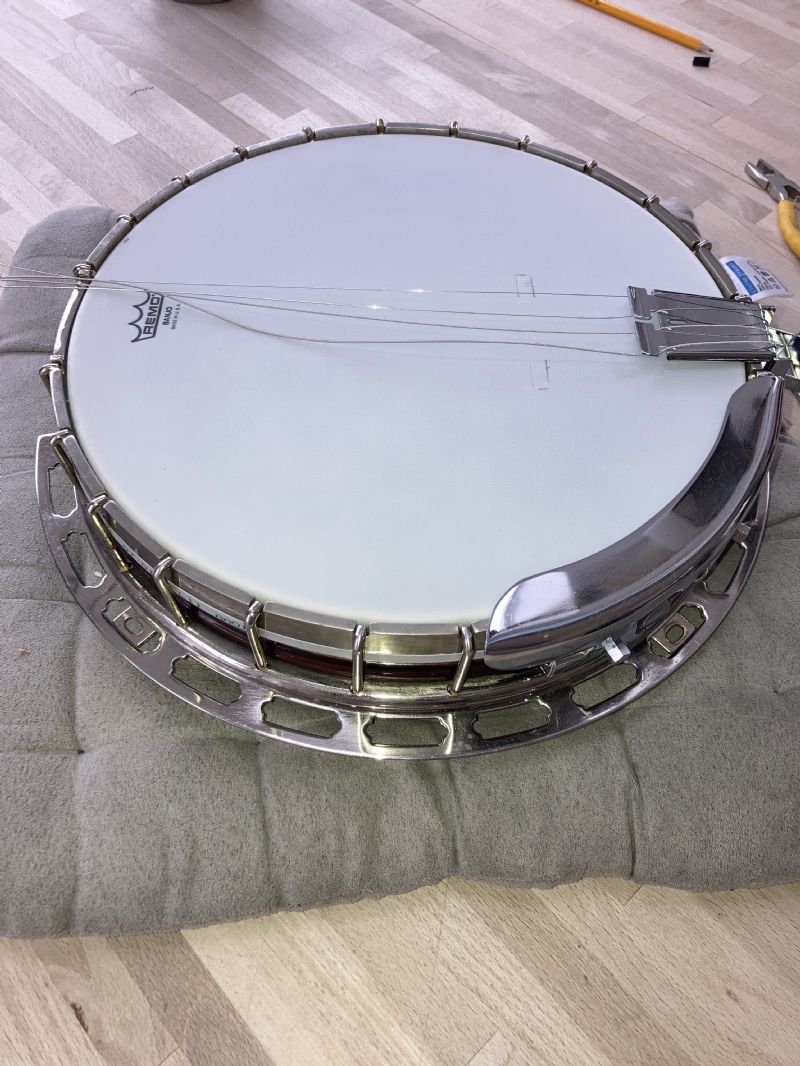
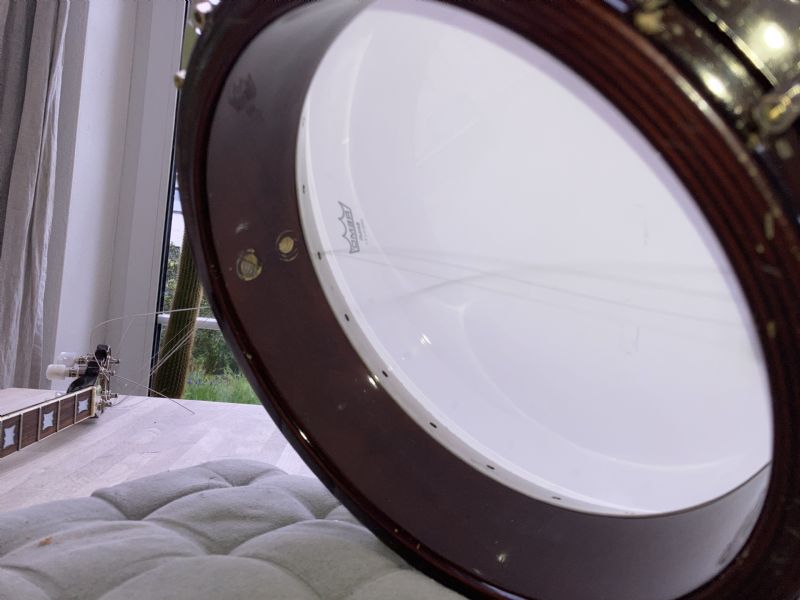
Here is the problem
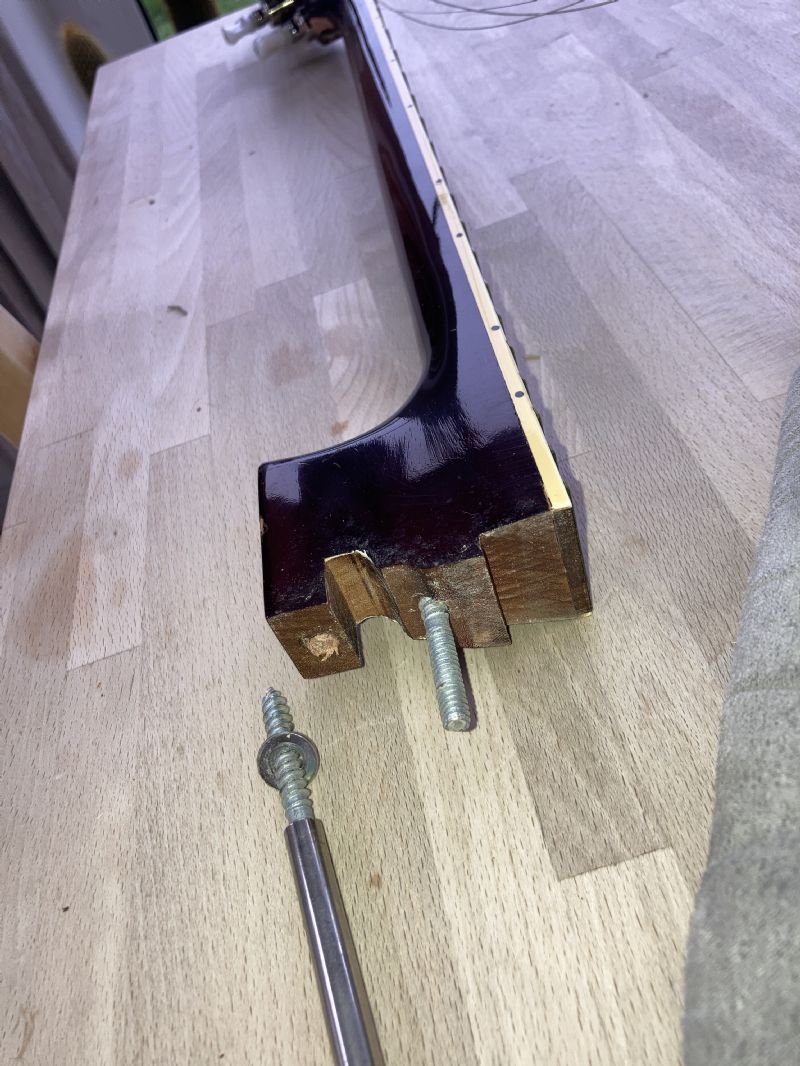
Also every bit of metal was corroded so that was fun to clean up
Glue in a dowel and redrill. You may someday need to take it out.
quote:
Originally posted by scoobykidsWhat are generic dowels made of? Presume its not soft wood. I wouldn’t have a clue where to find a maple dowel here in Berlin.
But yeah, dowel sounds like the best solution. I assumed that since mahogany is dense and heavy, that means its strong. From that you say that isn’t correct?
, i read that someone called deering uses old bamjo head skins as shim?
Hardware stores usually have what are called doweling kits which have the drill bit and several wooden dowels. They may be made of maple, beech, or oak. Any of the three is better than mahogany which is fairly soft for a hardwood.
Having a better than average experience with precision woodworking (life long contest aeromodeller, not shy of performing all small maintenance, even to my pre war RB-1), I wouldn't try my hand at anything serious, like the neck to body fit without proper tooling.
A hand drill (imho) doesn't qualify for such a task.
I'd rather take a 4 hour drive from where I live to Bremen, where one of the very few really qualified banjo luthiers in Germany resides.
I wouldn't even risk a nice Masterclone like yours.
I'm convinced he can make that banjo back the way it was supposed to be (and better).
Thanks for everyone’s advice but the reason im doing all this is i can’t afford an expensive banjo -or a luthier. But i am very good at fixing stuff.
So here is what I’ve done:
I cleaned the hole and epoxied the bolt/screw in because this way I’m positive its positioned correctly. Also, It is highly unlikely that anyone would ever need to remove it, but even if they did, it would still be possible to torque it out. Yes, then it would need to be drilled and dowelled. But at this stage i was more concerned about misaligning it after dowelling, than using epoxy.
If it ever needs to be removed, it won't be as easy as torquing it out. It's very likely that the bottom part of the heel will be destroyed as the screw is taken out.
Im thinking not. The epoxy is thick, it won’t wick into the surrounding wood fibres to any appreciable extent. It would probably shear locally with a bit of back and forth torque.
heres hoping I'll never need to find out ??
Seriously, when removing the neck, that part stays in. There is no need for its removal. I actually can't think of a reason to remove it. Can you?
Edited by - scoobykids on 05/05/2026 11:09:10
Good that you got it fixed.
I did a plug and redrill myself, not so well, for the same problem 8 or so years ago. The hole I drilled wasn't perfectly straight (left-right), so the bolt was skewed a bit but worked. I had it redone a year or so later by a luthier when I sent him the neck for some other work.
For you, for next time (if dealing with a similarly too-large hole) the easy repair is to line the hole with slivered wood and a little carpenter's glue to give the screw/bolt threads something new to grab. Flat toothpicks are perfect for this. Wood veneer works, too.
If the epoxy works and there's no movement of the hanger bolt, then you're good. And no one ever needs to know!
quote:
Originally posted by scoobykidsIm thinking not. The epoxy is thick, it won’t wick into the surrounding wood fibres to any appreciable extent. It would probably shear locally with a bit of back and forth torque.
heres hoping I'll never need to find out ??Seriously, when removing the neck, that part stays in. There is no need for its removal. I actually can't think of a reason to remove it. Can you?
Yes. If the threads inside the coordinator rod strip and it has to be replaced, you have to make sure you get another rod with the same threads. I've had that happen before. Both times it happened, my usual suppliers were out of stock and I wound up with co-rods that had different threads. I had to remove the lag bolts then. Hopefully, it won't happen to you.
Thanks. Good point
Edited by - scoobykids on 05/05/2026 13:26:57
Terms of Use | Privacy Policy | Privacy Consent (EU/GDPR Only)
Copyright 2026 Banjo Hangout. All Rights Reserved.