


Ordered for my awesome stonebanjo 11” walnut fretless. Looking forward to bolstering my banjo!


quote: csacwp
I'd read the site. Your description doesn't provide an explanation of the mechanistic difference between the Banjo Bolster and an adjustable piece of foam fitted under the dowel stick or along the side of the rim. Both seem to work the same way. So how is this any different?
*******************************
John, you asked. So, here goes -- with at least some of what must be going on:
A steady note of a single pitch, i.e., starting before the Big Bang and lasting long after the Sun is a Red Giant, only contains integer multiples of the fundamental frequency. An ideal string has resonances with integer multiple frequencies. If it isn't quite ideal, the new resonant frequencies will generate their own harmonic series. However, the sudden start of a pluck note excites every resonance with which it has any contact. That is not only all the resonances of the strings but also those of the head and even those of every wood and metal part. In respectable instruments like guitars, these die off much quicker than the bulk of the note. In contrast, banjos are so efficient at turning string vibration into sound that the "nice" sound dies off almost as quickly.
Lots of things are vibrating when you pluck a note, but the thing most efficient at turning that into sound is the head. Essentially because of dipole cancellation of neighboring cells of the head normal modes, higher and higher frequencies are radiated most efficiently from nearer and nearer the edge. Hence, damping the head near the edge will selectively reduce the highest frequency components of the sound. I believe that is the main mechanism behind normal stuffing.
Ric Hollander's Bolster does not directly damp the head. But it does two conceptually different things to the air inside the pot. (Note: a zeroth order account of banjo physics completely ignores the pot, except as a rigid frame holding the head. That physics story is surprisingly successful, but any player knows that the pot does a lot to the sound.) First, it reduces air vibration under the edge of the head, which in turn, is the source of the highest frequency components of the sound. This part is rather like normal stuffing, but their effects on lower frequency head motion need not be identical. And second, it reduces some of the air vibration within the pot (whose pressure oscillations drive the head). This damping is certainly frequency dependent, but I haven't thought it through -- and leave that to the reader.
Of course, there are people who prefer not to stuff, even if they're using steel strings on a mylar head. They will hear a definite difference between the bolster and a sock but be happier without either.
quote:
John, you asked. So, here goes -- with at least some of what must be going on:
David! Thanks for joining the Banjo Bolster party and for that incredible explanation! Wow!
David's Customer Testimonial
“The eagerly anticipated Banjo Bolster arrived today. There was nothing subtle about its effectiveness. It does just what everyone says.”
- Ric
quote:
Originally posted by GeeBeeThreefingerOrdered for my awesome stonebanjo 11” walnut fretless. Looking forward to bolstering my banjo!
Thanks for your order Gregory! We received it!
- Ric
quote:
Originally posted by davidpppquote: csacwp
I'd read the site. Your description doesn't provide an explanation of the mechanistic difference between the Banjo Bolster and an adjustable piece of foam fitted under the dowel stick or along the side of the rim. Both seem to work the same way. So how is this any different?
*******************************
John, you asked. So, here goes -- with at least some of what must be going on:
A steady note of a single pitch, i.e., starting before the Big Bang and lasting long after the Sun is a Red Giant, only contains integer multiples of the fundamental frequency. An ideal string has resonances with integer multiple frequencies. If it isn't quite ideal, the new resonant frequencies will generate their own harmonic series. However, the sudden start of a pluck note excites every resonance with which it has any contact. That is not only all the resonances of the strings but also those of the head and even those of every wood and metal part. In respectable instruments like guitars, these die off much quicker than the bulk of the note. In contrast, banjos are so efficient at turning string vibration into sound that the "nice" sound dies off almost as quickly.
Lots of things are vibrating when you pluck a note, but the thing most efficient at turning that into sound is the head. Essentially because of dipole cancellation of neighboring cells of the head normal modes, higher and higher frequencies are radiated most efficiently from nearer and nearer the edge. Hence, damping the head near the edge will selectively reduce the highest frequency components of the sound. I believe that is the main mechanism behind normal stuffing.
Ric Hollander's Bolster does not directly damp the head. But it does two conceptually different things to the air inside the pot. (Note: a zeroth order account of banjo physics completely ignores the pot, except as a rigid frame holding the head. That physics story is surprisingly successful, but any player knows that the pot does a lot to the sound.) First, it reduces air vibration under the edge of the head, which in turn, is the source of the highest frequency components of the sound. This part is rather like normal stuffing, but their effects on lower frequency head motion need not be identical. And second, it reduces some of the air vibration within the pot (whose pressure oscillations drive the head). This damping is certainly frequency dependent, but I haven't thought it through -- and leave that to the reader.
Of course, there are people who prefer not to stuff, even if they're using steel strings on a mylar head. They will hear a definite difference between the bolster and a sock but be happier without either.
Thanks David, a lot to chew on. Would a thicker rim with hangover under the head have a similar effect?
csacwp -- The short answer is yes it would likely work like the first thing I described, but the thicker rim would be stiffer and do other things that you probably wouldn't like.
By choice, what I understand from actual physics is based on paper-and-pencil stuff, augmented sometimes by modest software like Audacity and Mathematica. In contrast, there is a serious field of engineering that does vibration studies. Those guys employ stuff like finite element descriptions of the vibrating solids that serve as boundary conditions to solving the fluid differential equations that describe the air. (The reason for using both approaches is that the air is a uniform medium whereas the solid structures have to be described in detail.) Getting useful results requires heavy duty numerical computing. I mention this to emphasize that I'm on thin ice with respect to rims and tone rings.
But there's a lot of experience in the community that's relevant.
Dobson and Bacon tone rings include a wide flange that sits right below the head around the edge. The Indian tabla has a second bit of head material running around the edge. A few years ago, Remo introduced the line of Powerstroke drum heads, which do the tabla thing in mylar. All of these produce a much mellower sound than without.
Builders and discerning players know that the shape of the rim directly under the edge of the head affects the sound. A builder told be that, when he started out, professionals insisted on a 1/4" diameter semicircle for the top of the rim. More or less was no good. Several builders have a particular shape for the rim below the head that they settled on, based on experience.
Man, that was quite the showstopper!
Who dares take the stage after David's stunning performance?
I tried Google translate, but it didn't detect the language. So I guess I'll have to remain content staying stuck in the part of my brain that only relates to sounds.
Allow me Paul Roberts: Ooh eee, ooh ahhh ahhh. Ting tang walla-walla bing bang.
quote:
Originally posted by GeeBeeThreefingerAllow me Paul Roberts: Ooh eee, ooh ahhh ahhh. Ting tang walla-walla bing bang.
“The Witch Doctor”, why of course, the 1958 number one smash hit that rescued Liberty Records from near-bankruptcy. I was in the 6th grade when this great earworm song was released. Ric probably wasn't born yet, but he must have discovered it in his mother's world-class record collection when he was growing up.
I had an inkling that Ric must have gleaned the idea for the Banjo Bolster from someplace, and you sleuthed it out! Great work, Gregory!
On behalf of Uncle Ric's Banjo Boster Circus, I would like to present you with the Sherlock Holmes Banjo Buster Award. This entitles you to buy up to one hundred Banjo Bolsters per year! Use them in good health, and best wishes from all of us at The Circus!
Edited by - Paul Roberts on 06/27/2023 11:39:08
From time to time I'll post some of my Banjo Bolster graphics work here. I've got a bunch in the queue. Deb says I'm having too much fun with these! 

Edited by - Frailblazer on 06/27/2023 12:18:40
Great, keep 'em coming, Ric!
The banjo community could do with some bolstering.
How about a Banjo Bolster art gallery?
A wonderful email testimonial I received this morning from Hilarie Burhans:
"Hi Ric,
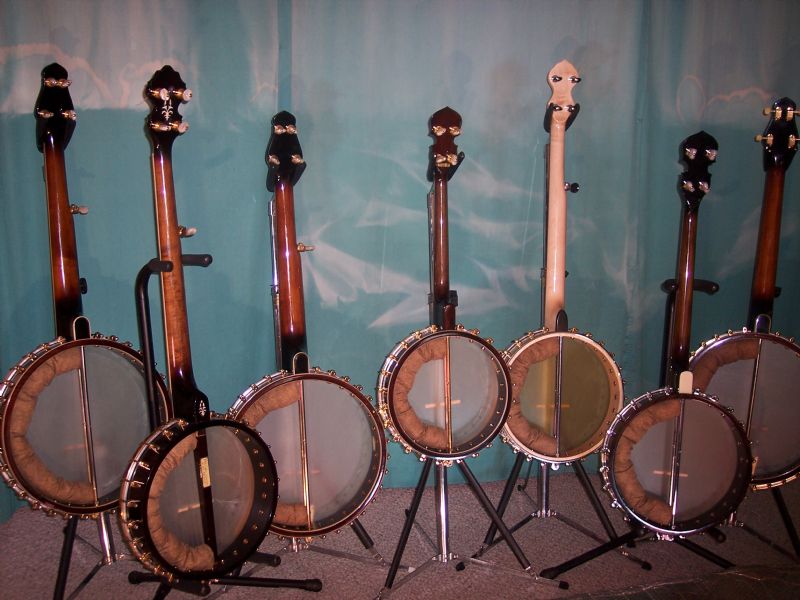
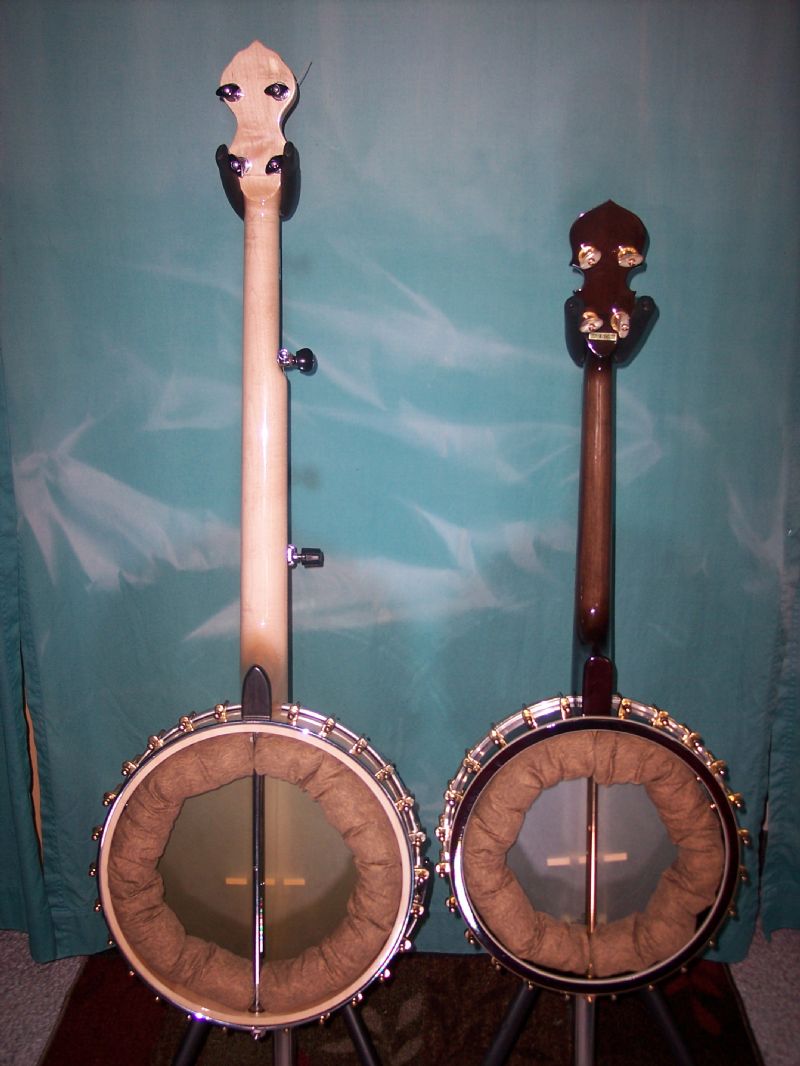
I was sent two Banjo Bolsters to review; one for my “main” banjo and one for my cello banjo, and I am loving them. In the past week, I’ve used them in a rockin’ jam as well as in a couple of solo videos, and they performed beautifully in both settings.
I’ve always stuffed my banjos, using all sorts of things from foam to rolled socks to stick-on gel. This beats them all. The Banjo Bolster somehow manages to let every note ring individually instead of stepping on the heels of the note that came before. My banjo sound seems subtly more concentrated, like a stock left on a low simmer for a few hours. (I’m a chef, so please forgive the cooking analogy.)
Glad to have them in my banjos, where I’m guessing they’ll be living for many years!"
--- Hilarie Burhans
quote:
Originally posted by Paul RobertsGreat, keep 'em coming, Ric!
The banjo community could do with some bolstering.
How about a Banjo Bolster art gallery?
Thanks Paul. Will do!!!

Edited by - Frailblazer on 06/29/2023 10:10:50
I recently saw a video from Hilarie Burhans about the Banjo Bolster. She’s a great teacher for me, and I’ve played and listened to the banjos she put the bolsters in. I’ve ordered them for my two banjos after hearing the difference they make. I am currently on tinterhooks as I await my package in the mail.
quote:
Originally posted by bigleafI recently saw a video from Hilarie Burhans about the Banjo Bolster. She’s a great teacher for me, and I’ve played and listened to the banjos she put the bolsters in. I’ve ordered them for my two banjos after hearing the difference they make. I am currently on tinterhooks as I await my package in the mail.
Hi Bill,
Thanks for your order!
Good news - your Banjo Bolsters will be in the next batch which we'll be working on next week. As soon as they ship you'll receive an email with the tracking number.
Thanks again Bill!
- Ric
Wouldn't a sock monkey do the same thing but with a bit more pinache?
You would need to use an organ grinder monkey. The Banjo Bolster is somewhat less expensive, weighs a little less, and doesn't require nearly as much maintenance.
Edited by - Paul Roberts on 06/29/2023 13:28:20
We just received this lovely email from a very happy customer. Made our day!! 
Out of respect for their privacy I have blurred their name and email address.

A very happy customer left us some awesome feedback yesterday on one of our YouTube videos!

Here are links to the first set of Banjo Bolster reviews posted right here on Banjo Hangout!!!
Russel Mofsky
Read Russel's Review
Mary Ann Gillespey
Read Mary Ann's Review
Chris Griffith
Read Chris' Review
Hilarie Burhans
Read Hilarie's Review
Marc Nerenberg
Read Marc's Review
David Chandler
Read David's Review
Ellen Torop
Read Ellen's Review
Paul Roberts
Read Paul's Review
- Ric
I've tried rags, socks, sponges (among other things) to enhance the sound of my banjo, but nothing works like the Bolster. I was expecting something heavier, but it's surprisingly light. I also like the fact that it is made to an exact size to fit my banjo and can be easily adjusted to get the sound I'm looking for. I highly recommend it.
Dan
A very happy customer in Belfast Ireland!

To all our Banjo Bolster Customers,
Deb and I just want to say how much we appreciate your emails. You guys are awesome!!!
Deb & Ric
Edited by - Frailblazer on 07/05/2023 07:45:11

Terms of Use | Privacy Policy | Privacy Consent (EU/GDPR Only)
Copyright 2026 Banjo Hangout. All Rights Reserved.


