DVD-quality lessons (including tabs/sheet music) available for immediate viewing on any device.
Take your playing to the next level with the help of a local or online banjo teacher.
Weekly newsletter includes free lessons, favorite member content, banjo news and more.
Premier Sponsors


|
Please note this is an archived topic, so it is locked and unable to be replied to. You may, however, start a new topic and refer to this topic with a link: http://www.banjohangout.org/archive/408387
erkj79 - Posted - 04/30/2026: 04:14:40
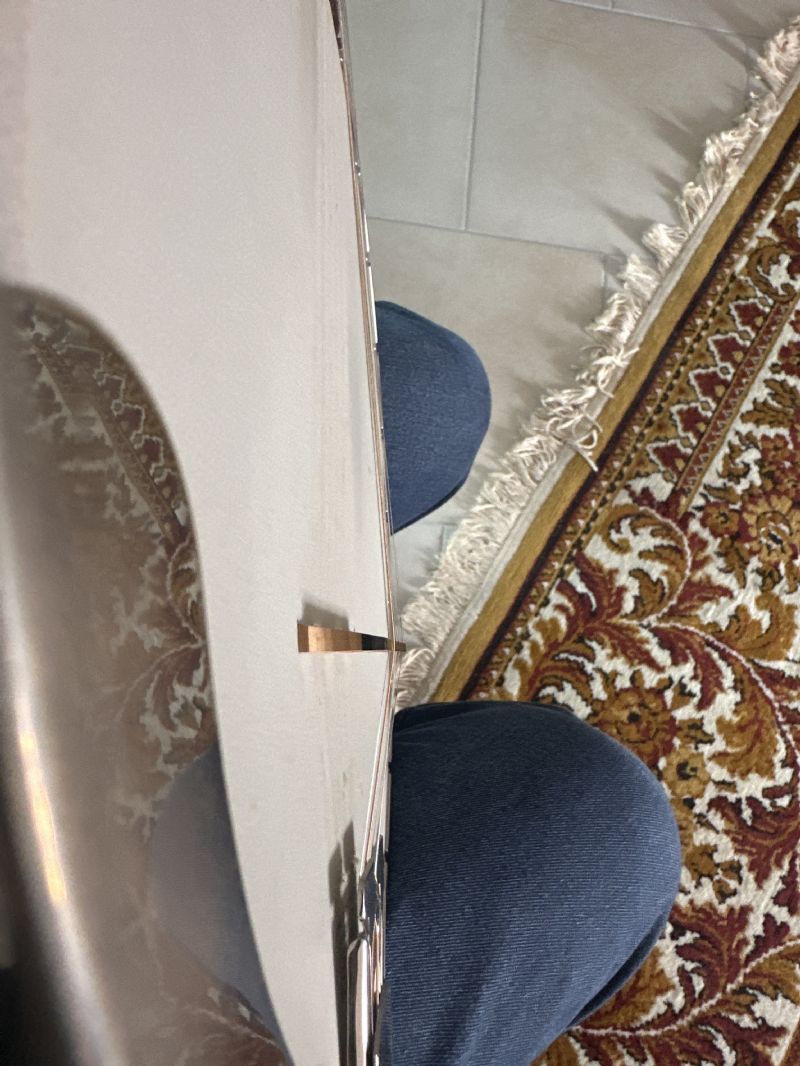
I have a recording king madison banjo that i found in a good will store and have a question on the correct orientation of the bridge. Having never seen this slanted design before, i am a bit befuddled.
lightgauge - Posted - 04/30/2026: 05:09:32
A fairly common design now. The square side goes toward the tailpiece with the slant facing the neck as yours is mounted. If you look at string pressure coming up from the tailpiece, this helps direct the pressure more downward into the head instead of trying to push the bridge over toward the neck. I have heard the idea came from fiddle bridges.
The Old Timer - Posted - 04/30/2026: 07:24:11
In years more recent than the Grover patent, the front-slanted 5 string banjo bridge was popularized by the Snuffy Smith bridge back in the 1980s or so. Along with the slant, they seemed "stouter" than the typical banjo bridge of those days with a broader/thicker ebony top.
The Snuffy Smith bridge sort of "swept" the bluegrass market. I remember the first time I saw one at a bluegrass festival and of course had to try one. I had them on all my banjos up until the 2010s or so. Among the many boutique bridges on the market nowadays a significant number copy the slanted front design.
sunburst - Posted - 04/30/2026: 08:22:14
More information coming than many will desire here:
Correctly fit violin/fiddle bridges do not lean toward the tailpiece. Instead, in order to correctly establish the 1.1mm top edge all the way across, a "chest" is carved on the neck side of the bridge.
When the thin edge of a wedge shaped object, like a violin bridge, it cut to a radius, the corners will be thicker than the center. In order to have that edge be the same all the way across, and thus establish equal string length, the "chest" is carved. Not only does that solve the edge thickness problem, but it also makes the bridge appear to slant back toward the tailpiece.
Perhaps the appearance of a violin bridge was the inspiration for leaning banjo bridges, but there are practical benefits. The bridge has less tenancy to slant forward (toward the neck) from tuning, and a leaning bridge more nearly bisects the angle of the strings across the bridge, which may or may not really help anything, but it generally makes us feel like it does! (ha)
Joel Hooks - Posted - 04/30/2026: 19:18:47
A. D. Grover was a structural engineer before, and while, becoming enamored by the banjo after a chance hearing of a pharmacy clerk practicing on his break.
The clerk was George L. Lansing.
Another part of that patent was hollow legs that were filled with rosin to keep the bridge from slipping.
Fred J. Bacon came up with a better solution by dipping the feet in glue and the emery.
RB3 - Posted - 05/01/2026: 06:33:54
Joel Hooks,
Thanks for the link to the patent. That explains why Deering hasn't patented the "slanted" bridge.
Joel Hooks - Posted - 05/01/2026: 10:25:38
quote:
Originally posted by RB3Joel Hooks,
Thanks for the link to the patent. That explains why Deering hasn't patented the "slanted" bridge.
Prior art or existing patents has not stopped them yet.
Terms of Use | Privacy Policy | Privacy Consent (EU/GDPR Only)
Copyright 2026 Banjo Hangout. All Rights Reserved.