DVD-quality lessons (including tabs/sheet music) available for immediate viewing on any device.
Take your playing to the next level with the help of a local or online banjo teacher.
Weekly newsletter includes free lessons, favorite member content, banjo news and more.
Premier Sponsors


|
Please note this is an archived topic, so it is locked and unable to be replied to. You may, however, start a new topic and refer to this topic with a link: http://www.banjohangout.org/archive/407590
RomanS - Posted - 03/03/2026: 04:57:37
I've only started learning Scruggs-style banjo a few months ago (been playing clawhammer & 2 finger thumb lead for a while, though), and I'm trying to use it with my band (where I also play dobro).
My biggest problem is speed, I still can't do straight 16th note rolls on faster songs (working on that...), and straight 8th note rolls often sound a bit clumsy/plodding.
I've tried making my playing more "interesting" by adding a bit of swing/syncopation to my forward rolls, sounds more "groovy"; the other guys in the band like it - but a local banjo picker (a good one - but very strictly classic bluegrass) recently critcized my playing - "That's not bluegrass!"
While I hear a predominance of "straight" 16ths and 8ths in the bluegrass "canon", I don't even have to look very long to find examples of the syncopated rolls I am doing on many "classic" bluegrass songs - and especially on many Earl Scruggs recordings - "Baby Blue Eyes", "While The Roses Bloom", and many more.
How do you guys feel - is this guy wrong, or am I.
For what it's worth, I'm not particularly concerned, I'm constantly trying to improve my playing, and I'm not stuck on following the "straight & narrow" path of bluegrass (as much as I love the classics), I also listen to a lot of "bluegrass-adjacent" music with banjo (Brothers Comatose, Jake Vaadeland, Billy Strings, OCMS,..)
Edited by - RomanS on 03/03/2026 05:05:21
stanleytone - Posted - 03/03/2026: 05:43:11
If you want to get that drive in your playing you HAVE to get those those notes youre talking about . At this point speed is not important. Whats impirtant is clear even spacing of notes and equal volume of each note hit.
Might i suggest that you get some ralph stanley in your playing. He relies mainly on forward roll type patterns and variations s .its a good foundation to get that drive in your right hand. I started out learning ralph and then branched out from there. But i credit ralph for the machine gun like sound that i wound up having.
O.D. - Posted - 03/03/2026: 06:51:17
Yrs ago we had some fairly heated discussions on this topic.
I think being able to play what ever rhythm is appropriate for what is being played is important
Personally I like the heavier rhythm ,bounce/ swing sounds. Certain pro players do it. I call it playing with attitude.
To each his own.
Good luck
E
Ira Gitlin - Posted - 03/03/2026: 07:07:55
Before the mid-1950s or thereabouts, nearly ALL American popular music settled into swing eighths at slower tempos. As tempos get faster, it becomes harder to maintain that swing, and at the faster end of the scale you're much more likely to have straight eighths. Exactly what the tempo will be where that transition occurs, I think, will vary from player to player.
KCJones - Posted - 03/03/2026: 07:09:50
Well first of all I'd ignore that guy. Every player has their own style. That guy's style is being a rude wannabe Scruggs. You can pick your own style though.
That said, "swing/bounce" can be good, but it will slow you down if you don't already have speed. You gain speed by playing it exactly on the beat. So I would say it's not that you shouldn't have some swing on your playing ever, but if you are struggling with speed you shouldn't have bounce/swing yet.
Remove the bounce/swing, play it straight, gain speed, add the swing back in.
Edited by - KCJones on 03/03/2026 07:11:49
chuckv97 - Posted - 03/03/2026: 07:17:23
On medium tempo songs the swing rhythm works, but I don’t think one could pull that off on faster tunes like Roll in m Sweet Baby’s Arms. However, since you’re still trying to advance your speed just keep the notes evenly spaced, as Gary mentioned, and gradually increase the tempo… “gradually” being the operative word.
Most audience members can’t tell if it’s “not the way Earl did it”, but you will run into the odd self-appointed BG banjo policeman!
eagleisland - Posted - 03/03/2026: 07:18:42
quote:
Originally posted by KCJonesWell first of all I'd ignore that guy. Every player has their own style. That guy's style is being a rude wannabe Scruggs. You can pick your own style though.
That said, "swing/bounce" can be good, but it will slow you down if you don't already have speed. You gain speed by playing it exactly on the beat. So I would say it's not that you shouldn't have some swing on your playing ever, but if you are struggling with speed you shouldn't have bounce/swing yet.
Remove the bounce/swing, play it straight, gain speed, add the swing back in.
^^^^ This.
RB3 - Posted - 03/03/2026: 07:47:54
I would urge you not to try to achieve syncopation by changing the time value of the notes you play. Instead, do it by using accents that don't occur on the beat.
One of the most important parts of the Scruggs/Bluegrass banjo idiom is the use of left-hand techniques such as hammer-ons, slides, pull-offs, chokes, and pinches. Those are techniques that provide emphasis or accent. One of the ways that Scruggs achieved syncopation was by executing those techniques just before or just after the beat. Do that, and you'll get desirable syncopated results.
Old Hickory - Posted - 03/03/2026: 08:20:18
quote:
Originally posted by RomanS. . . a local banjo picker (a good one - but very strictly classic bluegrass) recently critcized my playing - "That's not bluegrass!"
How do you guys feel - is this guy wrong, or am I.
Converts are often the most zealous. [I'm assuming your friend didn't grow up steeped in the bluegrass tradition in the foothills of the Eastern Alps. OK, I'm being provincial.]
All bluegrass music -- just as all music in general -- does not adhere to one type of rhythm.
Play what you want when it sounds right. But be aware of when it doesn't.
You mention OCMS as music you like. "Wagon Wheel" without some type of bounce would be dead. How would your friend play it? Conversely, Foggy Mountain Breakdown with bounce would sound strange, if not outright wrong.
- - - - - - - - - - -
I could be wrong, but I think the main difference between treating music as sixteenths or eighths is whether you feel or count the music as four beats per measure (eighths: 1 & 2 & 3 & 4 &) or two beats per measure: (1 E & a 2 E & a). I don't think one or the other has more or less swing or bounce than the other. But I could be wrong.
Tractor1 - Posted - 03/03/2026: 09:29:28
For me when I get in this frame of mind
I would build it into some arrangements entirely--to get the muscle memory ready to take hold elsewhere--for me swing varies from the most severe being a ''match up'' to playing 2 notes as triplets with the middle note left out --or less dramatic-- just hanging on a bit in the middle of an 8 note measure then slapping the last notes in a bit late and fast--the faster I play the more my ability to do this disappears -- celtic type tunes utilize a lot more of this --thus it has slower tempos but many more adventures in tone and ornaments --the longer a slide takes --the more it lives--
my opinion i ask no agreement
RomanS - Posted - 03/03/2026: 09:30:08
16ths as compared to the bass playing quarter notes on 1 and 3 (for banjo it's often notated as 8ths with a 2/4 time signature - that seems to be the most common pattern.
Thanks, guys , lots to think - I'm definitely working on getting my speed up, but I've got gigs with my band, where I have to get through with whatever I can do - making it up as I go...
Anybody got links for a good Ralph Stanley-style course? Currently doing Alison Brown's ArtistWorks course, working through the Scruggs book, and looking at various YouTube videos...
Old Hickory - Posted - 03/03/2026: 10:27:35
quote:
Originally posted by RomanS16ths as compared to the bass playing quarter notes on 1 and 3 (for banjo it's often notated as 8ths with a 2/4 time signature - that seems to be the most common pattern.
I think you have this reversed.
Both of the Scruggs books (20th and 21st centuries) and many other published tabs are notated in 16ths in 2/4 time, so there are two "beats" or pulses per measure -- 1 and 2 -- with eight 16th notes per measure.
A lot of tab is written in 8th notes and 4/4, counted as I wrote previously -- 1 & 2 & 3 & 4 &. Still eight notes per measure, with the pulses now on 1 and 3.
Sixteenth notes in 2/4 is probably more technically correct for bluegrass instrumentals and most fast instrumentals. Eighth notes in 4/4 is less cluttered visually, easier for learners without prior music-reading experience to understand, and maybe correct for slow- to moderate-paced vocal songs.
quote:
Originally posted by RomanS. . . I've got gigs with my band, where I have to get through with whatever I can do - making it up as I go...
Good for you! That's what it's all about!
Most of the audio and video I've posted in the media section of my profile is stuff I worked out or created on my own. A lot of what I played did not come out the exact same way every time. Very few of my posted examples were things I learned from tab. "Uncle Clooney" is one. Don't remember what else.
Be proud to do your own thing!
From Greylock to Bean Blossom - Posted - 03/03/2026: 11:05:54
quote:
Originally posted by RomanS16ths as compared to the bass playing quarter notes on 1 and 3 (for banjo it's often notated as 8ths with a 2/4 time signature - that seems to be the most common pattern.
Thanks, guys , lots to think - I'm definitely working on getting my speed up, but I've got gigs with my band, where I have to get through with whatever I can do - making it up as I go...
Anybody got links for a good Ralph Stanley-style course? Currently doing Alison Brown's ArtistWorks course, working through the Scruggs book, and looking at various YouTube videos...
Look for the following DVD/tapes: 1. Steve Sparkman: Stanley Style Banjo or 2. clinchmountainecho.co.uk/artic...style.php or 3. amazon.com/DVD-Banjo-Ralph-Sta...000BGPL2K 4. Follow BHO member Gary Bates. HIs name on the Hangout is Stanley Tone. He has posted a bunch of accurate Ralph Stanley tabs and can play it great himself.
ken
RomanS - Posted - 03/03/2026: 11:19:19
quote:
Originally posted by Old Hickoryquote:
Originally posted by RomanS16ths as compared to the bass playing quarter notes on 1 and 3 (for banjo it's often notated as 8ths with a 2/4 time signature - that seems to be the most common pattern.
I think you have this reversed.
Both of the Scruggs books (20th and 21st centuries) and many other published tabs are notated in 16ths in 2/4 time, so there are two "beats" or pulses per measure -- 1 and 2 -- with eight 16th notes per measure.
A lot of tab is written in 8th notes and 4/4, counted as I wrote previously -- 1 & 2 & 3 & 4 &. Still eight notes per measure, with the pulses now on 1 and 3.
Sixteenth notes in 2/4 is probably more technically correct for bluegrass instrumentals and most fast instrumentals. Eighth notes in 4/4 is less cluttered visually, easier for learners without prior music-reading experience to understand, and maybe correct for slow- to moderate-paced vocal songs.
quote:
Originally posted by RomanS. . . I've got gigs with my band, where I have to get through with whatever I can do - making it up as I go...
Good for you! That's what it's all about!
Most of the audio and video I've posted in the media section of my profile is stuff I worked out or created on my own. A lot of what I played did not come out the exact same way every time. Very few of my posted examples were things I learned from tab. "Uncle Clooney" is one. Don't remember what else.
Be proud to do your own thing!
Of course you're right! Math has never been my strong suit...
At any rate, what I meant is that I'm stuck with playing half as many notes than I'm supposed to for most fast songs...
Working on it!
Also, until I'm able to solo using melody notes combined with rolls, I'm currently trying to use "stock" Scruggs licks (like the Six-White-Horses lick) for soli breaks, or transferring guitar lines, like the classic G run, to banjo.
Also trying to use slides & hammer-ons & pull-offs to make rolls more "interesting".
Edited by - RomanS on 03/03/2026 11:23:16
Texasbanjo - Posted - 03/03/2026: 11:22:23
It's your banjo and your band, so play what you like, the way you like it. Don't let someone dictate what they think should be done.
Sure, go ahead and work on those straight ahead rolls, but don't let them dictate how you should play everything. I agree with what's been said above: on breakdowns and fast songs, straight ahead may be the thing to do and sound right. On the slower songs, if you like swing/bounce, go for it.
RomanS - Posted - 03/03/2026: 11:24:22
quote:
Originally posted by From Greylock to Bean Blossomquote:
Originally posted by RomanS16ths as compared to the bass playing quarter notes on 1 and 3 (for banjo it's often notated as 8ths with a 2/4 time signature - that seems to be the most common pattern.
Thanks, guys , lots to think - I'm definitely working on getting my speed up, but I've got gigs with my band, where I have to get through with whatever I can do - making it up as I go...
Anybody got links for a good Ralph Stanley-style course? Currently doing Alison Brown's ArtistWorks course, working through the Scruggs book, and looking at various YouTube videos...Look for the following DVD/tapes: 1. Steve Sparkman: Stanley Style Banjo or 2. clinchmountainecho.co.uk/artic...style.php or 3. amazon.com/DVD-Banjo-Ralph-Sta...000BGPL2K 4. Follow BHO member Gary Bates. HIs name on the Hangout is Stanley Tone. He has posted a bunch of accurate Ralph Stanley tabs and can play it great himself.
ken
Thanks - I'll check those out!
Old Hickory - Posted - 03/03/2026: 11:43:57
quote:
Originally posted by RomanSAlso, until I'm able to solo using melody notes combined with rolls, I'm currently trying to use "stock" Scruggs licks (like the Six-White-Horses lick) for soli breaks, or transferring guitar lines, like the classic G run, to banjo.
Also trying to use slides & hammer-ons & pull-offs to make rolls more "interesting".
That's also what it's all about. So more good for you.
Seriously, you're discovering an important aspect of soloing on the banjo. How to get beyond rolling on chords.
I've posted numerous times about bluegrass banjo playing the "core" melody. In vocal songs, this might be only the first note or lyric syllable of a measure. Certainly the note where a chord changes. To play a recognizable melody surrounded by roll notes, you don't need to play the right note on every syllable of the melody, which means a lot of the "passing" notes -- many of which might be outside a current chord -- can be ignored. While you're rolling, you'll hit some note where those syllables occur. But it doesn't matter if they're the actual sung notes -- as long as you hit enough of the "core" notes that actually express the melody.
In Rocky Top, for example, the core melody might happen on the syllables:
Wish . . . I . . . on . . . Rock- . . . back . . . Ten- . . . hills. Etc.
Of course, some songs can be busier and maybe trickier. Nine-Pound Hammer, for example. But that's one where licks can do a great job of substituting for melody as you're discovering for yourself.
Check out former Hangout member John Boulding's free "Lick of the Week" lessons #121 - 124 on "Understanding Licks." You can maybe skip #121-What is a Lick? and watch the others: Licks as Filler, Substituting Licks, and Improvising with Licks. "Substituting Licks" means substituting licks for melody -- which is exactly what you're discovering for yourself.
Here's the top of the Lick of the Week Index page. Over 170 free lessons. John recently posted a new lesson for the first time in years.
teetommy - Posted - 03/03/2026: 11:44:53
I associate swingy bouncy playing with northern bluegrass...Boston and NYC in the 60s and 70s. Bela Fleck talks about moving to Kentucky to learn the more even precise style of JD Crowe and shed the Trischka-sound he had developed. I believe the bouncy sound of Allen Shelton was a huge influence on that northern bluegrass style.
If you don't think Scruggs has swing his playing, listen to Foggy Mtn Special, which is cribbing from In the Mood, the most famous swing band song ever.
RomanS - Posted - 03/03/2026: 12:27:20
quote:
Originally posted by teetommyI associate swingy bouncy playing with northern bluegrass...Boston and NYC in the 60s and 70s. Bela Fleck talks about moving to Kentucky to learn the more even precise style of JD Crowe and shed the Trischka-sound he had developed. I believe the bouncy sound of Allen Shelton was a huge influence on that northern bluegrass style.
If you don't think Scruggs has swing his playing, listen to Foggy Mtn Special, which is cribbing from In the Mood, the most famous swing band song ever.
Yeah, I noticed that JD Crowe plays "straight" most of the time, whereas Earl Scruggs used to "swing" a whole lot more - I'm currently listening to this album a lot, and it seems that he is NOT playing "straight" on every other song:
share.google/RXDAed7etifdoFnq7
RomanS - Posted - 03/03/2026: 12:28:31
quote:
Originally posted by Old Hickoryquote:
Originally posted by RomanSAlso, until I'm able to solo using melody notes combined with rolls, I'm currently trying to use "stock" Scruggs licks (like the Six-White-Horses lick) for soli breaks, or transferring guitar lines, like the classic G run, to banjo.
Also trying to use slides & hammer-ons & pull-offs to make rolls more "interesting".
That's also what it's all about. So more good for you.
Seriously, you're discovering an important aspect of soloing on the banjo. How to get beyond rolling on chords.
I've posted numerous times about bluegrass banjo playing the "core" melody. In vocal songs, this might be only the first note or lyric syllable of a measure. Certainly the note where a chord changes. To play a recognizable melody surrounded by roll notes, you don't need to play the right note on every syllable of the melody, which means a lot of the "passing" notes -- many of which might be outside a current chord -- can be ignored. While you're rolling, you'll hit some note where those syllables occur. But it doesn't matter if they're the actual sung notes -- as long as you hit enough of the "core" notes that actually express the melody.
In Rocky Top, for example, the core melody might happen on the syllables:
Wish . . . I . . . on . . . Rock- . . . back . . . Ten- . . . hills. Etc.
Of course, some songs can be busier and maybe trickier. Nine-Pound Hammer, for example. But that's one where licks can do a great job of substituting for melody as you're discovering for yourself.
Check out former Hangout member John Boulding's free "Lick of the Week" lessons #121 - 124 on "Understanding Licks." You can maybe skip #121-What is a Lick? and watch the others: Licks as Filler, Substituting Licks, and Improvising with Licks. "Substituting Licks" means substituting licks for melody -- which is exactly what you're discovering for yourself.
Here's the top of the Lick of the Week Index page. Over 170 free lessons. John recently posted a new lesson for the first time in years.
Thanks - I'll check it out! All the links from this thread will keep me busy for a while...
Tractor1 - Posted - 03/03/2026: 12:45:01
Allen Shelton has been mentioned more than most on his non straight playing--
my keyboards and drum machine all have shuffle rhythms for practice ---
some grass can be an ohm-pah 2 beat some can hit a differing 4-beat which might be slower and more of a shuffle --I forget the song name where big Mon had a 2 beat verse but a 4 beat chorus
Old Hickory - Posted - 03/03/2026: 12:47:44
I guess this bouncy guy is doing it all wrong. That's no way to play banjo, right?
RomanS - Posted - 03/03/2026: 12:55:43
Of course 10 minutes after posting about JD Crowe playing straight motof the time, this song with a very swinging/bouncy banjo came up in my playlist... ??
youtu.be/-08kMSccq1I?si=mTLp3QBq2cgGb0bE
chuckv97 - Posted - 03/03/2026: 13:40:19
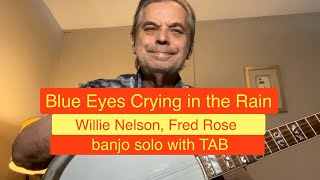
Here’s a swing-y rolls version of a Fred Rose song that Willie Nelson recorded…
RomanS - Posted - 03/03/2026: 15:24:32
quote:
Originally posted by Old HickoryCheck out former Hangout member John Boulding's free "Lick of the Week" lessons #121 - 124 on "Understanding Licks." You can maybe skip #121-What is a Lick? and watch the others: Licks as Filler, Substituting Licks, and Improvising with Licks. "Substituting Licks" means substituting licks for melody -- which is exactly what you're discovering for yourself.
Here's the top of the Lick of the Week Index page. Over 170 free lessons. John recently posted a new lesson for the first time in years.
Now that I'm home from work, I was finally able to check out this link - wow, what a gold mine! There's so much stuff on YouTube, it's often hard to filter out the useful channels - and this is definitely very useful!
As a guitar player, I'm mentally organizing my soloing through the CAGED system, coming from chord positions and chord partials to develop melodies and licks. On the banjo, most of the licks I found in beginner instruction were down the neck, open position ones - but this guy has a lot of closed position, up the neck licks, coming from the bar, D and F chords shapes, easy to move around. That's extremely useful, I think I'm dedicating the next weeks of practicing to work through this!
BG Banjo - Posted - 03/04/2026: 12:07:15
As a long time Bluegrass guitar player thrown into the pit when our banjo player quit, I became a banjo player on the accelerated learning program, which sounds maybe like the OP. I think firstly I would address the fellow who comments on what is "bluegrass" and what is not. As a member of a couple of bluegrass associations and having played "bluegrass" for a long time, there are those who have a narrow definition of what is and what isn't and are very vocal about it, then there is the rest of us.
Okay, I do not speak from years of experience, although I am discovering that there are those with a year's experience twenty times over, and then there are those with three years experience. But I spent a whole winter learning the forward roll, the inside roll, and the forward and reverse roll. It appears to me, and feel free to correct me if you don't agree, that other than songs in the Bile Those Cabbage Down category, you can't play a song in just one of those rolls. You combine the techniques learned in those three rolls, along with slides, hammer ons, and pull offs to create some rolling rhythm that goes with the song, and in my case, I try to hit as many melody notes as I can in the process. And if you can throw a little swing into it, that's just a little more flavoring.
The band that I started in has morphed. At first it was country/bluegrass, but it left that barn a long time ago. It still has that, but the music styles have expanded and changed. And you see that same thing in bluegrass today when you listen to Bluegrass Junction on Sirius radio. When musicians like Rick Faris and Jaelee Roberts are getting awards for The Power of Love and Stuck in the Middle with you, being able to adapt to different styles of music is where you have to be, and you can't just be stuck with just a forward roll to do that.
Anyway, I really think that if the other's in the band like what you are doing, that's really where you want to be. There in no better compliment than the mandolin player looking over at you after a song and saying, "nice job." That's really all you need to know.
Edited by - BG Banjo on 03/04/2026 12:15:53
Old Hickory - Posted - 03/05/2026: 16:07:53
quote:
Originally posted by RomanSAs a guitar player, I'm mentally organizing my soloing through the CAGED system, coming from chord positions and chord partials to develop melodies and licks. On the banjo, most of the licks I found in beginner instruction were down the neck, open position ones - but this guy has a lot of closed position, up the neck licks, coming from the bar, D and F chords shapes, easy to move around. That's extremely useful, I think I'm dedicating the next weeks of practicing to work through this!
Although it's not called CAGED on the banjo, I think the underlying concept of moving up and down the neck to the next position/location/inversion of the chord is the same. You've identified it with bar, D and F shapes.
I'm sure John has lesson on up-the-neck licks in his many videos. One way to get the hang of moving from one shape or location to another is to simply do that in an exercise. G for example: Choose any full-measure roll patter you know. Preferably one that starts on 3rd string. Start on G-barre position, 3rd string open. Then G F shape, then G D-shaper (at frets 7-9), then G bar at 12th fret, then G F-shape at 15-17, and finally the highest G D-shape. Then do the same thing -- same roll pattern -- through those inversions back down the neck.
Then do it for all the chords in the harmonized G major scale: Am, Bm, C, D, Em, F#dim. Start at the lowest shape/inversion of each chord, move to each higher one until you reach the highest that can be fretted.
Granted, the picking pattern you're doing amy not be the way you would do this movement in a song, but it will get you used to moving up and down the neck on a single chord, getting to the locations where you can make music with it.
Then you can do the same type of repeating roll pattern exercise to move up and down through the chord scale, not just up and down on one chord.
Have fun.
RomanS - Posted - 03/06/2026: 00:49:58
Thanks - yeah, I've been doing those exercises; also been incorporating those chord inversions into my rhythm playing, trying to stay out of the way of a soloist by playing in a different, higher or lower register, thsn they are...
steve davis - Posted - 03/06/2026: 13:16:51
Learn a tab of someone's break that is the style you want.
This isn't for locking you into that tab,but for getting you into a different frame of mind.
RB-1 - Posted - 03/07/2026: 00:38:22
I'd happily support Steve's advice, adding that a soundfile that you can slow down would be a crucial part of the process.
Tab alone is not capable of getting across the finer details that make the music.
It's not different from sheet music. That's why there are conductors and music teachers.
In Bluegrass, most of us are self taught.
By literally learning from others, we're gathering various influences, eventually resulting in our own 'style'.
steve davis - Posted - 03/08/2026: 17:13:01
Tab gives you a solid foundation in what you are searching for.The finer points have to come from your own learning experience,realizations and time.
RomanS - Posted - 03/09/2026: 11:11:09
Yeah, there aren't a lot of tabs for our setlist, anyway, we're doing covers of lesser known songs, as well as a bunch of originals our singer wrote.
I think except for "Sitting On Top Of The World" and "Long Journey Home", I haven't found any tabs I could use yet...
Old Hickory - Posted - 03/09/2026: 12:25:15
quote:
Originally posted by RomanSI think except for "Sitting On Top Of The World" and "Long Journey Home", I haven't found any tabs I could use yet...
You might if you think of tabs not as transcriptions for specific songs but as banjo vocabulary for other songs. Mine tabs for the choice measures. Ideas of things to do on certain chords in certain situations.
Depends on the source and quality of the tab, of course. Tabs by, or purporting to transcribe the playing of, noteworthy artists can provide a quick education into elements of their style. Easy, and sometimes free, way to grab licks.
I'm not suggesting not trying learn from others by ear. Just saying that sometimes we don't have time. There's nothing wrong with reading how someone does something instead of figuring it all out for yourself.
From Greylock to Bean Blossom - Posted - 03/09/2026: 18:51:28
quote:
Originally posted by RomanSquote:
Originally posted by Old Hickoryquote:
Originally posted by RomanSAlso, until I'm able to solo using melody notes combined with rolls, I'm currently trying to use "stock" Scruggs licks (like the Six-White-Horses lick) for soli breaks, or transferring guitar lines, like the classic G run, to banjo.
Also trying to use slides & hammer-ons & pull-offs to make rolls more "interesting".
That's also what it's all about. So more good for you.
Seriously, you're discovering an important aspect of soloing on the banjo. How to get beyond rolling on chords.
I've posted numerous times about bluegrass banjo playing the "core" melody. In vocal songs, this might be only the first note or lyric syllable of a measure. Certainly the note where a chord changes. To play a recognizable melody surrounded by roll notes, you don't need to play the right note on every syllable of the melody, which means a lot of the "passing" notes -- many of which might be outside a current chord -- can be ignored. While you're rolling, you'll hit some note where those syllables occur. But it doesn't matter if they're the actual sung notes -- as long as you hit enough of the "core" notes that actually express the melody.
In Rocky Top, for example, the core melody might happen on the syllables:
Wish . . . I . . . on . . . Rock- . . . back . . . Ten- . . . hills. Etc.
Of course, some songs can be busier and maybe trickier. Nine-Pound Hammer, for example. But that's one where licks can do a great job of substituting for melody as you're discovering for yourself.
Check out former Hangout member John Boulding's free "Lick of the Week" lessons #121 - 124 on "Understanding Licks." You can maybe skip #121-What is a Lick? and watch the others: Licks as Filler, Substituting Licks, and Improvising with Licks. "Substituting Licks" means substituting licks for melody -- which is exactly what you're discovering for yourself.
Here's the top of the Lick of the Week Index page. Over 170 free lessons. John recently posted a new lesson for the first time in years.
Thanks - I'll check it out! All the links from this thread will keep me busy for a while...
What was the new lesson John posted? His LOTW is an amazing resource that has been not mentioned enough.
thanks,
Ken
Old Hickory - Posted - 03/10/2026: 11:45:14
quote:
Originally posted by From Greylock to Bean Blossom
What was the new lesson John posted? His LOTW is an amazing resource that has been not mentioned enough.
Playing in the Key of D, Part 2.
YouTube today says "Posted 2 weeks ago."
He looks old enough for this to be current. I don't think it's a repost of an old one. I didn't watch it all, so I don't know if he says anything about being back to posting after the long absence.
chuckv97 - Posted - 03/10/2026: 11:56:10
John says “welcome back” ,, in the coments he mentions in a reply that Recording King is out of business now, so it must be a recent vid,, plus he’s in his bedroom now rather than the shop as in his older ones.
steve davis - Posted - 03/13/2026: 09:34:20
What's learned from a tab carries over into aspects of a great many tunes.
Terms of Use | Privacy Policy | Privacy Consent (EU/GDPR Only)
Copyright 2026 Banjo Hangout. All Rights Reserved.