DVD-quality lessons (including tabs/sheet music) available for immediate viewing on any device.
Take your playing to the next level with the help of a local or online banjo teacher.
Weekly newsletter includes free lessons, favorite member content, banjo news and more.
Premier Sponsors


|
Please note this is an archived topic, so it is locked and unable to be replied to. You may, however, start a new topic and refer to this topic with a link: http://www.banjohangout.org/archive/406351
Redbone - Posted - 12/07/2025: 18:07:14
I'm considering changing my mindset from 3 finger to old style clawhammer and need input from the experts as to the better banjos to consider. Obviously, the main factors are good quality for the cost and more obviously sound. Any advice from you long-timers? Much appreciated.
pinenut - Posted - 12/07/2025: 18:16:50
quote:
Originally posted by RedboneI'm considering changing my mindset from 3 finger to old style clawhammer and need input from the experts as to the better banjos to consider. Obviously, the main factors are good quality for the cost and more obviously sound. Any advice from you long-timers? Much appreciated.
Play your current 'bluegrass' banjo(s) for clawhammer. Give it time; you will eventually understand if you actually want a different banjo and what it should be...
Decent banjos with a proper setup sound good. The play style and banjo type is not as important as we believe (and tell each other).
Now then, if your current banjo has unsatisfying tone, hoo-doggy, let's round that up.
Edited by - pinenut on 12/07/2025 18:28:33
Bill Rogers - Posted - 12/07/2025: 18:41:27
Pinenut has a reasonable argument. But if you want to continue playing bluegrass, I would say you need a different banjo because clawhammer banjos are set up differently, particularly the strings. If you are abandoning bluegrss, then your present banjo will be fine; ilt ljust needs a new setup. … That said—you need to decide what sound you want, thunky/plunky or crisp and snappy. For the former you likely would want a banjo with no tone ring or a wooden one; for the latter a tone-ring banjo like a Whyte Laydie or Tubaphone. Once you figure all this out, then ask again with your more refined focus. There are plenty of good banjos, both new and used, available.
KCJones - Posted - 12/07/2025: 18:57:11
How about a 60s Gibson Mastertone Archtop?
Edited by - KCJones on 12/07/2025 19:11:43
Redbone - Posted - 12/07/2025: 19:28:51
I have a very nice Sullivan v35. Not looking to buy...yet. Just researching.
writerrad - Posted - 12/07/2025: 19:37:08
When Tom Ashley was lured back into performing by running into Mike Seeger and Ralph Rinzler at Galax in the late 1950s, someone came upon him claiming to have for sale Charlie Poole's old Mastertone. We know Charlie's family retrieved his banjos and Ashkey was probably being ripped off. I happen to know Mrs. Ashley was not pleased with the big bucks from one of his first old time music performances that had gone to that purchase,.
There is absolutely no reason why people identify old time music playing claw hammer and otherwise with open back banjos. People like Tom Ashley, Uncle Dave Macon, Gus Cannon, Rufus Kasey, Elizabeth Cotten, Dock Boggs, Doc Watson, Roscoe Holcombs and so many masters of old time music played resonator banjos.
There is every sign that once resonator banjos of the modern type started to be available in the early 1920s when Paramount began offering them, that actual old time musicians especially band entertainers, and especially finger picking banjoists considered open backs the way to go. That an open back is required for old time music is an affectation encouraged by old time revivalists who come out of the folk music movement, but that was not at all held by people who were playing old time music when it was current music.
Edited by - writerrad on 12/07/2025 19:45:41
writerrad - Posted - 12/07/2025: 19:48:52
quote:Bill speaks wisely, both if you are going at it, no banjoist can own one banjo. I have known hundreds if not thousands of true banjoists in old time music over the past 25 years and i can only think of two individuals who own one banjo who are really banjo players not fiddlers or guitarists or singers or yodellers trying to be classy by trying to plunk a banjo, The answer is never one banjo.
Originally posted by Bill RogersPinenut has a reasonable argument. But if you want to continue playing bluegrass, I would say you need a different banjo because clawhammer banjos are set up differently, particularly the strings. If you are abandoning bluegrss, then your present banjo will be fine; ilt ljust needs a new setup. … That said—you need to decide what sound you want, thunky/plunky or crisp and snappy. For the former you likely would want a banjo with no tone ring or a wooden one; for the latter a tone-ring banjo like a Whyte Laydie or Tubaphone. Once you figure all this out, then ask again with your more refined focus. There are plenty of good banjos, both new and used, available.
writerrad - Posted - 12/07/2025: 20:00:08
quote:Youhave some fine looking banjos in your picture that certainly a person could play some wonderful clawhammer upon A person who has achieved such quality in banjo has obviously spent some time watching the videos of the Flatt Scruggs Martha White Show. When came time for some claw hammering, because Earl told people he could just never figure that out, Paul Warren put down his fiddle and claw hammered on Earl's Gibson and it sounded pretty darn good.
You dont need an open back to play claw hammer. Great players play on RBs of every type and description. If I were you I would try to get into claw hammering with your RBs and see if that is sufficient. If not it is better to start checking out open backs with a little claw hammer knowledge under your belt, a bit of taste. Go to an old time jam or groupyou can find, and see if you can try out what banjos people have to see one you like, unless there is a store or something near where you live or go to.
Even more than in bluegrass, if you are playing old time banjo, you are going to find different banjos are better for different clawhammering.
Mickhammer - Posted - 12/07/2025: 23:20:43
I'm no long-timer, which is why I might actually try to answer your question...
it really depends on your budget and what's available nearby. If you've got a banjo shop near you, then head over there and play a bunch until you find the one that sings when you play it. If you've not, then, you'll have to cross your fingers and order online, hope for the best. Personally, I have a 600 euro (more in $$$) limit on what I'll spend on an instrument sight-unseen, so that limits me a lot.
But I just picked up a used Gretsch Dixie Special (G9455, I believe) for 200 euros, and I'm surprised at how great it is (it needed a setup badly and I put nylguts on it). I've all but stopped playing my Goodtime, which I bought just a few weeks earlier, which can only take steel strings because it has a spike instead of a pip. Decent banjo nonetheless. But that Gretsch has the frailing scoop, which is something to look out for when you're playing clawhammer - it's not essential, but it allows you to vary the sound a bit.
If I had the budget and a shop nearby, I'd go for an Ome, since I've never heard one sound bad and they're beautiful. I like the looks of Pisgah's instruments too. It's a banjo desert where I live, so I've never had a chance to play a high-end instrument, so I can't say if there's truly a difference in playability/quality. Cheaper banjos tend to be maple, which has a brighter tone than other woods.
Also, tone rings matter - a banjo without a tone ring will sound different from a banjo with a tone ring. And different tone rings sound... different. I had a Gold Tone MM-150 with a white Ladye style tone ring - I could never get used to its sound. Tried it with nylguts and it sounded lifeless. The Gretsch has a simple rolled brass tone ring and once I put on the nylguts, it just sings. If you're looking for that clawhammer plunk, there it is.
If weight is a concern for you, then look for a banjo with no tone ring, that adds a lot. Since you're coming from bluegrass, pretty much any open back is going to feel lighter than a resonator banjo anyway.
I do agree that it's impossible to have just one banjo. But who care what anyone else used to play? Play what feels good to you.
Edited by - Mickhammer on 12/07/2025 23:26:28
tbchappe - Posted - 12/08/2025: 04:51:16
You can use a resonator banjo for learning any style.
There’s no need to buy another one.
Blaine
Mickhammer - Posted - 12/08/2025: 04:52:56
quote:
Originally posted by tbchappeYou can use a resonator banjo for learning any style.
There’s no need to buy another one.
Blaine
That's not what he's asking. I've never heard of musicians discouraging other musicians from buying more gear before. Is this called anti-GAS? 
Redbone - Posted - 12/08/2025: 05:06:23
When someone simply asks, "what time is it?" Does get really want to know how to build a clock?
Let me rephrase. Who makes or made the better built and sounding open back banjos? I do appreciate all the input, regardless.
KCJones - Posted - 12/08/2025: 05:24:38
I'll answer the question.
Bart Reiter.
Get a Bart Reiter banjo. Pick your flavor, it doesn't really matter because they're all perfect. He made the best open back banjos since Vega in the 20s and nobody has surpassed him yet. I've got a couple. No they're not for sale.
If not that, go buy a Vega Whyte Laydie from the 1920s.
Anything other than those options will be 2nd best.
Yes this is my opinion, but this is the rare case where an opinion is actually factually correct. 9/10 dentists agree. No rebuttals, please. Don't @ me.
Edited by - KCJones on 12/08/2025 05:39:25
Ziradog - Posted - 12/08/2025: 05:32:09
Lots of good banjos out there, and at least one is right for you. Until you find it, do as KCJones suggested. bart made a lot of banjos, all were high quality & mainly fairly middle of the road instruments. They hold resale value pretty well too.
pinenut - Posted - 12/08/2025: 07:30:20
quote:
Originally posted by RedboneWhen someone simply asks, "what time is it?" Does get really want to know how to build a clock?
Let me rephrase. Who makes or made the better built and sounding open back banjos? I do appreciate all the input, regardless.
Hi Steven,
The 'known' continental American makers are consistently very good; check your budget and throw a rock.
A higher budget with the domestic makers equates to more bling and inlay; the engines sound roughly the same, type for type.
note: a total rim depth of about 3-1/2" is the max that fits in a case, deep rims are worth finding
Bob Buckingham - Posted - 12/08/2025: 07:37:47
One of the beauties of old time banjo, either clawhammer or finger style is that you do not need a state of the art banjo to play it. The old timers had what they could find. Sometimes it was a resonator model, sometimes it wasn't. Things can get out of hand but there is no need for it. Some of the recordings that I love most are less than optimum instruments. A younger player than myself, Joe Decosimo, has made a couple of recordings on a bottle top open back. These banjos have aluminum pots and sound good. You can find some of his music here. The field recordings I have are often of people playing Harmony, Kay, Supertone and other lower end banjos and their sound is always a good. I'd go out and play as many banjos as you can. Play the one you have. I had an arch top resonator banjo that I bought in the Bay area when I mustered out of the military and took it across the country with me. There are times I wish I still had it. It was great for any style, maybe not loud enough for bluegrass but it always sounded good. Another favorite was a Japanese made Vega. I recorded an album with that one. There are a lot of opinions out there but your gut will tell you when you found one that fits you.
The Old Timer - Posted - 12/08/2025: 09:24:20
I'm with KCJones. A Bart Reiter. I dabbled in clawhammer from the inspiration of Don Stover. I "learned" this on a Mastertone. That's how Stover played. But when I decided to get more seriously into it after buying one of the County Sales Clawhammer Banjo LPs, I went searching and discovered Reiter's earlier CONVERSIONS of old Vega open back tenors into 5 strings. This was around 1990. The perfect compromise of sound, cost and IMPROVED string action height.
Of course Reiter graduated to making his own complete banjos and moved out of the conversion business. I bought a Whyte Laydie Style R (4 string conversion) that Reiter made a nice WL No 2 neck for. He made his necks to have a more modern (lower) action than an original Vega or Fairbanks 5 string. By the way, with new modern geared tuners instead of the usual friction tuners of 1920s Fairbanks by Vegas.
If you can find one (used of course), nab it. You can ALWAYS resell it.
Brooklynbanjoboy - Posted - 12/08/2025: 10:11:23
When you'd ask George Gibson "what's the best banjo for me?" . . . he'd often answer: The one you have in your lap right now . . .
Mickhammer - Posted - 12/08/2025: 23:17:12
I dunno... I interpret this question as "what should I look for in an open back" rather than "what brand should I buy".
Because brands don't matter much. Back when I played guitar, as much as I loved the look of Fender's guitars, I just didn't like playing them. And if someone had said, "go get a Gibson Les Paul and don't think about it", I would have been pissed, because those things weigh a ton and I would have hated it. I eventually found my way to headless guitars - but if I told you just to close your eyes and buy a Steinberger, you'd probably roll your eyes at what came in the mail.
I'm sure this Reiter fellow makes fine banjos though.
Paul R - Posted - 12/11/2025: 10:41:02
I'd go for playability first. My number one banjo has a wider neck which makes playing easier - for me.
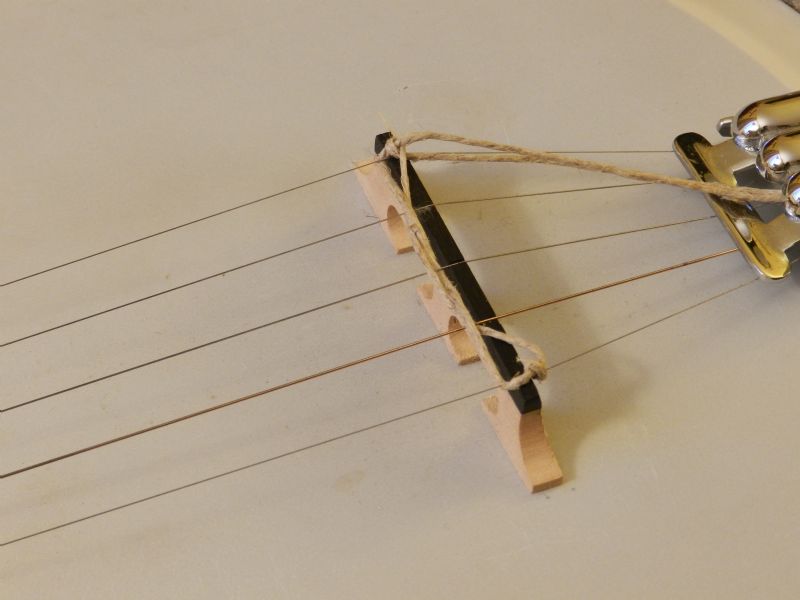
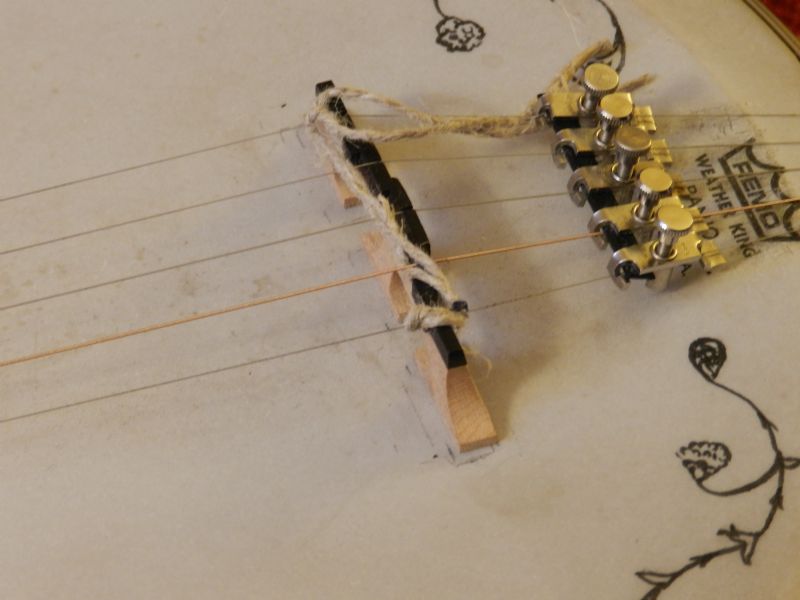
Tom Collins remarked that tone isn't such an issue for him because that can be adjusted. But playability, to me, has a more limited adjustability. I have an arch top resonator banjo that I also use for clawhammer. It has been adjusted for a more clawhammer friendly (to me) tone. I have a Silvertone that cost me sixty bucks that I think has, now, a reasonable clawhammer tone. I also run a length of twine on each to get a reasonable facsimile of gut string tone when I want to (and undo to get back to steel strings) . One can also adjust one's playing to work on tone.
It's not always the banjo itself, but what you do in adjusting and in playing. Head material, head tension, bridge, tailpiece, string choice (and gauge), tuners, are tweaks that will make a huge difference. (I put geared tuners on a fretless mountain banjo and it completely changed the tone - not the smartest move.) Even the room you play it in will affect the sound.
There's one plus that I always mention for resonator banjos - the resonator keeps all those bits of hardware from digging into your lap.
writerrad - Posted - 12/11/2025: 11:07:24
Blaine is not discouraging anyone.
Great clawhammer banjo has been played on resonator banjos like the questioner plays for more than 100 years, since the Paramount/Gibson style external resonator started being popularized. Great masters of clawhammer banjo like Dave Macon, Clarence Ashley, Gus Cannon, Odell Thompson and other masters of claw hammer, played defining clawhammer on Gibson Resonator banjos once they were available.
Mike Seeger told me that most of his banjo playing on the original 1950s and early 1960s New Lost City Ramblers recordings was done with a Gibson RB he owned, with the resonator on or off depending on the sound of the original old time recording he sought to replicate.
It is a myth of the post 1950 old time revival that open back banjos are best ir are required for clawhammer.
Mickhammer - Posted - 12/11/2025: 11:13:24
But, again, he's asking specifically about open-back banjos.
writerrad - Posted - 12/11/2025: 11:14:15
quote:Both the electric and the Stewart Thoroughbred were designed for finger style banjo in the classic style. I do like 2 and 3 finger picking with my 1890s electric, but it isa good banjo for both frailing and finger style. It is pretty loud and deep. It is a hard banjo to find and pay for. On the whole other end of the banjo world, I love especially more modal banjo frailing on my bottom of the line Recording King Dirty 30s RB.
Originally posted by RedboneFairbanks #1 Electric ?
S.s. Stewart Thoroughbred?
writerrad - Posted - 12/11/2025: 11:28:43
Nevertheless, as Blaine, a person knowledgeable about the history of the banjo, and I explain the notion that one must have an open back banjo to play clawhammer has no foundation in how traditional and for that matter show business players who played the banjo since the Paramount/Gibson resonator was introduced around 1918 or so.
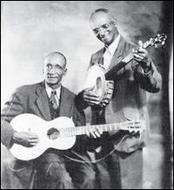
It can also be added that before the pie pan external resonator b ecame wide spread after WWI, many banjos, especially those that professionals played had internal resonators. In the attached photo taken probably in the 1930s, Gus Cannon's banjo appears to be playing an open back banjo. He is in fact, playing Van Eps Recording banjo which has an internal resonator that looks to me like something off of the brakes of a 53 Ford, LOL.
I did a bunch of research on this about African American traditional banjoists about 10-15 years ago, and even did a presentation on the banjos of the players represented on the digital library of Appalachia for the Banjo Gathering about 13 years ago. The original banjos almost every one of these traditional banjoists owned and played when they played in their home community was a resonator banjo. If they can be pictured with open back banjos without resonators, it was invariably a banjo that some old time music revivalist with a college, often a graduate, degree informed them they should be playing rather than the resonator banjo that they had played since they were available. I know this because often the open backs they are pictured with are banjos still owned by he old time revivalists that I have played myself.
blm10jn - Posted - 12/11/2025: 13:20:51
Play with what you have and learn to play well. It is not the instrument it is the musician. I remember when the great clawhammer banjo player Dan Gellert would go to festivals with (OMG) a bakelite rimmed and resonator Harmony. People not knowing who he was would laugh, snicker and snort until they heard him play.
Redbone - Posted - 12/11/2025: 13:45:42
I once had a great picker tell me, " focus on the music, not the banjo!" My Sullivan V35 is a fine banjo but too heavy for me and too bright for my old tastes at this point. So, I'm going to a lighter open back. I found an Ome Flora that suits my eyes and my ears and my back. I guess it all boils down to what suits YOU. Thanks for the discussion.
Diulin - Posted - 12/12/2025: 07:32:14
quote:
Originally posted by Paul RI also run a length of twine on each to get a reasonable facsimile of gut string tone
I never heard of putting twine on a banjo. Can someone explain? I searched the archives here and came up mostly with twine for cases and straps, nothing to mimic gut strings.
Lorilee - Posted - 12/12/2025: 08:31:07
IF you can find one, Bart Reiter banjos are amazing. Bishline is also a great choice.
I have one of each, and enjoy both. They differ quite a bit from in other in sound, but both are outstanding, IMHO.
Paul R - Posted - 12/12/2025: 12:37:16
quote:
Originally posted by Diulinquote:
Originally posted by Paul RI also run a length of twine on each to get a reasonable facsimile of gut string tone
I never heard of putting twine on a banjo. Can someone explain? I searched the archives here and came up mostly with twine for cases and straps, nothing to mimic gut strings.
Here's a pic of the Liberty, and the Orpheum I used to own, showing how the twine is used to mimic gut strings. It's a lot easier than changing strings. YMMV
R.D. Lunceford - Posted - 12/12/2025: 23:52:07
quote:
Originally posted by writerradMike Seeger told me that most of his banjo playing on the original 1950s and early 1960s New Lost City Ramblers recordings was done with a Gibson RB he owned, with the resonator on or off depending on the sound of the original old time recording he sought to replicate.
I played a 1974 Gibson RB-250 for 20+ years before I bought my Ramsey openback.
Almost every old-timer I met played a resonated banjo, though usually a Sears, Harmony, or Kaye.
writerrad - Posted - 12/13/2025: 13:29:34
Yes, about 6 yers ago I bought a bottom of the line Recording King Dirty 30s RB which is pretty much like the kind of banjos most of the traditional banjoists like Roscoe Holcomb had when old time revivalists came upon them in the 50s, 60s, and 70s, I find sometimes I cannot put it down even though I have a nice Fairbanks and a nice Vega, and an Enich banjo int he room.
Diulin - Posted - 12/13/2025: 18:23:10
Thanks for that explanation and the photos. It looks pretty simple. It looks like you just weave it over and under the strings across and back and then tie tie two ends to the bridge? I've never actually played on gut strings, so I don't know what it should sound like, but I might give it a try.
1935tb-11 - Posted - 12/14/2025: 06:17:37
Fairbanks by Vega Tubaphone Tenor Banjo make great choices.
William LaCroix - Posted - 12/15/2025: 10:31:57
Writerrad quote: "I have known hundreds if not thousands of true banjoists in old time music over the past 25 years and i can only think of two individuals who own one banjo who are really banjo players not fiddlers or guitarists or singers or yodellers trying to be classy by trying to plunk a banjo, The answer is never one banjo. "
This is a terminal condition known as Banjo-itis. There is no known cure. Budding banjoists beware!
Seriously (kinda): IMHO every banjo is unique (even the cheap ones) and they change with time as the head dirties and/or ages or gets changed. Most acoustic instruments share these qualities, of course, but banjos stand out in the acoustic instrument family (again IMHO) cuz the original instrument was born of particularly organic, accessible parts that interacted with each other that made their soul (Thanks Christina!) acoustically-accessible even to novices (a drum on a stick!) I may be wrong, Tony, but I currently believe they were originally a contemplative instrument, played for pleasure and relaxation just like a modern audiophile sitting in her living room listening to Bach on a good system. I think this could be where the current infatuation with open backs (and skin heads and old time in general) comes from. It's a real yearning to just sit down with yourself and get back to that original organic music.
My all-time fave banjo was my original Harmony Bakelite banjo I bought for $75. I could carry that thing in the woods and play it in a rainstorm (maybe under a tree just out of respect) and it only took about 1/2 hour to pluck around and find out where its soul was that day. Also, in an emergency it could be used for a canoe paddle with only minor compromises to its integrity....sigh...enough with banjo philosophy then. Not even sure it this'll post in the right place. But, the more the novice banjo players out there the better off the world is gonna be. That's my story and I'm stickin' to it!
pinenut - Posted - 12/15/2025: 10:58:12
quote:
Originally posted by writerradYes, about 6 years ago I bought a bottom of the line Recording King Dirty 30s RB which is pretty much like the kind of banjos most of the traditional banjoists like Roscoe Holcomb had when old time revivalists came upon them in the 50s, 60s, and 70s,
I find sometimes I cannot put it down even though I have a nice Fairbanks and a nice Vega, and an Enoch banjo in the room.
Yup, it's hard to beat the consistent honesty of a rolled ring banjo.
Edited by - pinenut on 12/15/2025 10:58:58
Joel Hooks - Posted - 12/15/2025: 12:19:44
quote:
Originally posted by DiulinThanks for that explanation and the photos. It looks pretty simple. It looks like you just weave it over and under the strings across and back and then tie tie two ends to the bridge? I've never actually played on gut strings, so I don't know what it should sound like, but I might give it a try.
If you do this, you still won't know what it should sound like. You will only know what wire strings with twine tied on sounds like.
Mickhammer - Posted - 12/15/2025: 13:50:04
quote:
Originally posted by Joel Hooksquote:
Originally posted by DiulinThanks for that explanation and the photos. It looks pretty simple. It looks like you just weave it over and under the strings across and back and then tie tie two ends to the bridge? I've never actually played on gut strings, so I don't know what it should sound like, but I might give it a try.If you do this, you still won't know what it should sound like. You will only know what wire strings with twine tied on sounds like.
I've been playing around with this idea this evening. It deadens the strings, removes the resonance, so the sound hollows out a bit, similar to the nylguts I have on another banjo, but also removes most of the sustain. I suppose if you only have one banjo, it's a workaround. But why have only one banjo?
I'm a big fan of gadgets though. I like playing with the Gold Tone bridge mute sometimes, it's like playing through a tin can.
I'll be ordering one of your thimbles next time I'm in the States (or someone from the family comes to visit me).
pinenut - Posted - 12/15/2025: 14:57:12
quote:
Originally posted by Joel Hooksquote:
Originally posted by DiulinThanks for that explanation and the photos. It looks pretty simple. It looks like you just weave it over and under the strings across and back and then tie tie two ends to the bridge? I've never actually played on gut strings, so I don't know what it should sound like, but I might give it a try.If you do this, you still won't know what it should sound like. You will only know what wire strings with twine tied on sounds like.
Yup again, that twine is muting material applied to steel strings. Attenuation with parts or techniques is very important for adjusting and setting-up a banjo to sound a specific way. Common steel strings cannot emulate gut or synthetic strings and we shouldn't want them to.
Let's use nylon or Nylgut as an example since it is recognized to be an acceptable facsimile of gut strings, costs less and is commonly available.
Nylon isn't just a sound or tone it's also a 'feel' and an experience that is very different from steel strings. Like going from riding the tractor with a big single u-spring seat to a semi-hydraulic seat, nylon is comfortable in a different way.
And, concerning tone, nylon strings bring a rich and complex tone that is distinct to nylon strings.
It's a good thing.
Edited by - pinenut on 12/15/2025 15:19:20
reubenstump - Posted - 12/15/2025: 15:10:51
quote:
Originally posted by Joel Hooksquote:
Originally posted by DiulinThanks for that explanation and the photos. It looks pretty simple. It looks like you just weave it over and under the strings across and back and then tie tie two ends to the bridge? I've never actually played on gut strings, so I don't know what it should sound like, but I might give it a try.If you do this, you still won't know what it should sound like.
Who's to say what it should sound like?
Joel Hooks - Posted - 12/16/2025: 05:49:48
quote:
Originally posted by Mickhammerquote:
Originally posted by Joel Hooksquote:
Originally posted by DiulinThanks for that explanation and the photos. It looks pretty simple. It looks like you just weave it over and under the strings across and back and then tie tie two ends to the bridge? I've never actually played on gut strings, so I don't know what it should sound like, but I might give it a try.If you do this, you still won't know what it should sound like. You will only know what wire strings with twine tied on sounds like.
I've been playing around with this idea this evening. It deadens the strings, removes the resonance, so the sound hollows out a bit, similar to the nylguts I have on another banjo, but also removes most of the sustain. I suppose if you only have one banjo, it's a workaround. But why have only one banjo?
I'm a big fan of gadgets though. I like playing with the Gold Tone bridge mute sometimes, it's like playing through a tin can.
I'll be ordering one of your thimbles next time I'm in the States (or someone from the family comes to visit me).
I am all for experimenting, and weaving twine around a bridge is a fun idea to modify the tone. I don't want to disparage that.
But that is like saying that wrapping some twine around the strings on an electric guitar will change it into a fine Spanish guitar. Those are two different instruments.
And the wire strung banjo (which was originally configured for plectrum playing) is, in my opinion, a different instrument from the nylon string banjo. And the current trend of very heavy polyester strings on a short scale, dull tone banjo, is a different instrument from a classic era banjo.
Paul R - Posted - 12/16/2025: 18:08:25
quote:
Originally posted by DiulinThanks for that explanation and the photos. It looks pretty simple. It looks like you just weave it over and under the strings across and back and then tie tie two ends to the bridge? I've never actually played on gut strings, so I don't know what it should sound like, but I might give it a try.
I've since tweaked it by starting by tying the double strand at the tailpiece, knotting it (with slack) where it meets the fifth string, then weaving it through the strings and tying it at the end. That keeps the whole thing available for use at any time, since it's fastened to the tailpiece (and swinging loose) when not used. Different banjos will react differently. My Silvertone sounds quite minstrel-y, the Neufeld, not as much.
The Old Timer - Posted - 12/17/2025: 11:02:27
There really is no answer to your question. Only YOU can discover what banjo features satisfy YOU.
You can't choose a banjo that will satisfy you by reading catalog descriptions or photos. You're going to have to go on a quest to play as many banjos as you can get your hands on, and listen to as many banjo players as you can find, and then ask them polite questions about their banjos and hope they invite you to play theirs.
Who knows what YOU will settle on? Maybe "bling" will turn out against all odds to make you want a banjo so bad you can't stand it. Maybe "feel" will float your boat. It might be "sound". You can find probably 1000 banjos, new and used that are all "good".
What can reading catalogs and looking at photos and asking questions on BHO do to help? They may help you break banjos into "types": resonator vs open back, new vs used, maple vs mahogany, plastic heads vs skin heads, metal strings vs. "gut" type, big diameter heads vs small diameter heads, tone ring vs no tone ring vs and Tubaphone vs Whyte Laydie/Electric vs Bacon vs tone hoop vs. Grenadillo, fretted vs fretless, domestic vs imported, factory standard vs custom, and on and on and on. And every single one of them is probably "good".
Start that quest now and go find banjos where they are and inform yourself. I could tell you specifically what I want to buy and why, but why should that have any bearing on what will please you?
Get shopping -- mingle with other banjo players.
Good luck.
Edited by - The Old Timer on 12/17/2025 11:04:45
Terms of Use | Privacy Policy | Privacy Consent (EU/GDPR Only)
Copyright 2026 Banjo Hangout. All Rights Reserved.