DVD-quality lessons (including tabs/sheet music) available for immediate viewing on any device.
Take your playing to the next level with the help of a local or online banjo teacher.
Weekly newsletter includes free lessons, favorite member content, banjo news and more.
Premier Sponsors


|
Please note this is an archived topic, so it is locked and unable to be replied to. You may, however, start a new topic and refer to this topic with a link: http://www.banjohangout.org/archive/405959
PhillipH - Posted - 11/14/2025: 00:21:23
I want to join my university's jazz band next year with my banjo, but obviously they aren't going to take a bluegrass player (me).
So instead want to learn dixieland / trad jazz banjo, because banjos were used historically in the genre. That way I have a much better chance of being allowed to join.
From listening to trad jazz, I know you have to strum fast, mute a lot, and play complicated jazz chords, but I have so far found ZERO learning material. Does anyone know how to start?
I've already "converted" my 5 string to a plectrum by removing my 5th drone string.
Edited by - PhillipH on 11/14/2025 00:30:26
guitarbanjoman - Posted - 11/14/2025: 04:41:23
Hi Phillip,
Welcome to four string world!
I started out as a five stringer who removed my fifth string just like you, only about 50 years ago.
You are likely to find that your banjo works fine for learning but eventually you will want to buy a real fourstring banjo.
That fifth string tuning peg gets right in the way. And even if you totally remove that peg, it is still a minor PITA.
Anyway, if you are already a guitar player, you may choose to tune your banjo DGBE, also known as Chicago tuning for some reason.
Or you might even buy a six string banjo for that matter.
However, there is one great player who uses DGBD tuning, check out Sean Moyses on Youtube.
CGBD tuning is best for solo playing, but as a longtime plectrum player I have to admit that CGDA tenor tuning is best for jazz band playing, but you’d need to buy a tenor banjo for that.
Whatever tuning you eventually choose, you’re going to need to learn all your chords up and down the neck.
And as a beginner, you may find the fast strumming a challenge at first, at least I did.
Good luck!
Will
PS Jazz bands tend to play mostly in the flat keys and avoid the sharp keys as much as possible so you'll have to get used to that!
Edited by - guitarbanjoman on 11/14/2025 04:49:32
Compass56 - Posted - 11/14/2025: 04:54:15
Learning to play jazz and learning to play jazz in a university jazz band are very different journeys. In college, student bands typically play arrangements. Your main job will be to learn how to read the sheets and faithfully reproduce what the arrangers had in mind when they created the arrangements on your music stand.
Nopix - Posted - 11/14/2025: 05:29:44
Watch every Tuba Skinny video.
Then watch every Preservation Hall Jazz Band video.
mainejohn - Posted - 11/14/2025: 07:28:01
I transitioned from 5 string to plectrum in the 60's but still continue to play 5 string to this day. As has been stated, you can play plectrum style on a 5 string either by leaving the 5th tuner in place (which becomes a PITA), or removing it, in which case you still have to deal with the bump at the 5th fret. My solution was to keep the 5 string intact because I still wanted to play 5 string, and buy a plectrum. As for tuning, I learned 5 string from Pete's "little red book" which was centered around gCGBD, so that tuning transitioned well into what is considered the standard tuning for plectrums, which is CGBD, with not an uncommon exception being DGBE, or "Chicago tuning." I like the CGBD tuning because for me it works best for the chord melody style, making up the neck chords easier to play than either open G (DGBD) or Chicago tuning. In addition, the best printed instruction book, showing the chord structure for all the 20's/30's tunes and more, is the classic by Dave Frey (The Ultimate Plectrum Banjo PLayer's Guide, Volume II). The arrangements are all done in "standard" (CGBD) tuning.
Another option would be to acquire and learn tenor banjo jazz style which some might say works better for jazz than a plectrum.
Edited by - mainejohn on 11/14/2025 07:29:28
Omeboy - Posted - 11/14/2025: 07:37:29
If you're ever going to make real progress on the plectrum, a good method book that explains how ALL chords are formed according to shape and the specific string (with the root note that names the chord) is absolutely essential. The old method that used to be the gold standard was Charles McNeil Chord System for Plectrum (Long Neck) Banjo. It was published back in the early Twenties and is now difficult to find. FREE download for McNeil System!!! The good news is, you can still see a copy of it as a FREE download on the Internet Archive. BHO member, Joel Hooks did some research and found it available here:
archive.org/details/ChordSyste.../mode/2up
Just sign in and register to gain access to this great book. Study the section that explains the entire neck with regards to how all the chords are formed and named by the specific string that is responsible for naming that chord form (pages 21 & 22.)
sethb - Posted - 11/14/2025: 07:46:57
If you're going to play trad jazz, I don't believe you need to play lots of complicated chords. A banjo is not a guitar. With only four strings, playing any extended chords (9ths, 11th, etc.) requires you to drop notes (usually at least the root) in order to make the chord. If you know your majors, minors, dominant sevenths, and diminished/augmented chords, that should be more than sufficient. If you like, you could add in your sixths, ninths and major/minor sevenths for icing on the cake.
Your bigger challenge will be the right hand. If you're a bluegrass picker, you need to learn a very different way to strum across all four strings with a plectrum. Contrary to what you may think, very little arm motion is needed -- it should all come from the wrist. While the forearm may twist a little bit, it shouldn't move up and down at all. Speed comes from efficient, small strums. But speed is not essential and not needed for most banjo accompaniment, even on fast tunes -- if you're playing in 4/4 or 2/4, one strum for each beat is usually sufficient. Later on when your strum is strong, you can throw in a few glissandos (slides) for some flash!
What tuning were you using for bluegrass? If it was gDGBD and you're comfortable with that, you might as well stick with it. But if you don't already know them, you should also learn your chord inversions up the fretboard, at least to about the 10th or 12th fret, to add some variety and interesting harmonies to your playing. As you may know, CGBD is the standard plectrum tuning.
My guess is that at least for starters, you'll be playing harmony chords as part of the rhythm section, and the plectrum should be fine for that. If you later want to give melody chords a try, I think the plectrum is also better suited to that than the tenor. But being a plectrum player myself, I may be a little biased. In any event, good luck with it and let us know how it goes! SETH
Edited by - sethb on 11/14/2025 07:52:27
Alvin Conder - Posted - 11/14/2025: 08:08:12
Here it is…the first grain of sand on the beach of converting five string banjos into 4 stringers…
mmuussiiccaall - Posted - 11/14/2025: 10:26:44
I would advise visiting the university and finding out what type of banjo is needed, tenor, plectrum what tuning. Take a look at some of the actual sheet music that you will to be playing in order to get yourself on a path in that direction. You might also ask if you have any competition for the chair.
Jim_R - Posted - 11/14/2025: 13:27:05
Search for Eddy Davis here and on YouTube. Eddy left us a wealth of knowledge on jazz banjo.
One thing he didn't get into was right hand technique but Cynthia Sayer has that covered on YouTube as well.
youtu.be/PuKT2DXNKOc?si=bFrgVbeS1Tv8VoMM
Compass56 - Posted - 11/14/2025: 13:40:38
Years ago, I put together a YouTube playlist of short instructional videos by Eddy, Cynthia, and Don Vappie. It is called “Learning Jazz on 4-String Banjo.” The playlist contains about 30 videos by those three masters. Please check it out.
Edited by - Compass56 on 11/14/2025 13:49:18
timsch - Posted - 11/17/2025: 06:08:02
quote:
Originally posted by Compass56Years ago, I put together a YouTube playlist of short instructional videos by Eddy, Cynthia, and Don Vappie. It is called “Learning Jazz on 4-String Banjo.” The playlist contains about 30 videos by those three masters. Please check it out.
Do you have a link for that? I couldn't find it with a search. thx.
Compass56 - Posted - 11/17/2025: 06:17:08
quote:
Originally posted by timschquote:
Originally posted by Compass56Years ago, I put together a YouTube playlist of short instructional videos by Eddy, Cynthia, and Don Vappie. It is called “Learning Jazz on 4-String Banjo.” The playlist contains about 30 videos by those three masters. Please check it out.
Do you have a link for that? I couldn't4 find it with a search. thx.
I will try to post it. (I'm not the greatest at posting.)
jwold - Posted - 11/18/2025: 15:48:44
Long time bluegrass player here, I still play bluegrass regularly, but I've recently started playing with a trad-jazz band, I have some thoughts about making this transition.
I have a 20's era Bacon & Day Blue Bonnet plectrum banjo that I've been using, it needs a neck reset bad but isn't slowing me down.
I just keep tuned DGBD like my 5 string just so I could know where I am and minimize the learning curve. It's been a good stretch to play in Eb and Bb and not using any capos. Lots of songs in Bb.
Main thing that hit me was just how much the banjo is needed to keep the chordal foundation and structure of the song together. Once you past the intro and everyone drops out for the vocalist it gets very spartan, it's just you, the vocalist, drums, and the tuba (or standup/electric bass) so be ready to step up.
I also picked up a very small practice amp and am going to put a face mounted pickup on this banjo as playing with brass instruments are sooooo loud, worse if your group has a piano or electric bass.
I'm not too skilled with playing breaks yet with a pick so I'm mostly just chopping the chords and leaving breaks to the others.
Obviously learning to play tremolo and faster leads is another skillset (I don't have yet) but players already mentioned like Eddy Davis, Dave Weirback, Sean Moyses and Eddie Peabody are great role models and have helpful instructional videos on YouTube.
It's been a little frustrating when our band does "Momma Don't allow" which I could play circles around in a 3 finger style bluegrass setting yet struggle with a solid break with a flatpack...learning curve alert!
Along with Tuba Skinny I'd suggest you seek out on YouTube: The Traveling Janes, Smoking Time Jazz Band, The Shotgun Jazz Band, and the pre-Tuba Skinny iteration Loose Marbles. Also Ewan Bleach's group Man Overboard band and the French group Ramène Ta Trompette. All great contemporary ambassadors of the Trad style with plectrum, tenor and guitar banjo representation.
That said, going back and listening to Louis Armstrong, King Oliver, Bix Biederbeck recordings are helpful and I would consider mandatory.
Seek out a .pdf of the "Firehouse Jazz Band Fakebook" it's a great resource for tunes in this genre. I have a .pdf somewhere, it seems like that should be an accessibly sticky on this website. If I can find a .pdf I'll post it here if that's allowed.
Also, here in the Portland, Oregon area we're blessed with a jazz radio station KMHD 89.1 fm that has a traditional jazz show on Sunday mornings that is live-streaming. The host has passed away a few years ago, but the station rebroadcasts his program that he had for years and the guy was an encyclopedia of early jazz knowledge.
Hope some of that helps, please post an update of your progress...
jwold - Posted - 11/18/2025: 15:49:28
quote:
Originally posted by Compass56youtube.com/playlist?list=PLjO...IVXeMn06K
This is awesome Tony!
Compass56 - Posted - 11/18/2025: 18:58:45
quote:
Originally posted by jwoldquote:
Originally posted by Compass56youtube.com/playlist?list=PLjO...IVXeMn06K
This is awesome Tony!
Thanks Jeff! I really enjoyed putting this playlist together. I wanted instructional videos by Eddy, Cynthia, and Don Vappie all in place for easy access. I hope others enjoy these videos as well.
guitarbanjoman - Posted - 11/18/2025: 19:15:31
Good luck, Jeff!
When it come to dixie tunes that border on bluegrass (like “Mama Don’t Allow” “Down by the Riverside”) you might try using a capo and doing some crosspicking to simulate a bluegrass feel for your solos—— not for your rhythm playing of course…
From what I can see via internet clips, the guy who played banjo with the Firehouse Five seemed to be playing in DGBE tuning with a capo at the fifth fret.
sethb - Posted - 11/19/2025: 10:55:31
quote:
Originally posted by jwoldLong time bluegrass player here, I still play bluegrass regularly, but I've recently started playing with a trad-jazz band, I have some thoughts about making this transition.
Main thing that hit me was just how much the banjo is needed to keep the chordal foundation and structure of the song together. Once you past the intro and everyone drops out for the vocalist it gets very spartan, it's just you, the vocalist, drums, and the tuba (or standup/electric bass) so be ready to step up.
I also picked up a very small practice amp and am going to put a face mounted pickup on this banjo as playing with brass instruments are sooooo loud, worse if your group has a piano or electric bass.
On your comment about keeping the chord foundation and song structure together, I was reminded of a comment the great jazz drummer Louie Bellson once made:
I've always felt that a great drummer needed to learn how to play solos, but the most important thing is knowing how to back up soloists and play for the band . . . . Solos are fine, but a drummer may only play one or two solos a night. What about the rest of the evening? It's how you play the ballads . . . it's how you fit in with the rest of the rhythm section, it's how you support the band."
I also agree that while a banjo can usually be plenty loud all by itself, sometimes you do need a little electronic help if the horn section gets too enthusiastic. Having tried a few different setups, I found that aiming an instrument mic (a/k/a a "shotgun mic" ) at the resonator holes gives me the best sound quality and also stays out of the way of my strumming hand. I used to aim the mic at the banjo head, but that picked a lot of pick slap and other unwanted noises; it was also in an awkward position relative to my strumming hand, even when using a small boom mic stand. SETH
jwold - Posted - 11/20/2025: 12:00:19
quote:
Originally posted by sethbquote:
Originally posted by jwoldLong time bluegrass player here, I still play bluegrass regularly, but I've recently started playing with a trad-jazz band, I have some thoughts about making this transition.
Main thing that hit me was just how much the banjo is needed to keep the chordal foundation and structure of the song together. Once you past the intro and everyone drops out for the vocalist it gets very spartan, it's just you, the vocalist, drums, and the tuba (or standup/electric bass) so be ready to step up.
I also picked up a very small practice amp and am going to put a face mounted pickup on this banjo as playing with brass instruments are sooooo loud, worse if your group has a piano or electric bass.On your comment about keeping the chord foundation and song structure together, I was reminded of a comment the great jazz drummer Louie Bellson once made:
I've always felt that a great drummer needed to learn how to play solos, but the most important thing is knowing how to back up soloists and play for the band . . . . Solos are fine, but a drummer may only play one or two solos a night. What about the rest of the evening? It's how you play the ballads . . . it's how you fit in with the rest of the rhythm section, it's how you support the band."
I also agree that while a banjo can usually be plenty loud all by itself, sometimes you do need a little electronic help if the horn section gets too enthusiastic. Having tried a few different setups, I found that aiming an instrument mic (a/k/a a "shotgun mic" ) at the resonator holes gives me the best sound quality and also stays out of the way of my strumming hand. I used to aim the mic at the banjo head, but that picked a lot of pick slap and other unwanted noises; it was also in an awkward position relative to my strumming hand, even when using a small boom mic stand. SETH
Thanks Seth.
i might give that a try at my next gig.
i tend to prefer a mic over a PU for sound and I could see how a shotgun might be the best way to get a clear sound without picking up everything else.
jwold - Posted - 11/29/2025: 16:37:36
I found a link with a download for the Firehouse Jazz Band Fakebook in C:
archive.org/details/fakebook_t.../mode/2up
Great resource...
neuronz - Posted - 12/03/2025: 17:27:07
I've been playing plectrum banjo tuned CGBD for years with the "East Bay Banjo Club". We meet 4 times a month and play old standards from the 20's and 30's, some more recent tunes, such as by the Beatles. Most of the music is in the keys of C, G, D, F and rarely in Bb.
I recently had an opportunity to "jam" with other trumpet, trombone, clarinet, trombone players doing traditional Dixieland music. They use the "Vintage Jazz Standards" book, the C concert version. It has the music with all the chords to the tunes (there are over 300 tunes). What I notice is that a lot of the music is in keys such as Ab, Bb, Eb, F, keys that the brass and wind instruments play in. That means a lot of bar chords, at least on the plectrum banjo. Watching other plectrum players, nobody ever uses a capo. And sometimes they will say for a tune, such as in Bb, "Let's play it in F". You need to be very familiar with transposing. It is challenging, to say the least, but lots of fun.
Edited by - neuronz on 12/03/2025 17:27:50
BlueMountain - Posted - 12/03/2025: 18:21:14
Every Thursday morning I get to perform Dixieland and Tin Pan Alley tunes on the plectrum banjo. I love it. As I also play guitar (and mandolin, dobro, and five-string), I use the DGBE tuning. If you want to learn quickly to play closed chords all over the fretboard, may I recommend my inexpensive book on the topic, available on Amazon. “DGBE: Play Chords All Over the Neck on Tenor Guitar, Plectrum Banjo, and Baritone Ukulele and Banjolele”
Work through that book and you will soon be able to play in any key without a capo and without sweat.
Edited by - BlueMountain on 12/03/2025 18:24:38
Omeboy - Posted - 12/03/2025: 18:24:35
IF you live any where near a major city, you might check to see if they have jazz club. If they do and it's a traditional jazz club, you'll probably have a chance to sit in with a monthly or weekly jam. I used to drive from Springfield, Illinois to St. Louis once a month to sit in and jam with the St. Louis Jazz Club monthly jam session on Saturday afternoons. Then after the jam session, a few of us would head over to a local pub to play for two or three ore hours. So, that would be a great way to sharpen your chops if you have the opportunity. (BTW, Bb is a great solo key for "Sweet Georgia Brown" in on the plectrum (CGBD.)
Edited by - Omeboy on 12/03/2025 18:25:59
Fathand - Posted - 12/03/2025: 20:21:09
quote:
Originally posted by PhillipHI want to join my university's jazz band next year with my banjo, but obviously they aren't going to take a bluegrass player (me).
So instead want to learn dixieland / trad jazz banjo, because banjos were used historically in the genre. That way I have a much better chance of being allowed to join.
From listening to trad jazz, I know you have to strum fast, mute a lot, and play complicated jazz chords, but I have so far found ZERO learning material. Does anyone know how to start?
I've already "converted" my 5 string to a plectrum by removing my 5th drone string.
If you are playing Plectrum banjo, you can use the same tuning as 5 string, usually DGBD and use all the same chords. Some of the Pros do this. You can also use Chicago tuning and use the same chords as a baritone uke.
Now start learning movable chord formation for major, minor, 7th, Maj 7th, Augmented, Diminished, etc chords.
Cynthia Sayer has instruction material for jazz plectrum material.
kyeates - Posted - 12/04/2025: 15:33:41
I too started on 5 string and later switched to four string as my interest moved to trad jazz. If you are sticking with only playing trad jazz you will most likely want to change your bridge to a 4-string bridge. A four-string bridge has the strings closer together, which makes it easier to strum. A 5-string bridge has the strings further apart to make picking easier.
I stuck with the DGBD tuning as I have no desire to learn one more set of chords. It works wonderfully in trad jazz.
Th basic strumming pattern for trad jazz is very much like bluegrass. Bluegrass is based on the chung- chuck sound (bass on the beat – the chung -and the mandolin playing a staccato off-beat – the chuck). You will do that on the banjo with a strum on beat one and play beat two and immediately lift the left hand off the strings to dampen the ring. Repeat for beats 3 and 4.
I have put together a chord chart that will get you through much any trad jazz tune. Trad jazz doesn’t use chord extensions like 11’s or 13’s. The most you will see is a 9 chord which is easily covered simply with the 7 chord. You do not play any open strings in jazz chords because you can’t control the ringing of an unfretted string.
Just like we should be using a metronome when practising 5-string, you really need to get used to practising with a metronome on 4-string. You are part of the rhythm section, and you really NEED to be able to play in time. If you don’t like playing with a metronome, that is a sign that you aren’t able to play steady. No matter what reason you come up with to explain why you don’t like playing with a metronome , the truth is you can’t play steadily. A metronome is nothing more than a drummer, and I don’t hear people refusing to play with a drummer.
I have attached a chord chart for the G chord. I will post the others as soon as I can find them.
cebracher - Posted - 12/04/2025: 16:19:06
quote:
Originally posted by NopixWatch every Tuba Skinny video.
Then watch every Preservation Hall Jazz Band video.
And also watch every Peninsula Banjo Band video on YouTube, along with every Sacramento Banjo Band video, plus the Pittsburgh Banjo Band and ANY OTHER VIDEO that pops up when you search for "banjo bands" on Youtube.
That's a good start. :)
Chris
sethb - Posted - 12/04/2025: 16:56:03
The Internet Archive has a set of the "Creole Jazz Band" fake books, with hundreds of public domain jazz standards in matching keys of C, Bb, Eb and in bass clef for a tuba. Unlike some other jazz fake books, the quality of these lead sheets is very good, with accurate melody lines and good harmonic chords. And they're all free, so download away!
Just Google "Creole Jazz Band fake books" and look for the cite with the "Internet Archive" link.
BTW, most horn players can transpose on the fly into their own keys, so all you really need is one fake book in the key of C -- as long as you're playing the tune in the published key. But if you need to transpose into another key to accommodate a singer's vocal range, things can get sticky real fast. For example, if you need to transpose from C to Eb for a vocalist, then the clarinetist would need to transpose from C to F on the fly, which is no mean feat.
Our group has an alto vocalist, so most tunes usually need to be transposed down a fifth from the published key to accommodate her. Then the tune needs to be transposed again from her key for the clarinetist (up two halftones), and then a third time for the sax guy (down three halftones). So we've found it easier and simpler to buy digital lead sheets for $2-3 each, and then transpose them on the computer as needed and print them out.
I grew up with paper (analog) fake books and still use them on occasion, but the digital versions are a lot easier to work with if you need to transpose often. SETH
Edited by - sethb on 12/04/2025 17:01:51
guitarbanjoman - Posted - 12/05/2025: 00:05:08
True dat, Seth. I put my sheet music onto my iPad and built a little stand to hold it.
It was a lot of work but worth it. Our band’s three ring binder had grown over three hundred charts so it had become just too much to carry around.
Some of the charts were two pagers, so I bought a Donner Bluetooth foot pedal to turn the pages.
Will
Edited by - guitarbanjoman on 12/05/2025 00:07:26
sethb - Posted - 12/05/2025: 12:01:11
Another benefit to having digital leadsheets on a tablet is that you can probably put a playlist together in about five minutes!
It is a lot of work to digitize paper leadsheets or buy and upload premade digital ones. But when I need to wade through two big ring binders of leadsheets in alphabetical order, pull a bunch of tunes and then refile the previous playlist numbers away, I probably spend 30-45 minutes doing that when I could be actually playing some songs instead! And that doesn't include the extra time spent searching for songs that I accidentally filed incorrectly . . . . SETH
Edited by - sethb on 12/05/2025 12:04:14
sethb - Posted - 12/06/2025: 16:32:47
As long as we're talking about digital leadsheets, I wanted to mention that in my experience, the SheetMusicDirect website offers the most variety and the best value. It's owned by the Hal Leonard Company, a name well known to many music students, and it has licensed tons of sheet music from various sources.
Hal Leonard offers both full scores and leadsheets. Many of them are transposable into any key, and at no extra cost for additional copies. For banjoists and guitarists, the lead sheets work well and are easy to handle. There are also uke leadsheets which are a bit simpler (less busy) but still very serviceable; just ignore the uke fingering diagrams. And the leadsheets are $2-3 apiece, with no limit on extra copies in other keys.
I play in two different bands; one plays music of the 1920's, 30's and 40's, and the other plays classic rock & roll from the 1950's and 60's. I've been able to find about 95% of what I need on this website. Another website to try is Musicnotes. But their leadsheets tend to be fussier, with lots of fancy extended chords that you can't easily play on a 4-string banjo (like an F9b5!), and also pricier. They don't offer transposed versions on many songs, and when they do, it's only for 4-6 keys and there's an extra charge for printing extra copies in different keys. But sometimes they're the only source for a particular song due to licensing arrangements. SETH
Bert Huckelberry - Posted - 12/06/2025: 18:34:04
Phillip,
I have had many Plectrum banjo books. Most are out of print.
The most comprehensive that I found is - The Ultimate Plectrum Banjo Players Guide - by David Frey.
It has over 300 pages dedicated to learning Plectrum Banjo. (but of course it's out of print).
However, you can get a free PDF. type into your browser, ( the ultimate plectrum banjo players guide)
then look for: ia904609.us.archive.org (depending on the browser, it should be between 5 and 8 listings down.
banjopaolo - Posted - 12/07/2025: 09:39:07
If someone is interested I made years ago a compilation of classic jazz standards arranged for Tenor banjo with trascription in standard notation and tab, this is the link to the audio files in the tab archive there should be all the sheets...
neuronz - Posted - 12/07/2025: 09:46:11
I've followed the instructions in this post and all I get are sites offering the 2 books for sale. Am I missing something?
banjopaolo - Posted - 12/07/2025: 09:49:52
Here’s the link to an old banjohangout post on the same topic, you can find mp3 and scrolling down the pdf… it’s all free :-)
shpalman - Posted - 12/23/2025: 02:47:48
I got here via a different route. I've been a guitar player most of my life and during the summer discovered a nearby dixieland band who were in need of me. They play the Hal Leonard "dixieland pak" arrangements by Paul Severson. I've always been pretty good at reading the charts (I've been in pit bands for musicals at university and I've also studied classical guitar) so I fit right in, but of course the music needs banjo not guitar.
So about a month ago I got myself an inexpensive tenor banjo (19 frets, 576 mm scale) and now I only take that to rehearsals. I'll do my first gig with it in less than two weeks' time and I'm not particularly worried.
I have it tuned CGDA, although finding strings for it is a bit of an adventure, since I have a nickel allergy.
What I did to learn the shapes, was program the charts into Musescore with linked music and tablature scores, then play along while reading the tab. But the idea was never to play from the tab or memorize the songs; at rehearsals I play from the usual charts. There are of course some passages which need more practice than others, but that was true on the guitar too.
Open to any tips for how to stop my left thumb from aching from playing in Eb the whole time, though.
stevo58 - Posted - 12/23/2025: 10:44:30
Hmm Eb, Bb, F, and Ab - all the horn keys - I play those all night without thumb problems. Although as a ragtime guitar player, it was tough training my thumb to stay behind the neck. You shouldn’t need much finger pressure on a well-set-up tenor, either.
sethb - Posted - 12/24/2025: 13:35:42
Whenever guitarists asks me about playing a 4-string banjo, I tell them that since you only have four fingers (not counting the thumb), and a tenor or plectrum banjo only has four strings as opposed to a guitar's six strings, the banjo is a much fairer fight.
It's a statement made in jest, with some truth behind it. But it's also true that a plectrum banjo's longer scale length (usually 26-3/16") as opposed to many guitars' smaller scale of 24-3/4", can make it hard to handle some chord fingerings that require stretches across three or more frets, especially if you're close to the nut. SETH
shpalman - Posted - 02/09/2026: 07:38:12
I think I know what it is. I note that Eb is especially annoying when F isn't. If you open your hand completely and then try to move your thumb towards your fingers you'll note that your fingers will want to be less spread out. This makes it slightly harder to maintain the major chord shape at 3rd fret as compared to 5th fret, on my long-scale tenor. It's not really a thumb issue as such, it's tension in the hand in general.
guitarbanjoman - Posted - 02/09/2026: 11:41:27
Metronome is good but Band-In-A-Box is way more fun
I’ve been using it for twenty-five years
Can’t recommend it highly enough.
You control the key, the tempo, the chords, the accompaniment style.
It’s a lot like playing with real people
Even though, yeah, it’s actually robots who never make a mistake…
Good luck!
Ondrej - Posted - 02/11/2026: 03:35:33
This book inspired me when studying how to accompany. There is both a Tenor banjo and a Plectrum banjo version in one book.
davidfryer - Posted - 03/02/2026: 12:48:44
I've been learning tunes from Hal Leonard's Dixieland Jazz Banjo book... It gives you chord charts for plectrum and tenor banjo, as well as the melody written in standard notation and lyrics. The chords from the charts often seem to get you pretty close to playing a chord melody. Lots of good tunes.
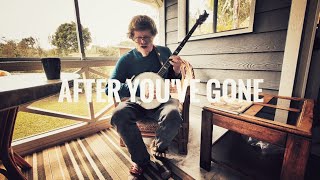
For example, here's me attempting to play "After You've Gone" based on the charts in the book..
Terms of Use | Privacy Policy | Privacy Consent (EU/GDPR Only)
Copyright 2026 Banjo Hangout. All Rights Reserved.