DVD-quality lessons (including tabs/sheet music) available for immediate viewing on any device.
Take your playing to the next level with the help of a local or online banjo teacher.
Weekly newsletter includes free lessons, favorite member content, banjo news and more.
Premier Sponsors


|
Please note this is an archived topic, so it is locked and unable to be replied to. You may, however, start a new topic and refer to this topic with a link: http://www.banjohangout.org/archive/404735
Spudwheat - Posted - 08/22/2025: 16:46:16
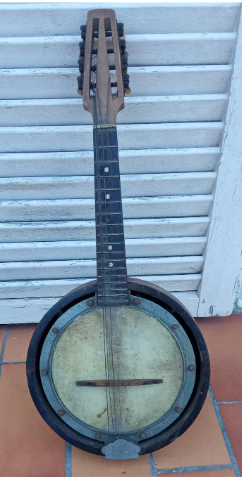
First, thanks for the help. I am going to be trying to rig a banjolin as a 5 string banjo. I would like to know how chords (scales? keys?) work from say G to A or something like that? I don't even know if I am using the right terminology. I usually play in G, am an advanced beginner, and am starting to play in C on one song. So, my question is: Does anyone know what the translation is? Could a song played in G be translated to a tuning like gDGBD = aDADE ? I am sorry about the vagueness, but I am trying to ask a question, but I don't know how to ask it. There is a table at this link: gtmg.b-cdn.net/goldtone/manual...ition.pdf Can anyone give me an explanation of how this works exactly? Thank you, again. :-)
Nopix - Posted - 08/22/2025: 17:25:17
By chance, have you ever learned the note names on a piano keyboard?
Thing is, a piano keyboard lays it all out, like a chart unto itself.
For instance, a C chord contains a C, E, and G note. That's for any instrument. Then it's your job to figure out where those notes are on your neck, according to how you've got it tuned.
The other route is to decide on a tuning, then Google the chord chart for that tuning. You ran really muddy up the whole thing by goofing with tunings AND a capo. But the notes of the chord remain. 4, 5 or 6 strings, other than the three notes of the chord are a chord extension. Extending a chord is another page full. Chord inversion are again, another page.
We transpose chords all the time. According to the Key choice of the vocalist. A song has a chord progression, in a given key. Change key, the relationship of the chords within a progression does not change. 'Google Nashville numbering system.' But it's best if you know about chord construction first.
Edited by - Nopix on 08/22/2025 17:31:50
trapdoor2 - Posted - 08/22/2025: 19:44:44
The chart is a comparison between a "mini", which is tuned to open C, to a standard tuned to open G.
A similar chart can be made up for open A (aEAC#E, as if the standard were capoed at the 2nd fret). aDADE is a different tuning and the notes of any given chord occur in different places (between different tunings)...so a chart like that won't work.
Spudwheat - Posted - 08/22/2025: 19:48:12
quote:
Originally posted by NopixBy chance, have you ever learned the note names on a piano keyboard?
Thing is, a piano keyboard lays it all out, like a chart unto itself.
For instance, a C chord contains a C, E, and G note. That's for any instrument. Then it's your job to figure out where those notes are on your neck, according to how you've got it tuned.
The other route is to decide on a tuning, then Google the chord chart for that tuning. You ran really muddy up the whole thing by goofing with tunings AND a capo. But the notes of the chord remain. 4, 5 or 6 strings, other than the three notes of the chord are a chord extension. Extending a chord is another page full. Chord inversion are again, another page.We transpose chords all the time. According to the Key choice of the vocalist. A song has a chord progression, in a given key. Change key, the relationship of the chords within a progression does not change. 'Google Nashville numbering system.' But it's best if you know about chord construction first.
Thank you . This helps some. It is not due to your lack explanation, it is my lack of knowledge. I do not know anything of playing piano. However, the google thing is a good idea. I am pretty astute in the patterns, but have holes in my knowledge. If a banjo is tuned aDADE, is the C chord still 4S/2nd Fret; 1S/2F; 2S/1F?
I am familiar with Nashville Numbering System.
Edited by - Spudwheat on 08/22/2025 19:49:37
Spudwheat - Posted - 08/22/2025: 19:52:08
quote:
Originally posted by trapdoor2The chart is a comparison between a "mini", which is tuned to open C, to a standard tuned to open G.
A similar chart can be made up for open A (aEAC#E, as if the standard were capoed at the 2nd fret). aDADE is a different tuning and the notes of any given chord occur in different places (between different tunings)...so a chart like that won't work.
Thank you. What I am wondering is if this short banjolin can be tuned like a Gold Tone Plucky or some other similar Pony Banjo. I noticed a guy who makes Baycu banjos can tune them to G, but he uses nylagut strings. I would like to use steel strings and tune to G but I don't know if that is possible.
Nopix - Posted - 08/22/2025: 20:13:45
I've got this 'pro guitar tuner' app on my tablet and phone. It's free and it plays ads that drive me crazy, but it's handy. I can set the instrument to Open G banjo or Standard guitar, it doesn't matter, because the needle and the display under the needle will tell you what the tone/note is regardless of the preset instrument.
So, whatever your open tuning is, you finger the note and read the needle.
So a C chord is C, plus a 3rd and a 5th. A G chord is G plus a 3rd, and a fifth. But either of those notes could be lower than the root note. (Chord inversion) I'm the wrong guy to talk about tunings other than open G and EADG tuning like fiddle and mandolin. Sorry
Edited by - Nopix on 08/22/2025 20:18:38
trapdoor2 - Posted - 08/22/2025: 20:45:12
quote:
Originally posted by SpudwheatThank you. What I am wondering is if this short banjolin can be tuned like a Gold Tone Plucky or some other similar Pony Banjo. I noticed a guy who makes Baycu banjos can tune them to G, but he uses nylagut strings. I would like to use steel strings and tune to G but I don't know if that is possible.
Banjolins are typically tuned to GGDDAAEE. I presume you intend to somehow string it with only 5 strings and figure out a way to include a short 5th string (like add a railroad spike capo at the 5th fret).
It can be done...but no guarantees that you'll like the results. I would expect it to be more trouble than it would be worth. The short scale means it will be an octave higher than a standard banjo. Capo your standard banjo at the 12th fret (5th string at the 17th) to get an idea of what it will sound and feel like.
Spudwheat - Posted - 08/22/2025: 21:05:19
quote:
Originally posted by trapdoor2quote:
Originally posted by SpudwheatThank you. What I am wondering is if this short banjolin can be tuned like a Gold Tone Plucky or some other similar Pony Banjo. I noticed a guy who makes Baycu banjos can tune them to G, but he uses nylagut strings. I would like to use steel strings and tune to G but I don't know if that is possible.
Banjolins are typically tuned to GGDDAAEE. I presume you intend to somehow string it with only 5 strings and figure out a way to include a short 5th string (like add a railroad spike capo at the 5th fret).
It can be done...but no guarantees that you'll like the results. I would expect it to be more trouble than it would be worth. The short scale means it will be an octave higher than a standard banjo. Capo your standard banjo at the 12th fret (5th string at the 17th) to get an idea of what it will sound and feel like.
True about the results. I don't know, I see that some have figured it out. Here's a short necked banjo that a guy in Vermont builds. The second photo is a sound file. I am looking to try for something in this ball park. ;-) ebay.com/itm/365704716118?itmm...waQNoF9zd
Thank you for your input. :-)
Edited by - Spudwheat on 08/22/2025 21:07:32
Nopix - Posted - 08/23/2025: 04:54:04
I don't know if it's a cuss word around here, but I think you could find answers at a ukulele forum/site. That pony banjo has nygut strings, making it possible for all kinds of tunings. But the description also stated a scale/neck equal to a mandolin. EADG mandolin tunings is very versatile.
Edited by - Nopix on 08/23/2025 04:56:13
Ira Gitlin - Posted - 08/23/2025: 05:56:19
This may not be useful to you from a practical point of view, but ANY sequence of notes can be played in ANY tuning.
BUT some tunings make certain note sequences WAY easier than others!
trapdoor2 - Posted - 08/23/2025: 06:15:39
quote:
Originally posted by Spudwheatquote:
Originally posted by trapdoor2quote:
Originally posted by SpudwheatThank you. What I am wondering is if this short banjolin can be tuned like a Gold Tone Plucky or some other similar Pony Banjo. I noticed a guy who makes Baycu banjos can tune them to G, but he uses nylagut strings. I would like to use steel strings and tune to G but I don't know if that is possible.
Banjolins are typically tuned to GGDDAAEE. I presume you intend to somehow string it with only 5 strings and figure out a way to include a short 5th string (like add a railroad spike capo at the 5th fret).
It can be done...but no guarantees that you'll like the results. I would expect it to be more trouble than it would be worth. The short scale means it will be an octave higher than a standard banjo. Capo your standard banjo at the 12th fret (5th string at the 17th) to get an idea of what it will sound and feel like.
True about the results. I don't know, I see that some have figured it out. Here's a short necked banjo that a guy in Vermont builds. The second photo is a sound file. I am looking to try for something in this ball park. ;-) ebay.com/itm/365704716118?itmm...waQNoF9zd
Thank you for your input. :-)
Short banjos do fine. I have several. Conversions from banjolins, not so much.
Spudwheat - Posted - 08/23/2025: 06:33:11
quote:
Originally posted by NopixI've got this 'pro guitar tuner' app on my tablet and phone. It's free and it plays ads that drive me crazy, but it's handy. I can set the instrument to Open G banjo or Standard guitar, it doesn't matter, because the needle and the display under the needle will tell you what the tone/note is regardless of the preset instrument.
So, whatever your open tuning is, you finger the note and read the needle.
So a C chord is C, plus a 3rd and a 5th. A G chord is G plus a 3rd, and a fifth. But either of those notes could be lower than the root note. (Chord inversion) I'm the wrong guy to talk about tunings other than open G and EADG tuning like fiddle and mandolin. Sorry
Good idea, I think I might have something like that installed on my phone. I'll have to check, otherwise, I'll find it and suffer through the ads. I appreciate the suggestion. My main target on this is to have an instrument to practice with that sounds reasonable. Thank you.
Spudwheat - Posted - 08/23/2025: 06:46:29
quote:
Originally posted by Ira GitlinThis may not be useful to you from a practical point of view, but ANY sequence of notes can be played in ANY tuning.
BUT some tunings make certain note sequences WAY easier than others!Good to know. I want to use this banjolin as a practice instrument when I travel. Having it sound favorable would be a plus. If it sounds terrible, I guess I'll have to invest in something else.
Spudwheat - Posted - 08/23/2025: 06:50:15
quote:
Originally posted by trapdoor2quote:
Originally posted by Spudwheatquote:
Originally posted by trapdoor2quote:
Originally posted by SpudwheatThank you. What I am wondering is if this short banjolin can be tuned like a Gold Tone Plucky or some other similar Pony Banjo. I noticed a guy who makes Baycu banjos can tune them to G, but he uses nylagut strings. I would like to use steel strings and tune to G but I don't know if that is possible.
Banjolins are typically tuned to GGDDAAEE. I presume you intend to somehow string it with only 5 strings and figure out a way to include a short 5th string (like add a railroad spike capo at the 5th fret).
It can be done...but no guarantees that you'll like the results. I would expect it to be more trouble than it would be worth. The short scale means it will be an octave higher than a standard banjo. Capo your standard banjo at the 12th fret (5th string at the 17th) to get an idea of what it will sound and feel like.
True about the results. I don't know, I see that some have figured it out. Here's a short necked banjo that a guy in Vermont builds. The second photo is a sound file. I am looking to try for something in this ball park. ;-) ebay.com/itm/365704716118?itmm...waQNoF9zd
Thank you for your input. :-)
Short banjos do fine. I have several. Conversions from banjolins, not so much.
Why do you think this is? The structures are so similar. The pot on this one is just over 10" and the overall length is 24". I think that the bridge placement might help me some. We'll see. The initial question isn't sarcastic. I appreciate your thoughts.
trapdoor2 - Posted - 08/23/2025: 07:03:57
quote:
Originally posted by Spudwheatquote:
Originally posted by trapdoor2quote:
Originally posted by Spudwheatquote:
Originally posted by trapdoor2quote:
Originally posted by SpudwheatThank you. What I am wondering is if this short banjolin can be tuned like a Gold Tone Plucky or some other similar Pony Banjo. I noticed a guy who makes Baycu banjos can tune them to G, but he uses nylagut strings. I would like to use steel strings and tune to G but I don't know if that is possible.
Banjolins are typically tuned to GGDDAAEE. I presume you intend to somehow string it with only 5 strings and figure out a way to include a short 5th string (like add a railroad spike capo at the 5th fret).
It can be done...but no guarantees that you'll like the results. I would expect it to be more trouble than it would be worth. The short scale means it will be an octave higher than a standard banjo. Capo your standard banjo at the 12th fret (5th string at the 17th) to get an idea of what it will sound and feel like.
True about the results. I don't know, I see that some have figured it out. Here's a short necked banjo that a guy in Vermont builds. The second photo is a sound file. I am looking to try for something in this ball park. ;-) ebay.com/itm/365704716118?itmm...waQNoF9zd
Thank you for your input. :-)
Short banjos do fine. I have several. Conversions from banjolins, not so much.
Why do you think this is? The structures are so similar. The pot on this one is just over 10" and the overall length is 24". I think that the bridge placement might help me some. We'll see. The initial question isn't sarcastic. I appreciate your thoughts.
I think your terminology is confusing me. A "Banjolin" is a banjo-mandolin, 8 strings, etc. Yet you talk 5-string tunings.
They are structurally similar only in that they are both banjos. The necks are very different. Post a pic of yours.
banjoy - Posted - 08/23/2025: 07:21:47
I am not familiar with banjolins, but I can comment that if trapdoor2's post above about tuning is correct, that it's typically tuned to GGDDAAEE, well, that's the same tuning as any mandolin or violin, so you could basically use chord shapes for those instruments for any named chord. If you change tunings, well, never mind :)
Spudwheat - Posted - 08/23/2025: 12:12:19
quote:
Originally posted by trapdoor2quote:
Originally posted by Spudwheatquote:
Originally posted by trapdoor2quote:
Originally posted by Spudwheatquote:
Originally posted by trapdoor2quote:
Originally posted by SpudwheatThank you. What I am wondering is if this short banjolin can be tuned like a Gold Tone Plucky or some other similar Pony Banjo. I noticed a guy who makes Baycu banjos can tune them to G, but he uses nylagut strings. I would like to use steel strings and tune to G but I don't know if that is possible.
Banjolins are typically tuned to GGDDAAEE. I presume you intend to somehow string it with only 5 strings and figure out a way to include a short 5th string (like add a railroad spike capo at the 5th fret).
It can be done...but no guarantees that you'll like the results. I would expect it to be more trouble than it would be worth. The short scale means it will be an octave higher than a standard banjo. Capo your standard banjo at the 12th fret (5th string at the 17th) to get an idea of what it will sound and feel like.
True about the results. I don't know, I see that some have figured it out. Here's a short necked banjo that a guy in Vermont builds. The second photo is a sound file. I am looking to try for something in this ball park. ;-) ebay.com/itm/365704716118?itmm...waQNoF9zd
Thank you for your input. :-)
Short banjos do fine. I have several. Conversions from banjolins, not so much.
Why do you think this is? The structures are so similar. The pot on this one is just over 10" and the overall length is 24". I think that the bridge placement might help me some. We'll see. The initial question isn't sarcastic. I appreciate your thoughts.
I think your terminology is confusing me. A "Banjolin" is a banjo-mandolin, 8 strings, etc. Yet you talk 5-string tunings.
They are structurally similar only in that they are both banjos. The necks are very different. Post a pic of yours.
Sorry to confuse you. Seems as though I may have infected you with my own confusion. :-) I would like to rig this 8 string banjolin with only 5 strings. Three on the left and two on the right. I don't know if it will work, but I do appreciate your input.
trapdoor2 - Posted - 08/23/2025: 12:54:07
I think your terminology is confusing me. A "Banjolin" is a banjo-mandolin, 8 strings, etc. Yet you talk 5-string tunings.
They are structurally similar only in that they are both banjos. The necks are very different. Post a pic of yours.
Sorry to confuse you. Seems as though I may have infected you with my own confusion. :-) I would like to rig this 8 string banjolin with only 5 strings. Three on the left and two on the right. I don't know if it will work, but I do appreciate your input.
OK. The picture is indeed a banjo-mandolin, aka Banjolin. This is a very short-scale instrument. Much shorter than the 5-string Mini or other short 5-strings you have posted links to. It has ~15" scale length (nut to bridge), where the others are closer to 21". It makes a lot of difference in the pitch/tuning you want to use, the string gauges, playability, etc...and the resulting instrument will likely be quite shrill in tone.
The comparable 5-string instrument would be a Piccolo Banjo...and it would be as if you capoed your normal size 5-string at the 12th fret (as I said previously). Here I am playing a vintage one: youtu.be/72Zfm70eTaA?si=VW2S_ICi6a3NJUFY new ones are available, of course.
What you propose can be done...but it is not going to be easy, nor is it likely to be a good player. My favorite thing to do with banjolins is take off half the strings (convert it to a 4-string). Less stress on the instrument, more room for your fingers.
If you want a short 5-string (A scale, tuned aEAC#E/aDADE or C scale, tuned cGCEG), you could have a new, longer, 5-string neck made for your banjolin (or make one yourself). That would be the cheaper option and more likely to be a good player.
Jerry Hatrick - Posted - 08/23/2025: 12:54:39
I’m sure lots of us have been down the road before of trying to retune instruments to tunings we are more familiar with. It hardly ever works, because your new instrument sounds neither like what is was nor what you hope it might sound like. For example, guitarists typically try retuning mandolins to guitar tuning, then find it sounds awful and revert to their first instrument.
A banjolin will sound best when tuned in fifths, such as GDAE, and surely it would only take a very short while to learn the following very basic chords, which are arguably easier than the five string banjo chords:
G 0023
C 0210
D 2002.
Jerry Hatrick - Posted - 08/23/2025: 13:15:23
Ooops, the C chord would actually be 0230 (notes g, e, c, e).
Spudwheat - Posted - 08/23/2025: 13:17:33
quote:
Originally posted by trapdoor2I think your terminology is confusing me. A "Banjolin" is a banjo-mandolin, 8 strings, etc. Yet you talk 5-string tunings.
They are structurally similar only in that they are both banjos. The necks are very different. Post a pic of yours.
Sorry to confuse you. Seems as though I may have infected you with my own confusion. :-) I would like to rig this 8 string banjolin with only 5 strings. Three on the left and two on the right. I don't know if it will work, but I do appreciate your input.
OK. The picture is indeed a banjo-mandolin, aka Banjolin. This is a very short-scale instrument. Much shorter than the 5-string Mini or other short 5-strings you have posted links to. It has ~15" scale length (nut to bridge), where the others are closer to 21". It makes a lot of difference in the pitch/tuning you want to use, the string gauges, playability, etc...and the resulting instrument will likely be quite shrill in tone.
The comparable 5-string instrument would be a Piccolo Banjo...and it would be as if you capoed your normal size 5-string at the 12th fret (as I said previously). Here I am playing a vintage one: youtu.be/72Zfm70eTaA?si=VW2S_ICi6a3NJUFY new ones are available, of course.
What you propose can be done...but it is not going to be easy, nor is it likely to be a good player. My favorite thing to do with banjolins is take off half the strings (convert it to a 4-string). Less stress on the instrument, more room for your fingers.
If you want a short 5-string (A scale, tuned aEAC#E/aDADE or C scale, tuned cGCEG), you could have a new, longer, 5-string neck made for your banjolin (or make one yourself). That would be the cheaper option and more likely to be a good player.
Thanks for posting the video. I'll give it a try, see what comes out, might just be for practice with a mute. I still can't figure out how the guy with the ebay posting (Baycu) is making it happen with an overall final length of 22"... Maybe it is magic. :-P
trapdoor2 - Posted - 08/23/2025: 13:24:35
quote:
Originally posted by SpudwheatThanks for posting the video. I'll give it a try, see what comes out, might just be for practice with a mute. I still can't figure out how the guy with the ebay posting (Baycu) is making it happen with an overall final length of 22"... Maybe it is magic. :-P
Bacyu is not converting banjolins. The overall length has nothing to do with it.
Terms of Use | Privacy Policy | Privacy Consent (EU/GDPR Only)
Copyright 2026 Banjo Hangout. All Rights Reserved.