DVD-quality lessons (including tabs/sheet music) available for immediate viewing on any device.
Take your playing to the next level with the help of a local or online banjo teacher.
Weekly newsletter includes free lessons, favorite member content, banjo news and more.
Premier Sponsors


|
Please note this is an archived topic, so it is locked and unable to be replied to. You may, however, start a new topic and refer to this topic with a link: http://www.banjohangout.org/archive/404437
Heady - Posted - 08/04/2025: 21:13:53
In 2022 I went back to college for music and was too busy on the school instruments (flute and viola) to play much else.
I'd only been playing a little over a year at that time. Now that I've recovered from my recital and all that, I pulled the banjo out and was pleasantly surprised not to suck.
But I've got work to do and the banjo is a little disheveled.
I'd switched to florocarbon strings and a thin, uncapped maple bridge.
I'm definitely over due for a string change bc these are so stretched out the winding around the post is too tight to get up to standard pitches (I play alone in the basement so it kind of doesn't matter but in principle I'd like to be able to tune it "correctly").
I was thinking of going back to metal strings and an ebony capped bridge bc I'm essentially an early beginner again and that's the default beginner set up.
But I lost my bridge.
Which gives me an excuse to order a bridge with my strings.
I am having trouble with fret 4 on the 4th string (where the 5th string tuner sits). I'm sure it needs more of a practice-based solution and less of an engineering solution, but I thought I'd mention it in case you had ideas.
I pulled out a beginner book and went for Lost Gander even though it requires a one-off tuning and was pretty happy with the bit of muscle memory still there.
It also has a bunch of chimes so that helped me reposition the bridge.
The instrument is a relatively cheap starter open back GoldTone. I forget the model number. It wasn't the absolute cheapest but iirc it was the *2nd* cheapest.
Any suggestions for:
1) a bridge
2) strings
3) things I'm forgetting about set-up tweaking
4) is the standard 5/8" bridge height a safe bet or given my dead 4th fret 4th string situation would I want to go to 1/2 or 9/16? I'm not actually able to visualize which direction would even *plausibly* matter.
Thanks in advance.
Banner Blue - Posted - 08/05/2025: 06:16:11
The dead 4th fret may be a high fret. Do a search for "fret rocker tool" and learn how to test for a high fret.
Laurence Diehl - Posted - 08/05/2025: 07:21:02
I think we would need to know more about what your goals are. Going from nylon to steel strings is a radical change. What kind of music are you interested in playing?
banjonate - Posted - 08/05/2025: 07:38:10
For metal strings:
1) a bridge - Grover (like 10 bucks and good)
2) strings - Daddario EJ61 good baseline to start with
3) things I'm forgetting about set-up tweaking - check that neck is oriented evenly with the pot, head tension, truss rod, coordinator rods. If those are all set, sometimes frets move with humidity changes. You can tap them down gently maybe.
4) is the standard 5/8" bridge height a safe bet or given my dead 4th fret 4th string situation would I want to go to 1/2 or 9/16? I'm not actually able to visualize which direction would even *plausibly* matter. - Probably 5/8
Heady - Posted - 08/05/2025: 09:00:00
quote:
Originally posted by Laurence DiehlI think we would need to know more about what your goals are. Going from nylon to steel strings is a radical change. What kind of music are you interested in playing?
No specific goal. Just going back to more of an out of the box set up. It's a fun instrument for fidgety ppl bc you can always tweak something. But I can't remember how or why I got where it is. Going back to default for safety in numbers and then I'll wiggle around from there again.
I know I had tried and lost interest in nylgut strings, and prefered florocarbon. But I can't remember if that was just in comparison to nylgut or how I thought FC compared to metal.
pinenut - Posted - 08/05/2025: 09:31:41
For metal strings: (Pretty much the same as Nate)
1) a bridge: Moon or Grover style compensated 5/8" medium/heavy weight ($10-35) I like how compensated bridges smooth the fretted tone. (note: Measure the current bridge height)
2) strings: GHS PF150 (10-12-14-22-10, my current preference) This is a sweet spot and is a little lighter for getting back into it.
3) things I'm forgetting about set-up tweaking: check that the neck and tailpiece are oriented evenly with the pot, head tension, truss rod, coordinator rods and bridge location. If those are all set, sometimes frets move with humidity changes. You can tap/press them down, gently. Measure the current bridge height.
4) is the standard 5/8" bridge height a safe bet or given my dead 4th fret: Probably need to increase tension on the head to bring the bridge up. Otherwise, check the frets for high/low spots and/or get a taller bridge than the existing one.
Edited by - pinenut on 08/05/2025 09:49:50
pinenut - Posted - 08/05/2025: 09:34:10
quote:
Originally posted by HeadyI know I had tried and lost interest in nylgut strings, and prefered florocarbon. But I can't remember if that was just in comparison to nylgut or how I thought FC compared to metal.
Fluorocarbon don't break when bringing them up to initial tension and are less scary to re-tune. I like Nylguts, but, they have a way about them.
Edited by - pinenut on 08/05/2025 09:36:31
Dan Gellert - Posted - 08/05/2025: 09:34:56
If it's a Gold Tone banjo, you can be sure the original bridge was 5/8".
Changing the bridge height is not going to address that dead fret. Assuming that it's caused by the frets (and not a damaged string), the problem is either that the bass end of the 4th fret is depressed, or (MUCH more likely) that the bass end of the 5th fret has been raised up. Anywhere else on the fingerboard, it would almost certainly mean that the end of the fret was not seated fully in its slot, but in that spot, it can also be caused by the thumb string peg pushing up on the fingerboard. Use a bright light and a magnifier, and check for any cracking or distortion in that area, as well as a loose fret end.
Eric A - Posted - 08/05/2025: 17:42:20
Somebody has to look at the "dead fret" issue, to see what you are actually talking about. Could be just a truss rod issue.
Bridges: 5/8" unless you have evidence of otherwise. Back in the day, there was a fashionable trend toward light, thin bridges for a snappy sound. Today, the world has swung toward heavy fat bridges for a different sound. I was old school, went to sleep for a couple decades, raised kids, did the career, did not know how things had changed, got back into it unknowing of the current fashion, and I still like light thin bridges. Sandpaper is my friend. I'm not afraid to take a bridge from the most famous of current makers and then take sandpaper to it.
Don't discount the effects of different tailpieces.
I'll pick the scab of a recent and ongoing argument about drum dials and say get one and know a thing or two about head tension.
Heady - Posted - 08/05/2025: 17:46:40
quote:
Originally posted by Eric ASomebody has to look at the "dead fret" issue, to see what you are actually talking about. Could be just a truss rod issue.
Bridges: 5/8" unless you have evidence of otherwise. Back in the day, there was a fashionable trend toward light, thin bridges for a snappy sound. Today, the world has swung toward heavy fat bridges for a different sound. I was old school, went to sleep for a couple decades, raised kids, did the career, did not know how things had changed, got back into it unknowing of the current fashion, and I still like light thin bridges. Sandpaper is my friend. I'm not afraid to take a bridge from the most famous of current makers and then take sandpaper to it.
Don't discount the effects of different tailpieces.
I'll pick the scab of a recent and ongoing argument about drum dials and say get one and know a thing or two about head tension.
Thanks for the benefit of the doubt but it's probably bad technique bc I'm out of practice ??
Eric A - Posted - 08/05/2025: 18:16:39
quote:
Originally posted by Eric ASomebody has to look at the "dead fret" issue, to see what you are actually talking about. Could be just a truss rod issue.
Bridges: 5/8" unless you have evidence of otherwise. Back in the day, there was a fashionable trend toward light, thin bridges for a snappy sound. Today, the world has swung toward heavy fat bridges for a different sound. I was old school, went to sleep for a couple decades, raised kids, did the career, did not know how things had changed, got back into it unknowing of the current fashion, and I still like light thin bridges. Sandpaper is my friend. I'm not afraid to take a bridge from the most famous of current makers and then take sandpaper to it.
Don't discount the effects of different tailpieces.
I'll pick the scab of a recent and ongoing argument about drum dials and say get one and know a thing or two about head tension.
I didn't risk sandpaper on my spendy bridges until I had honed my skills on some cheapo chinese bridges first. Yes, I ruined a couple. Just saying. Get a cheap digital scale, to the hundredth of a gram, so you know what is exactly going on. Around 10 bucks ( before new tariffs, jeepers...).
The great bridge makers of today will make you a bridge of any weight you want. But first, you need to know what you want.
Old Hickory - Posted - 08/05/2025: 19:55:21
quote:
Originally posted by Eric ABack in the day, there was a fashionable trend toward light, thin bridges for a snappy sound. Today, the world has swung toward heavy fat bridges for a different sound. I was old school, went to sleep for a couple decades, raised kids, did the career, did not know how things had changed, got back into it unknowing of the current fashion, and I still like light thin bridges.
Likewise, I started thinning bridges in the '70s, when I was in my 20s. I actually sanded an original Shubb stair-step compensated bridge to a shadow of its former self. Maybe that was 80s.
When my band broke up in '87 I went 20 years playing maybe two or three times a year. That thinned Shubb was on my banjo that whole time. When I got back into it in 2007, I also was surprised to discover the popularity of thicker bridges. Especially from Snuffy Smith. But it wasn't until around 2010 that I bought one. I was amazed. My banjo could be just as bright while also being full and punchy.
I'm now a believer in thicker bridges weighing over 2 grams. Scorpion and Dotson are on the two banjos I play the most. I think the Snuffy lives on a banjo I Iike to tone down. It now has heavy strings for low tuning.
My collection includes a 1.9 g Kat Eyz Spice pegged top. I probably would have loved it in the '70s. It's a bit too bright for me these days, so currently isn't in rotation.
Sorry for the thread drift.
Heady: Trying too many different bridges can get pricey. I highly recommend Silvio Ferretti's Scorpion bridges. Available directly from Silvio in Italy. scorpionmusic.com/contenuti/contact.html Or in the US from banjoteacher.com.
Richie Dotson's bridge sounds similar to my ear. acousticbox.com
Sullivan bridges are very good and cost a bit less, so easier to experiment. He has a "roasted maple" bridge for $10, a "Factory Floor" bridge (old growth wood) for $15, and roasted Factory Floor for $20. sullivanbanjo.com
Tim Purcell has sound samples of all his currently available bridges. The descriptions of the clips tell you what kind of banjo, including tone ring, is being played. That's cool. purcell-banjo-bridges.com
I mentioned Kat Eyz bridges above. Mike Smith is the maker. He's also the current source of Snuffy Smith bridges. No relation, as far as I know. kateyzbb.com
Heady - Posted - 08/06/2025: 08:26:00
I'm rusty and can't remember exactly what inspired each change from the factory set up - I know I liked the Aquila strings I'd put on my ukulele and that pulled me down a rabbit hole that ended in nylgut on my banjo. When I say "thin" I mean the drastically different style that looks like a little square U. BHO members steered me to a nice J. Hooks bridge that I was very happy with. I had beginners luck and absolutely no problem getting the nylguts strung. Tied them all off without snapping even one. They were interesting for a few weeks but they played in very rubbery and after a few weeks I swapped them out for fluorocarbon, and that I liked quite a bit.
I tossed the bag and went through online receipts as far as I could but I can't remember what those strings were.
And now I just wanted to remember what the metal strings were like but don't want to ruin the Hooks bridge. I would put the factory default bridge back on but apparently I lost it.
pinenut - Posted - 08/06/2025: 09:47:26
quote:
Originally posted by HeadyI'm rusty and can't remember exactly what inspired each change from the factory set up - I know I liked the Aquila strings I'd put on my ukulele and that pulled me down a rabbit hole that ended in nylgut on my banjo. When I say "thin" I mean the drastically different style that looks like a little square U. BHO members steered me to a nice J. Hooks bridge that I was very happy with. I had beginners luck and absolutely no problem getting the nylguts strung. Tied them all off without snapping even one. They were interesting for a few weeks but they played in very rubbery and after a few weeks I swapped them out for fluorocarbon, and that I liked quite a bit.
I tossed the bag and went through online receipts as far as I could but I can't remember what those strings were.
And now I just wanted to remember what the metal strings were like but don't want to ruin the Hooks bridge. I would put the factory default bridge back on but apparently I lost it.
High five on getting the Nylguts on and tuned on the first shot. Nice.
Seriously, the starting point on any modern banjo is pretty much as follows:
- tensions, nuts, bolts, screws, etc. adjusted
- top-frosted head,
- any 5/8" bridge with dense material in the string slot area
- 0.010" first-fifth steel strings in medium or med/lt
- maybe add a $30 brass Presto
- geared tuners
Good to go.
Edited by - pinenut on 08/06/2025 10:13:10
Heady - Posted - 08/06/2025: 16:00:32
I got carried away and went with a fancy pants katzeye model with lots of bells and whistles. Things I don't play well enough to discern in the first place but it looks pretty.
In my defense my primary instrument is viola and D'addario knows bowed instrument players are suckers and charge us accordingly. So when I see the cart total on banjo stuff I just keep going. I'm embarrassed at how impulsive I am but don't think I'll be disappointed.
Thanks.
Heady - Posted - 08/07/2025: 08:16:34
quote:
Originally posted by Bart Veermanppl bchuh???
people because
Heady - Posted - 08/14/2025: 08:47:38
Hope the neighbors are ready to hear Cripple Creek... 400 times.
Thanks for the speedy processing :)
One day I'll be able to play three songs.

Heady - Posted - 08/14/2025: 13:26:25
OMG I love it.
I was an A student in geometry and physics so I surely over-thought this and misapplied book-learning. I was trying to think about issues I have playing and trying to figure out if I was just going in a circle (like when people mix soap and vinegar and swear it's a better cleaning agent even though the vinegar just desaponifies the soap) with these various choices and eventually just clicked "confirm order" to move on.
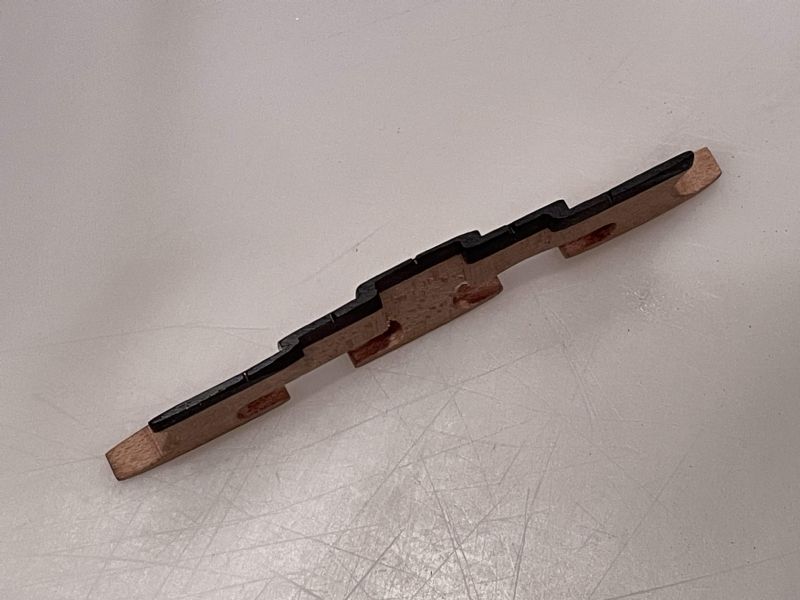
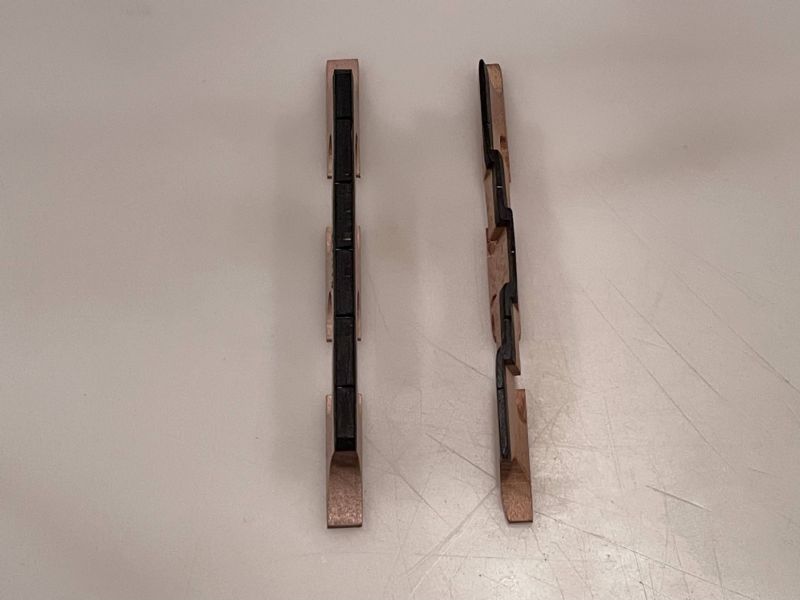
I went with a Kat Eyz bridge.
African blackwood top (over thought this like crazy with hardness tables open - went with the blackwood because it was the second densest and second hardest and trying to turn over a new leaf and not always be extreme).
Compensated because I have a pretty good ear - when I play anything unfretted (flute, viola), you would never know I have close to perfect pitch because it sure doesn't sound perfect - but my ears can hear what my hands cannot readily fix. And I'm very fond of chimes so I like to be able to set the bridge well to hit them consistently.
Then we get to where I was like lady-doing-math-meme trying to figure out if a radiused bridge would just un-do the compensation - but the one time I attempted to "improve" the tension in my head I got lost in space and made a mess. I thought a radiused bridge might make it easier to get it tensioned consistently across the whole surface. I do not, even though I trust the recommendation, have a drum dial. I tap tuned and the last time I did this it was like a G in some places and up to an A in others and I tried starting from finger-tight only, repeatedly, and could never get it even.
I went with the largest radius because I wasn't sure if I wanted it radiused in the first place and figured less extreme would be better.
I got it nice and even :) Could be the bridge - could be experience - but in any event I'm MUCH happier with the head tension. Also, I have it significantly lower. It's more like an F/Gb now but the banjo sounds great with it here.
I went with one slightly higher and slightly thinner than the default. I was playing on that Joel Hooks* bridge for a long time and it was very high and thin and thought this would be a smoother transition. (*which I really liked too - I just wanted to shake things up).
I also tried completely different strings from anything I tried before - Deering Julie Belle's with the wound 3rd string. I like wound strings on my other instruments so this was purely whim and not over-thought at all.
So idk how many of these little parameters mattered and how many were placebos or just canceled each other out anyway - but the banjo sounds great now - thanks for the recommendations :)
Terms of Use | Privacy Policy | Privacy Consent (EU/GDPR Only)
Copyright 2026 Banjo Hangout. All Rights Reserved.