DVD-quality lessons (including tabs/sheet music) available for immediate viewing on any device.
Take your playing to the next level with the help of a local or online banjo teacher.
Weekly newsletter includes free lessons, favorite member content, banjo news and more.
Premier Sponsors


|
Please note this is an archived topic, so it is locked and unable to be replied to. You may, however, start a new topic and refer to this topic with a link: http://www.banjohangout.org/archive/404253
Kellie - Posted - 07/22/2025: 04:20:16
Over the past few days, something has become very clear to me, Farland never intended for his Works to become quaint parlor pieces or Museum artifacts. He wanted them to be interpreted like classical music. Living breathing banjo music. Rising from the parlor straight to the concert stage. That was his dream, and I've taken it upon myself to take up the torch to reveal the true purpose of his method book. To elevate the banjo out of its parlor status. To continue Farland's legacy and life's goal.
Kellie - Posted - 07/22/2025: 04:23:29
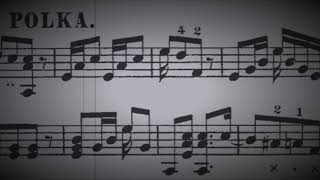
Not the most polished score video I know, but that's not the point.
csacwp - Posted - 07/22/2025: 09:04:25
quote:
Originally posted by KellieOver the past few days, something has become very clear to me, Farland never intended for his Works to become quaint parlor pieces or Museum artifacts. He wanted them to be interpreted like classical music. Living breathing banjo music. Rising from the parlor straight to the concert stage. That was his dream, and I've taken it upon myself to take up the torch to reveal the true purpose of his method book. To elevate the banjo out of its parlor status. To continue Farland's legacy and life's goal.
I don't know what you mean by "parlor status". The banjo was a concert instrument before Farland and remained one afterwards.
Kellie - Posted - 07/22/2025: 09:37:20
quote:
Originally posted by csacwpquote:
Originally posted by KellieOver the past few days, something has become very clear to me, Farland never intended for his Works to become quaint parlor pieces or Museum artifacts. He wanted them to be interpreted like classical music. Living breathing banjo music. Rising from the parlor straight to the concert stage. That was his dream, and I've taken it upon myself to take up the torch to reveal the true purpose of his method book. To elevate the banjo out of its parlor status. To continue Farland's legacy and life's goal.
I don't know what you mean by "parlor status". The banjo was a concert instrument before Farland and remained one afterwards.
I want to make clear: Farland refused to wear black face afaik. And he can often be seen as dismissive of Black culture or trying to separate it from its roots, That's a Ball and chain that I have to wear if I want to promote his music. And I do not endorse that message in any way. I don't think Farland was trying to be racist, I think he meant to be racist in the process. The banjo is capable of great emotional expression, both in the form of spirituals and rags. I've arranged a few.
He wanted to pry it from the hands of minstrels and put it in the hands of artists like Horace Weston and SS Stewart. He expected banjoists to be able to breathe with the phrase, utilize the banjo's capability for deep expression. I get that it somewhat exists and people tried to preserve Classic Banjo, which is fine. But it locks people into strict rhythm Rather than emphasiing silence as much as the notes, It doesn't leave room for nuanced phrasing I find understanding this is absolutely imperative to understanding Farland's music and mission. Perhaps you can see it as gatekeeping, which yeah I tend to agree and I have to wrestle with that as a person following in his footsteps. Farland is meant to be interpreted like Chopin or Liszt. Not like quaint minstrel music of the time. The problem is, It was published at a time when not only was the banjo disrespected by the class that controlled access to stages, and it looks quaint on the surface, but Farland did not intend it like that. It's classical music dressed up in 1800s Americana. There are no tempo markings. Farland was a romantic composer, he thought like a romantic. A romantic doomed to be misunderstood.
Edited by - Kellie on 07/22/2025 09:49:20
Joel Hooks - Posted - 07/22/2025: 12:17:50
quote:
Originally posted by Kelliequote:
Originally posted by csacwpquote:
Originally posted by KellieOver the past few days, something has become very clear to me, Farland never intended for his Works to become quaint parlor pieces or Museum artifacts. He wanted them to be interpreted like classical music. Living breathing banjo music. Rising from the parlor straight to the concert stage. That was his dream, and I've taken it upon myself to take up the torch to reveal the true purpose of his method book. To elevate the banjo out of its parlor status. To continue Farland's legacy and life's goal.
I don't know what you mean by "parlor status". The banjo was a concert instrument before Farland and remained one afterwards.
I want to make clear: Farland refused to wear black face afaik. And he can often be seen as dismissive of Black culture or trying to separate it from its roots, That's a Ball and chain that I have to wear if I want to promote his music. And I do not endorse that message in any way. I don't think Farland was trying to be racist, I think he meant to be racist in the process. The banjo is capable of great emotional expression, both in the form of spirituals and rags. I've arranged a few.
He wanted to pry it from the hands of minstrels and put it in the hands of artists like Horace Weston and SS Stewart. He expected banjoists to be able to breathe with the phrase, utilize the banjo's capability for deep expression. I get that it somewhat exists and people tried to preserve Classic Banjo, which is fine. But it locks people into strict rhythm Rather than emphasiing silence as much as the notes, It doesn't leave room for nuanced phrasing I find understanding this is absolutely imperative to understanding Farland's music and mission. Perhaps you can see it as gatekeeping, which yeah I tend to agree and I have to wrestle with that as a person following in his footsteps. Farland is meant to be interpreted like Chopin or Liszt. Not like quaint minstrel music of the time. The problem is, It was published at a time when not only was the banjo disrespected by the class that controlled access to stages, and it looks quaint on the surface, but Farland did not intend it like that. It's classical music dressed up in 1800s Americana. There are no tempo markings. Farland was a romantic composer, he thought like a romantic. A romantic doomed to be misunderstood.
You might want to revisit some of this and correct your timeline. Farland made his concert debut "as an artist" (not playing dance music or in minstrelsy) in 1893--- Weston died in 1890. Kinda hard for Farland to influence a dead man. The other BIG fallacy is that most of Weston's billing was on the minstrel stage. So, Weston was a "minstrel banjoist" for the most part, even touring England with Jarrett and Palmer's Uncle Tom's Cabin show (Uncle Tom shows were a type of minstrelsy, another thing you could research).
1893 was fairly late. The non minstrel banjoist had then been well established for over two decades by then.
It was generally accepted (by people who lived through it) that the person to really take the banjo out of burnt cork and minstrelsy was Frank B. Converse. I would also argue that the "pugilistic age" (the banjo contest era) heavily promoted by the Dobson family also contributed to the banjo being separated from burnt cork. So, thank the Dobson family as well for Farland being a concert banjoist.
Additionally, Albert Baur contributed heavily to the available music with some of his arrangements of popular and light classics being quite advanced, in the early and mid 1880s (BF-- Before Farland).
Not to mention that Farland was a bit pejorative towards Weston in at least one article from 1912 he wrote.
Before making these broad declarations, I would recommend continuing your research and education by reading all of the Cadenza and Crescendo magazines (and take notes). Read all the available Stewart Journals (not all are available). Go ahead and read all the BMGs while at it.
It is a lot, but worth it.
Edited by - Joel Hooks on 07/22/2025 12:19:33
Kellie - Posted - 07/22/2025: 13:32:01
Except according to classicbanjo.ning he did start as a minstrel. Not sure if he refused to wear black face or not. He probably criticized Weston for being a minstrel, and wasn't sensitive to the fact that it was the only work a black musician could get at the time. His career started in 1884 and his luck changed after he wrote the 1890 publication national School of Banjo All of this is according to the Ning site. SS Stewart caught wind of him after he became a banjo teacher full time and then he started his concert career, but only after being a minstrel. BMG is a British publication far removed from Farlands Americana, but I would happily read the Stewart journals, do you have a link?
Joel Hooks - Posted - 07/22/2025: 13:53:57
quote:
Originally posted by KellieExcept according to classicbanjo.ning he did start as a minstrel. Not sure if he refused to wear black face or not. He probably criticized Weston for being a minstrel, and wasn't sensitive to the fact that it was the only work a black musician could get at the time. His career started in 1884 and his luck changed after he wrote the 1890 publication national School of Banjo All of this is according to the Ning site. SS Stewart caught wind of him after he became a banjo teacher full time and then he started his concert career, but only after being a minstrel. BMG is a British publication far removed from Farlands Americana, but I would happily read the Stewart journals, do you have a link?
Incorrect, Farland trivialized Weston's "minor jigs".
Farland was teaching in Pittsburg when he self published his book. This was, as I understand, before he started the whole "violin music" obsession with tremolo, which happened a couple years later.
At any rate...
Kellie - Posted - 07/22/2025: 14:19:22
The minor jigs are not his best work to be fair. His best work is by far his home sweet home variations. Virtuosic Cascades of notes meant to be interpreted rather than just regurgitated. Yeah Farland got very obsessed with violin, music and tremolo, he did it wrong, but to be fair he didn't have much biological knowledge at that time. The way he describes it yeah it's no wonder he got injured. Also thank you!
Edited by - Kellie on 07/22/2025 14:19:34
Terms of Use | Privacy Policy | Privacy Consent (EU/GDPR Only)
Copyright 2026 Banjo Hangout. All Rights Reserved.