DVD-quality lessons (including tabs/sheet music) available for immediate viewing on any device.
Take your playing to the next level with the help of a local or online banjo teacher.
Weekly newsletter includes free lessons, favorite member content, banjo news and more.
Premier Sponsors


|
Please note this is an archived topic, so it is locked and unable to be replied to. You may, however, start a new topic and refer to this topic with a link: http://www.banjohangout.org/archive/398328
gentrixuk - Posted - 07/12/2024: 04:36:22
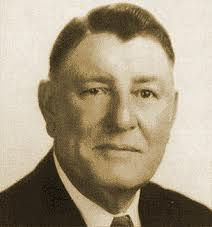
For this week’s tune of the week, I have chosen “Sallie Cooper” (aka “Sally Cooper”). The original source for the tune is the fiddle playing of John Salyer (1882-1952, Salyersville, Magoffin County, Ky.). You can hear John Salyer’s original 1942 recording here
The original source recording is held in the Berea College Special Collections and Archives:
This collection consists of forty eight acetate disc recordings made in the early 1940s that document Magoffin County, Kentucky fiddler and banjo player, John Morgan Salyer. The recordings were made in 1941-42 by his sons Grover and Glen Salyer using a home disc-cutting machine. Many of John Salyer's tunes have not been documented elsewhere. On several of the recordings Salyer uses cross-tunings and some have banjo, mandolin, and guitar accompaniment provided by Grover and Glen Salyer.
Here is a brief biography, taken from knoxvilleoldtime.org
John Morgan Salyer (1882-1952) was born and raised in Magoffin County, Kentucky. He has come to be recognized as a major influence on Old Time music. His crooked tunes and unique bowing and phrasing continue to challenge fiddle players even today. Well known Salyer tunes include Billy In The Lowground, Indian Ate The Woodchuck, Lost Girl, Mike In The Wilderness, Jeff Sturgeon, Last Of Harris, and Duck River.
When he was about eight years old, John fell out of a tree and broke his leg. His father (a fiddler) bought him a half-size fiddle to keep him occupied while recovering. In 1901, he enlisted in the army and served three years in the Philippines. Salyer returned home to marry Minnie Gullett on August 11, 1905. They eventually had nine children together: seven girls (two of whom died young) and two boys. Rosemary Carlson, Salyer's great niece, wrote a short article called “Appalachia: John Morgan Salyer, father of bluegrass music and Kentucky fiddle music” that reveals some more family history.
There are many excellent sources to learn more about John Salyer. One of the best is this compilation from Old Time Central, which includes information from the Salyer family along with research from player and historian Bruce Greene.
Salyer made no commercial recordings. In 1933, while working with his horse in the fields, he was approached by a scout to make records. After hearing the proposal, which he thought was very unfair, he reportedly said "Get up Kate; we can make more money plowing than playing the fiddle!"
It was only at the insistence of Salyer’s sons that he agreed to record some of his tunes, which took place between 1941-42. These original discs of 84 sides are now housed at Berea College, and are available for listening on the Digital Library Of Appalachia website.
In an interesting note, Salyer was working as a pipefitter for the oil companies in Knoxville around 1937, when field recorders from the Library of Congress came through Magoffin County, Kentucky. While there, they recorded another fiddler from the area, W.H. (Bill) Stepp. Stepp's tunes are now well known in Old Time circles, especially his playing of Bonaparte’s Retreat. Who knows how history could have been different if Salyer had been at home at the time?
Here is a selection of other excellent recorded versions available online, mainly fiddling:
Bruce Molsky
David Bragger and Susan Platz (fiddle duet)
Walt Koken
Here is the entry for the Traditional Tune Archive, which includes musical notation transcriptions of the original recording and Bruce Molsky’s version.
The tune
It’s in the key of G (although the original version sounds closer to A to me, but perhaps that’s an issue with the old recording).
The B part is interesting as the first line seems to shift key very briefly into the key of A, suddenly hitting a C# note. I really like the way that Bruce Molsky and Bragger and Platz version handle this part, as it doesn’t sound like the key is really changing, but you can hear a difference in harmony coming through.
My version is attached, along with my tab. I’ve written out the A part as two different versions back to back rather than showing it as a repeat, just to show some of the variations I’ve heard in the recordings
Edited by - gentrixuk on 07/12/2024 04:37:44
dbrooks - Posted - 07/12/2024: 05:24:12
Great selection and fine write-up, Mark. I have tabbed a bunch of John Salyer's tunes but have not given "Sally Cooper" any attention at all. (I worked for a while with a greatniece of Salyer and became a fan after hearing some about him.) I'll need to spend some time with this tune.
David
carolynf - Posted - 07/12/2024: 11:49:12
Likewise, I hadn’t given Sally Cooper any attention before. I enjoy the Salyer tunes, and I am looking forward to trying this one
JanetB - Posted - 07/13/2024: 14:54:54
Nice playing, Mark, on a banjo with a clear, bright tone. Glad to have another John Salyer tune. It's on a CD I have oft listened to -- "Lost Boy" by Bruce Molsky (in fact, that's the tune I plan to cover for my next TOTW presentation).
My arrangement comes from the Slippery Hill recording of John Salyer. I had a bit of trouble getting a nice clean 4th fret, 4th string note, which happens often in the A part, so I resorted to a "ghost" hammer on, followed by another hammer-on on the 2nd fret, 3rd string. Getting as clean a note as possible is always a goal to strive for. The B part appears to modulate to the key of D and then back to finish in the key of G. It does this twice in its brief eight measures. That movement gives it interest.
gentrixuk - Posted - 07/14/2024: 10:54:25
quote:
Originally posted by JanetBNice playing, Mark, on a banjo with a clear, bright tone. Glad to have another John Salyer tune. It's on a CD I have oft listened to -- "Lost Boy" by Bruce Molsky (in fact, that's the tune I plan to cover for my next TOTW presentation).
My arrangement comes from the Slippery Hill recording of John Salyer. I had a bit of trouble getting a nice clean 4th fret, 4th string note, which happens often in the A part, so I resorted to a "ghost" hammer on, followed by another hammer-on on the 2nd fret, 3rd string. Getting as clean a note as possible is always a goal to strive for. The B part appears to modulate to the key of D and then back to finish in the key of G. It does this twice in its brief eight measures. That movement gives it interest.
Lovely version, Janet. It sounds like such a simple tune, but there is really quite a lot going on in there.
Terms of Use | Privacy Policy | Privacy Consent (EU/GDPR Only)
Copyright 2026 Banjo Hangout. All Rights Reserved.