DVD-quality lessons (including tabs/sheet music) available for immediate viewing on any device.
Take your playing to the next level with the help of a local or online banjo teacher.
Weekly newsletter includes free lessons, favorite member content, banjo news and more.
Premier Sponsors


|
Please note this is an archived topic, so it is locked and unable to be replied to. You may, however, start a new topic and refer to this topic with a link: http://www.banjohangout.org/archive/385575
janolov - Posted - 09/09/2022: 09:35:03
I have decided to dedicate this week’s TOTW to Art Rosenbaum who left us five days ago. His version of Spanish Fandango, issued on the vinyl LP Folk Banjo Styles in 1962, collected by Art from Pete Steele, has been one of my favorite banjo tune from the late 60’s when I bought the LP.
I start this history lesson with Henry Worrall. Born in Liverpool, England, in 1825, Worrall moved to the United States in 1835 and eventually settled in Cincinnati, Ohio. For a while he worked as a glasscutter’s apprentice, but his passion was guitar music. A skilled performer and composer, he became a music professor at the Ohio Female College. One of his prize guitar students, Mary Elizabeth Harvey, became his playing partner and wife. In 1856, he completed Worrall’s Guitar School, or The Eclectic Guitar Instructor, which remained in print through the 1880s.
On June 29, 1860 , Worrall walked into the Clerk’s Office of the Southern District Court of Ohio and filed copyrights for two instrumental guitar songs. “Worrall’s Original Spanish Fandango” called for the guitar strings to be tuned to an open-G chord (D- G-D-G-B-D, from low to high), with the explanation that the music was to be read as if the guitar were in standard tuning (for example if the notation showed a high E, same as open first string in standard tuning, the string should be played open which is the note D).
Two words stand out in Worrall’s title. “Fandango,” thought to be of African origin, first appeared in the English language in the 1760s, used to describe a “native ball,” or dance. Then the term was applied to a lively 3/4 time dance that originated among Spanish-speaking people. An April 1796 playbill for New York’s John Street Theatre, for instance, advertised a “Spanish Fandango” between the play and the afterpiece, listing four dancers and five singers who did not appear in the play. Eventually the word was used to describe the music itself. Of far more interest to blues sleuths, though, is the word that precedes “Fandango” in Worrall’s title, “Spanish.” In the decades to come, this word would echo in the vocabularies of seminal bluesmen such as Charlie Patton, Son House, Robert Johnson, and Muddy Waters. More on this in a moment.
Worrall’s other copyright entry that day, “Sebastopol,” was composed several years earlier, when the Crimean War was raging. To commemorate the lengthy siege of the Russian city of Sebastopol (later spelled Sevastopol), Worrall composed a stately march that imitated a bugle and military marching band. He subtitled his piece a “Descriptive Fantaisie for the Guitar.” This time, the music instructed players to retune their guitar to open D so the song’s elegant treble-string melodies and chiming harmonics fell easily under the fingers. In its 1860 form, “Sebastopol” has little harmonic variation and sounds decidedly un-African, but its main melody and voice-leading approach to chords became staples for blues and folk performers as varied as Libba Cotten, Robert Wilkins, Mississippi John Hurt, and Furry Lewis.
It didn’t take long time before banjoists discovered Spanish Fandango. There are printed versions in for example Buckley's Banjo Guide (1868), Winners "New American School For Banjo"1883, and S.S. Stewart 1884 (the book is here ) . These versions were in open G tuning or its equivalents (at that time usually called high bass tuning) and in triple time (3/4 or 6/8 time). These versions were rather close Worrell’s guitar version but had a lot of own elaborations. The fifth string was often treated as a bass string and substituted the open fifth string on guitar.
The sheet notation of original Worrell guitar version can be downloaded from here.
Here are some modern examples how the old version could sound:
Tim Twiss: minstrelbanjo.ning.com/video/s...dango-wmv
Rob McKillop: soundcloud.com/robmackillop/16...-fandango
Simon “Pete” Steele (March 5, 1891 - November 21, 1985) was an American traditional banjo player. Steele grew up in the Corbin – London, Kentucky area. At age nineteen he married London native Lillie Swanner. Over several years’ time he had held a variety of jobs in various parts of Indiana and Ohio as well as Kentucky. It was from East Bernstadt near London that in 1937 the family moved to Hamilton, Ohio. There Steele joined the ranks of the many other rural Kentuckians who found dependable work for the Champion Paper Company.
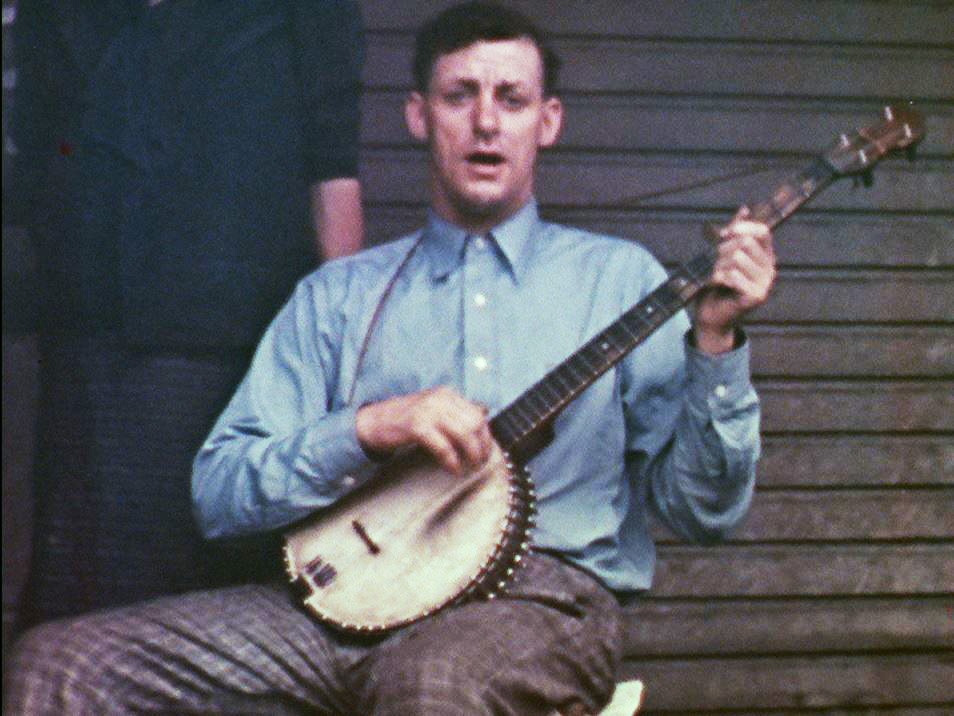
Of all the early banjo players recorded for the Library of Congress’s folk music archive, none commanded as many techniques or employed as many tunings as Pete Steele. A dazzling array of frailing, two-?nger, and up-picking styles de?nes his extensive repertoire of instrumentals, folk songs, and ballads. Steele gave few public performances outside his home community in Hamilton, Ohio, yet he had considerable in?uence on musicians of the urban folk revival during the 1950s and 1960s.
Steele began playing the banjo when he was six or seven on a fretless instrument made for him by his ?ddle-playing father. While much of Steele’s instruction came from his father, other local musicians also passed along tunes. One of these, “Coal Creek March,” a parlor-based banjo instrumental with a series of ascending and descending arpeggios, commemorated mining troubles that occurred in the early 1890s in Coal Creek, Tennessee.
In 1938 Steele recorded “Coal Creek March” for the Library of Congress. With the tune’s publication in 1942, Steele’s playing came to be known to a wider audience, and by the mid-1950s, Pete Seeger had made the “March” an integral part of his concerts, urging his listeners to learn directly from the music’s authentic sources. This led to Steele’s 1958 solo album on the Folkways label, Banjo Tunes and Songs. In later years, those who travelled to his home were rewarded with his performance of “Coal Creek March,” which had become a signature piece among the many he had mastered.
Pete Steele also learned Spanish Fandango (recorded March 29, 1938): archive.org/details/afc1938004_1705B2 ). It is not known how and where he learned it. He played in open C tuning (gCGCE) and used a mixed two-finger thumb lead and index lead style.His version differs a lot the older version in G tuning from the late 1800’s, but I think it is also a lot of similarities.
Pete Steele also made a lot of other interesting tunes. His most famous tune is probably Coal Creek March (TOTW 12/30/2011 banjohangout.org/archive/224203 )
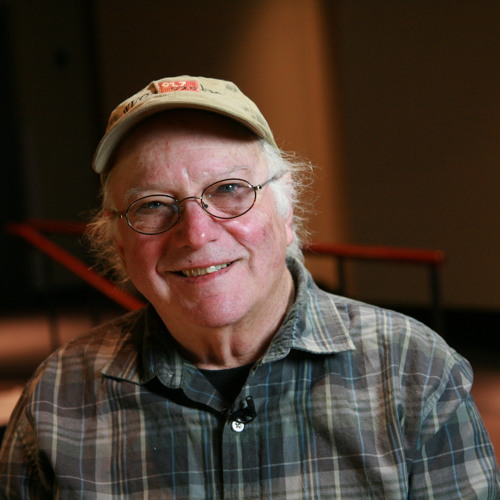
Art Rosenbaum
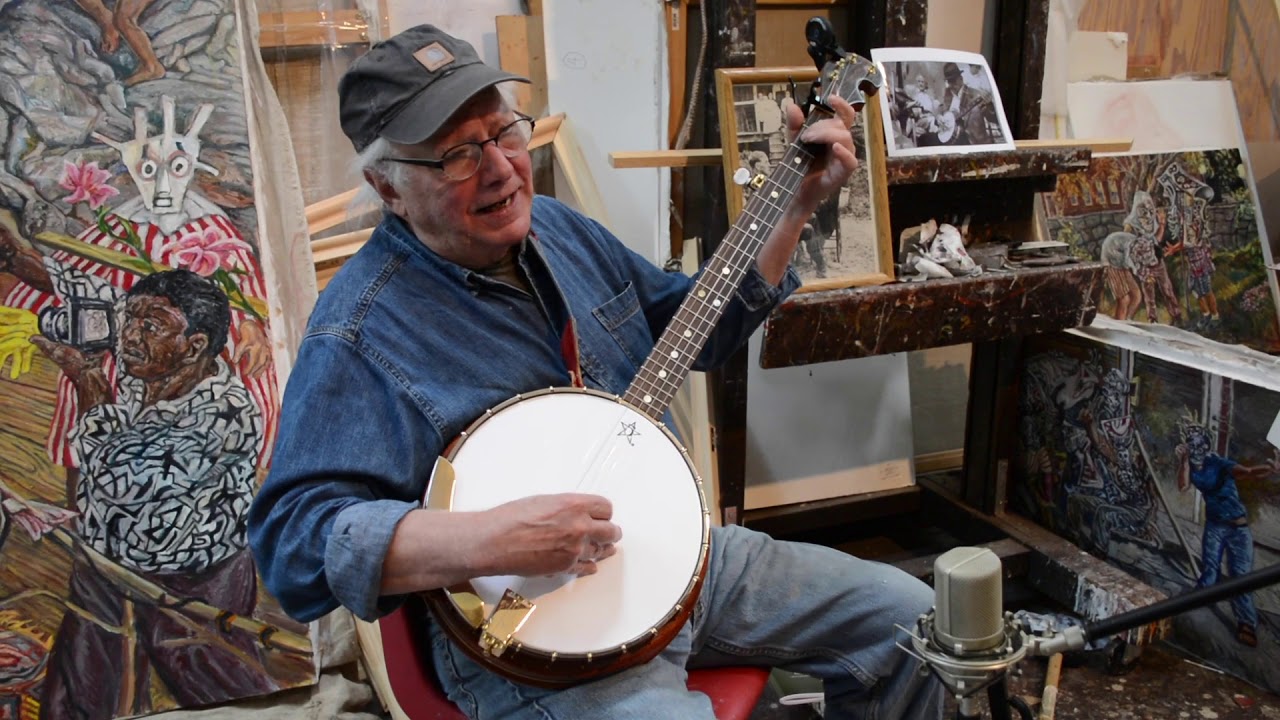
Arthur Spark Rosenbaum (December 6, 1938 – September 4, 2022) was an American art professor emeritus at the University of Georgia, an artist, musician, and folklorist. He won a Grammy award in 2008 for Best Historical Album, for his music collection Art Of Field Recording Volume I: Fifty Years Of Traditional American Music Documented By Art Rosenbaum.
Rosenbaum was born in Ogdensburg, upstate New York. His family moved around the United States during his childhood, spending time in Indianapolis and elsewhere, while his father was a member of the Army Medical Corps. He studied at Columbia University.
Rosenbaum taught at the University of Georgia from 1976 to 2006. The Georgia Museum of Art later held an exhibition of his drawings and paintings. His other paintings include a mural in the Russell Special Collections Building on the UGA campus, featuring the faces of political figures from Georgia's history. The book Weaving His Art on Golden Looms: Paintings and Drawings by Art Rosenbaum was published on October 1, 2006 by Georgia Museum of Art and William U. Eiland.
With his wife Margo, he travelled around the United States for over 50 years, recording blues music, fiddle tunes, and other forms of traditional music. Selections of his recordings were published as The Art of Field Recording: 50 Years of Traditional American Music. He also performed as a banjo player.
He died from cancer on September 4, 2022.
The LP album Folk Banjo Styles (Elektra EKS-7217) was recorded in 1962. There were some young unknown street musicians in New York that had an interest in “folk banjo”. They gathered and made the recording during two days. The musicians were rather unknown in 1962: Art Rosenbaum, Tom Paley, Eric Weissberg, Marshall Brickman, but today they all are more or less World famous. Here you can listen to all tracks: archive.org/details/lp_folk-ba...erg-marsh (Spanish Fandango with Art Rosenbaum on banjo and Marshall Brickman on guitar is number 18).
For those who are interested, there is an interview with Art in Banjo Newsletter, November 1997 banjonews.com/1997-11/art_rose...view.html (the interview was done by Ken Perlman).
Also here is another interview from 2016: youtube.com/watch?v=0jg6YIjvztU
Art Rosenbaum seems to have collected the tune sometime in the 1950’s or around 1960 when he met Pete. Art seems to have visited Pete several times and learned a lot of tunes directly from him.
Here is a photo with both Pete and Art.

Art Rosenbaum recorded Spanish Fandango first in 1962, see above. There is also another recording in the DVD following his last book Old Time Banjo Book 2014 artrosenbaum.org/v2/product/ar...njo-book/ . In this trailer he starts with playing Spanish Fandango: youtube.com/watch?v=LadR3ifjXUM (it is worth watching the whole trailer – and it is absolutely worth to buy the book with DVD!).
Spanish Fandango is played in open C tuning (gCGCE), and both Art Rosenbaum and Pete Steele use a mixed two-finger thumb lead and two-finger index lead style and use thumb rolls or thumb drags to alter between thumb lead and index lead (you play two following notes on third and second string by dragging the thumb from the third string to the second in the same movement).
There is a tab in John Burke’s book but I found that tab rather difficult to interpret. There is also a tab in his book Old Time Banjo Book artrosenbaum.org/v2/product/ar...njo-book/. I have worked out an own version (before the Old Time Banjo Book was issued) which is in the tab archive. Also Rick Van Patten (mmuussiiccaall) has posted a tab banjohangout.org/tab/browse.as...p;v=24653. A slightly different version is in t e Tab Archive: banjohangout.org/tab/browse.as...p;v=25625 (TablEdit, pdf and midi files)
There are some recordings available on Internet that are cover versions of Pete Steele’s or Art Rosebaum’s versions:
Lastfirstface: youtube.com/watch?v=hzMGiDABCEs
Mintzcondition: youtube.com/watch?v=UROHBugKwIs
There are also some clawhammer versions based on the old version in G from the 1860’s in triple time:
Mary Cox: youtube.com/shorts/hPTqbIGLIOU
Bob Flecher: youtube.com/watch?v=fGVZP6kMimM
Erich Schroeder vrteach.org/content/spanish-fandango
There are also other finger picked versions in 4/4 and in the key of G. It is i slightly other melody than Pete Steele's version and Worrell's version:
Oren Jenkins (nephew of Snuffy Jenkins) smithsonianfolkways.bandcamp.c...-fandango and youtube.com/watch?v=1CbrqKh9pjk
Snuffy Jenkins: youtube.com/watch?v=1NrFYMu9Dao
“Dango” by Dock Walsh (Carolina Tar Heels) youtube.com/watch?v=uIOB8fZe_kk
Clifton Hicks calls Dock Boggs’ Coke Oven March Spanish Fandango: youtube.com/watch?v=OpzCjNxeUsY
E.K. Griggs: youtube.com/watch?v=eiOgkhcMunY
The G version from Oren Jenkins and Snuffy Jenkins are tabbed out in Art’s second book: The Art of the Mountain Banjo melbay.com/Products/96711M/the...anjo.aspx and on the CD Art is playing his version.
Many of the later version are in 2/4 or 4/4 time, while Worrell’s version and the early banjo versions were in 6/8 time. The word Fandango also indicate that there is a dance in ¾ or 6/8.
However, the Worrell version contains several parts, starting with 6/8 but the concluding parts actually are in 2/4, and it may be possible that the 2/4 parts of the original version were adapted by other banjo players (in traditional banjo music 2/4 or 4/4 seems to be a lot more common than ¾ and 6/8).
Edited by - janolov on 09/11/2022 06:44:18
chip arnold - Posted - 09/09/2022: 17:40:24
What a great job of TOW. You've really outdone yourself Jan. And what a treasure Art was. And thanks for all the info about Pete Steele. I believe Art recorded his Coal Creek March in '58. 30 years after John Lomax recorded it for the Library of Congress. Years ago I got a cassette tape of it from them and learned it from that. Here's my take on Pete's 1938 playing.
banjohangout.org/myhangout/med...archived=https://www.banjohangout.org/myhangout/media-player/audio_player2.asp?musicid=2766&archived=https://www.banjohangout.org/myhangout/media-player/audio_player2.asp?musicid=2766&archived=https://www.banjohangout.org/myhangout/media-player/audio_player2.asp?musicid=2766&archived=
Edited by - chip arnold on 09/09/2022 17:42:36
Bill H - Posted - 09/10/2022: 04:47:04
Thanks for all of this great research Jan. Many years ago I made a try at the John Burke version in C tuning. I agree that it lacks something. Now, learning that the original was in G with the guitar tuned to an open G tuning, I am inclined to go in that direction. I found several arrangements for guitar in G tuning on Musescore.
musescore.com/user/1515446/scores/7105070
musescore.com/user/56747/scores/2176191
It is interesting how the original has been reinterpreted over the years. I have always loved the Oren Jenkins version.
janolov - Posted - 09/10/2022: 05:58:55
quote:
Originally posted by Bill HThanks for all of this great research Jan. Many years ago I made a try at the John Burke version in C tuning. I agree that it lacks something. Now, learning that the original was in G with the guitar tuned to an open G tuning, I am inclined to go in that direction. I found several arrangements for guitar in G tuning on Musescore.
musescore.com/user/1515446/scores/7105070musescore.com/user/56747/scores/2176191
It is interesting how the original has been reinterpreted over the years. I have always loved the Oren Jenkins version.
Bill, if you are - or someone else - is interesting in the original Worrell version, I have tabbed it out in TablEdit (for guitar), and also made a note by note transcription to banjo (the difference is that i have changed the six string notes and some of the fifth string notes on the guitar to other notes on the banjo). I can post it if anyone is intersted.
Bill H - Posted - 09/10/2022: 06:14:55
quote:
Originally posted by janolovBill, if you are - or someone else - is interesting in the original Worrell version, I have tabbed it out in TablEdit (for guitar), and also made a note by note transcription to banjo (the difference is that i have changed the six string notes and some of the fifth string notes on the guitar to other notes on the banjo). I can post it if anyone is intersted.
Jan, yes, I would be interested in the Tabledit file. It was my intention to transcribe the guitar notation into a banjo arrangement. I was fooling around this moring with moving those low notes up an octave and incorporating them into a pinch. I think this piece will take some practice time for me, but I have always had an interest in this tune. Thanks for the motivation.
Alvin Conder - Posted - 09/10/2022: 07:27:45
Very well done!
Looking forward to re-listening to all those recordings.
Thank You for putting this together. Impressive.
janolov - Posted - 09/10/2022: 07:39:32
Here is a guitar tab of Worrell's original version, and a direct transcription to banjo: banjohangout.org/tab/browse.as...p;v=25629
JanetB - Posted - 09/10/2022: 10:23:14
Wow, Jan! You get an A+++ and a shiny star to boot. Art Rosenbaum has been a beacon in my banjo journey and his legacy will grow. I've wanted to learn Spanish Fandango ever since I read about it in Stephen Ward's seminal book The Beautiful Music All Around Us, Field Recordings and the American Experience. Stephen has an entire chapter on Pete Steele, who taught the tune to Art. You can listen to his own beautiful version here:
My arrangement is a clawed version of Art's 2-finger tab in the recent book and DVD Jan mentioned -- Art Rosenbaum's Old-Time Banjo, Forty-Seven 5-String Banjo Tunings and Picking Styles. I was happy to discover some clawed adaptations to the picking patterns in the A part. The B part barred chords I played in a traditional clawed method with drop-thumbing.
Postscript: After posting this, I was looking through Art's book and see that he has a "Spanish Fandango (II)" at the end of the book, based on Oren Jenkins' 3-finger version. Another project to explore this week....
Edited by - JanetB on 09/10/2022 10:27:56
RG - Posted - 09/10/2022: 11:15:45
GREAT pick Jan! I first meet Art in the mid 70's, and was lucky to have spent some time with him and Margo in 2019 when David Bragger and I recorded him for the Old-Time Tiki Parlour. Art was such a giant figure in old-time music preservation, playing and education... and such a wonderful human being. I don't think we'll see the likes of him again any time soon...
BobTheGambler - Posted - 09/11/2022: 06:33:04
RIP Art Rosenbaum
Edited by - BobTheGambler on 09/11/2022 06:33:58
Tractor1 - Posted - 09/11/2022: 17:02:54
don't know if this fits but this is where I picked it up years ago--I think the liner notes say it (the tune) is an old wire recording -I'll have to pull the sleeve
Edited by - Tractor1 on 09/11/2022 17:11:59
Emiel - Posted - 09/17/2022: 05:27:01
Thank you Jan for the interesting contribution. I am a bit late to this thread.
Personally, I find it hard to separate the great 2/4 an 4/4 versions of "Spanish Fandango" from "Coal Creek March" versions…
The 3/4 (or 6/8) time version (as it is originally) always clearly is "Spanish Fandango". Here is my simple version the way it developed on my banjo, having heard several 3/4 time renditions over the years (tuning: gDGBD):
Edited by - Emiel on 09/17/2022 05:37:46
Terms of Use | Privacy Policy | Privacy Consent (EU/GDPR Only)
Copyright 2026 Banjo Hangout. All Rights Reserved.