DVD-quality lessons (including tabs/sheet music) available for immediate viewing on any device.
Take your playing to the next level with the help of a local or online banjo teacher.
Weekly newsletter includes free lessons, favorite member content, banjo news and more.
Premier Sponsors


|
Please note this is an archived topic, so it is locked and unable to be replied to. You may, however, start a new topic and refer to this topic with a link: http://www.banjohangout.org/archive/369331
RG - Posted - 10/08/2020: 23:00:48
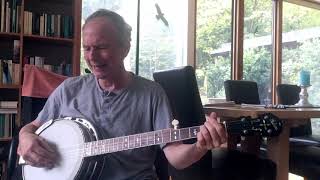
Well, this may well be one of my all time favorite banjo tunes. For fingerpicked OT banjo, Dock and Rosko Halcomb rank right up there at the top in my opinion, along with folks like Marvin Gaster, Omer Forster, Lee Sexton and Morgan Sexton.
Dock first recorded "Country Blues" in 1927 for Brunswick Records. The "B" side of the record was "Sammie Where Have You Been So Long?" backed by the great Hub Mahaffey on guitar, but that "A" side with Country Blues was all Dock, and man what a track it is! The virtual definition of the Southern "rounder."
I'm not the best at these TOTW's for providing information, a lot of folks are much better at that, but do your own research on Dock and have fun... he was quite a character and a seminal figure in old-time music en.wikipedia.org/wiki/Dock_Boggs.
I highly recommend getting every recording you can by Dock, they are all on the Folkways label folkways.si.edu/dock-boggs/his...ithsonian folkways.si.edu/dock-boggs/leg...jo-player Mike Seeger recorded the latter albums in 1968; in 1927 Dock played "Country Blues" at a fast clip... in 1968 it was slower and more bluesy... I like 1927 Dock so play it somewhere in between.
"Country Blues" is a song that is in the "Darling Cora" line of tunes, Dock learned it around 1914 from Tennessee musician Homer Crawford as "Hustling Gambler", but since "blues" were all the rage in the 20's and 30's, Brunswick changed the name on the recording. A LOT of info on Dock and his music in the extensive liner notes to the Smithsonian Folkways re-issue album of Dock's original 1920's recordings folkways-media.si.edu/liner_no...BF654.pdf
A lot of folks have covered this tune, Dock plays it in a 3 finger style, but I like to play it in a thumb lead. It's a very simple song to play, you're really playing mostly opening strings with this tuning, and working the 3rd and 5th frets of the fourth and second strings and the second fret of the first and third string. I use the old Rosko Halcomb TTI for the high part in the beginning of the tune and play it pretty straight forward thumb lead.
Anyway, that's about it, search out some other versions of the tune on your own, and be sure to check out Dock himself, there is NO substitute for the original youtube.com/watch?v=a54YpZIdFS0
As a non-sequitur, but old-time related, be sure to spend a little time checking out the digital 49th Santa Barbara Old-Time Fiddlers Festival this Sunday. There is an amazing lineup of performances, workshops and some great music from the contest, all arranged by artistic director and old-time musician extraordinaire David Bragger; it's WELL WORTH spending a few hours to check out, trust me, you'll really enjoy it! fiddlersfestival.org
Take care!
Edited by - RG on 10/12/2020 21:35:08
Hay-on-Wye - Posted - 10/10/2020: 00:34:49
Great choice for tune of the week and I love your rendition. I’m ashamed to say I only came across Doc Bloggs fairly recently but love his style
Don Borchelt - Posted - 10/10/2020: 07:11:55
A fine performance, RG, you got the sound. I also like the way my good friend Don Couchie, up in Ontario, Canada, does Dock's signature song. Here is a video from Clifftop, 2010, done by Tish Arnold. You guys both sound so good, I have to sit down and learn this one.
- Don B.
Edited by - Don Borchelt on 10/10/2020 07:12:21
RG - Posted - 10/10/2020: 09:59:11
Thanks Neill and Don, appreciate it!
Don, that is a great version Don plays, always like hearing what you guys come up with, GREAT stuff, thanks for posting that!
janolov - Posted - 10/10/2020: 11:19:38
I think it is a very good choice for a TOTW. Dock is almost always mentioned when old-time and three-finger is discussed (but I think he played more two-finger when he was young during the 1920's). His three-finger style is rather uncomplicated, He tried to play the melody with (mostly) the thumb and have different fill-in licks or rolls with the the index and middle finger and thumb. Most of his songs is also easy to to play in clawhammer and in other tunings.
The connection to Darling Cora is interesting. I wonder if it is essentially the same tune from the beginning, that have been developed differently in different regions? I think Rick's recording emphasize the similarities more than Dock's recording.
I have a wondering about his three-finger style. Is it unique or were there other players from the 1920's that have a similar playing style (and using the same strange tunings)?
Emiel - Posted - 10/11/2020: 04:52:38
I too will record a version soon. I already recorded one in double-C tuning, but will now do one in f#CGAD. Maybe today, maybe tomorrow. Let me say a few things about the points that janolov made.
The melody of "Country Blues" is almost the same as the melody of "Darling Cory".
I don't think that Dock mostly played the melody by the thumb. Mike Seeger describes Dock's way of picking very precisely in the booklet to the CDs "Dock Boggs – His Folkways Years". Dock's thumb is only on the 5th, 4th and 3rd strings; the index finger plays melody when required on the 2nd string, the middle finger on the 1st string. The 2nd and 1st strings are often required for the melody.
Mike Seeger also mentions that Dock played clawhammer as well, but none of it has been recorded. I read somewhere else, he personally wasn't too fond of that way of playing.
I don't know if Dock's style is/was unique, maybe Banjo Bill Cornett comes close? The f#CGAD tuning is basically a variant of the f#DGAD tuning (also used by Dock), giving Dock the possibility of a hammer-on on the first string from C to D. f#DGAD is not that strange a tuning if you look at guitar tunings. It is basically the 5-string variant of the not unpopular DADGAD tuning. Of course, Dock used many other tunings as well…
Jan Olov, what makes you think that Dock played more two-finger when he way young? I've never heard that before…
Emiel - Posted - 10/11/2020: 06:22:31
Well, here it is. Dock Boggs' Country Blues, this time in the original tuning: f#CGAD, one half step down. Banjo: 1926 Gibson TB-3 ball-bearing with a 5-string reproduction neck.
Difficult to not make one mistake in such a long song in this tuning. I've recorded it several times, but there are always two or three mistakes…
chip arnold - Posted - 10/11/2020: 08:55:21
Just a side note ... In the clip Don Borchelt posted above, Don Couchie is playing my old Baldwin. The one banjo I should never have let go! What a beautiful sound it had in Don's capable hands.
Another side note ... If anyone has not yet heard the OT 3-finger playing of Don Borchelt, make haste to his website and have a listen and a look ...
banjr.com/
JanetB - Posted - 10/12/2020: 15:49:03
You always offer something unique, RG. Your complete vocals and great banjo accompaniment are much appreciated, as are the performances from Don Couchie and Emiel. Here's the version I first heard with Buddy and Julie Miller singing Country Blues with the Chieftains in "Down the Old Plank Road." In this link you hear them with clawhammer banjo: Buddy and Julie Miller.
RG - Posted - 10/12/2020: 20:54:37
Thank you Janet, sure appreciate the kind words.
Emiel and Jan-Olov, Dock mentioned in the Seeger interviews about sneaking down to the Black railroad worker's camps and hearing them play music... where he said he picked up his fingerpicking style. Dock also used brushes in his playing, which you can really hear on tunes like "Davenport." I always approach Docks songs thumb lead for some reason, some of his "show" pieces are definitely three-fine specific, but others just seem to fall real easy into thumb lead. A lot of early blues guitar players did amazing things with just thumb and index, maybe Dock adopted that to three finger or maybe they played three finger classical style and that's what Dock played. All in all, he had a great and unique sound, and that's about all I know for sure.
Edited by - RG on 10/12/2020 21:01:46
RG - Posted - 10/12/2020: 21:24:13
Janet - Used to distribute Buddy and Julie's CD's when they were signed to my good friend Bruce Bromberg's Hightone label... real nice folks.
Edited by - RG on 10/12/2020 21:36:54
Don Borchelt - Posted - 10/13/2020: 09:11:46
Chip, thanks for the nice plug!! Wonderful performance, Emil. I have one of those 1926 ball bearings, with the same repro-neck pattern. I love it, crisp but very sweet. You make it sound great.
I want to make a couple of points about the tuning Boggs uses (f#CGAD). First of all, as Emil points out, it is just a variant of another tuning he uses (f#DGAD), but with the dropped 4th allowing him to hammer onto the tonic note. That basic tuning, the 1st through 4th anyway, is essentially the open D version of Sawmill (gDGCD). Boggs is picking the tune on the banjo in Dorian Mode, the same mode as Pretty Polly and Shady Grove, which means the scale has a minor 3rd and a natural 7th. In D, that would be D E F G A B C D, all white keys on the piano, starting on D. Now, when he sings it, he is generally hitting a note closer to the neutral 3rd, a note somewhere between the minor 3rd and the major 3rd, the way a great number of Appalachian performers sing those old modal ballads. Ralph Stanley does the same thing. (That same neutral tone also shows up in a lot of Appalachian modal fiddling, too. Listen to Henry Reed.) But now come back to Boggs' tuning. What's with that 5th string tuned to F#, the MAJOR third? You might expect him to tune it up to A, the 5th degree of the scale, the dominant, which along with the tonic, are the notes most used as drones in traditional mountain music, on fiddle and dulcimer, for example, a practice which goes back centuries. It would be understandable to assume he just didn't know any better, but I think he did it very deliberately. That dissonance that comes from hearing all three notes, the minor, major and neutral thirds, is a unique sound that gives those traditional performances their characteristic feel, modal and bluesy at the same time. Elements of Scotland and West Africa merged, if you will. Ralph Stanley did the same thing when he sang Pretty Polly with the Clinch Mountain Boys. When he picked the banjo, he played the Dorian melody. As he was picking, he generally held down the 2nd string at the 1st fret to mimic Sawmill tuning, except when he didn't, and hit the open major 3rd instead. All the while, the guitar player is backing him with the major chord. That's the sound of old time music.
Edited by - Don Borchelt on 10/13/2020 09:17:45
cmic - Posted - 10/13/2020: 09:36:29
Thanks Don.
Very instructive. But I had to read it twice to try to (try to) understand !
Chris Berry - Posted - 10/13/2020: 16:40:17
A few random thoughts:
When Dock's playing in this style (and he had a couple of styles), he definitely is playing thumb lead most of the time; occasionally he switches but it's a thumb driven style. I think Country Blues and Prodigal Son are the only numbers he plays in these tunings where he frets the first string.
Personally I think Dock was a true original; he certainly built from thumb-lead style playing and used tunings that were around, but he combined and built on those to create his own style. His blues in G tuning are absolutely his own. I think he was also more influential in his local region than he's given credit for – and although they too had their own way of playing, I think both Banjo Bill Cornett and Roscoe Holcomb were influenced by him.
As far as DADGAD tuning on the guitar, that is not a tuning that was common among old-time players; today it's mostly used by Celtic musicians. I think it's more likely that banjo influenced guitar there rather than the other way around.
One other little thing – the f# in these tunings on the thumb string isn't exactly used as a drone in the same way that a drone is commonly used on a 5-string. In f#CGAD it's part of his time keeping lick, but in f#DGAD it's not and you only hear it as part of what's essentially the V chord of the song. I agree it's a deliberate sound choice, but he really leans on the tonic and fifth, like a power chord, no third at all, and that's really what rings out through the tunes – the thumb on the D and the top two strings at D and A. That f# is more of a "flavor" sprinkled throughout.
janolov - Posted - 10/13/2020: 23:09:06
According to the liner notes in one of the Folkways Records (Dock Boggs His Folkways Years 1963 - 1968) Dock first learned banjo from his brother Roscoe who was a two finger picker. He learned Cuba and Danville Girl from Roscoe. Later he got influences from a black guitar playing blues singer and tried to use the same three-finger style on the banjo.
Don Borchelt - Posted - 10/14/2020: 05:59:48
Chris Berry wrote: "One other little thing – the f# in these tunings on the thumb string isn't exactly used as a drone in the same way that a drone is commonly used on a 5-string. In f#CGAD it's part of his time keeping lick, but in f#DGAD it's not and you only hear it as part of what's essentially the V chord of the song. I agree it's a deliberate sound choice, but he really leans on the tonic and fifth, like a power chord, no third at all, and that's really what rings out through the tunes – the thumb on the D and the top two strings at D and A. That f# is more of a "flavor" sprinkled throughout." (My emphasis)
I assume, Chris, that you are talking about the patterns he is playing to accompany his singing on Country Blues, because he does hit the third quite a bit when he plays his instrumental interludes, and he hits the note in his vocal as well. In the first phrase alone he hits it twice, the high neutral third when he sings the word good," and the low neutral third in the drawn out phrase when he sings the word "people."
I would agree that the 5th string is less of a drone and more of a "flavor," but then again, I never liked the term "drone string" anyway; even in clawhammer, it's not really a drone to my way of thinking, more a rhythmic pedal point.
Michel wrote: "...I had to read it twice to try to (try to) understand !"
Sorry Michel, that's the best I can do.
Edited by - Don Borchelt on 10/14/2020 06:03:28
Emiel - Posted - 10/14/2020: 08:14:44
For those who don't know: This website about Dock Boggs is still online ("Last updated: 11 June 2005"):
angelfire.com/folk/longtimecom...ockboggs/
Chris Berry - Posted - 10/14/2020: 14:20:56
quote:
Originally posted by Don BorcheltChris Berry wrote: "One other little thing – the f# in these tunings on the thumb string isn't exactly used as a drone in the same way that a drone is commonly used on a 5-string. In f#CGAD it's part of his time keeping lick, but in f#DGAD it's not and you only hear it as part of what's essentially the V chord of the song. I agree it's a deliberate sound choice, but he really leans on the tonic and fifth, like a power chord, no third at all, and that's really what rings out through the tunes – the thumb on the D and the top two strings at D and A. That f# is more of a "flavor" sprinkled throughout." (My emphasis)
I assume, Chris, that you are talking about the patterns he is playing to accompany his singing on Country Blues, because he does hit the third quite a bit when he plays his instrumental interludes, and he hits the note in his vocal as well. In the first phrase alone he hits it twice, the high neutral third when he sings the word good," and the low neutral third in the drawn out phrase when he sings the word "people."
I would agree that the 5th string is less of a drone and more of a "flavor," but then again, I never liked the term "drone string" anyway; even in clawhammer, it's not really a drone to my way of thinking, more a rhythmic pedal point.
Michel wrote: "...I had to read it twice to try to (try to) understand !"
Sorry Michel, that's the best I can do.
Don, I wasn't talking about during the melody/singing so much, but the main rhythm/pulse in between. As I said, that time-keeping lick in f#CGAD he does hit the thumb string, but he doesn't do that in f#DGAD. Mostly a convoluted way of saying he's not using the thumb string in the same way that it's used in clawhammer or even in thumb-lead two-finger picking, at least in these tunings.
Chris
Terms of Use | Privacy Policy | Privacy Consent (EU/GDPR Only)
Copyright 2026 Banjo Hangout. All Rights Reserved.