DVD-quality lessons (including tabs/sheet music) available for immediate viewing on any device.
Take your playing to the next level with the help of a local or online banjo teacher.
Weekly newsletter includes free lessons, favorite member content, banjo news and more.
Premier Sponsors


|
Please note this is an archived topic, so it is locked and unable to be replied to. You may, however, start a new topic and refer to this topic with a link: http://www.banjohangout.org/archive/354148
mjt0229 - Posted - 05/24/2019: 07:33:49
The TOTW for this week is Highlander’s Farewell. This tune is usually associated with Emmett Lundy, a prominent Galax fiddler born in 1864. The earliest known recordings of the tune are his; there are two that are accessible on the internet, one on Slippery Hill [1] (with some accompaniment) and one on Youtube that has him playing solo [2]. The latter recording has been truncated, according to Adam Hurt, who recalls that the full recording included some commentary from Mr. Lundy. I’d love to hear it if anybody knows where to find the whole clip.
I’m working on this tune for my monthly lessons with Adam; we’re playing the tune in A modal (aEADE). Slippery Hill concurs, but I’ve seen some references to the tune in G modal as well. I became interested in learning the tune because a couple of old-time musicians here in Bellingham like to play it. I don’t get a lot of opportunities to play banjo along with other musicians so it’s nice to have some shared repertoire!
The tune itself doesn’t consist of a lot of material but strains that seem familiar are developed differently along the way, so it’s easy for me to get lost in it a bit. It has a Celtic feel to it (the title also hints that way). According to Slippery Hill, Lundy learned a lot of his tunes from Greenberry (“Green”) Leonard, who was born before the Civil War. Google turned up a “find a grave” site [3] for a Greenberry Leonard living in Grayson County, VA, born in 1810 and died 1892. It’s not clear whether Green Leonard himself was born in America or emigrated himself, but it seems likely he might have known or learned from musicians who had emigrated.
I did find one interesting biographical article about Emmett Lundy himself [4]; I'm not certain of its reliability (its sources are no longer available) but the information seems plausible. That note suggests that Lundy was born in Grayson County but that his parents emigrated from England, settling first in Pennsylvania and later in the Galax area.
There is no shortage of recordings of Highlander's Farewell; I'll leave it to you to suggest your favorites. Since I'm working with Adam Hurt, it's no surprise that my favorite modern recording is from his 2009 album Perspectives [5].
[1] slippery-hill.com/recording/hi...-farewell
[2] youtube.com/watch?v=nXkxjwazDgo
[3] findagrave.com/memorial/156984...e-leonard
[4] wikitree.com/wiki/Lundy-1439
[5] open.spotify.com/track/3dtEdDm...ms9QAN1sg
rudy - Posted - 05/24/2019: 08:40:20
Excellent tune choice! I wish I had a buck for every time I've played it in a live band or contradance. I'll have to see if I have any existing recordings I did when doing back-up for my buddies Tom and Matt Turino who play a mean version. We did it often in a "power" oldtime bar band with drums and electric bass.
Edited by - rudy on 05/24/2019 08:42:51
carlb - Posted - 05/24/2019: 13:20:59
If you're looking for the cut on the record
longplayingrecords.wordpress.c...virginia/
long out of print, but use to be available at this site, then send me a personal message. Before he plays the tune there's a cut talking about it, if that what you're looking for.
hendrid - Posted - 05/24/2019: 15:52:24
Youtube has an Adam Hurt version
youtube.com/watch?v=1lTeMvGOKoo
From ibiblio.org, note this is their version 4. HIGHLANDER'S FAREWELL [4]. Old?Time, Breakdown. A Dorian. Standard tuning. AA'BB. Traditional. The tune was in the repertoire of Grayson County, Va., fiddler Emmett Lundy and recorded by him for the Library of Congress. There is some similarity between this tune and the contra-dance staple “Growling Old Man and (Grumbling Old) Woman.” Source for notated version: Ruthie Dornfeld (Seattle) [Phillips]. Phillips (Traditional American Fiddle Tunes), vol. 1, 1994; pg. 112. Carryon Records 007, The Renegades - "I Need to Find." Flying Fish FF266, Malcolm Dalglish & Grey Larsen ? "Thunderhead" (1982). Marimac 9009, Andy Cahan ? "Old Time Friends" (1987). Ruthie Dornfeld - “The American Cafe Orchestra” (1987). Sara Hieber - “Moving Cloud Orchestra” (1993).
thesession.org does have the Ireland versions but a paragraph on Lundy
thesession.org/tunes/2695
A Virginia connection
A favorite of mine as well. Actually, I first came by it on an old field recording of an elderly fiddler from Galax, Virginia by the name of Emmett Lundy. Lundy refered to it simply as
"Highlander’s Farewell" and it was actually sometime before I realized its relationship to "H.’s Farewell to Ireland" (I know—a big leap ain’t it?). Regardless, Lundy’s variant is really more closely related to the version presented in the Gow Collection. Still, his is very distinct. He actually plays it as a reel, is heavy on the double stops, and incorporates some fairly complicated syncopation on the A part. In fact, I believe he plays it in the key of F—which makes for some Very interesting harmonies! Today, however, most "old-time" musicians play it in A. (I’m suspicious, however, that, while this may be truer to the melody’s Scottish origins, it may simply be a product of the fact that most "old-time" musicians are uncomfortable in keys other than A D G.) Also on the recording, Lundy tells a little story traditionally associated with the tune—at least in Virginia. He relates, "This piece was composed in the old country, where they had war in Scotland. And when the Highlanders took their departure from the Lowlands. A Highlander had a sweetheart in the Lowlands, and they just give him so long for to bid her farewell; and the low part of this represents the man and the high part, the lady."
# Posted by gille ruadh 14 years ago.
Wyozark - Posted - 05/24/2019: 19:07:32
Well Done! I really enjoy the history of these old tunes and appreciate it when someone puts in the exhaustive research to capture the details. Thanks.
WVDreamin - Posted - 05/24/2019: 20:03:57
Lundy played it in A but his fiddle was pitched low in the recording. He was also tuned standards rather than high base and the low part is very tricky that way. Most fiddlers get the low octaves by retuning.
Great tune.
JanetB - Posted - 05/24/2019: 20:50:42
Mark, you’re receiving wonderful instruction from a superb teacher. I was happy to also learn it from Adam. He sent me a file of his own fiddled version and had me play along with it.
Emmett Lundy, born in 1864, was indeed a musical treasure. It’s fortunate that Alan and Elizabeth Lomax recorded him in 1941 at the Galax Fiddlers’ Convention, including an interview. He was approaching 80 years of age.
Don Borchelt - Posted - 05/26/2019: 07:21:08
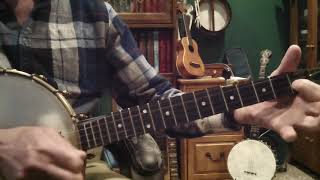
This is such a great tune, and I love Adam Hurt's sweet rendition, and Janet's also. I have been meaning to learn for years, but never got around to it, so I have spent the last couple of days working on it. This is as good as I can do so far:
My first shot at Highlander's Farewell
One thing I'm puzzled about. Milliner & Koken hear and transcribed a high A drone in the low part that seems to be there in Lundy's recording, but none of the other fiddlers whose versions I listened to (Marian Macrae, John Hoffman, or Ambrose Verdibello) seem to play it. It's also in the transcription in Phillips, based on the playing of Ruthie Dornfeld. It would be tough to do on the fiddle, you would have to get it by fretting the 3rd string, not playing the 2nd string open. He does slide into the note, but I'm not sure what I (and Milliner/Koken, etc.) are hearing isn't just a loud overtone.
WVDreamin - Posted - 05/28/2019: 05:48:21
quote:
Originally posted by Don BorcheltThis is such a great tune....
One thing I'm puzzled about. Milliner & Koken hear and transcribed a high A drone in the low part that seems to be there in Lundy's recording, but none of the other fiddlers whose versions I listened to (Marian Macrae, John Hoffman, or Ambrose Verdibello) seem to play it. It's also in the transcription in Phillips, based on the playing of Ruthie Dornfeld. It would be tough to do on the fiddle, you would have to get it by fretting the 3rd string, not playing the 2nd string open. He does slide into the note, but I'm not sure what I (and Milliner/Koken, etc.) are hearing isn't just a loud overtone.
Lundy was indeed a great fiddler. The reason you don't see that drone in other versions (standard tuning) is because it is very tough to play, requiring a five "fret" stretch holding the A note accurately with the pinky whilst still playing with accuracy on the next string over. No overtone, just fantastic fiddling.
Matt Buckley - Posted - 05/28/2019: 14:26:50
quote:
Lundy tells a little story traditionally associated with the tune—at least in Virginia. He relates, "This piece was composed in the old country, where they had war in Scotland. And when the Highlanders took their departure from the Lowlands. A Highlander had a sweetheart in the Lowlands, and they just give him so long for to bid her farewell; and the low part of this represents the man and the high part, the lady."
Makes for a great story, but strikes me as fanciful. The tune is very close to a very old Highland pipe tune called "Highland Harry", a strathspey common to several old collections of pipe music.
Don Borchelt - Posted - 05/29/2019: 07:28:46
rudy, I really love your rendition, and your style of playing in general. Just beautiful, very fine. If it's loose, it's only loose in a good way.
Billy (WVDreamin), thanks for the clarification, it's pretty amazing to think that he wanted that note and did what he had to do.
Edited by - Don Borchelt on 05/29/2019 07:29:41
mjt0229 - Posted - 05/29/2019: 09:03:30
quote:
Originally posted by WVDreaminLundy played it in A but his fiddle was pitched low in the recording.
I know tuning is all relative but in the classical (orchestra) world, standard tuning has generally been getting higher in pitch over the years. I think I've linked to it before, there's a great video containing the opening two chords of Beethoven's 3rd symphony (the 'Eroica') taken from a number of recordings arranged in chronological order], and you can hear the pitch gradually going up over time, until you reach a point in the '70s and '80s when the "historically informed performance" movement took hold and the pitch suddenly drops down again before coming back up.
Does anyone have any insight on how the old time fiddlers and banjo players tuned? Did they just tune by ear and to each other, or use tuning forks occasionally? I sometimes debate tuning my banjos below A 440 to approximate what I hear in older recordings and to see how it affects the overall tone or response of the banjo.
Edited by - mjt0229 on 05/29/2019 09:04:15
rudy - Posted - 05/29/2019: 09:30:23
quote:
Originally posted by Don Borcheltrudy, I really love your rendition, and your style of playing in general. Just beautiful, very fine. If it's loose, it's only loose in a good way.
Billy (WVDreamin), thanks for the clarification, it's pretty amazing to think that he wanted that note and did what he had to do.
Thanks much, Don. Your vote of confidence is appreciated, as I always enjoy your contributions to TOTW.
rudy - Posted - 05/29/2019: 09:46:23
quote:
Originally posted by mjt0229quote:
Originally posted by WVDreaminLundy played it in A but his fiddle was pitched low in the recording.
I know tuning is all relative but in the classical (orchestra) world, standard tuning has generally been getting higher in pitch over the years. I think I've linked to it before, there's a great video containing the opening two chords of Beethoven's 3rd symphony (the 'Eroica') taken from a number of recordings arranged in chronological order], and you can hear the pitch gradually going up over time, until you reach a point in the '70s and '80s when the "historically informed performance" movement took hold and the pitch suddenly drops down again before coming back up.
Does anyone have any insight on how the old time fiddlers and banjo players tuned? Did they just tune by ear and to each other, or use tuning forks occasionally? I sometimes debate tuning my banjos below A 440 to approximate what I hear in older recordings and to see how it affects the overall tone or response of the banjo.
I certainly can't speak from a point of authority, but my suspicions are that individual instrument tuning was often done from a point of accommodating the player's vocal range in combination with tuning high enough to produce good tone and volume without reaching a point where strings would break. It only takes a few broken strings to figure out how high you can go and still be within safe limits. Tuning forks would have certainly been available, but not generally used.
With two or more players I'd speculate that most players would defer to the dominant, more skillful player out of respect. In modern oldtime jams I've been in it always seems that the fiddle player leads the pack, but they generally ask someone for a note to use as a reference pitch to tune to.
I CAN say that in cultures where fixed tuning instruments prevail then everyone tunes to that instrument, and it even dominates the general tuning used by fiddle players. I've played Cajun music for decades and you won't find very many fiddle players who aren't tuned a full step down to match the "C" accordion, many times played in cross key fingering. More modern times, the availability of differently keyed Cajun accordions, and more expendable income for extravagances like multiple diatonic accordions has somewhat changed fiddling, but the low tuned fiddle is still king.
Edited by - rudy on 05/29/2019 09:46:52
WVDreamin - Posted - 05/29/2019: 09:47:51
They probably tuned by ear (it's how I learned to tune the guitar back in the 70s when no one I knew used a tuner) and with the way tuning can drift, some wound up much lower than concert pitch (possibly because it was easier on the ears). I've seen fiddles with an A pitch pipe built into the end pin, so surely some used a reference pitch.
banjukebox - Posted - 05/29/2019: 10:29:36
Great tune choice, Mark. And interesting commentary by the respondents. I've been looking for more modal tunes to learn recently. When I'm learning an A-modal tune, I try to figure it out in standard A tuning on the banjo, so that if it comes up at a jam, I won't have to retune to play.
Here's the version I have worked out along with a tab:
rudy - Posted - 05/29/2019: 12:27:35
quote:
Originally posted by banjukeboxGreat tune choice, Mark. And interesting commentary by the respondents. I've been looking for more modal tunes to learn recently. When I'm learning an A-modal tune, I try to figure it out in standard A tuning on the banjo, so that if it comes up at a jam, I won't have to retune to play.
Here's the version I have worked out along with a tab:
Very nice indeed!
It's interesting to listen to the difference in the basic tune as it's played in various keys (and tunings).
I played guitar or bass when doing Highlander's as a contradance tune, so it was interesting doing it on banjo for myself. When we played it as a contradance tune our band paired it with another tune called "Lowlander's Retreat" which I believe was composed by our banjo guy. It would be pushing the limits of my memory to conjure up that one, so I'll have to ask the fiddle or banjo player if they remember it.
mjt0229 - Posted - 05/29/2019: 12:37:26
quote:
Originally posted by banjukeboxGreat tune choice, Mark. And interesting commentary by the respondents. I've been looking for more modal tunes to learn recently. When I'm learning an A-modal tune, I try to figure it out in standard A tuning on the banjo, so that if it comes up at a jam, I won't have to retune to play.
Here's the version I have worked out along with a tab:
Good idea, I'll try it in A as well. Offhand it should work out okay, but I don't have a banjo in front of me.
Before Highlander's Farewell, I'd been playing around a bit in my spare time with another A modal tune, "Pretty Little Dog", based roughly on Miles Krassen's version and the version played by the (always amazing) Hilarie Burhans. I played it for Adam and he suggested I learn it in gEADE tuning as well, which works almost perfectly. There's one weak note (an A usually played on the 5th string) in the tune that you have to make an awkward move to get, or just accept the `G` on the 5th string as a passing tone. The G isn't awful but I can get stubborn.
mjt0229 - Posted - 05/30/2019: 12:04:34
quote:
Originally posted by mjt0229quote:
Originally posted by banjukeboxGreat tune choice, Mark. And interesting commentary by the respondents. I've been looking for more modal tunes to learn recently. When I'm learning an A-modal tune, I try to figure it out in standard A tuning on the banjo, so that if it comes up at a jam, I won't have to retune to play.
Here's the version I have worked out along with a tab:
Good idea, I'll try it in A as well. Offhand it should work out okay, but I don't have a banjo in front of me.
Before Highlander's Farewell, I'd been playing around a bit in my spare time with another A modal tune, "Pretty Little Dog", based roughly on Miles Krassen's version and the version played by the (always amazing) Hilarie Burhans. I played it for Adam and he suggested I learn it in gEADE tuning as well, which works almost perfectly. There's one weak note (an A usually played on the 5th string) in the tune that you have to make an awkward move to get, or just accept the `G` on the 5th string as a passing tone. The G isn't awful but I can get stubborn.
Update: I tried my arrangement of Highlander's Farewell in A and it's harder than I thought.
Terms of Use | Privacy Policy | Privacy Consent (EU/GDPR Only)
Copyright 2026 Banjo Hangout. All Rights Reserved.