
DVD-quality lessons (including tabs/sheet music) available for immediate viewing on any device.
Take your playing to the next level with the help of a local or online banjo teacher.
Weekly newsletter includes free lessons, favorite member content, banjo news and more.
Premier Sponsors


|
Please note this is an archived topic, so it is locked and unable to be replied to. You may, however, start a new topic and refer to this topic with a link: http://www.banjohangout.org/archive/351013
DanSavage - Posted - 02/08/2019: 14:37:44
I recently bought a 1928 Vega Artist Plectrum. It's a beautiful banjo in terrific condition. Almost mint, I would say. It looks, sounds and plays wonderfully.
I have a couple of questions about it.
1) At this point, were Vega banjos finished with shellac (french polish) or nitro lacquer?
2) The nut looks/feels like ivory. I'm very familiar with bone nuts and this looks different. It feels much harder than bone.
3) Similarly, the neck and resonator binding looks like ivory. Is it ivory or nitrocellulose? (plastic)
Bill H - Posted - 02/08/2019: 14:53:12
I have a 1930 Artist, and I'm fairly certain the finish is French Polish. But I am not an authority. I'm not sure if Vega ever lacquered their banjos. My 1971 Martin Vega is finished with French Polish I believe, because I cleaned up a blemish with a bit of alcohol and the finish softened right up.
DanSavage - Posted - 02/08/2019: 15:03:04
Thanks for the quick reply, Bill. This is good to know.
Both finishes have their strengths and weaknesses.
Some on luthier forums recommend applying a solvent to an inconspicuous place to test. I'm not real keen on applying a solvent to this banjo. I'll just treat it like it's a delicate finish.
Any idea about the nut and binding material Vega used?
tdennis - Posted - 02/08/2019: 15:49:55
I play a c.1931 "Artist", & I believe the binding is celluloid & the nut is bone. It seems that a model w/ such a liberal use of celluloid would stay w/ that material. The bone nut is smooth & nicely shaped. (The calf head is signed, "Smilingly, Eddy Peabody" )
George Flink - Posted - 02/08/2019: 16:30:57
I would think that ivory would be softer than bone but I could be wrong.
DanSavage - Posted - 02/08/2019: 17:03:07
quote:
Originally posted by tdennisI play a c.1931 "Artist", & I believe the binding is celluloid & the nut is bone. It seems that a model w/ such a liberal use of celluloid would stay w/ that material. The bone nut is smooth & nicely shaped. (The calf head is signed, "Smilingly, Eddy Peabody" )
Thanks for responding.
Given that the outer rim of the resonator is mother-of-toilet seat, I would tend to think the binding there is also celluloid. In looking at the resonator again, I do see a discrete spot where I could apply the hot-pin test.
One of my hobbies is restoring old Ovation guitars. My experience with bone nuts comes from these. The bone nuts I've made/polished still have a slightly grainy look/feel. The nut on the Vega is a different material, both in look and feel. This is much smoother and has a creamy color instead of the yellow-ish color of unbleached bone, or the translucent white of bleached bone.
I love the old-timey expressions, such as that. Please forgive me, but I'm going to steal that salutation. :)
DanSavage - Posted - 02/08/2019: 17:09:20
quote:
Originally posted by George FlinkI would think that ivory would be softer than bone but I could be wrong.
I wasn't sure, either so I did a quick search online.
As it turns out ivory is harder than bone. And, thinking about it, this makes perfect sense.
Ivory is made from tooth enamel, which is harder and more dense than bone.
tdennis - Posted - 02/08/2019: 18:12:15
The little I know about bone/ivory/celluloid comes from knife collecting, & the common topic of distinguishing these handle materials . I think of bone as being homogenous off-white w/ occasional tiny capillary holes, & ivory as having definite lines.
Polle Flaunoe - Posted - 02/09/2019: 02:08:04
Vega used a celluloid material called IVOROID for bindings - with either longitudinal or transversal grains - for it to look somewhat like genuine ivory.
All vintage Vega´s passing my workshop over the years had their original bone nuts - yours could be made of elephant or mammoth tusk - and thus being a later replacement.
Andy FitzGibbon - Posted - 02/09/2019: 04:23:24
I've never seen a Vega from that era with an original ivory nut, and I've worked on hundreds of them over the last twenty years. Vega was not the most consistent company, so anything is possible... but then, it's also quite possible that someone replaced the nut over the last 90 years.
The binding is Ivoroid plastic, as Polle says. The finish, if original, ought to be shellac.
Andy
DanSavage - Posted - 02/09/2019: 10:44:37
quote:
Originally posted by tdennisThe little I know about bone/ivory/celluloid comes from knife collecting, & the common topic of distinguishing these handle materials . I think of bone as being homogenous off-white w/ occasional tiny capillary holes, & ivory as having definite lines.
I took a closer look at the banjo this morning. The bindings have a visible grain structure.
I took the resonator off and performed a hot pin test (hot Xacto knife tip, actually) on the end of the binding in the neck heel cut-out and they are definitely plastic as I was able to penetrate the end of the binding.
I also took a closer look at the nut and it's bone. It doesn't have the grain structure seen in the bindings.
DanSavage - Posted - 02/09/2019: 10:47:48
quote:
Originally posted by Polle Flaunoe
Vega used a celluloid material called IVOROID for bindings - with either longitudinal or transversal grains - for it to look somewhat like genuine ivory.
All vintage Vega´s passing my workshop over the years had their original bone nuts - yours could be made of elephant or mammoth tusk - and thus being a later replacement.
Thanks.
Yep. It's got ivoroid bindings and bone nut. The nut looks like it could be original as it looks to be sealed into place by the shellac. The head stock looks like the finish has been touched up over the years.
DanSavage - Posted - 02/09/2019: 10:50:04
quote:
Originally posted by Andy FitzGibbonI've never seen a Vega from that era with an original ivory nut, and I've worked on hundreds of them over the last twenty years. Vega was not the most consistent company, so anything is possible... but then, it's also quite possible that someone replaced the nut over the last 90 years.
The binding is Ivoroid plastic, as Polle says. The finish, if original, ought to be shellac.
Andy
Thanks for the info.
I used some denatured alcohol to test the finish on the heel where it joins the hoop and as you say, it is shellac.
DanSavage - Posted - 02/09/2019: 13:37:44
Here's some pics of the banjo.
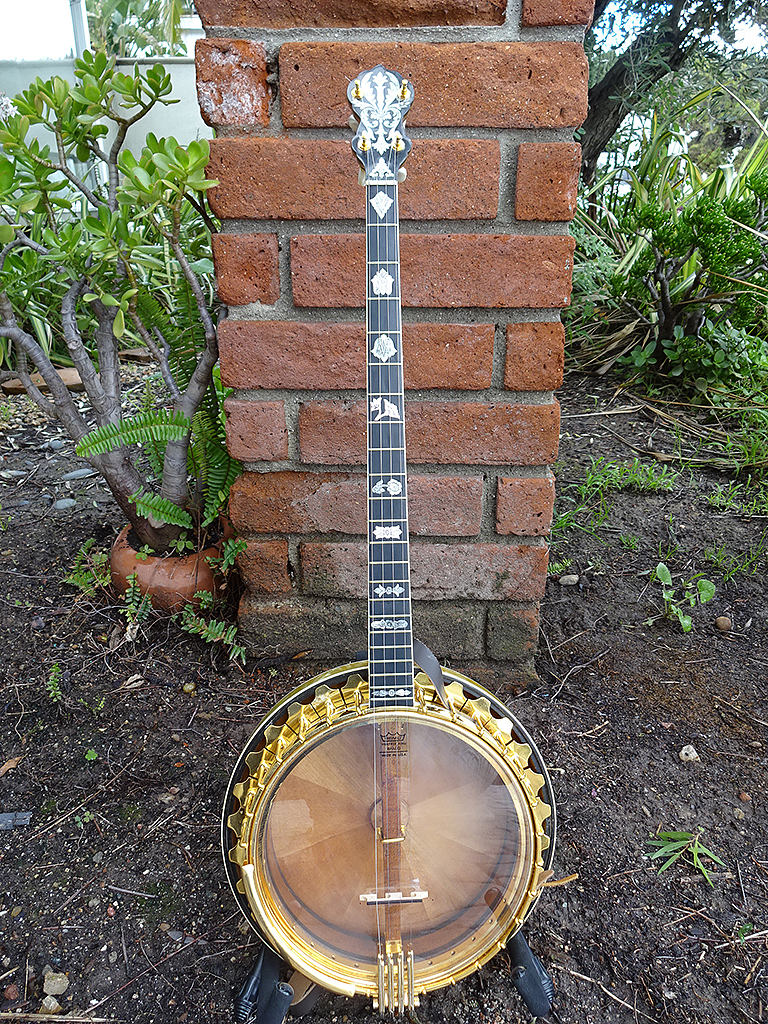
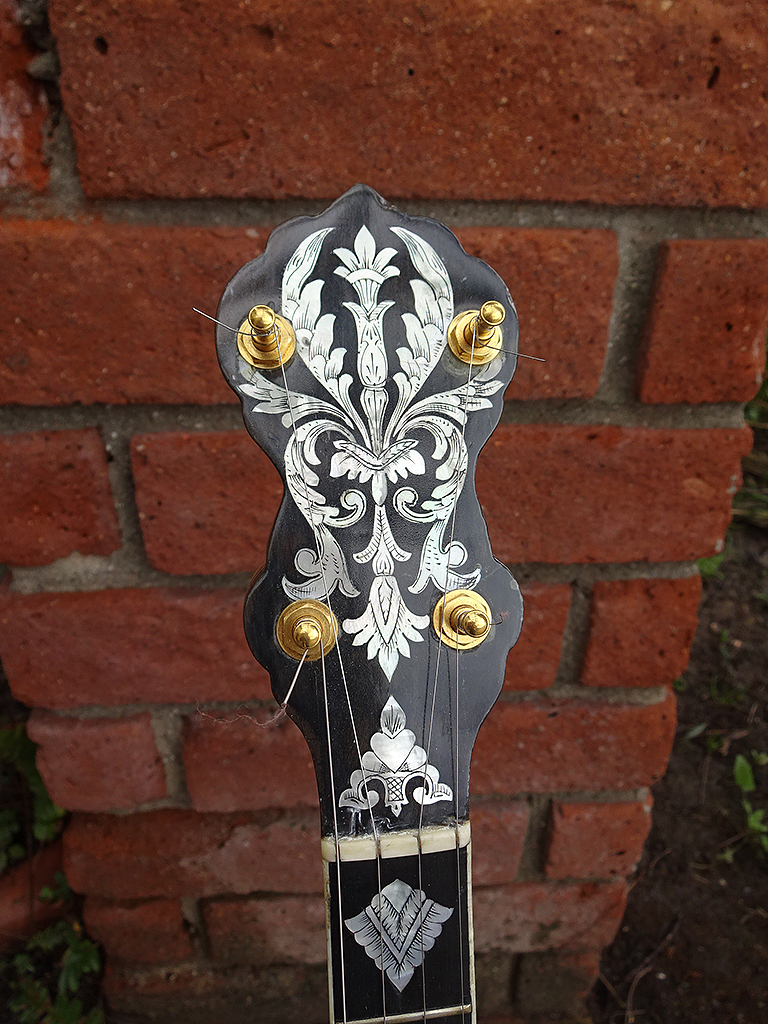
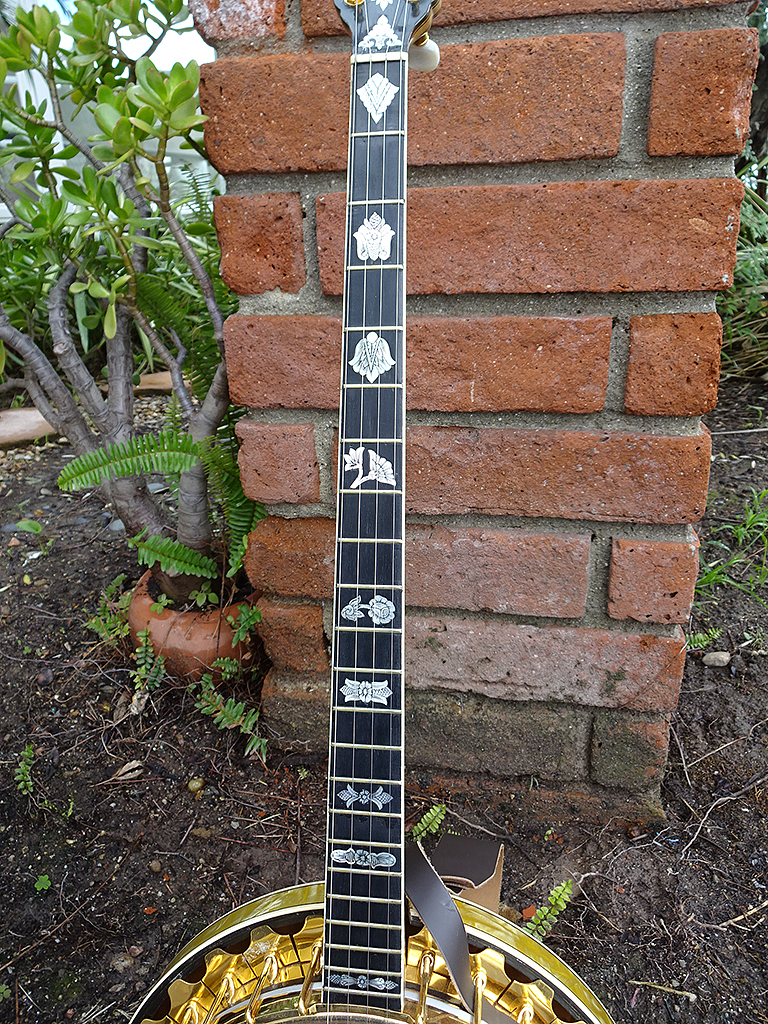
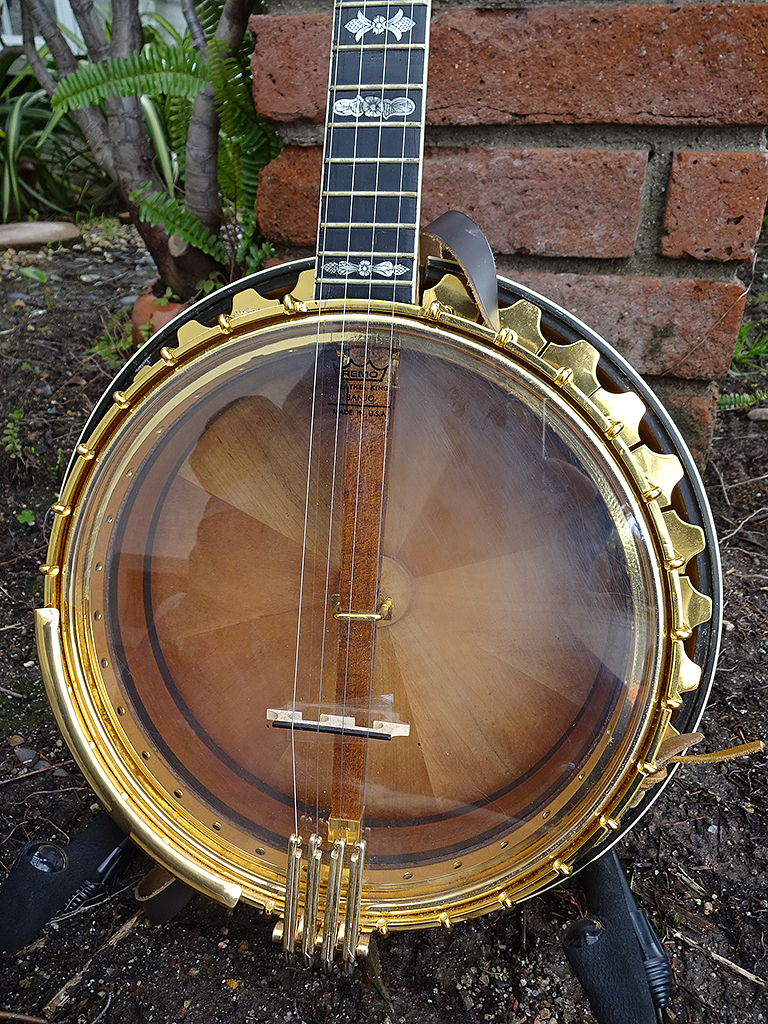
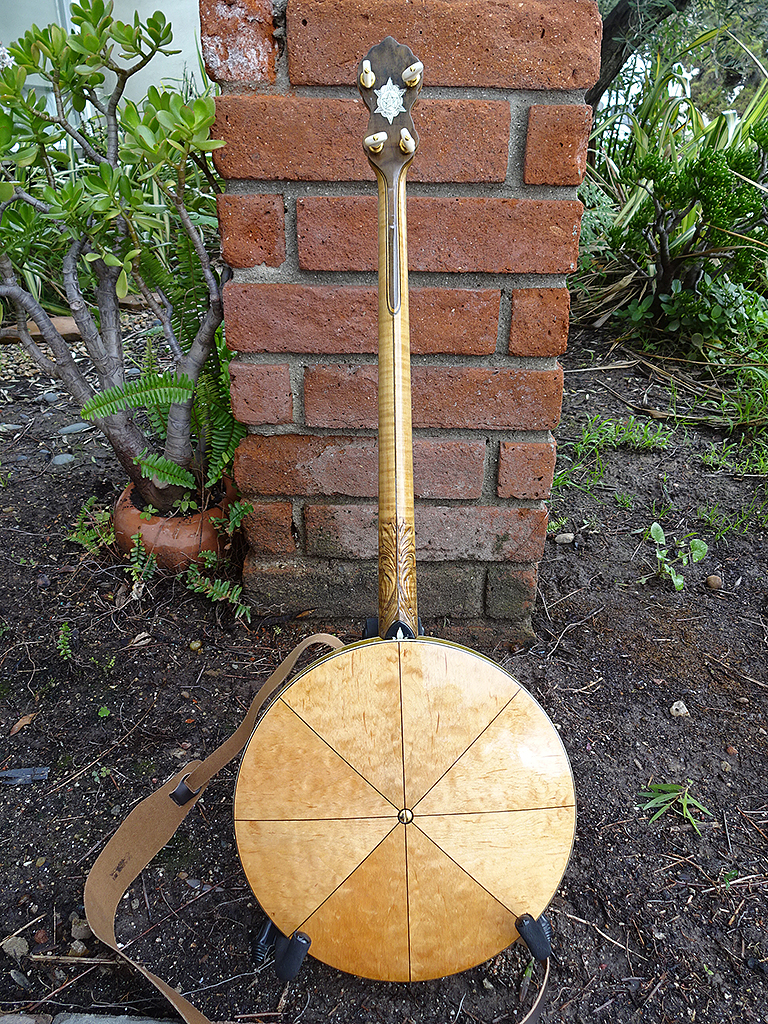
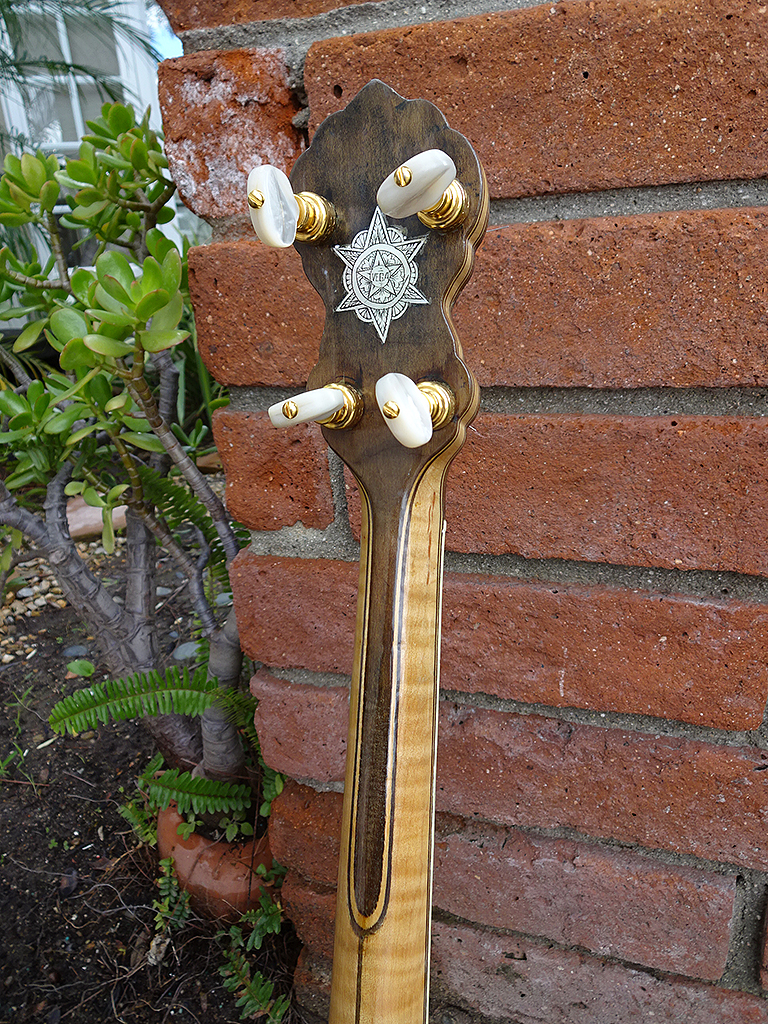
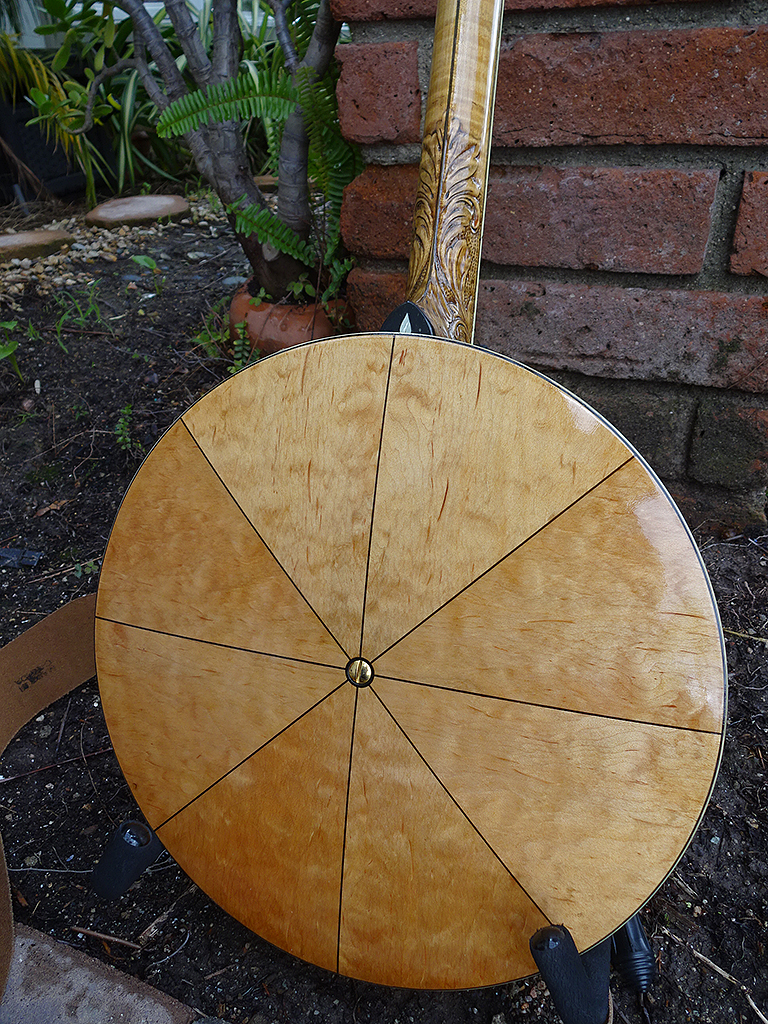
Obligatory Mother of Toilet Seat side.
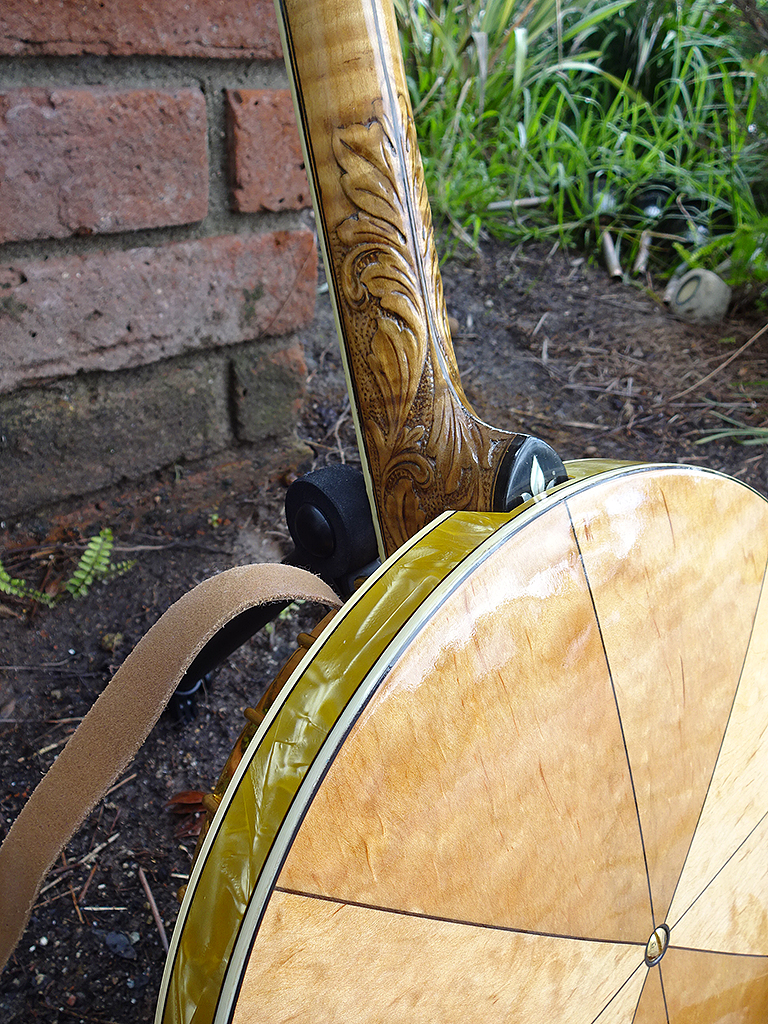
Real Mother of Pearl tuner knobs.
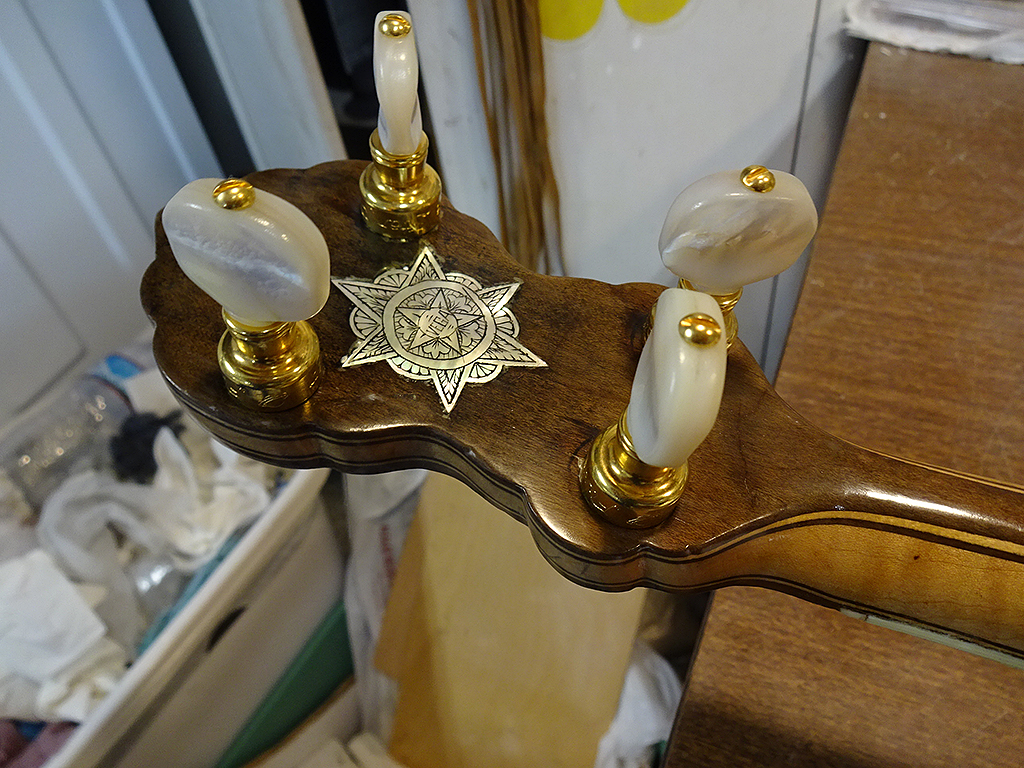
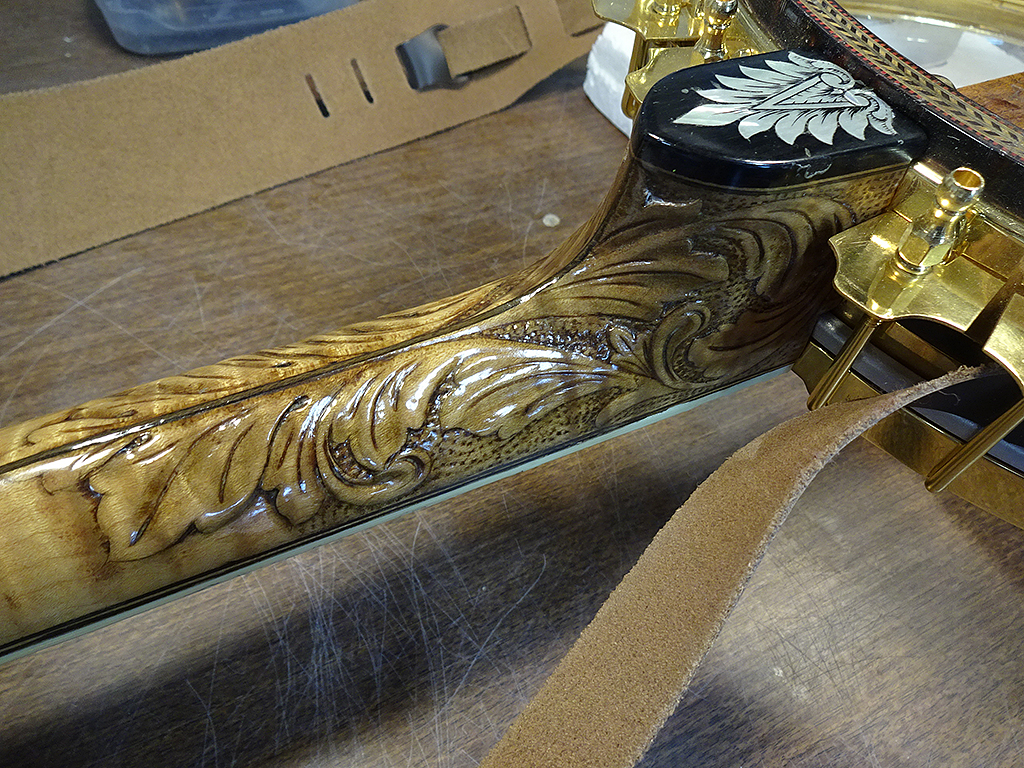
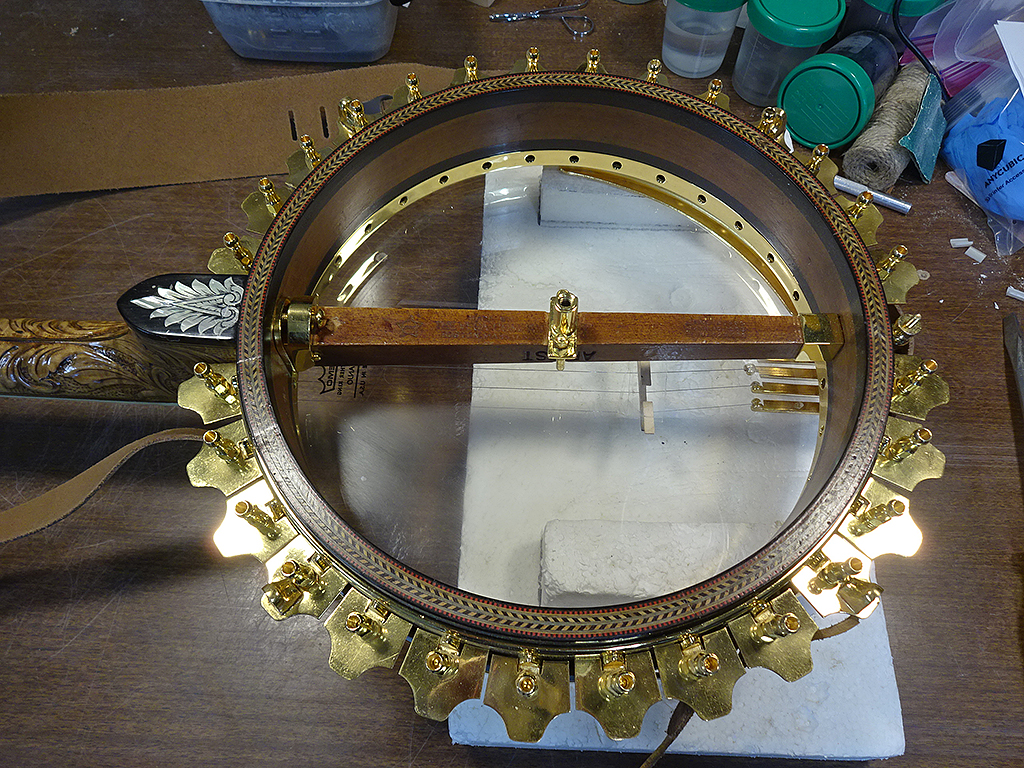
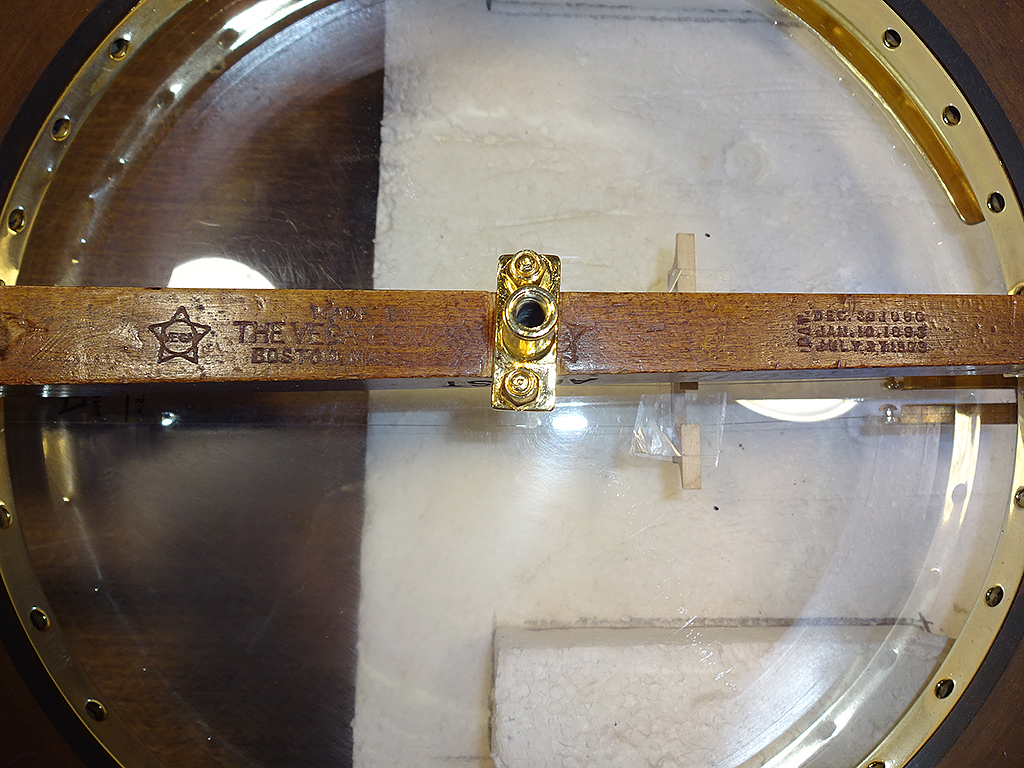
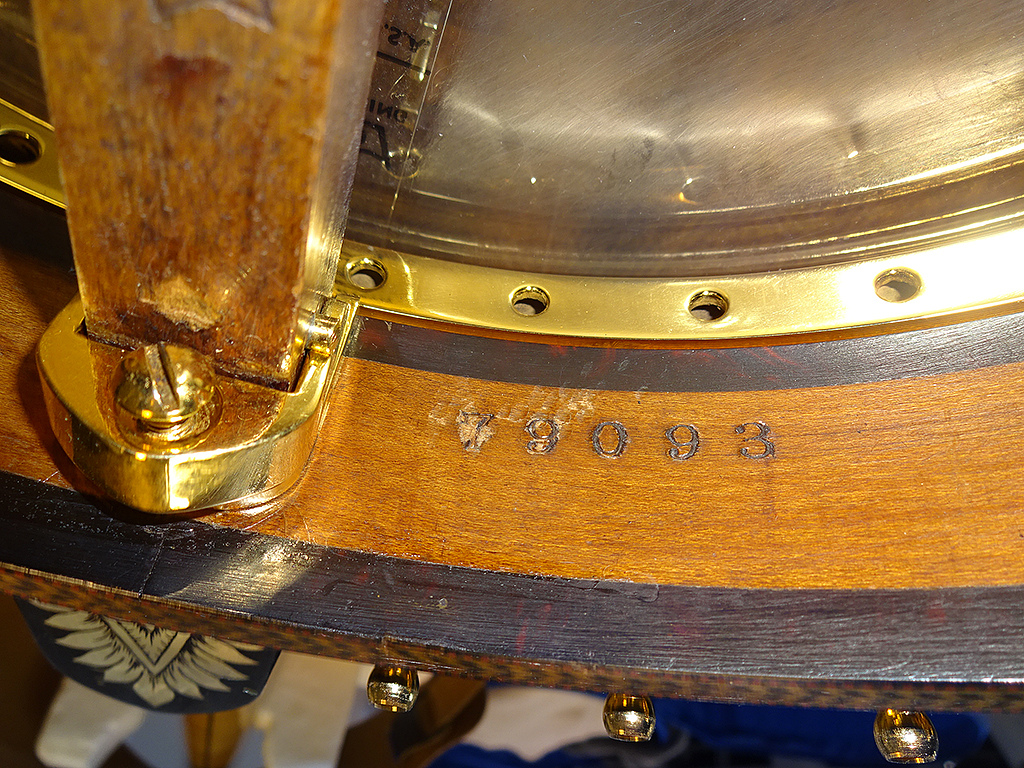
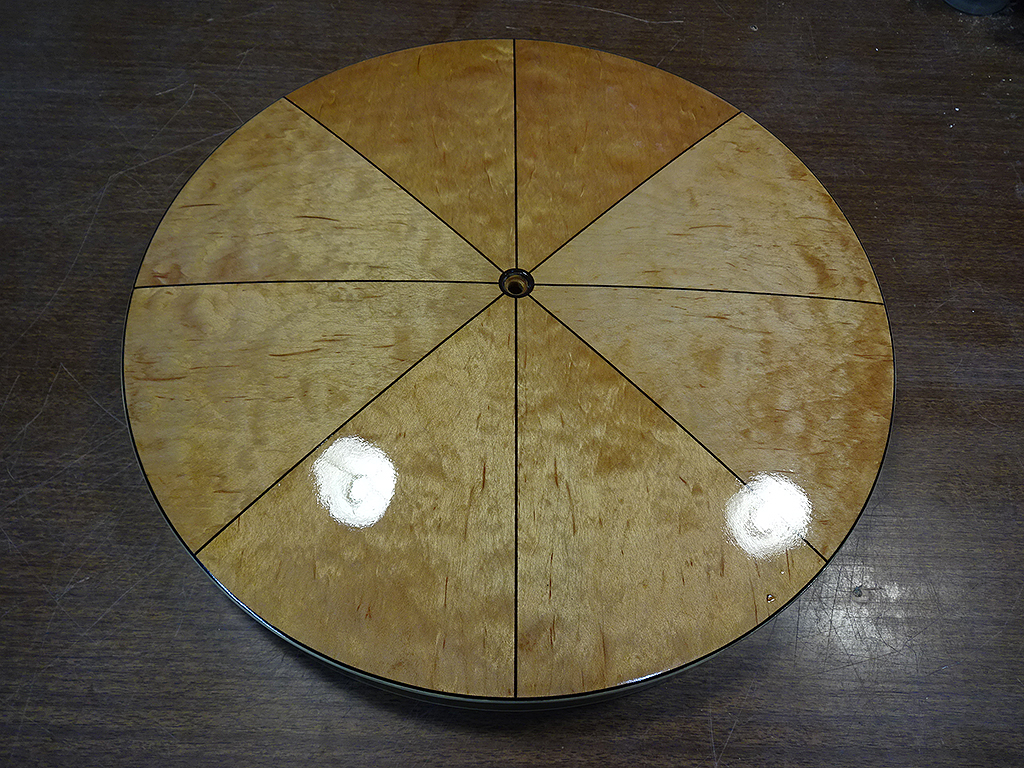
Mother of Toilet Seat side.
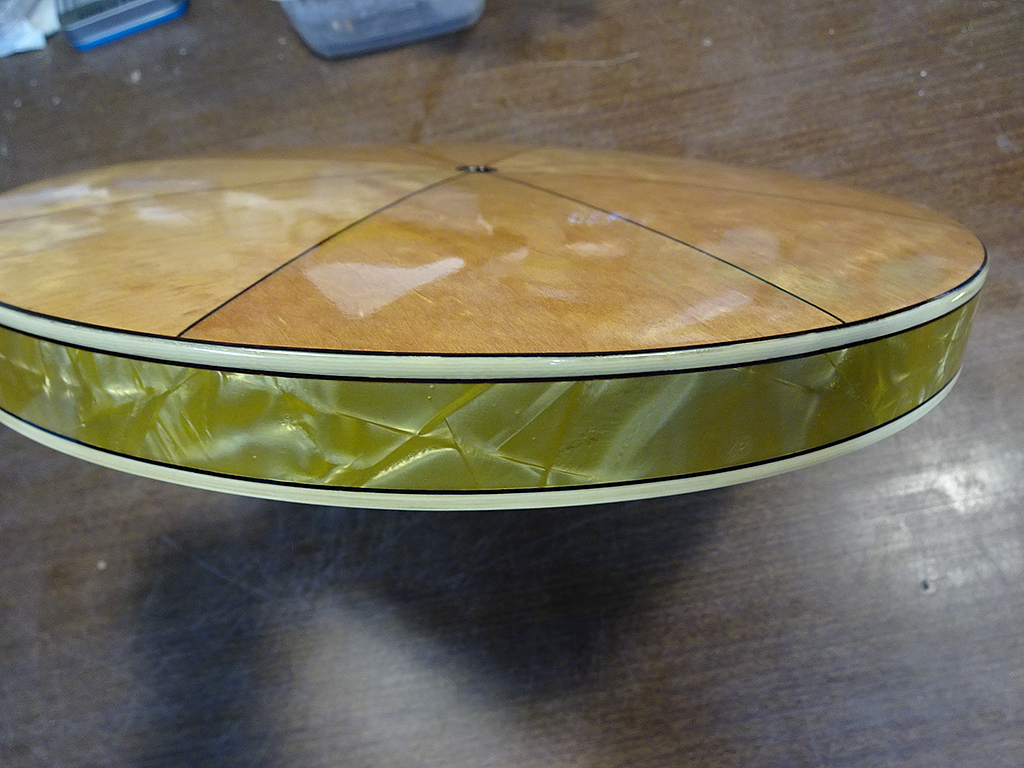
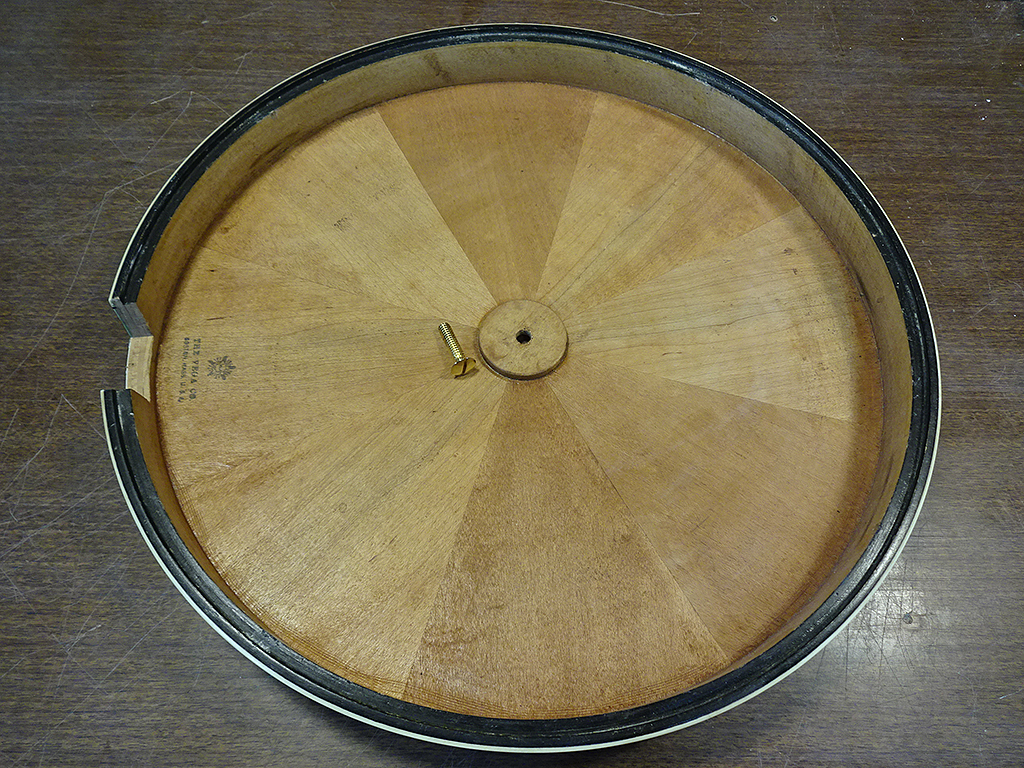
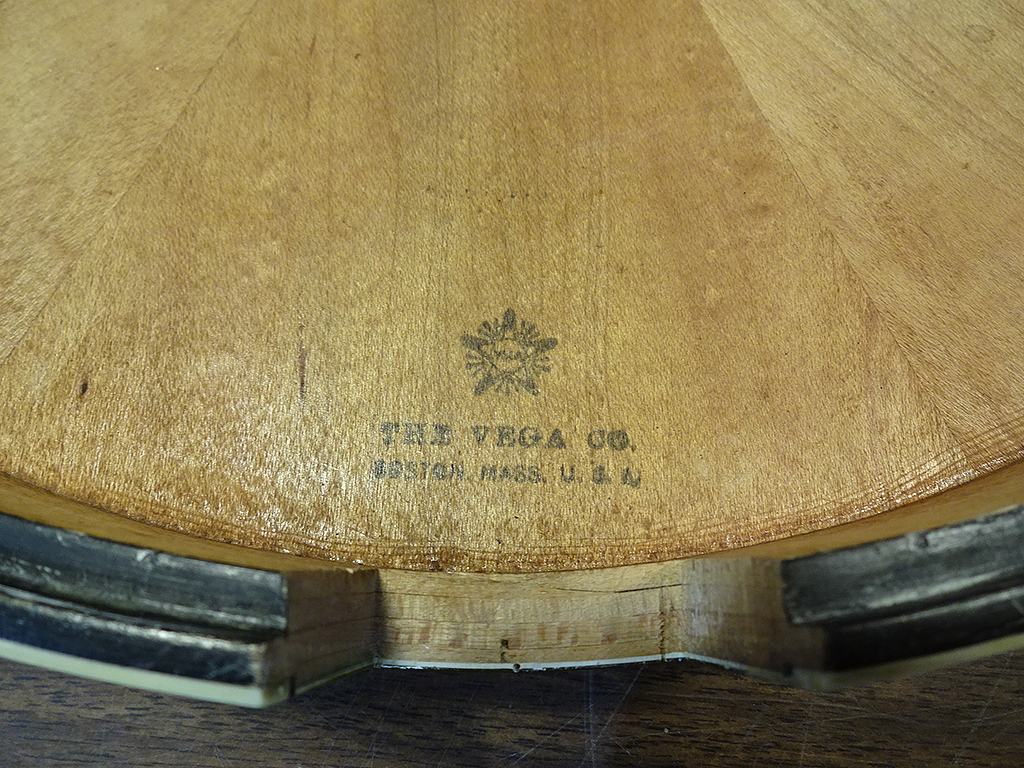
mainejohn - Posted - 02/09/2019: 14:15:32
Wow! As I was scrolling down looking at the photos, I was thinking "this looks awfully familiar!" I went to my photo album of banjos I've owned in the past, as sure enough, there it was. I can tell you a lot about what I know of it, when I bought it, what I had done to it, and that the resonator that is on it now is not the one that was on it when I owned it. I sold it to a guy in the Seattle area around 2007 or 2008. If you'd like further information, I'd be happy to PM you.
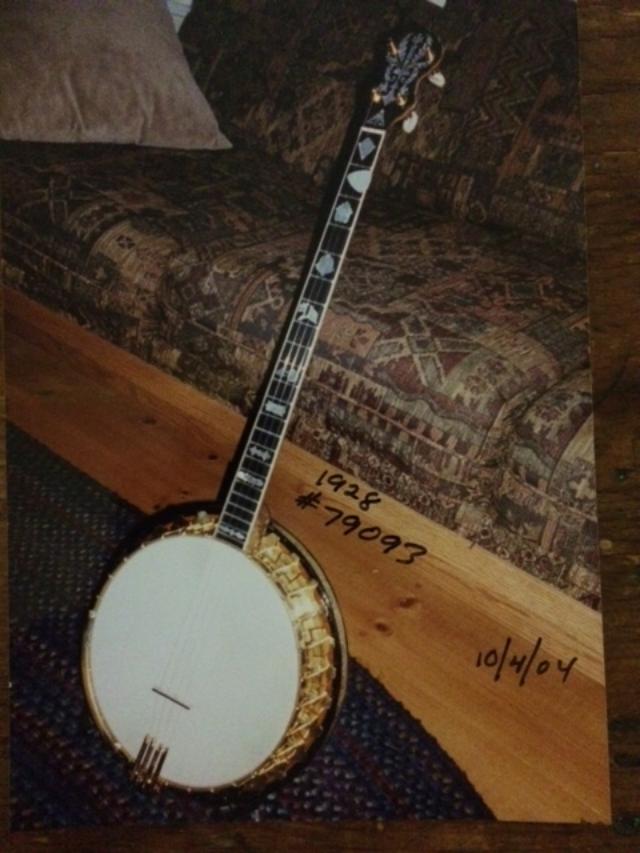
mainejohn - Posted - 02/09/2019: 14:31:41
quote:
Originally posted by mainejohnWow! As I was scrolling down looking at the photos, I was thinking "this looks awfully familiar!" I went to my photo album of banjos I've owned in the past, and sure enough, there it was. I can tell you a lot about what I know of it, when I bought it, what I had done to it, and that the resonator that is on it now is not the one that was on it when I owned it. I sold it to a guy in the Seattle area around 2007 or 2008. If you'd like further information, I'd be happy to PM you.
mainejohn - Posted - 02/09/2019: 14:33:52
Oops! Sorry for the duplicate post. Tried to delete it, but apparently that isn't allowed.
DanSavage - Posted - 02/09/2019: 15:03:00
quote:
Originally posted by mainejohnWow! As I was scrolling down looking at the photos, I was thinking "this looks awfully familiar!" I went to my photo album of banjos I've owned in the past, as sure enough, there it was. I can tell you a lot about what I know of it, when I bought it, what I had done to it, and that the resonator that is on it now is not the one that was on it when I owned it. I sold it to a guy in the Seattle area around 2007 or 2008. If you'd like further information, I'd be happy to PM you.
Kewl! I guess the Vega world is a pretty small one, eh?
I bought from a guy in Long Beach, CA. I just looked at the receipt and I guess I've had it for almost a year now.
Yes, I'd love to have information on it. It's interesting that the resonator got changed out. I wonder why? What style was on it when you owned it?
The guy I bought it from had a list of names it had passed through, but I didn't think at the time to ask for a copy. I think I'll contact him to see what he's got.
Edited by - DanSavage on 02/09/2019 15:05:53
DanSavage - Posted - 02/09/2019: 15:54:48
quote:
Originally posted by mainejohnOops! Sorry for the duplicate post. Tried to delete it, but apparently that isn't allowed.
S'not a problem. I run a loose thread. :)
mikehalloran - Posted - 02/09/2019: 20:23:50
quote:
Originally posted by DanSavagequote:
Originally posted by George FlinkI would think that ivory would be softer than bone but I could be wrong.
I wasn't sure, either so I did a quick search online.
As it turns out ivory is harder than bone. And, thinking about it, this makes perfect sense.
Ivory is made from tooth enamel, which is harder and more dense than bone.
That is not correct. Ivory is not made from tooth enamel. It is a protein and has a MOHs hardness (resistance to scratching—important in a nut) of 2.2–2.5. This is the same as hair, antlers, fingernails, horn, feathers, fish scales etc. Ivory is denser than those other materials but it is no harder. This is why hot needles are used to test for genuine ivory. When burned, all smell the same.
On the MOHs, 1 is talc and 10 is diamond.
Apatite, the material in bone and tooth enamel, has a MOHs of 6. This why a nice, dense bone nut lasts many times longer than ivory.
Every steel stringed guitar I ever owned that had an ivory nut had it replaced after a few years. I have never had to replace a bone nut—even on instruments that played thousands of shows.
My classical guitars still have their original ivory nuts if so equipped.
There are other hardness scales that test density by bouncing diamond balls against the surface but MOHs is the important one for nuts.
Vega banjos have celluloid binding. Celluloid plastic was invented in the 1850s.
Edited by - mikehalloran on 02/09/2019 20:31:08
DanSavage - Posted - 02/10/2019: 14:12:12
I meant to ask about the resonator. Is this the style of resonator that would have been on the banjo when it was sold new?
If not, what model would this resonator belong to?
Terms of Use | Privacy Policy | Privacy Consent (EU/GDPR Only)
Copyright 2026 Banjo Hangout. All Rights Reserved.


