
DVD-quality lessons (including tabs/sheet music) available for immediate viewing on any device.
Take your playing to the next level with the help of a local or online banjo teacher.
Weekly newsletter includes free lessons, favorite member content, banjo news and more.
Premier Sponsors


|
Please note this is an archived topic, so it is locked and unable to be replied to. You may, however, start a new topic and refer to this topic with a link: http://www.banjohangout.org/archive/343361
mbuk06 - Posted - 06/05/2018: 01:57:18
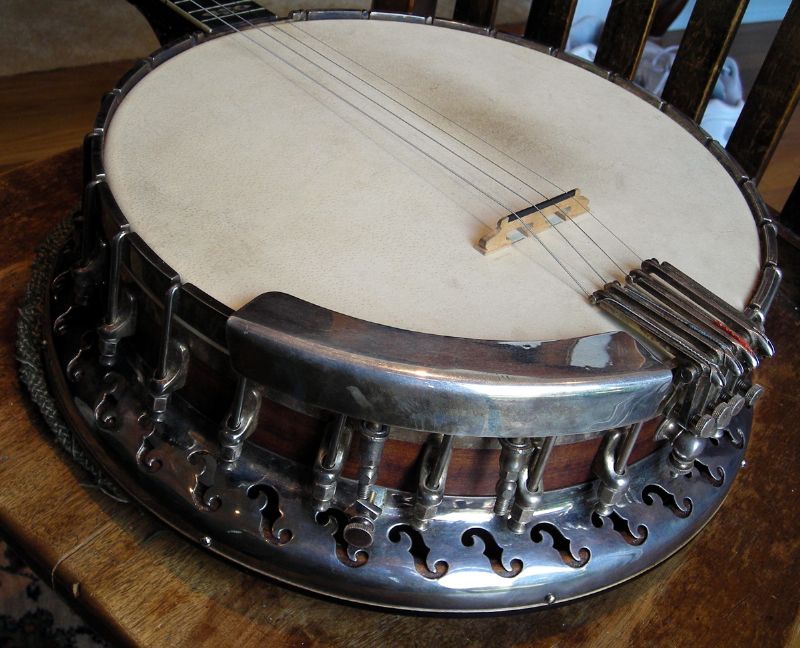
This is a 'care' rather than 'repair' question. I have replaced skin heads on some of my vintage 19th century banjos but I have one banjo dating from c.1870 that appears to have original undamaged skin head and I would like to keep the banjo in overall original condition. Given the inevitable drying process over time are there methods for maintaining vintage skin heads and sensitively raising the moisture content? Or is it just a case of ensuring a suitable environment and leaving it be?
rgoad - Posted - 06/05/2018: 04:47:03
Mike, I would contact John Balch. What little he does not know he could point you towards finding.
jbalch - Posted - 06/05/2018: 05:16:22
Mike:
My experience preserving very old heads is limited. I don't have recommendations for any type of application to add moisture (as you know - most often folks are interested in doing exactly the opposite). I think that any type of oil or other solution that soaks into the hide might change its sound significantly. I will be interested to see of others here on the BHO have suggestions that might help.
I have taken two different approaches:
I had an H. C. Dobson banjo from the 1880s with a very old head. That head appeared to be sturdy with no apparent weak spots. Like you, I wanted to preserve it while still being able to use the banjo. I did not clean the head or apply anything to it at all. I avoided over-tightening it - the tension was adequate for the way I set that banjo up (but maybe not as tight as I might use with a fresh new hide). I stored and used the banjo in a reasonably stable, climate-controlled, environment. Not that I never took the banjo out - but I didn't use it in extreme conditions (festivals, etc.). That banjo served me well - with the original head intact - for several years. I used it in the recording of my ~HOT~ Biscuit Jam Cd. When I sold the banjo the head was still installed (but I think the new owner replaced it immediately). Note - having now installed new hides on a number of these old Dobsons (for other folks), I realize that my choice to play my old Dobson with the old head probably compromised the potential sound of that banjo. If I had another similar banjo now, I might make a different choice.
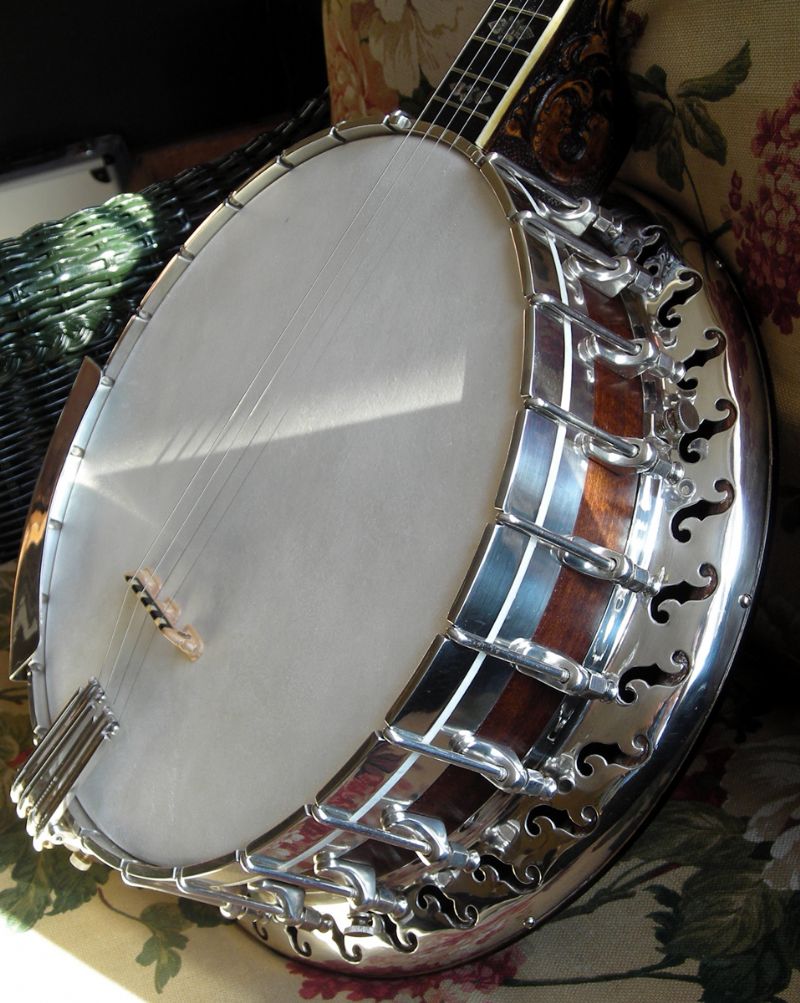
In another case, I have a B&D Silver Bell that came to me with a great old Rogers head installed. That head had a small bit of damage. Although it maintained tension well - and sounded absolutely amazing. In that case, I chose to remove the old head - for storage and preservation. I replaced the head with a new one for everyday use.
The only thing I might consider using on an old head is reniassance wax. Not to re-moisturize the skin - but as a surface protectant.
Edited by - jbalch on 06/05/2018 05:25:18

mbuk06 - Posted - 06/06/2018: 07:49:25
Thank you for your advice John. My inclination is to keep the original head on as it's in good condition and it contributes to a nice tone. There is no immediate reason to adjust the head tension which I guess would be a potential risk on an old, dry head. The skin naturally has some ingrained accumulated grime, I don't know if wax protection should only be applied to a clean surface? Personally the aging effect of the grime is perfectly in keeping and I have no problem with it. Some careful attention with a clean pencil eraser or putty rubber is all I ever use on skin heads.
jbalch - Posted - 06/06/2018: 08:03:59
Mike - a soft white pencil eraser is what I use to clean old heads. If they are thick, very sturdy, and not too old - I sometimes resort to fine sandpaper (400 grit +).
Renaissance Wax is clear. It may impart a VERY slight sheen - but is virtually undetectable. (It smells like shoe polish). In my experience, it protects the surface from soiling and can give the head a smooth, soft feel. It may add some surface moisture resistance - but does not stop a hide from absorbing atmospheric humidity. According to the marketing materials, Renaissance Wax was developed by the British Museum for protecting antiquities. It is used on leather, wood, metal, even paper. I apply it to all of my newly mounted heads.
Terms of Use | Privacy Policy | Privacy Consent (EU/GDPR Only)
Copyright 2026 Banjo Hangout. All Rights Reserved.


