DVD-quality lessons (including tabs/sheet music) available for immediate viewing on any device.
Take your playing to the next level with the help of a local or online banjo teacher.
Weekly newsletter includes free lessons, favorite member content, banjo news and more.
Premier Sponsors


|
Please note this is an archived topic, so it is locked and unable to be replied to. You may, however, start a new topic and refer to this topic with a link: http://www.banjohangout.org/archive/338798
IMBanjoJim - Posted - 01/14/2018: 19:53:11
Just came across this article online. Some interesting perspectives on the history of the banjo in the mountains.
nativeground.com/banjo-history...#comments
Andy FitzGibbon - Posted - 01/14/2018: 21:27:21
More of George's work is available at his website:
banjohistory.com
Andy
csacwp - Posted - 01/15/2018: 10:03:57
I find it very interesting that George knows that minstrel banjo wasn’t played as published in the tutors and that it sounded like Bob Flesher’s CD.
Edited by - csacwp on 01/15/2018 10:04:31
trapdoor2 - Posted - 01/19/2018: 16:20:25
George has been beating this "hillbilly first" drum for quite a while. He is a self-avowed story teller and raconteur, and usually sows hearsay in with established facts. He's a good player and singer and a strong advocate for his idea of hillbilly culture. I do not consider him to be anything more than a good entertainer.
GRGibson - Posted - 01/24/2018: 16:08:43
My family farm is in east Kentucky. Gas well fracking and coal mining have destroyed 80% or more of the water table in the area; my neighbors serve visitors with water in plastic bottles. Although the EPA only recently decided that fracking can destroy drinking water, this has been a problem in east Kentucky since I was a boy in the 1950s.
The” hillbilly” stereotype that is buried in the DNA of literate America has allowed energy companies to conceal this destruction. Unfortunately, when urban banjo revivalists decided the southern banjo was exclusively a “mountain” instrument (it wasn’t), it doomed the banjo’s history to be obscured by the hillbilly stereotype. I have never seen a southern historian or folklorist cited in any essay, formal or informal, about mountain banjo history - the only citations I have seen are from mid-eighteenth minstrelsy or from an essay by an urban banjo revivalist. This has led to the mistaken notion that minstrelsy planted the banjo in white mountain folk culture. Fabricating the history of a region without consulting its scholars would be roundly condemned for any place other than Appalachia.
Those who distort Appalachian life and history are described by Loyal Jones in his foreword to the second edition of "Appalachian Images in Folk and Popular Cultures": "The self proclaimed 'experts' on Appalachia, and there have been many, are usually frauds or are deceived by the appearances on which they happen to focus at the moment. . . . The army of observer-writers who have commented on it usually had a narrow focus and have found support for whatever favorite notion each one carried. Thus, there is a mass of confusing and contradictory writings about the place and people." Mr. Jones followed this with a quote from John C. Campbell: "Let us now come to the Highlands - a land of promise, a land of romance, and a land about which, perhaps, more things have been written that are not true than any other part of our country."
I learned to play old-time banjo ca. 1950 and have performed occasionally since the mid-1990s. I only perform at venues that allow me to discuss banjo history, and I have never made a claim about mountain banjo history that cannot be supported.
The University Press of Illinois just announced the publication of “Banjo Roots and Branches” in June 2018. I have an essay in the book that proves that white Kentuckians were dancing to the banjo and fiddle prior to the Civil War in the western tip of Kentucky, in south central Kentucky, and in the mountains of east Kentucky; that pioneers in Arkansas were dancing to the gourd banjo and fiddle ca. 1830; and that western Carolinians were dancing to the gourd banjo in the 1780s.
The early penetration of the banjo in the Carolinas is supported by historian John Preston Arthur (1851-1916) in "Western North Carolina, A History from 1730 to 1913": "The banjo and fiddle have been as constant companions of the of the pioneers of the mountains of North Carolina as the Bible and Hymn Book." A biographer quoted an acquaintance of Arthur's, who said: "More so than any other local historian, he [Arthur] went to the original sources for facts. He sought out old diaries, journals, letters and even talked with old citizens, who shared their recollections with him."
My views regarding the hillbilly stereotype and the stripmining of Appalachian culture are outlined by Rachel Hopkin in her essay in the Winter 2016/17 issue of the Western Folklore Journal.
RG - Posted - 01/27/2018: 13:13:01
Great reply George, and interesting article. We do know what mistral banjo sounded like, we have this from Charles Asbury recorded in 1894...
cylinders.library.ucsb.edu/sea...mp;query=cylinder8103
Sounds quite a bit like Bob Flesher.
Furthermore, we have Uncle Dave Macon as well... surely as close as we will ever know (outside of the Asbury recording) what minstrel banjo sounded like.
I find it quite humorous for the "minstrel first" crowd to so staunchly believes that all things banjo derived from the minstrel stage when there is a body of evidence for a southern banjo tradition (both Black and White) that precedes it... how else would the blackface musicians from Joel Sweeney onward know how or what to parody and make fun of? Additionally, the tired old "it's not documented" argument falls SO flat when one considers the English/Scottish?Irish ballad singing tradition that existed undetected for YEARS in the Southern Mountains, South and West until it was "discovered" in the late 19th Century, or the blues tradition that wasn't "discovered" until WC Handy heard slide guitar at a railway station in Tutwiler MI in 1903 (surely apocryphal), or Cajun music carried down from Acadia, etc. etc.
Since minstrel banjo was largely a northern invention that spread worldwide (and I fam fully aware the huge worldwide popularity of blackface), northern scholars had no vested interest or intention of exploring anything to do with the original tradition from which it sprang, especially Black culture or music traditions (other than to mock both on the minstrel stage), since it simply wasn't profitable, especially after the Civil War; they created a commercial market based on a legitimate existing folk tradition, spun a manufactured narrative around that to exploit it. and sold tons of banjos, sheet music, tutors and ephemera mocking Black (and then later Southern) culture. It didn't fit the narrative (and probably still doesn't judging by some of the responses posted in similar threads on the hangout) and therefore wasn't viable commercially. Economics and marketing 101.
joe28675 - Posted - 02/04/2018: 09:50:03
So, when were the first minstrel shows preformed in the mountains of east Kentucky? I would think much later than in the river towns along the Ohio, which would have been much later than in the northern cities.
IMBanjoJim - Posted - 02/04/2018: 10:21:53
A good source of information about early minstrel touring is the reprint of A History Of The Banjo: Frank Converse's Banjo Reminiscences, edited by Paul Heller.
csacwp - Posted - 02/04/2018: 13:14:31
I don't think they would have been much later. Minstrelsy spread like wildfire.
CliftonHicks - Posted - 02/20/2018: 12:07:56
Anyone who considers Gibson merely an "entertainer" has neglected to look very deeply into his prolific contributions toward both an honest and informed understanding of banjo history and his lasting influence as a transmitter of banjo culture.
I don't think it too controversial to point out that hillbillies had been living among African-American musicians for over 200 years before the appearance of banjo-playing minstrels. It is patently absurd to insist that the latter group were the original and sole recipients of the African banjo tradition, all the while ignoring a growing mountain of evidence to the contrary.
Gibson is merely pointing out that mountain of evidence.
Sincerely,
Clifton Hicks
Copperhill, TN
csacwp - Posted - 02/20/2018: 14:53:47
Gibson has no evidence other than a few anecdotes. Also, no serious banjo scholar claims that the minstrels inherited any sort of "African banjo tradition" other than possibly the basic right hand technique used in stroke style playing. I won't deny that "hillbillies" lived alongside African Americans before the 1830s (but not "200 years before"), but do you really believe that they freely associated with one another, given the racial prejudices of the day?
CliftonHicks - Posted - 02/20/2018: 15:31:27
1. Gibson has collected a large number of primary accounts strongly indicating the widespread presence of an interracial banjo tradition in the southern back country many decades before the emergence of minstrelsy.
2. Yes, probably as early as the 1630s (two hundred years before minstrelsy) black and white southerners, especially people of "low status" along the frontiers, were living, working and sleeping with one-another. Albion's Seed : Four British Folkways in America (Fischer, D.H. 1989) contains exhaustive chapters covering vernacular culture in both the early Virginia colony and later southern pioneer settlements--one of many sources I have read which points to a relatively "free association" between blacks and whites along the early frontiers.
CliftonHicks - Posted - 03/04/2018: 11:50:15
Here are two of the many secondary (many others are primary) sources cited by Gibson in his 2001 article: "Gourd Banjos: from Africa to the Appalachians" (full text here: banjohistory.com/article/detai...alachians)
"Through the first fifty years of English and African settlements on the Chesapeake, black and white workers lived together in ways that blurred the racial lines... "
[Berlin, Ira (2000). Many Thousands Gone: the first two centuries of slavery in North America. Cambirdge, MA: Harvard University Press.]
"Heinegg documents the geneologies of the majority of free African American families in the 1790 census... most were descended from the union of a slave and a white servant woman in the seventeenth and eighteenth centuries."
[Heinegg, Paul (1997). Free African Americans of North Carolina. Baltimore: Geneological Publishing Co.]
My personal library is not extensive but I can keep citing Fischer, Berlin, Heinegg and Gibson's many primary sources if anyone wishes to continue. If not, I hope we will revisit this discussion after having had a chance to read Banjo Roots and Branches later this summer.
Edited by - CliftonHicks on 03/04/2018 11:55:56
Cleitus - Posted - 03/07/2018: 09:16:03
Thanks to RG for the Charles Asbery link - fascinating to hear such old stuff. There was also a banjo player on Pete Seeger's rainbow series who played minstrel cakewalks and similar pieces - think he studied with Van Eps but I cannot recall his name.
Joel Hooks - Posted - 03/07/2018: 12:49:19
quote:
Originally posted by CleitusThanks to RG for the Charles Asbery link - fascinating to hear such old stuff. There was also a banjo player on Pete Seeger's rainbow series who played minstrel cakewalks and similar pieces - think he studied with Van Eps but I cannot recall his name.
Do you mean Paul Cadwell?
Cleitus - Posted - 03/07/2018: 17:56:18
quote:
Originally posted by Joel Hooksquote:
Originally posted by CleitusThanks to RG for the Charles Asbery link - fascinating to hear such old stuff. There was also a banjo player on Pete Seeger's rainbow series who played minstrel cakewalks and similar pieces - think he studied with Van Eps but I cannot recall his name.
Do you mean Paul Cadwell?
archive.org/details/RainbowQuest36
Yes that's the person - fabulous player IMHO
joe28675 - Posted - 03/28/2018: 15:50:56
I've been reading some about Archibald Ferguson who was from the North Carolina Mountains.
I don't believe he learned to play banjo from the minstrels, just the opposite is true.
However, there seems to be a bit of confusion whether he was black or white. Perhaps of mixed race?
Larry Marcus - Posted - 04/15/2018: 15:40:56
How hard is it to imagine that banjo history is more complicated, nuanced and full of places that need more investigation? Not having all the answers, it seems like a good idea to challenge the "accepted" view and explore what has not been accepted.
csacwp - Posted - 04/15/2018: 16:01:00
It's apparently very difficult for folklorists to accept that there is a mountain of evidence that contradicts their beliefs about the banjo. Some of us are exploring these other areas but are routinely ignored or brushed aside.
Andy FitzGibbon - Posted - 04/17/2018: 06:21:10
quote:
Originally posted by csacwpIt's apparently very difficult for folklorists to accept that there is a mountain of evidence that contradicts their beliefs about the banjo. Some of us are exploring these other areas but are routinely ignored or brushed aside.
It's also apparently very difficult for some banjo players to accept that there may be other people who know things that they don't, and that their dismissive and condescending manner is not conducive to productive discussion, or the sharing of ideas.
Andy
Clifton Hicks - Posted - 05/01/2018: 13:14:04
quote:
Originally posted by csacwpIt's apparently very difficult for folklorists to accept that there is a mountain of evidence that contradicts their beliefs about the banjo. Some of us are exploring these other areas but are routinely ignored or brushed aside.
John: Who are these particular folklorists who can't/won't accept new findings? What exactly is their position? Also, would you please summarize that "mountain of evidence" and let us know what conclusion(s) it supports?
Sincerely,
Clifton Hicks
Copperhill, TN
csacwp - Posted - 05/02/2018: 06:38:40
quote:
Originally posted by Clifton Hicksquote:
Originally posted by csacwpIt's apparently very difficult for folklorists to accept that there is a mountain of evidence that contradicts their beliefs about the banjo. Some of us are exploring these other areas but are routinely ignored or brushed aside.
John: Who are these particular folklorists who can't/won't accept new findings? What exactly is their position? Also, would you please summarize that "mountain of evidence" and let us know what conclusion(s) it supports?
Sincerely,
Clifton Hicks
Copperhill, TN
See my response on the other discussion.
Cleitus - Posted - 05/06/2018: 08:25:45
I feel like or abhor George Gibson's contribution we still all owe him a measure of thanks for contributing material that otherwise might not have been seen. I work in an academic area where the extreme love to play and while their conclusions etc can drive you up the wall if you accept the conventional canon, the evidence they produce makes you look very closely again at what that canon is based on with some surprising results sometimes.
Clifton Hicks - Posted - 06/04/2018: 07:50:01
Banjo Roots and Branches is now available for pre-order through University of Illinois Press and Amazon; it's scheduled to ship this August. I have already pre-ordered my copy and suggest that all who have an interest in banjo history do the same.
The title of Gibson's essay is "Black Banjo, Fiddle and Dance in Kentucky and the Amalgamation of African- and Anglo-American Folk Music." I had the privilege of reading a rough draft of it some months ago and found it very compelling, to say the least.
It's interesting that critics of Gibson's essays (always quick to throw stones) have themselves published no alternate version of folk banjo history.
Edited by - Clifton Hicks on 06/04/2018 07:50:30
REALLYoldbanjos - Posted - 06/07/2018: 18:31:11
At the risk of being repetitive, I'd like to add my two cents worth in support of George and his efforts to shine some light on banjo history in his corner of the world. I admit to some bias as I have known George for many years and consider him a close friend. I have also had the privilege of visiting him several times at his home in Kentucky, and at the many Gatherings of the Banjo Collector's group we have attended.
On several of those visits, and by his sharing of his papers and letters, I have read most if not all of his articles and papers. We have discussed his conclusions, and I was able to see first hand how he researched the subject of his original post on this site, and for his many other articles and letters. As a retired litigator, I know how to do research and I was impressed with his efforts. I also know he took the time to become acquainted with the published efforts of other banjo scholars and researchers. And to my knowledge, he has compared their efforts to his own research before reaching any of his conclusions.
As a litigator, I know that if you want to be convincing and be considered credible, you do not walk into Court and spout off if you have not carefully researched the other guy's conclusions and are ready to tell the Court exactly why his conclusions are incorrect and why his research does not support his conclusions.
I did not see much of that here. Those that disparage George personally, not to mention his conclusions, fail to say they have read the research that led to his conclusions, and specifically why they reject his conclusions and the basis for their own differing opinion. Now I realize that may be a difficult task considering this platform, but as common courtesy demands, there ought to be some minimal efforts taken along that line.
In the present very distasteful political climate (as in the non-banjo world), it has become all too common for those in power to shoot the messenger if they don't like the message. And more frightening is the fact that this, in some camps, is an acceptable means of defending your own message. I hope we can avoid doing that here.
Thanks George, for all your efforts, and thanks to all those others who do the hard work of research on banjo history and willingly share it on this site and elsewhere. Whether we agree or disagree, we ought to at least appreciate the effort.
Norm Peterson, Helena, Montana
Larry Marcus - Posted - 07/04/2018: 05:29:17
I have been informed that " Banjo Roots and Branches", a book of current banjo research, can be preordered on Amazon.
GRGibson - Posted - 07/25/2018: 07:46:00
I resolved years ago to cease posting on Internet forums, however, I posted on this topic to respond to observations made about my character. Following is my final post on this topic, which I hope will clarify two opposing positions regarding southern banjo history.
These positions can be briefly summarized as follows: many believe the banjo was planted in white southern folk culture by northern minstrelsy, while some (including me) believe the banjo was in southern white culture prior to minstrelsy. I suspect that most who embrace the minstrel origin of the southern banjo do so only because they have never seen a countervailing view of banjo history.
I belong to the American Banjo Fraternity (ABF) where art music developed by professional northern musicians is still performed. I belong to ABF because I like the music, think it is worth preserving, and because the ABF publication often contains interesting banjo history.
A prominent member of ABF clarified for me a belief that some people embrace: he told me the banjo was a folk object of no importance until it was adopted by northern minstrels and music was written for the instrument. He was incensed when I stated that western Carolinians were dancing to the gourd banjo in the 1780s; he told me that “gourd thing” was not a banjo. His theory relies on defining a banjo as the instrument manufactured after 1840 in response to minstrelsy. It should be noted that I do not claim his position is that of other members of ABF.
I do not believe this person is prejudiced, however, he failed to see the implications of his argument, since he believes the banjo was exclusively an African-American instrument prior to minstrelsy. Stating that the African-American banjo was not important until it was appropriated by northern minstrels has obvious racist implications.
Believing that the banjo was exclusively an African-American instrument prior to minstrelsy leads to the conclusion that minstrelsy must have planted the banjo in white southern folk culture. That minstrelsy is responsible for the southern folk banjo is promoted in essays, books and on various websites.
Quite often you find statements claiming the banjo entered white southern culture after minstrelsy began in the 1840s: during or after the Civil War. Maintaining this position requires ignoring 200 years of American history and all southern historians, folklorists and musicians who grew up among Civil War veterans: I have found none that state the banjo was acquired after pioneer settlement; instead, several describe the instrument as being present in white folk culture before the Civil War.
My essay in Banjo Roots and Branches, “Black Banjo, Fiddle and Dance in Kentucky, and the Amalgamation of African- and Anglo-American Folk Music,” provides ample evidence the banjo was in southern white folk culture well before the Civil War.
I had a banjo historian tell me he would modify his views if a white man could be documented playing banjo before Joel Walker Sweeney (1810-1860). I provide evidence in my essay that a white man born before Sweeney was playing banjo in the 1820s; curiously, however, none of his friends claimed that he was the first white man to play banjo or that he invented the instrument.
I also provide information relevant to a question Pete Seeger posed in an interview with the Banjo Newsletter in June 1987: “Did you ever stop to think the Kentucky style of banjo playing may have come from West Africa?”
Banjo Roots and Branches is due out in August and can be preordered on Amazon. I hope those interested in banjo history will purchase the book, which contains excellent essays outlining current banjo research. I hope this book provokes a substantive discussion regarding banjo history, which has been lacking on this forum by those who oppose my views.
Joel Hooks - Posted - 07/25/2018: 10:36:57
quote:
Originally posted by GRGibsonI resolved years ago to cease posting on Internet forums, however, I posted on this topic to respond to observations made about my character. Following is my final post on this topic, which I hope will clarify two opposing positions regarding southern banjo history.
These positions can be briefly summarized as follows: many believe the banjo was planted in white southern folk culture by northern minstrelsy, while some (including me) believe the banjo was in southern white culture prior to minstrelsy. I suspect that most who embrace the minstrel origin of the southern banjo do so only because they have never seen a countervailing view of banjo history.
I belong to the American Banjo Fraternity (ABF) where art music developed by professional northern musicians is still performed. I belong to ABF because I like the music, think it is worth preserving, and because the ABF publication often contains interesting banjo history.
A prominent member of ABF clarified for me a belief that some people embrace: he told me the banjo was a folk object of no importance until it was adopted by northern minstrels and music was written for the instrument. He was incensed when I stated that western Carolinians were dancing to the gourd banjo in the 1780s; he told me that “gourd thing” was not a banjo. His theory relies on defining a banjo as the instrument manufactured after 1840 in response to minstrelsy. It should be noted that I do not claim his position is that of other members of ABF.
I do not believe this person is prejudiced, however, he failed to see the implications of his argument, since he believes the banjo was exclusively an African-American instrument prior to minstrelsy. Stating that the African-American banjo was not important until it was appropriated by northern minstrels has obvious racist implications.
Believing that the banjo was exclusively an African-American instrument prior to minstrelsy leads to the conclusion that minstrelsy must have planted the banjo in white southern folk culture. That minstrelsy is responsible for the southern folk banjo is promoted in essays, books and on various websites.
Quite often you find statements claiming the banjo entered white southern culture after minstrelsy began in the 1840s: during or after the Civil War. Maintaining this position requires ignoring 200 years of American history and all southern historians, folklorists and musicians who grew up among Civil War veterans: I have found none that state the banjo was acquired after pioneer settlement; instead, several describe the instrument as being present in white folk culture before the Civil War.
My essay in Banjo Roots and Branches, “Black Banjo, Fiddle and Dance in Kentucky, and the Amalgamation of African- and Anglo-American Folk Music,” provides ample evidence the banjo was in southern white folk culture well before the Civil War.
I had a banjo historian tell me he would modify his views if a white man could be documented playing banjo before Joel Walker Sweeney (1810-1860). I provide evidence in my essay that a white man born before Sweeney was playing banjo in the 1820s; curiously, however, none of his friends claimed that he was the first white man to play banjo or that he invented the instrument.
I also provide information relevant to a question Pete Seeger posed in an interview with the Banjo Newsletter in June 1987: “Did you ever stop to think the Kentucky style of banjo playing may have come from West Africa?”
Banjo Roots and Branches is due out in August and can be preordered on Amazon. I hope those interested in banjo history will purchase the book, which contains excellent essays outlining current banjo research. I hope this book provokes a substantive discussion regarding banjo history, which has been lacking on this forum by those who oppose my views.
I would like to comment on this in the official capacity of Executive Secretary of the American Banjo Fraternity (ABF).
The ABF is a special interest group focused on what is now called "classic banjo." The goal of the group is to preserve the "classic banjo" playing style and promote the exchange of music among members.
The ABF has no stance on history outside of the "classic banjo" era (5 string banjo music played by professional and amateurs from roughly 1860s to 1930s+)
The ABF has no interest in any political party or movement. All people who have an interest in classic banjo are welcome to be members or participate in our rallies.
George, if you have a problem with an individual you should use that persons name. If they happen to be a member of the ABF, their views on race and history have nothing to do with the organization. Please separate peoples personal views from that of the ABF.
Thanks,
Joel Hooks
Clifton Hicks - Posted - 07/25/2018: 18:12:14
quote:
Originally posted by GRGibsonI resolved years ago to cease posting on Internet forums, however, I posted on this topic to respond to observations made about my character. Following is my final post on this topic, which I hope will clarify two opposing positions regarding southern banjo history.
These positions can be briefly summarized as follows: many believe the banjo was planted in white southern folk culture by northern minstrelsy, while some (including me) believe the banjo was in southern white culture prior to minstrelsy. I suspect that most who embrace the minstrel origin of the southern banjo do so only because they have never seen a countervailing view of banjo history.
I belong to the American Banjo Fraternity (ABF) where art music developed by professional northern musicians is still performed. I belong to ABF because I like the music, think it is worth preserving, and because the ABF publication often contains interesting banjo history.
A prominent member of ABF clarified for me a belief that some people embrace: he told me the banjo was a folk object of no importance until it was adopted by northern minstrels and music was written for the instrument. He was incensed when I stated that western Carolinians were dancing to the gourd banjo in the 1780s; he told me that “gourd thing” was not a banjo. His theory relies on defining a banjo as the instrument manufactured after 1840 in response to minstrelsy. It should be noted that I do not claim his position is that of other members of ABF.
I do not believe this person is prejudiced, however, he failed to see the implications of his argument, since he believes the banjo was exclusively an African-American instrument prior to minstrelsy. Stating that the African-American banjo was not important until it was appropriated by northern minstrels has obvious racist implications.
Believing that the banjo was exclusively an African-American instrument prior to minstrelsy leads to the conclusion that minstrelsy must have planted the banjo in white southern folk culture. That minstrelsy is responsible for the southern folk banjo is promoted in essays, books and on various websites.
Quite often you find statements claiming the banjo entered white southern culture after minstrelsy began in the 1840s: during or after the Civil War. Maintaining this position requires ignoring 200 years of American history and all southern historians, folklorists and musicians who grew up among Civil War veterans: I have found none that state the banjo was acquired after pioneer settlement; instead, several describe the instrument as being present in white folk culture before the Civil War.
My essay in Banjo Roots and Branches, “Black Banjo, Fiddle and Dance in Kentucky, and the Amalgamation of African- and Anglo-American Folk Music,” provides ample evidence the banjo was in southern white folk culture well before the Civil War.
I had a banjo historian tell me he would modify his views if a white man could be documented playing banjo before Joel Walker Sweeney (1810-1860). I provide evidence in my essay that a white man born before Sweeney was playing banjo in the 1820s; curiously, however, none of his friends claimed that he was the first white man to play banjo or that he invented the instrument.
I also provide information relevant to a question Pete Seeger posed in an interview with the Banjo Newsletter in June 1987: “Did you ever stop to think the Kentucky style of banjo playing may have come from West Africa?”
Banjo Roots and Branches is due out in August and can be preordered on Amazon. I hope those interested in banjo history will purchase the book, which contains excellent essays outlining current banjo research. I hope this book provokes a substantive discussion regarding banjo history, which has been lacking on this forum by those who oppose my views.
I agree that the disregard shown by many white folklorists for pre-minstrel banjo history has obvious racist implications. Perhaps Gibson's new evidence for a white banjo player pre-dating Sweeney will finally rouse their interest? I, for one, eagerly anticipate the arrival of my copy of Banjo Roots and Branches which was ordered directly from University of Illinois Press' website here: press.uillinois.edu/books/cata...1945.html
Clifton Hicks - Posted - 08/24/2018: 09:01:01
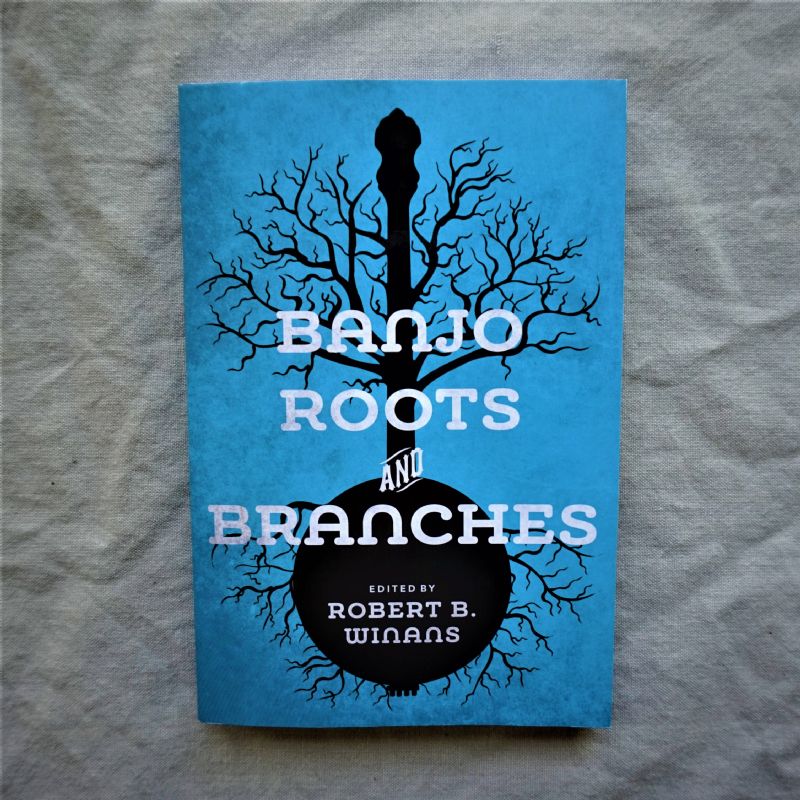
Finally, the long-awaited release of BANJO ROOTS AND BRANCHES!
This book was about ten years in the making and brings together cutting-edge banjo history research from a diverse group of leading academics, musicians and collectors. The late Shlomo Pestcoe, ethnomusicologist Greg C. Adams, pioneering Akonting researcher Dr. Chuck Levy, minstrel banjo expert Dr. Robet Winans, master luthier Pete Ross, prolific researcher Tony Thomas and my longtime friend and mentor George R. Gibson are among the contributors to this new, vital survey of banjo history.
"Wide-ranging and illustrated with twenty color images, Banjo Roots and Branches offers a wealth of new information to scholars of African American and folk musics as well as the worldwide community of banjo aficionados."
Order your copy HERE: press.uillinois.edu/books/catalog/23cnd4ft9780252041945.html
Terms of Use | Privacy Policy | Privacy Consent (EU/GDPR Only)
Copyright 2026 Banjo Hangout. All Rights Reserved.