
DVD-quality lessons (including tabs/sheet music) available for immediate viewing on any device.
Take your playing to the next level with the help of a local or online banjo teacher.
Weekly newsletter includes free lessons, favorite member content, banjo news and more.
Premier Sponsors


|
Please note this is an archived topic, so it is locked and unable to be replied to. You may, however, start a new topic and refer to this topic with a link: http://www.banjohangout.org/archive/318265
banjered - Posted - 05/10/2016: 13:48:14
I have 3 banjos with hide heads - a 12" Enoch Tradesman, an 1890 11" Stewart, and a 1927 10&5/8" Supertone. Surprisingly of the 3, it is the smaller Supertone that has the warmest, mellowest sound. The first two are thin goatskin. The tension is about the same on all three as far as feeling how much "give" each has with finger pressure near the bridge.The unknown hide on the Supertone feels softer and slightly slick like there is some kind of conditioner on it.
So, does anybody know of some kind of hide conditioner that softens/improves the tone of a banjo? Banjered
ClayTech - Posted - 05/10/2016: 14:57:03
No idea about conditioner, but I would guess that the differences in tone have more to do with the thickness and tension of the heads than anything else. Plus you've got 3 different pot diameters, and maybe depths, too. Do they all have the same bridge? I suppose it's possible the head has been waxed, but unless it's a very thick coat it shouldn't affect the sound much.
ess4439 - Posted - 05/10/2016: 19:37:11
quote:
Originally posted by banjered
I have 3 banjos with hide heads - a 12" Enoch Tradesman, an 1890 11" Stewart, and a 1927 10&5/8" Supertone. Surprisingly of the 3, it is the smaller Supertone that has the warmest, mellowest sound. The first two are thin goatskin. The tension is about the same on all three as far as feeling how much "give" each has with finger pressure near the bridge.The unknown hide on the Supertone feels softer and slightly slick like there is some kind of conditioner on it.
So, does anybody know of some kind of hide conditioner that softens/improves the tone of a banjo? Banjered
Tequilla with a Corona chaser drool works well 
Edited by - ess4439 on 05/10/2016 19:41:13
OldPappy - Posted - 05/11/2016: 11:59:15
As does beer.
I am also thinking it is more related to the thickness of the hide, and all the factors of the banjo itself, than it is to the texture of the head.
It is probably calf skin, and the others are goat. One moos, the others bleat.
Joel Hooks - Posted - 05/11/2016: 15:57:25
Would the fact that they are three completely different banjos with different designs and constructions have any affect? The SSS (provided that it is not a S&B or "grade 2") and the Enoch are top tier banjos. The "Supertone" is jobber contract banjo built to sell at a low price. SSS banjos were never meant to sound "warm"-- they were intended to cut with a sharp tone and gut strings.
jbalch - Posted - 05/12/2016: 05:58:20
I don't know of any "conditioner" to soften a hide head. and I'm not sure that any such application would improve the sound. I sometimes apply waterproofer spray, wax and or a light coat of hard oil finish. Those treatments may improve initial stability and enhance the appearance. But they do not soften the hide or have significant impact on the sound.
Natural hides occur in a big range of thickness and texture. Both characteristics may also be affected by processing - before mounting.
Some hides are naturally opaque and relatively flexible (soft). Often those hides have a consistent layer of off-white fatty material on the "flesh" (underneath) side. Others are translucent, stiff, and almost plastic-like. Mottled hides are a mixture of both.
Hides that have been sanded (or very precisely scraped - like the old Rogers brand), usually appear more opaque and have a softer surface feel. You can sand a pre-mounted head to clean it or smooth the surface. But - sanding will thin the hide. Too much thinning can weaken the head. If there is any impact on tone, I expect it to be brighter due to decreased thickness and mass.
As for natural thickness, I personally prefer to use hides that are between .012 in. and .016 in. thick. I find hides in this range to be reliable and sound good. If they are too much thicker, you might have problems mounting them on many banjos due to tight clearances between the tension hoop & rim. Plus - really thick hides are less responsive and can be dull sounding. On the other hand, extremely thin hides (.008-.012) are easy to mount and may sound bright, but they can lack stability and may break more easily.
I think you are better off selecting a fresh raw hide that has characteristics you are seeking - rather than trying to apply conditioners to change an already mounted head.
bartmcneil - Posted - 05/12/2016: 06:17:15
The texture of head probably is not significant to sound except as how it sounds when the finger or fingernail scrapes against it. There are skin head conditioners that lay claim to "improving" the sound of the banjo, but whether they have any real effect is in doubt. At east they have never been accepted as a necessity by the vast majority of players.
It is fun to experiment with various heads, skin and plastic, coatings, bridges, strings, various finger and flat picks and even tailpieces and you will find opinions all over the map on how to make your banjo sound just like the professionals. The only problem is that the professional has been playing four+ hours per day for the last 30 years.The professional can make almost any Banjo, no matter how inexpensive, sound good.
banjered - Posted - 05/12/2016: 07:01:14
OK, I guess there is no "Grandma's Secret Skin Head Conditioner" out there. I am back to trying to figure out why the small 10&5/8" head Supertone with its tarnished spunover and banged up neck sounds better than my other banjos -design? materials? It seems to defy the general consensus of what makes a banjo sound a certain way. Banjered
mbuk06 - Posted - 05/12/2016: 12:30:11
I don't know if it rates as a 'conditioner' but Botox injections would create a head that's smooth - but with a weird Frankenstein's monster downside that it was unable to react naturally to anything going on around it? 

jbalch - Posted - 05/12/2016: 14:47:58
Tom:
As you know ... there are lots of variables affecting the sound of a banjo. Head is one of the most important. But it is certainly only one of many important factors.
If the head on your supertone is very old .. the soft "texture" you describe might be nothing more than age and use. Old hides sometimes get VERY smooth where they are handled.
banjered - Posted - 05/12/2016: 15:16:24
Thanks John! Hand oil over time? What is done to make hide heads white? Would that affect texture? Banjered
blm10jn - Posted - 05/12/2016: 17:02:01
The very best Rodgers Vellum heads were cow hide sanded thin and polished both sides to produce a very clear tone. Goat is much softer than cow and Kangaroo is softer yet. I prefer cow medium thin and polished one side. But for every day use Mylarsouras hide is plenty good enough
jbalch - Posted - 05/12/2016: 17:40:28
quote:
Originally posted by banjered
Thanks John! Hand oil over time? What is done to make hide heads white? Would that affect texture? Banjered
Tom:
Some hides are naturally off-white. Others are chemically "bleached". I have not had good luck with chemically bleached hides. I think some of the chemicals used may weaken them.
There is information about the Rogers process in this book: ( amazon.com/Rogers-Book-Rob-Coo...drum+book ). Rogers hides were scraped (by hand) ... Not sanded. They were "bleached" in the sun (not by chemicals). The opaque, off- white color was enhanced by the scraping which broke down some of the fibers in the hide. The employees who scraped the hides were among the most skilled (and highly paid) workers in the operation. At peak production, Rogers was processing several hundred complete hides every day. I'm sure they could be quite selective choosing only the very best portions of the skin for their top Three-Star brand.
In 1950, a Rogers Three Star pre-mounted head cost $19. That is $187.74 today (inflation adjusted). See the attached Rogers price list from the late Bill Miller's website.
AMRAWco and United Tanning Co. of Chicago used machine sanders (rather than hand scraping) to smooth hides and achieve uniform thickness. They offered heads in various precise thicknesses for a range of applications. United Tanning produced heads for Slingerland, ludwig and others.
Jeff Stern of Stern Tanning Co bought the equipment and business of United Tanning Co after the owner retired. He still offers limited production of of very high quality hides for banjo and drums. Stern tanning Co hides are the best available today (In my experience).
Edited by - jbalch on 05/12/2016 17:47:26
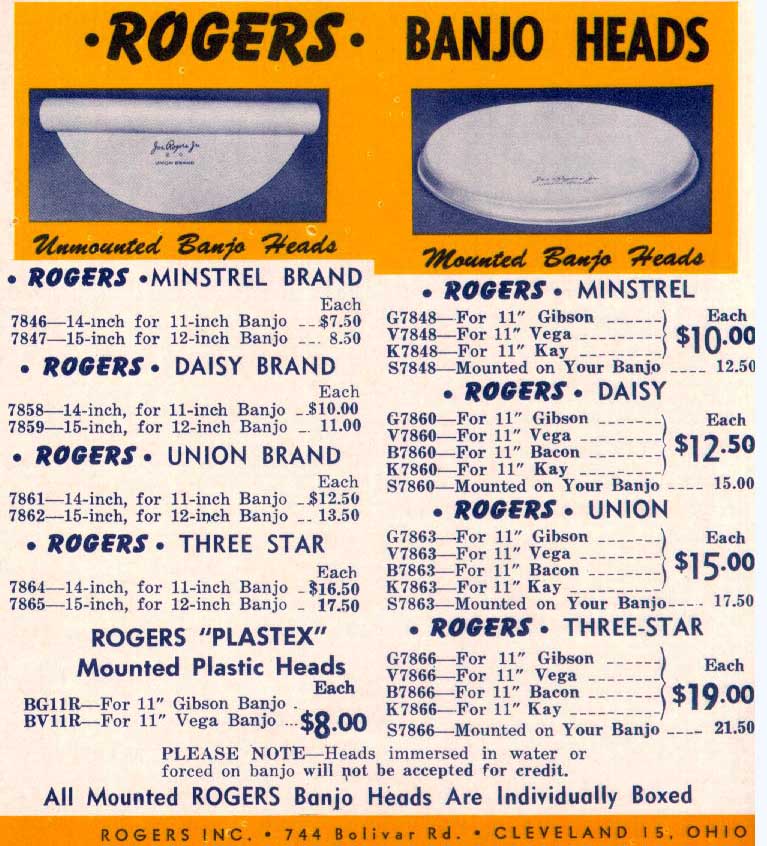 Rogers price list 1950s from Bill Miller's website | 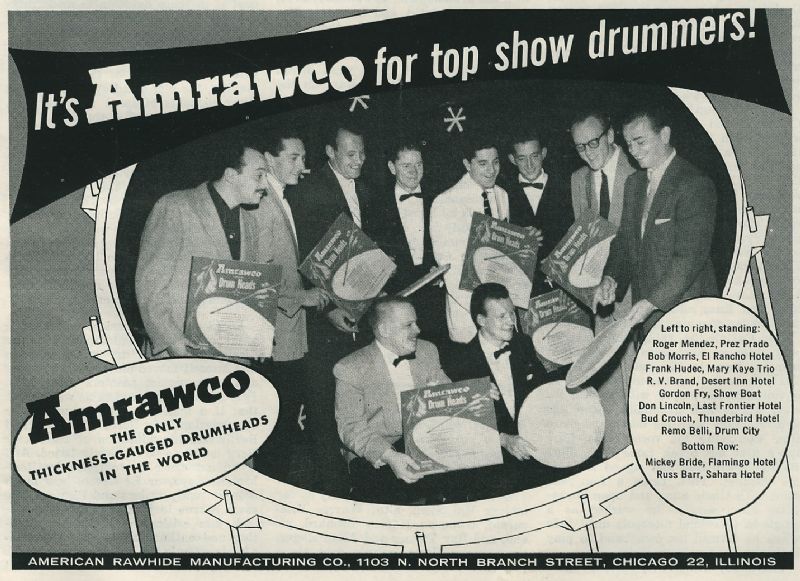 AMRAWCo Ad | 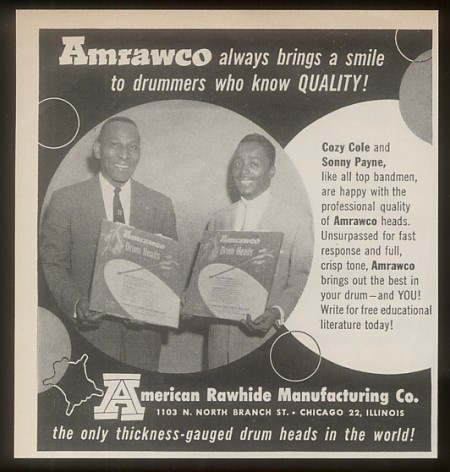 AMRAWCo Ad | 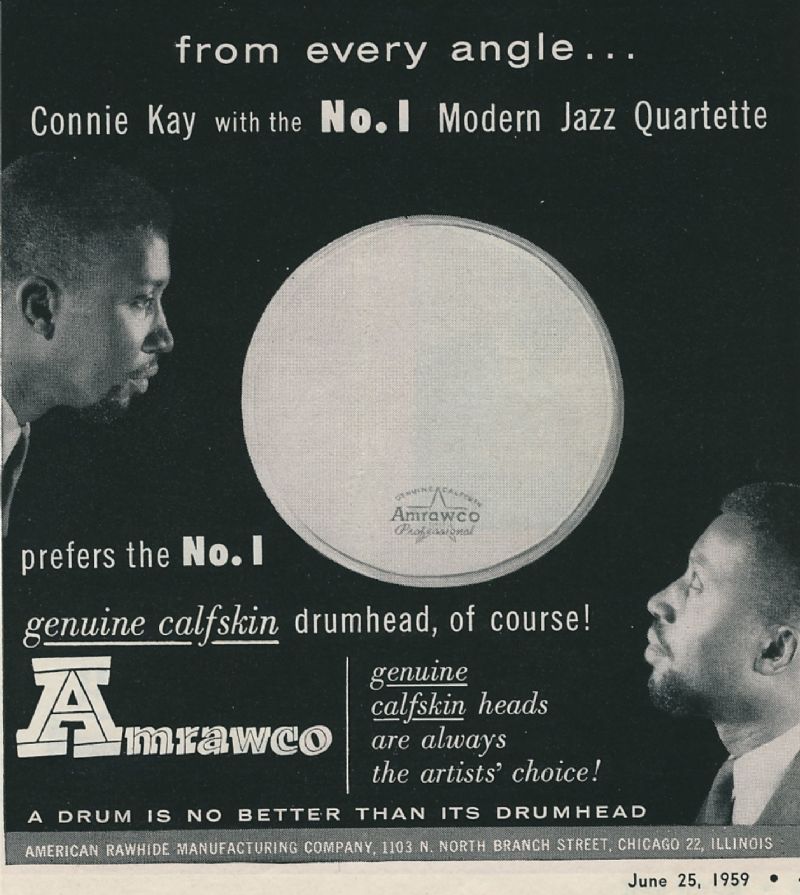 AMRAWCo Ad |
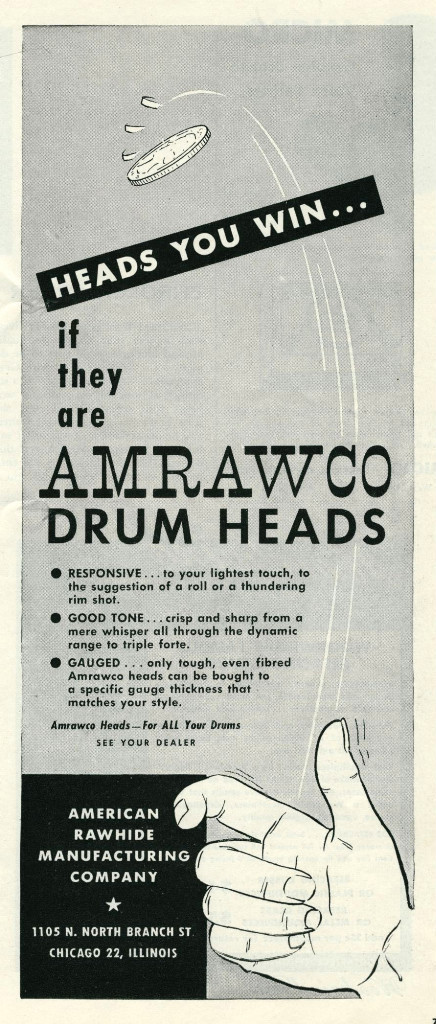 AMRAWCo Ad | 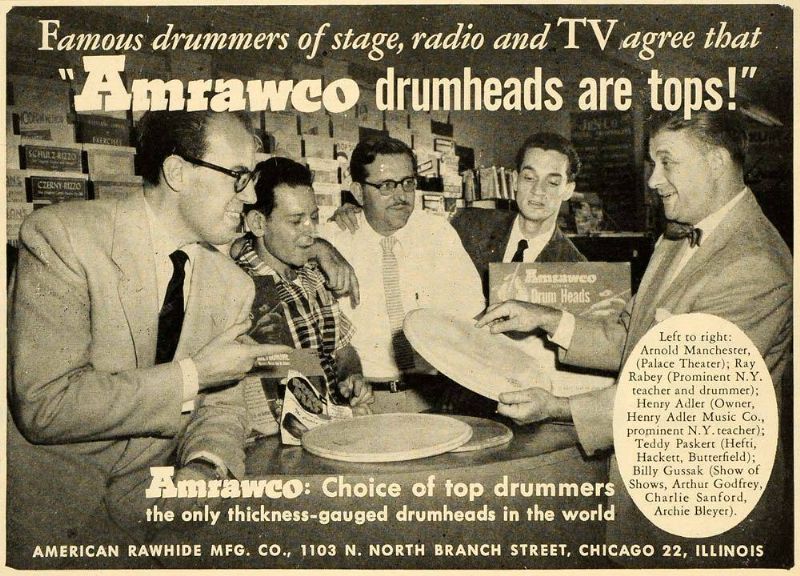 AMRAWCo Ad |
Terms of Use | Privacy Policy | Privacy Consent (EU/GDPR Only)
Copyright 2026 Banjo Hangout. All Rights Reserved.


