
DVD-quality lessons (including tabs/sheet music) available for immediate viewing on any device.
Take your playing to the next level with the help of a local or online banjo teacher.
Weekly newsletter includes free lessons, favorite member content, banjo news and more.
Premier Sponsors


|
Please note this is an archived topic, so it is locked and unable to be replied to. You may, however, start a new topic and refer to this topic with a link: http://www.banjohangout.org/archive/294409
Joe the banjo guy - Posted - 11/14/2014: 06:50:11
I don't want this to be inflammatory or accusatory. I'm just genuinely interested to hear how Old Time musicians think about this issue.
There are a significant number of old time standards that were born in the minstrel show tradition, which has (rightly so) been pilloried as trafficking heavily in offensive and derogatory racial stereotypes.
The tunes themselves may or may not reveal those stereotypes. Either way, how do (or should) Old Time musicians think through the issue of playing those tunes today? I'm sure the vast majority have no desire to be disrespectful.
I don't have an answer here. I'm just curious to read what other people's thought processes have been on this issue, or if you've thought about it at all.
ringtailman - Posted - 11/14/2014: 07:17:45
,m not sure how the old timers might feel but I read Al Jolson was a minstrel performer with a history of helping black performers like Cab Calloway.
Helix - Posted - 11/14/2014: 07:52:19
Read about Charlie Poole, they loved Al Jolson's music but refused to do black face makeup.
Personally, I think Robert Louis Stephenson's "Hard Times Come again no more" I sang this Sept. 22nd acoustically at the Peoria Public Library in Peoria , AZ.
So I think the music is more important than the milk carton it's in. See how "Doo Dah" has entered general usage. Whereas "Mammy" was too cheesy for me, personally, too much theater, not enough seats.
Old Timer's, heck I'm getting there myself.
I think I heard on NPR that there were about 4 bands of white guys in the US doing lampblack and singing Christy Minstrel songs, AND they are NOT having a good time...............good.
But it's Ok to laugh at ourselves, no 4 black guys are using WHITE FACE and singing 4 Freshman songs, wheee. I would sell oranges to go see that.
Your Post was very well written. This music kills death itself. I'm too young for this.
 Helix Mariner |
Helix - Posted - 11/14/2014: 08:21:08
If you don't mind, why can't we have a banjo band again, like 40 men, women and children of all "distraction".
oldwoodchuckb - Posted - 11/14/2014: 08:41:14
I have always done it in much the same way as I did the blues long before I got into OTM.
As a white guy.
No "Gwines" no references to "Old Master" No songs that were about race. There is plenty of material without it.
Don Borchelt - Posted - 11/14/2014: 09:33:02
The Old Woodchuck wrote: 'No "Gwines" no references to "Old Master" No songs that were about race. There is plenty of material without it.'
I have long thought this was an important issue in old time music, one that every practitioner should be aware of and think about. I've read three works that deal at least in part with the minstrel era: Karen Linn's That Half-Barbaric Twang, published in 1994, Phil Gura and Jim Bollman's America's Instrument, published in 1999, and Bob Carlin's The Birth of the Banjo, published in 2007. These were all interesting, informative, and well-written works, but I was disappointed to find that all of them meekly skirted the issue of racial prejudice and stereotyping in minstrelsy. I have been told that I should read Blacking Up: The Minstrel Show in Nineteenth-Century America, by Robert Toll, published in 1977, but I haven't gotten around to it, yet.
Earlier this year, there was a Facebook thread- I think that's where it was- about the racist lyrics in Old Zip Coon, which, of course, has the same melody as Turkey in the Straw. The original post, or the on-line article it linked to, suggested that ice cream trucks should stop playing the tune, because of the racist symbolism it supposedly represents. I think this is a good example of how a single, narrow issue can illustrate a much larger point. First of all, the melody of Turkey in the Straw/Zip Coon is very old, and probably has Irish origins. As a fiddle tune, it also goes by the name Natchez Under the Hill. I would insist that musical notes have no political or racial opinion, and their value assembled together as music rests entirely on how well the melody engages and edifies us. Musical notes, in and of themselves, do not insult or degrade anyone. Racist lyrics reflect back upon the performers who sing them, not the melodies commandeered to carry them, and the melodies themselves are no more guilty than the slave was responsible for the inhumane crimes of his master.
Minstrel music represents perhaps the first time, but certainly not the last, that the dominant white American culture has expropriated a black musical form. The character Jim Crow itself, the historical icon of American racism, appears to have come from the African-American slave tradition. Those first white interpreters, performers like Joel Sweeney and George Dixon, saw themselves as "Ethiopian delineators," who appear to have been generally admiring and sympathetic in their intent. You can see this reflected later in the works of composer Stephen Foster, who penned songs like Angelina Baker (1850) and Hard Times Come Again No More (1854), that drew attention and empathy to the condition of blacks under slavery. There were even a few successful black minstrel troupes, like the Georgia Minstrels, who performed primarily for black audiences. Fairly quickly, however, the typical minstrel show degenerated into a cruel vehicle to mock the African-American race, and it's aspirations to achieve social, economic, and political equality. By the end of the century, as a popular form of public entertainment, it had pretty much faded away. But it's influence on traditional Appalachian music, especially banjo music and technique, is immeasurable. Traveling minstrel shows undoubtedly were a major force in spreading the stroke/clawhammer style of playing throughout the mountains, in the days before the invention of the phonograph and radio. Without minstrelsy, the would still have been a mountain banjo tradition, but one not nearly as varied and vital.
I am reminded of a somewhat similar musical controversy that continues today. Since the founding of the State of Israel in 1948, there has been an unofficial ban throughout the country on the playing of any music by the 19th Century German composer Richard Wagner, who was a notorious anti-semite, and the favorite composer of Adolf Hitler and the rest of the Nazi leadership. His music become the soundtrack of the Nazi rise to power. Attempts within Israel over the years to overturn that de facto ban have been unsuccessful; a concert sponsored by the Israel Wagner Society as recently as 2012 had to be canceled, when two different venues withdrew their support. The Society's founder, Israeli attorney Jonathan Livny, whose father was a holocaust survivor, had this to say:
The important thing is that this is good music, and I am against any boycott of that regardless of who wrote it. Also you can't understand modern music without listening to Wagner. Schoenberg, Mahler, all these composers were disciples of his. It's like saying 'don't listen to Beethoven'. He made his imprint on music. And so did Wagner.
I think you could say the same thing about our American minstrel melodies. Old time music cannot be fully experienced without them. As Woodchuck said, just skip the lyrics.
leadbelly - Posted - 11/14/2014: 09:44:42
quote:
Originally posted by HelixIf you don't mind, why can't we have a banjo band again, like 40 men, women and children of all "distraction".
When I was a kid, back in the sixties, I worked at an ancient music store (Hunleth's) here in St. Louis. Several of the older guys there had been professional musicians as far back as the twenties. One day I came across an old picture of a banjo orchestra, complete with six foot bass banjo and all. I asked old Elmer Lochner what those outfits sounded like, and all he said was "awful!" This is probably the reason.
kwl - Posted - 11/14/2014: 10:20:21
Just a small correction as I ponder this. Hard Times Come Again No More was written by Stephen Foster.
Zischkale - Posted - 11/14/2014: 10:33:01
For me personally it's Ol' Woodchuck's response (and Don Borchelt elaborated nicely).
However, stronger words come from someone with a different experience than mine--check out this excellent article by Dom Flemons:
oxfordamerican.org/articles/20...s-cannon/
Ron Stanfield - Posted - 11/14/2014: 10:39:52
I have some questions. Somewhere on this planet, thousands of years ago, somebody took a gourd, a stick and strands from a horse's tail and built a musical instrument. In time this same somebody learned to play music from this contraption. Who was this person? What was his or her name? Were they Asian, African, Indian, Spanish, or what? Does it matter?
No doubt, this innovative individual may have been considered different, weird, and a little on the goofy side for sitting around and extracting strange sounds from a funny looking gadget as rest of the world criticized, condemned and mocked his efforts.
To whomever it may have been, I say THANKS FOR THE BANJO!
Marc Nerenberg - Posted - 11/14/2014: 10:54:17
quote:
Originally posted by Ron Stanfield
...No doubt, this innovative individual may have been considered different, weird, and a little on the goofy side for sitting around and extracting strange sounds from a funny looking gadget as rest of the world criticized, condemned and mocked his efforts.
...
I have no idea why you have no doubt about that. I don't see any reason anyone would have "criticized, condemned and mocked his efforts". I suspect they were welcomed. Music is universal in all cultures. There is no reason to suppose the creators of musical instruments would have been denigrated in any way.
Edited by - Marc Nerenberg on 11/14/2014 10:56:53
Joe the banjo guy - Posted - 11/14/2014: 10:55:18
Don, thank you for that very thoughtful answer, and to everybody else.
kwl - Posted - 11/14/2014: 11:08:46
Aaron, thanks for sharing that link from Dom Flemons. It was very infromative.
Joe the banjo guy - Posted - 11/14/2014: 11:13:34
Yes, second that. I'm going to dig into it when i have the time. Looks really interesting.
stevel - Posted - 11/14/2014: 11:26:07
i just warn my audience that naughty words are coming up. if i have to sanitize something for public consumption then i just don't play it for a general audience.
UncleClawhammer - Posted - 11/14/2014: 12:24:01
Honestly, I think most minstrel show songs are pretty dreadful musically and lyrically even if they don't contain racial slurs or stereotypes. Occasionally I come across a good song, like Little Old Log Cabin in the Lane, and discover that it began its life as racist tripe. I don't care, it's better now.
Tony and Don both had excellent responses.
dculgan - Posted - 11/14/2014: 13:00:38
quote:
Originally posted by UncleClawhammerHonestly, I think most minstrel show songs are pretty dreadful musically and lyrically even if they don't contain racial slurs or stereotypes.
I disagree. There are some great melodies and also very poetic lyrics. Minstrelsy was a huge genre encompassing many different themes, not all blatantly racist. Dave
Joel Hooks - Posted - 11/15/2014: 05:19:04
The most popular song in history came from this genre of popular music, Oh! Susanna.
The Zip Coon story on NPR was good old fashioned shock reporting. It was an "investigation" into common knowledge of the tune to invent recreational outrage (slow news time, folks are bored, let's get mad about something). They even made a leap connection with Harry C. Browne recordings from the 1920s. That is a big leap from the 1840s to the 1920s, especially when the Browne recordings were actually a throw back to 1880s minstrelsy.
FWIW "lampblack" was not used-- it was burnt cork (as in wine corks set on fire, crushed and applied to skin).
chip arnold - Posted - 11/15/2014: 06:41:11
I don't sing, so If I like the tune, I play it. I don't want to participate in a song though, when hurtful lyrics are sung. Racist, classist or otherwise. I do think it's a good thing to preserve these lyrics, just as it's good to preserve the facts and writings from the Holocaust, or the genocide visited on native Americans. When we know history we don't need to repeat it, and if others repeat it, we're quickly sensitive to the wrong in it.
carlb - Posted - 11/15/2014: 11:16:27
I have changed words when I personally find them hurtful. Two examples are:
Kingdom Coming opening and in other verses as well: Say brother slaves have you seen the master with a mustache on his face............
Whistling Rufus: Black as a stick of ebony (that's the only line that's changed in the whole song
JanetB - Posted - 11/15/2014: 11:31:22
I appreciate the simple wisdom, as well as the brilliance in these observations and comments. Thanks for helping me think more about minstrelsy and giving me the motivation to delve into book resources I already have. The link to Dom Flemons was indeed illuminating and just about above my first-grade head.
Rawhide Creek - Posted - 11/15/2014: 15:22:51
quote:
Originally posted by Joel Hooks. . .
FWIW "lampblack" was not used-- it was burnt cork (as in wine corks set on fire, crushed and applied to skin).
Example.
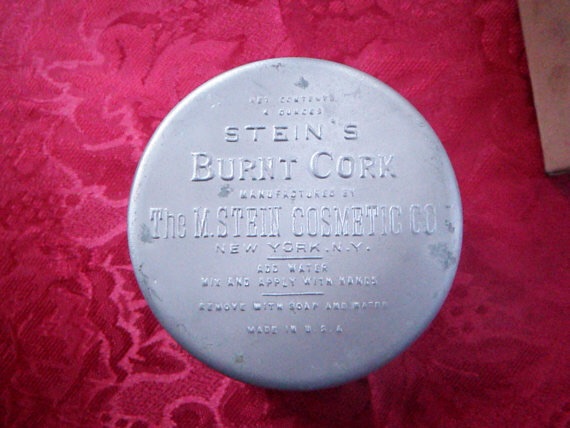 Burnt Cork |
R.D. Lunceford - Posted - 11/15/2014: 15:33:13
I also don't sing so lyrics are less of an issue for me as well.
I also agree that sanitizing history does little good. Would you want all references to slavery or Jim Crow deleted from the history books? Wouldn't the motivation behind that be questioned? To a degree, suppressing/deleting the minstrel material with offensive lyrics is similar. Now I would emphasize that the performance of these lyrics must be done with caution, sensitivity, and put into context. They are a window on our past and should not be done away with, but care must be exercised.
Much minstrel music is melodically quite beautiful, and not all of the songs in that genre are offensive. Songs like Nelly Gray and Mary Blane can be quite poignant and often elicit sympathy in the listener. These songs must be performed AND listened to intelligently, and with an awareness of the audience AND the performer's intention. They are certainly not the sort of songs one busks with.
Even the most innocuous low-key performance can elicit a violent reaction, and this based on the title alone. See the comment(s) posted to this video:
youtube.com/watch?v=zcxAPN4ozJQ
.
Joe Connor - Posted - 11/15/2014: 16:36:56
These issues go far beyond minstrel shows. A lot of folk music contains lyrics that reflect the values of the past and not present-day attitudes. Many of the attitudes of the past are considered offensive today. How should we handle that? Should we condemn that music outright? How do we balance decency and good taste without genuflecting at the altar of political correctness? Where is the happy medium? There is virtually no subject that might not offend someone. If inoffensiveness is the goal, we'll soon be left with nothing left but instrumentals. Here are some issues:
Race: What about a song whose title might be offensive to some? For example, should we change "Colored Aristocracy" to "Southern Aristocracy"? What about the Civil War song "Colored Volunteers," which describes the efforts of freed slaves to fight for the Union? In addition to the title, it contains the n word. What about "Dixie," which some might feel is inextricably linked to the Confederacy and slavery?
Sexism: How many humorous folk songs are based on a variant of the "take my wife...please" joke? Should we purge them from our musical consciousness? I'm sure some would see even a more recent song, like "Fox on the Run," as sexist.
Violence: A lot of folk songs glorify outlaws who did some pretty violent and gruesome things. Do we sanitize those songs or simply ignore them?
Years ago, Pete Seeger wrote a column in Sing Out! bemoaning the censorship and bowlderization of folk songs. I wish I could find it.
Rawhide Creek - Posted - 11/15/2014: 16:46:05
It's not just minstrel shows and it's not just folk music . . .
How about this effort by a professor of literature, reported not that many years ago, to "sanitize" Mark Twain's Huckleberry Finn?
nytimes.com/2011/01/07/books/0...anted=all
Edited by - Rawhide Creek on 11/15/2014 16:47:56
Lew H - Posted - 11/15/2014: 17:52:41
Greg Adams, an erudite banjo historian and picker, linked an interview with Banjo Newsletter. Some parts of it are relevant here, and other parts tangential at best. Greg points out that there is a dark side to banjo history, from the minstrel period (bad pun!) to the attempt to cover or minimize the African origins of the banjo itself. Greg took a couple of trips to west Africa and learned to play the ekonting--the 3-string gourd instrument that seems to be the closest precursor to the 5-string banjo. He talks about his excursion into minstrel banjo in the interview also.
banjonews.com/index.html (If this link doesn't work go to Greg's page, find it, and pick it up there).
I agree that we need to acknowledge this history, warts and all. Joe is right about these song lyrics reflecting the sometimes repugnant views of earlier eras. "The Knoxville Girl" is both sexist ("I met a little girl in Knoxville") and violent ("I picked a stick up off the ground and knocked that fair maid down"). If we look into the history of this song, we find that it evolved out of a British ballad--maybe from the 1700s--called the "The Wexford (or Oxford) Tragedy." If I recall the old version correctly, the guy killed the gal because she had syphillis. We find religious animosity in the old ballads as well. I learned one from the Ozarks back in the sixties called "The Jew's Garden," an even older song from Britain. It tells the story of a boy playing ball, but the ball goes into a Jewish lady's garden. She entices him in, then kills him--for no apparent reason in the Ozark version. More recently--pre-Civil War period-- "Run Slave Run" tells about a slave fleeing the Paterollers, or patrolers, gangs of whites who captured slaves to return to their owners to collect rewards. This song mocks blacks in the worst way. Hedy West converted the lyrics to show sympathy for the slave. I have followed in her footsteps in this case, though I usually keep lyrics straight in other songs, even if they are about marital discord, wife beating, murder, tragic deadly accidents full of blood and gore, or what not. So, Joe, we shouldn't always hide, but oftentimes we need to explain the dark elements of banjo history and traditional music to our audiences.
Rawhide Creek - Posted - 11/15/2014: 18:17:08
quote:
Originally posted by Lew H. . .
. . . I learned one from the Ozarks back in the sixties called "The Jew's Garden," an even older song from Britain. It tells the story of a boy playing ball, but the ball goes into a Jewish lady's garden. She entices him in, then kills him--for no apparent reason in the Ozark version. . . .
. . .
That one is antisemitic in the extreme and dates back to an unfortunate event in Lincoln, England in 1255. It exists in numerous versions and is #155 in Francis Child's collection (a.k.a. "The Child Ballads"). It's about the "blood libel", the accusation commonly made against Jews that they engaged in the ritual murder of Christian children.
Here are many sets of lyrics collected by Child:
sacred-texts.com/neu/eng/child/ch155.htm
Here's some backstory and more lyrics:
contemplator.com/child/sirhugh.html
And here are three versions from the Arkansas Ozarks:
maxhunter.missouristate.edu/so...x?ID=0184
maxhunter.missouristate.edu/so...x?ID=0335
maxhunter.missouristate.edu/so...x?ID=0751
(See especially verse 7 of the last one. Note also that it was recorded in 1969. While traveling in Arkansas, Rabbi Joseph Telushkin bought a book of Ozark Mountain folk songs that included the last one. It was published in 1973.)
Edited by - Rawhide Creek on 11/15/2014 18:33:02
Don Huber - Posted - 11/15/2014: 18:26:24
We should not judge those who were born in a different time and place. Tommy Jarrel, Dave Macon, Doc Walsh and many others used the language of their day, and I accept that and still admire their music. Abraham Lincoln made the occasional racist joke, appropriate for the time in Southern Illinois, during the Lincoln-Douglass debates even as he called for a societal shift on race. I don't feel obligated to take a black sharpie to his face on the $5.00 bill in my wallet.
Don Huber - Posted - 11/15/2014: 18:35:54
One of the most accurate, interesting and powerful films about slavery was the recently produced, "Twelve Years a Slave". I wonder what R.D.'s detractors think about this use of the Pateroler song in the context of an historic film. If minstrel songs and tunes were not being kept alive and used as living history, we'd be the worse for it. At least those dimwits got to see some fine banjo playing, had they even noticed.
Don
Joe Connor - Posted - 11/15/2014: 19:02:27
We should not judge those who were born in a different time and place
I agree, Don. Thomas Jefferson was a slave owner and fathered children with one of his slaves. I don't see that as negating the Declaration of Independence and all Jefferson's other accomplishments. Ultimately, he lived within the boundaries of what was considered acceptable in his day.
With folk music, as Lew points out, you can perform a potentially objectionable song as a reflection of history. When Pete Seeger appeared on the Smothers Bros. show after the blacklist ended, he performed a medley of American war songs to illustrate the history of the times when those songs were written. One, from the Spanish-American War, had an extreme chorus, the kind of thing you'd never expect to hear Pete sing:
"Damn, damn, damn, the Filipinos......And beneath the starry flag, civilize 'em with a Krag, and go back to our own beloved homes"
A Krag was the Krag-Jorgensen rifle that the American soldiers carried.
While there was a lot of fussing when he performed "Waist Deep in the Big Muddy" on the Smothers Bros. show, I don't recall any criticism of this medley.
Edited by - Joe Connor on 11/15/2014 19:05:47
UncleClawhammer - Posted - 11/15/2014: 23:19:05
I know a West Virginia version of "The Jew's Daughter" or "Little Sir Hugh" that is called "The Duke's Daughter." Oral tradition has erased any obvious anti-Semitism; some of the old-timers pronounced "Jew" as "due," which might explain the change in the lyrics. I don't have any particular hangups about singing it, but it's not that great of a song. I wouldn't dream of singing the unexpurgated versions except for historical purposes.
Pete Seeger did preface the war song by saying "This is not a very pretty song," and after he sang that verse, he did say, very clearly, "If there are any Filipino people listening, I hope you'll pardon me. I'm just trying to get the history out."
chip arnold - Posted - 11/16/2014: 08:06:30
I don't think the so called "political correctness" issue needs to be a part of this. Simple human kindness and respect will do quite nicely all by themselves. The issue is not necessarily the use of a particular word, like colored or indian. For me the issue is whether or not I feel like the word is used in a context that is derogatory, insulting, mean and unkind. And with kindness and respect as a measuring pole, I decide what I think is okay or not okay.
Huck Finn. For me, this is one of the greatest books of all time. I read Tom Sawyer once when i was little. I read Huck Finn at least a dozen times. The book is filled with racism, ignorant characters, thieves, slave holders, crooks and bad guys. It is also a (My copy has 421 pages) long, in depth study in these human characteristics from the standpoint of kindness and respect. Clemmons set the pace nicely in a chapter set on Jackson's Island. Huck had gone to shore, masquerading as a girl, to find out if they were being hunted. He found out that they were and when he got back to the island and Jim, the runaway slave, he said "They're coming for us" ... US.
I see the words to songs the same way. Are they degrading? Or are they actually illustrating a larger and higher point ? We all get to decide that one for ourselves.
kwl - Posted - 11/16/2014: 09:05:59
Reflecting on all the comments here, I remembered this quote from Woody Guthrie. I pulled it off of the Woody Guthrie website to post here: "I hate a song that makes you think that you're not any good. I hate a song that makes you think that you are just born to lose. Bound to lose. No good to nobody. No good for nothing. Because you are either too old or too young or too fat or too slim or too ugly or too this or too that....songs that run you down or songs that poke fun of you on account of your bad luck or your hard traveling. I am out to fight those kinds of songs to my very last breath of air and my last drop of blood." - Source: Script written by Woody Guthrie on December 3rd, 1944 for a WNEW radio show, 1944.
R.D. Lunceford - Posted - 11/16/2014: 17:22:21
quote:
Originally posted by whytemanOne of the most accurate, interesting and powerful films about slavery was the recently produced, "Twelve Years a Slave". I wonder what R.D.'s detractors think about this use of the Pateroler song in the context of an historic film...
Don
Folks often say things anonymously (or at a distance as on the internet) that they would never say in person. I guess it is a sad commentary on what people will say when they aren't worried about consequences. A personal attack never furthers one's opinions anyway.
Yes Don. Thanks for bringing up "Twelve Years a Slave". It is all the more powerful for being a true account.
Minstrel songs are at turns beautiful and by today's standards sometimes offensive, but sanitizing the past and the songs is in many ways a disservice to the folks who were denigrated by them. It is to cover up and ignore their suffering. As an analogy, no one likes war, but should the sacrifices of our soldiers be erased and forgotten because war is terrible and we'd like to forget about it and pretend it didn't happen?
The point about criticizing people who lived long before us is valid as well. Can we be so sure of how we would have acted had we been born in a different time and place? I can be fairly sure how a modern citizen would have acted had he traveled by time-machine to 1850, but what would the same person, born in 1820 have been like? He would have been a completely different person by virtue of the environment he was raised in. By today's standards, even President Lincoln made some statements that would be considered racist today.
Rawhide Creek - Posted - 11/17/2014: 09:55:47
quote:
Originally posted by UncleClawhammerI know a West Virginia version of "The Jew's Daughter" or "Little Sir Hugh" that is called "The Duke's Daughter." Oral tradition has erased any obvious anti-Semitism; some of the old-timers pronounced "Jew" as "due," which might explain the change in the lyrics. . . .
. . .
Thanks for the note.
I pronounce due as "dyoo" (rhymes with few) and as a homonym of dew rather than as a homonym of do.
Do you know any of the lyrics? I'd be interested.
Edited by - Rawhide Creek on 11/17/2014 10:07:49
Lew H - Posted - 11/17/2014: 14:17:43
In my previous post here, I mentioned a song from Hedy West, "Run, Slave, Run." Don's link to the "Twelve Years a Slave" video has the old words, and the correct title is "Run, n*****, Run." The Wikipedia entry claims that the song was first sung by slaves, then pick up in the minstrel musicians. Later it was recorded by numerous people, including Uncle Dave Macon. As I mentioned, in public performances, I use the "Run, Slave, Run" version that is sympathetic, rather than using the N-word. This one like some other songs became used in a different context than its original and for a different purpose. This one apparently wasn't "born in minstrel shows," but to the extent that we remember it today, its meaning does come from minstrelsy.
Wikipedia: en.wikipedia.org/wiki/Run,_n*****,_Run
Uncle Dave Macon: youtube.com/watch?v=4NDm6mcsxag
Edited by - Lew H on 11/17/2014 14:23:56
Rawhide Creek - Posted - 11/17/2014: 15:09:32
The Wikipedia link will not work as is; you will have to use the actual word in place of the asterisks.
Let's all nod thanks to automated censorship that keeps us all in line and from thinking evil thoughts.
Lew H - Posted - 11/17/2014: 18:08:55
Thanks, Russ. I was suprised to see the computer-lich alteration of the N-word both in the text and the link.
Rawhide Creek - Posted - 11/18/2014: 13:36:39
quote:
Originally posted by Lew HThanks, Russ. I was suprised to see the computer-lich alteration of the N-word both in the text and the link.
Wonder if it works for spic, kike, chink, and/or wop?
Well, as of 3:37pm Central time on this date, I guess not. Hmm.
Edited by - Rawhide Creek on 11/18/2014 13:37:41
sgdesertrat1 - Posted - 11/18/2014: 13:43:24
I agree with those who've already pointed out that it’s dangerous to try to judge individuals from other times by the standards of our time. This thread has already mentioned that both Abraham Lincoln and Mark Twain engaged in speech and behavior that by the standards of our time would be unforgivably racist, but both men were instrumental in pushing their society in a positive direction in terms of race. The Minstrel Show is definitely a more complex animal, because it involved a lot of individuals, but there are bright spots to consider even in minstrelsy. Frederick Douglass said of “My Old Kentucky Home” that it stimulated "the sympathies for the slave, in which anti-slavery principles take root and flourish."
The other thing to consider is that popular music has been a vehicle by which African Americans have exercised an out sized influence on American society. When you think about it, it’s remarkable that so much of the innovation in American popular music has come from a community of people that has, in many respects, been marginalized throughout American history. Jazz, the blues, rock and roll, rap, and hip hop all trace their roots to African American communities, and so does the minstrel show. The minstrel show is really the beginning of this phenomenon that has ultimately given some voice to the voiceless.
I really don’t mean to downplay the ugliness of the history surrounding the Minstrel Show, but only to point out that history and art are complicated and that a more complete picture will always include some nuance. I’m reminded of an experience I had in college when reading T.S Eliot’s “The Wasteland”. There is one scene in the poem that is strikingly anti-Semitic and homophobic. The professor explained that we couldn't wish that scene away nor could we ignore it’s importance in the poem or ignore the poem’s influence on subsequent literature. All that was left to us was to acknowledge it and reject the values that it embraced.
I would add one more action we could take. In that time, a large segment of society viewed these things as totally reasonable. So much so that intelligent and influential people were perfectly willing to put these ideas in print or public performances. This should encourage us to constantly examine ourselves and our society. What do I believe that my children or grandchildren or great grandchildren will find abhorrent? It’s only by this examination that we can be people who, while we may not live up to the value systems of 100 years from now, might be viewed as someone who pushed our society in the right direction.
Rawhide Creek - Posted - 11/18/2014: 14:02:30
Thanks, Daniel, for a well-considered and well-written comment.
You state, " . . . Jazz, the blues, rock and roll, rap, and hip hop all trace their roots to African American communities, and so does the minstrel show. The minstrel show is really the beginning of this phenomenon . . ."
All true--absolutely!--but I'm surprised that you overlook influences on and direct contributions to Christian hymnody and especially gospel music, some of which dates far back to the "call and response" work songs.
Probably we should offer a separate mention for ragtime, too.
Edited by - Rawhide Creek on 11/18/2014 14:05:57
Lew H - Posted - 11/18/2014: 15:35:48
Daniel and Russ- Gospel for sure borrowed tunes and themes from black spirituals. Moreover, even country music has had contributions from blacks and borrowed from their music. Phenomenal!
sgdesertrat1 - Posted - 11/19/2014: 08:20:24
You're absolutely right Russ. It was an oversight on my part. I should add the caveat that the list is in no way comprehensive. I suspect we could think of more examples as well.
R.D. Lunceford - Posted - 11/19/2014: 10:04:14
quote:
Originally posted by sgdesertrat1I agree with those who've already pointed out that it’s dangerous to try to judge individuals from other times by the standards of our time....
Excellent post Dan, and as far as I'm concerned, the last word on the subject.
UncleClawhammer - Posted - 11/19/2014: 11:13:14
quote:
Originally posted by RawhideCreek
Thanks for the note.I pronounce due as "dyoo" (rhymes with few) and as a homonym of dew rather than as a homonym of do.
Do you know any of the lyrics? I'd be interested.
It rained a mist, it rained a mist
It rained all over the town
When three little boys went out to play
And tossed their ball around, ‘round
And tossed their ball around
And first they tossed the ball too high,
And then it was too low,
Until into the Duke’s garden it went
Where no one dared to go, go
Where no one dared to go
Out came the duke’s daughter all dressed in silk,
All dressed in silk so fine
“Come in, come in my pretty little boy
You shall have your ball again, etc.”
“I can’t come in, I won’t come in,
“Without my playmates kin
For I have heard whoever comes in
Will never come out again, etc.”
First she showed him a big red apple
And then a soft ripe pear
And then a cherry as red as blood,
To entice this little boy in, etc.
First she led him into the parlor,
And then out into the hall,
And then into the dining room,
Where no one could hear him call, etc.
She pinned a napkin with a pin
And wrapped him up so stout
She called up for the butcher knife
To let his heart’s blood out, etc.
“O spare me now, o spare me now!”
The little boy did cry,
“And when I grow to be a man
My riches shall be thine, etc.”
“Oh lay my prayerbook at my head,
My Bible at my feet,
And when my playmates ask for me,
Go tell them I’m asleep, etc."
Some of these words don't seem worded right, but it's pretty close to the way I learned it.
Edited by - UncleClawhammer on 11/19/2014 11:15:13
Lew H - Posted - 11/19/2014: 12:18:42
UncleC, Your words are fine. If you look at the lyrics that Russ linked to BHO, you'll see that the words vary, but most details of the story remain the same across all these versions of the song. I would expect to see similarities among the melodies as well.
Rawhide Creek - Posted - 11/19/2014: 12:33:32
quote:
Originally posted by Lew HUncleC, Your words are fine. If you look at the lyrics that Russ linked to BHO, you'll see that the words vary, but most details of the story remain the same across all these versions of the song. I would expect to see similarities among the melodies as well.
UncleC, could I/we further impose on you and ask you to record the tune?
UncleClawhammer - Posted - 11/20/2014: 00:34:33
I might could. I've been down with a pretty bad cold, but when I get my voice back I could give it a try. The tune is pretty much identical to the second Arkansas version you posted.
Terms of Use | Privacy Policy | Privacy Consent (EU/GDPR Only)
Copyright 2026 Banjo Hangout. All Rights Reserved.


