DVD-quality lessons (including tabs/sheet music) available for immediate viewing on any device.
Take your playing to the next level with the help of a local or online banjo teacher.
Weekly newsletter includes free lessons, favorite member content, banjo news and more.
Premier Sponsors


|
Please note this is an archived topic, so it is locked and unable to be replied to. You may, however, start a new topic and refer to this topic with a link: http://www.banjohangout.org/archive/285417
revellfa - Posted - 05/24/2014: 05:56:18
Hello all,
I know there were various formulas for pre-war flathead rings and a different formula for archtop rings. Does anybody know what the metal composition was for the Ball Bearing Tone rings?
The Old Timer - Posted - 05/24/2014: 06:40:11
I've wondered about that myself and am eager to see how those in the know respond!
Fathand - Posted - 05/24/2014: 06:59:33
Quoting another related thread:
"The tone ring on my 1924 TB-4 is made of German Silver. This is an alloy of 60% Copper, 20% nickel and 20% zinc. "
banjohangout.org/topic/278414/2
Note that Copper and Zinc Alloys are brass, so without the 20% Nickel you would have brass,
Edited by - Fathand on 05/24/2014 07:00:44
rgoad - Posted - 05/24/2014: 07:32:27
That is interesting! So they are basically the same metal composition as the mouth piece of a Brass instrument (trumpet, etc)? If so, that would make sense as they would already have the skills and sources to make it.
The Old Timer - Posted - 05/24/2014: 09:44:48
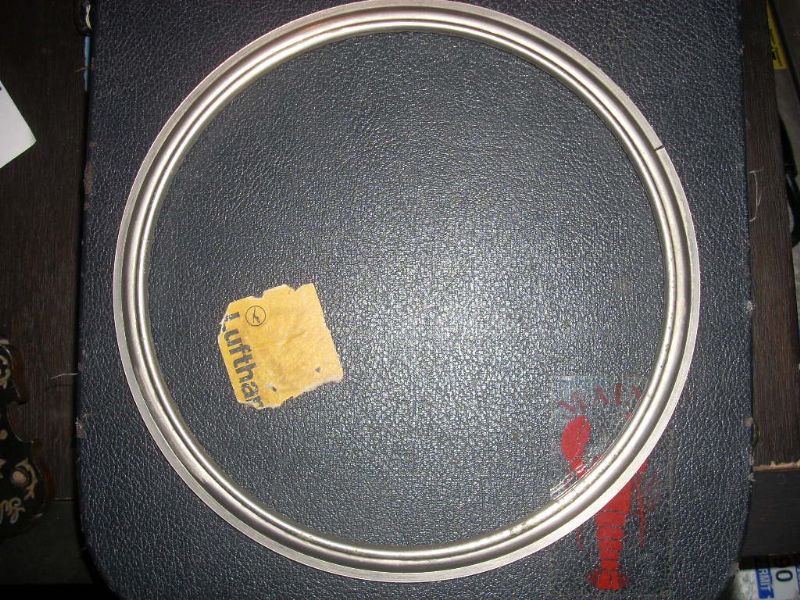
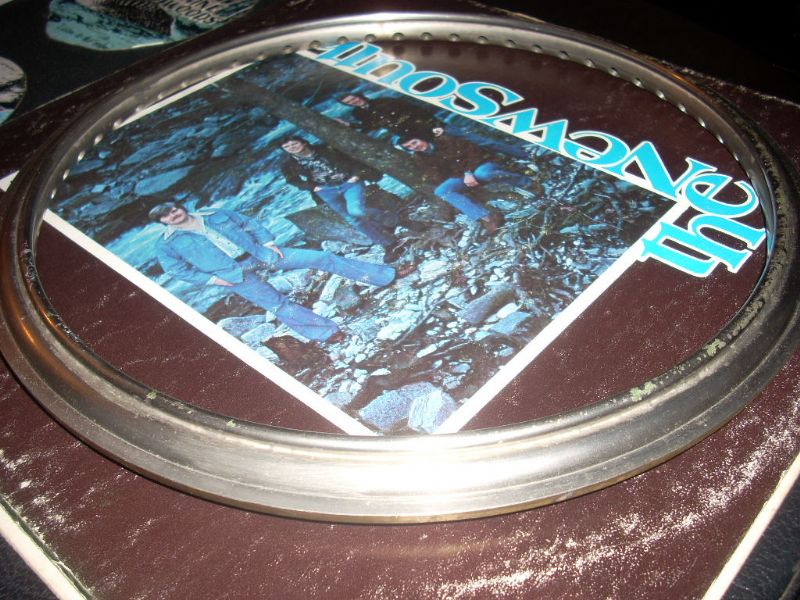
This thread tweaked my interest, so I opened up the box with the 1926 Granada ball bearing tone ring set.
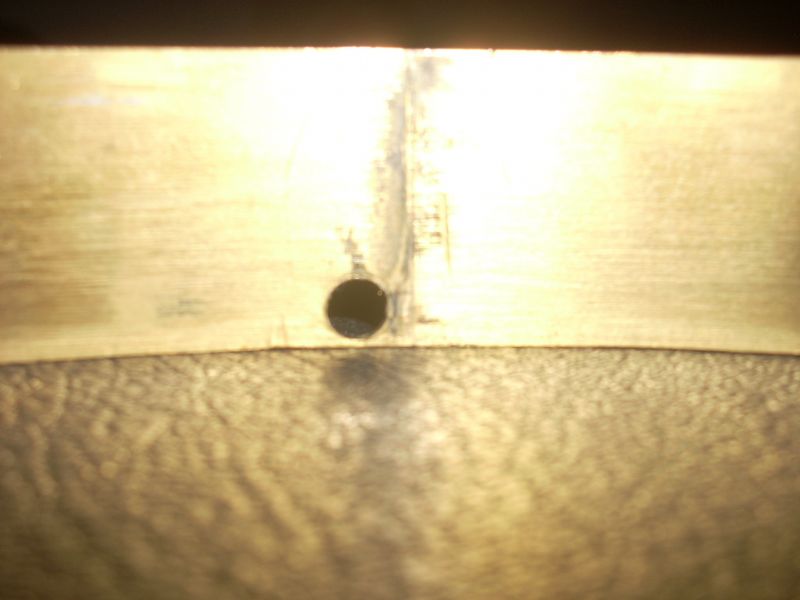
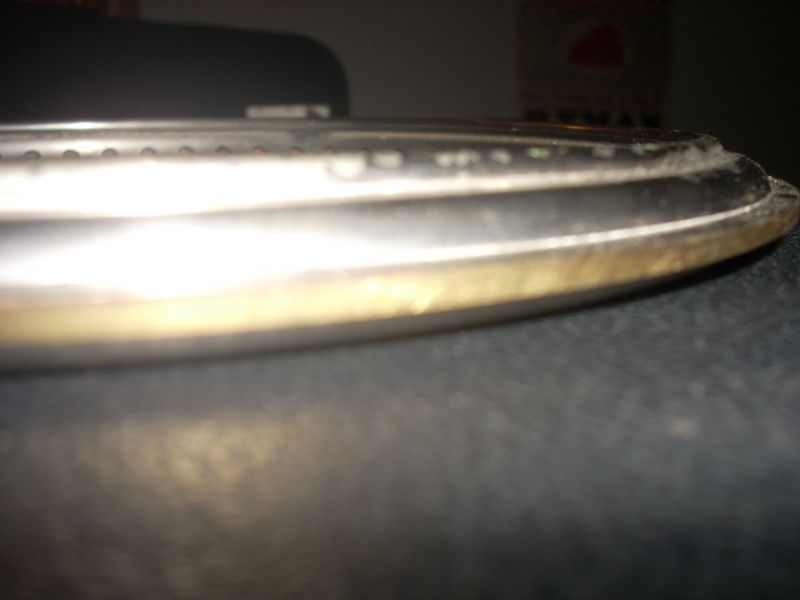
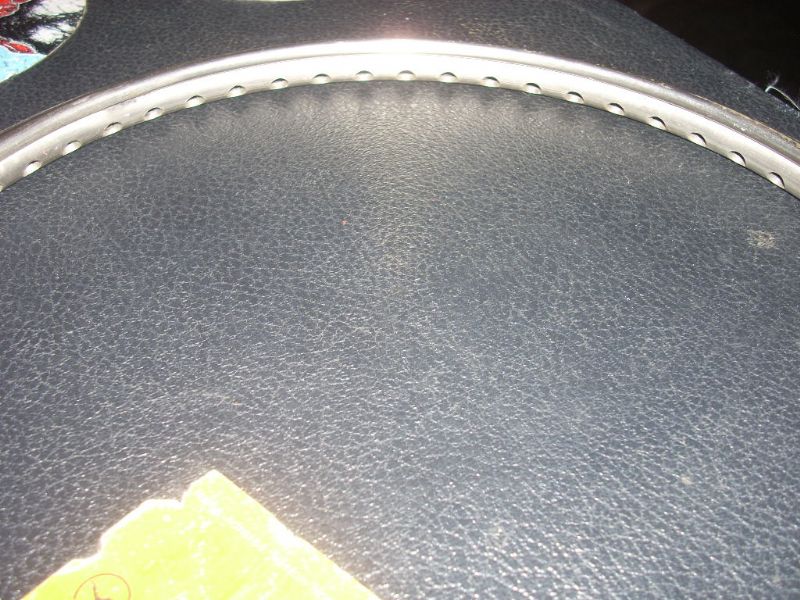
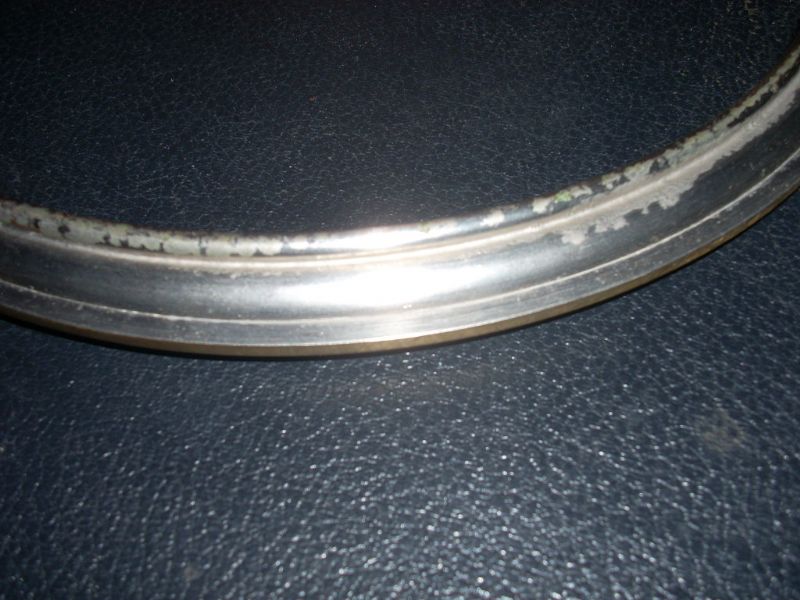
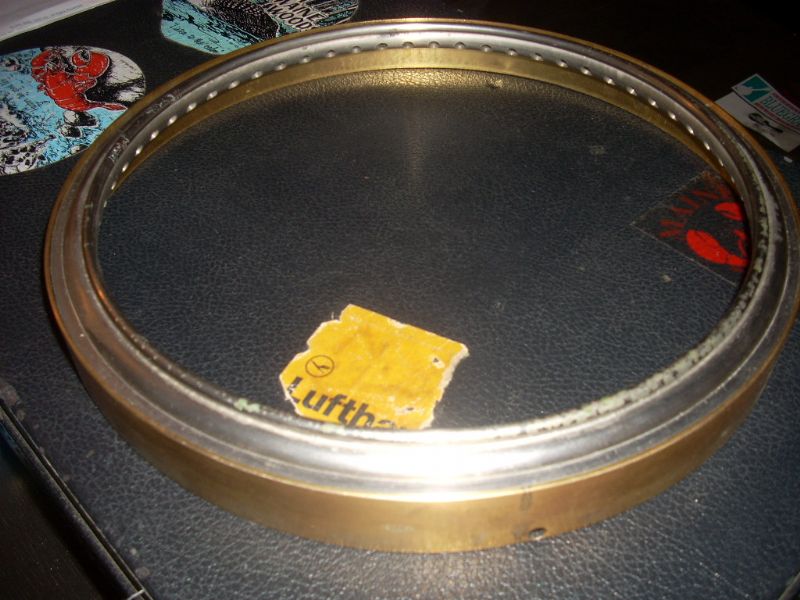
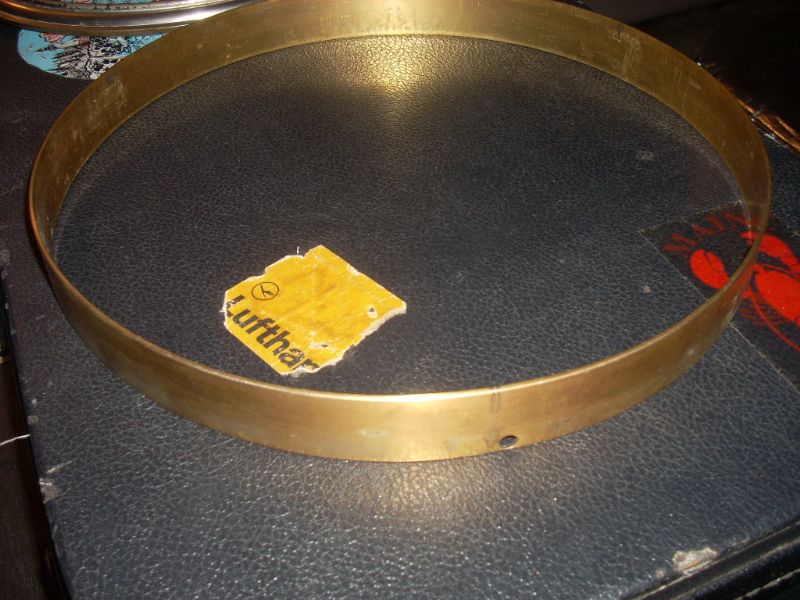
Now the ball bearing "tone ring" is made up of 4 pieces, not counting the ball bearings/springs. 3 are soldered to each other; the hollow tube with the 60 holes carefully designed by Lloyd Loar for acoustic properties, a solid rectangular cross-section "lip" attached to the outer circumference of the tube, and a round "bead" soldered to the top inner circumference of the tube, which the head bears on -- giving the arch top appearance. The 4th and separate piece is a bent flat brass skirt, soldered together not too finely right at the spot where the upper lag bolt of the neck comes through to the rim (there's a drilled hole in the skirt). This skirt is gold plated, but at the soldered joint you can see it's brass of some sort.
None of the pieces of the tube set are magnetic. The outer face of the "lip", that centers the tube set into the skirt, is hand-filed smooth and is obviously yellow brass of some sort. Everything else about this tone ring is a flat grey colored finish or plating. (Some ball bearing Granadas and DeLuxes have gold plated tube set, but not this one.) No brass is visible on the drilled edges of the 60 holes in the tube piece.
Holding the tone tube suspended from one hand in mid air and tapping it, it sounds like a ship's bell near an A note. Holding the skirt and wrapping it gives a very quiet low pitched tone, again reminiscent of a ship's bell or a bell buoy.
By comparison, holding an older Huber flat head ring in mid-air and tapping it makes a very higher pitched, thin ringing note.
Edited by - The Old Timer on 05/24/2014 09:56:34
bnlholic - Posted - 05/24/2014: 10:33:52
I have a 1925 BB Tone Ring which is tarnished. I bought a metal plate with holes in it that is intended for cleaning jewelry and silverware when immersed in a solution with a specified household cleaner. However, I was advised that some brasses might be adversely affected by this cleaning method. I'd like to know the content of the tone ring before attempting this.
Interesting Topic. Thanks.
Dan
Joe Spann - Posted - 05/24/2014: 13:26:13
quote:
Originally posted by revellfaHello all,
I know there were various formulas for pre-war flathead rings and a different formula for archtop rings.
This is simply not true. The alloy is identical.
Ken LeVan - Posted - 05/24/2014: 14:00:35
According to Bill Porter's information, there was no standard formula for the cast tone rings. They were made by job-shop foundries, the spec said "bronze", and they were all over the map - some even different on one part of the ring than another.
The BBs were a bent tube, most likely a different, more bendable alloy, more like Vega's Tubaphone.
Joe Spann - Posted - 05/25/2014: 04:47:05
quote:
Originally posted by Ken LeVanAccording to Bill Porter's information, there was no standard formula for the cast tone rings. They were made by job-shop foundries, the spec said "bronze", and they were all over the map - some even different on one part of the ring than another.
Really?
So Bill Porter has the original, pre-war Gibson factory spec sheet for the cast tone rings? I'd like to see that.
Joe Spann
Terms of Use | Privacy Policy | Privacy Consent (EU/GDPR Only)
Copyright 2026 Banjo Hangout. All Rights Reserved.