
DVD-quality lessons (including tabs/sheet music) available for immediate viewing on any device.
Take your playing to the next level with the help of a local or online banjo teacher.
Weekly newsletter includes free lessons, favorite member content, banjo news and more.
Premier Sponsors


|
Please note this is an archived topic, so it is locked and unable to be replied to. You may, however, start a new topic and refer to this topic with a link: http://www.banjohangout.org/archive/220238
mbuk06 - Posted - 11/11/2011: 05:38:48
Can anyone tell me in double C tuning what chord first and third strings fretted at the third fret is? Whatever it is it sounds kind've nice.
I have a copy of Mike Iverson's chord chart for double C tuning but can't see it there. The nearest is a B flat chord but that has the second string fretted at the second fret.
Alan Butterfield - Posted - 11/11/2011: 05:50:00
Well, your notes would be Bb, C, and F. So without any context, it could be an inversion of Fsus4, or a C7sus4. If you are including the open 4th string, then C7sus4 is probably the best name for it.
Sorry, it's not a simple major or minor chord - if that's what you were hoping.
Alan
must fret - Posted - 11/11/2011: 07:50:54
You can see the usefulness of the Fsus4 chord by moving to the second fret, third string, resolving to plain old F
Marc Nerenberg - Posted - 11/11/2011: 13:21:38
No wonder I never know what chords I'm playing - they have incomprehensible names, and lots of numbers in them.
I do use all kinds of partial chords, or stuff that sounds good to me (but clearly isn't a simple major or minor chord) - but I have no idea what any one of those chords discussed above even is.
Heck, I don't even know what "sus" means - I'm guessing "suspended" - but then I don't know what that means either.
Furthermore, I also don't know what an augmented or diminished chord is - so who knows if I ever use one. I might.
I think I'll stick to augminished chords - talk about ambiguity!
oldwoodchuckb - Posted - 11/11/2011: 13:29:26
Yet another good reason for ignoring the Chord Police. Yes, if you work hard enough everything anyone ever plays on the banjo is part of a chord, but this trying to stuff all the music into the sus 6th min 4th aug 5th, dim 7th chord bag, is simply an unwillingness to admit that not everything is a chord and not all chords are worth bothering about.
Alan Friend - Posted - 11/11/2011: 14:08:15
quote:
Originally posted by oldwoodchuckb
Yet another good reason for ignoring the Chord Police. Yes, if you work hard enough everything anyone ever plays on the banjo is part of a chord, but this trying to stuff all the music into the sus 6th min 4th aug 5th, dim 7th chord bag, is simply an unwillingness to admit that not everything is a chord and not all chords are worth bothering about.
If it sounds good, use it. Forget about the name.
UNYBP - Posted - 11/12/2011: 05:32:45
quote:
Originally posted by Marc Nerenberg
No wonder I never know what chords I'm playing - they have incomprehensible names, and lots of numbers in them.
I do use all kinds of partial chords, or stuff that sounds good to me (but clearly isn't a simple major or minor chord) - but I have no idea what any one of those chords discussed above even is.
Heck, I don't even know what "sus" means - I'm guessing "suspended" - but then I don't know what that means either.
Furthermore, I also don't know what an augmented or diminished chord is - so who knows if I ever use one. I might.
I think I'll stick to augminished chords - talk about ambiguity!
My banjo teacher uses the term demolished chords for these sorts of things, seems to fit.
beenjammin - Posted - 11/12/2011: 06:20:13
I don't get what is so scary about knowing those chords or how it takes away from the focus on melody and harmony. There's no need to get a degree in theory to get a sense of whats going on. if it sounds good great, but why not understand why it sounds good so you can apply it in different contexts. I don't get all that hung up on the exact, most academically correct name for a chord, but i also don't like to be totally blind about whats going on.
for example, if the OP understands what is going on with this particular chord, then with a totally different chord he'll know (or can at least figure out by counting) which note to raise or lower to achieve a similar sound in the new chord. so he takes this info and plays a chord and realizes hey that's a G major, what do I need to adjust to give a similar effect as the original chord?
that doesn't mean you've all of a sudden become chord-centric and somehow opposed to the melody centric tradition of old-time. its just a way of understanding things.
oldwoodchuckb - Posted - 11/12/2011: 16:05:52
Music theory doesn't make things sound good, it is simply an attempt to label things so that guitar players can quickly and easily play those chump-chump chump-chump backgrounds while the sax and trumpet are soloing. This heavy backup can sometimes work well enough for certain types of jazz and pop music, but is often like adding concrete to folk music.
It sort of reminds me of what happened to Dave van Ronk's bass line for House of the Rising Sun. He just played the bass notes against the normal chords (Using his left thumb - Dave had HUGE hands) to produce a descant to the melody. It was light and unobtrusive. Young Bob Dylan, who was not yet at his musical peak and could not reach all the notes with his thumb, changed the line to a series of chord arpeggios and it started to wallow in self inflated pomposity. Still the Dylan recording was nothing compared to the leaden garbage that Eric Burdon and his Animals did creating the first of a long line of Heavy Lead Footed Rock Operas. This all lead up to the Sauropodian Heavy Metal stomping groups like Blue Cheer, Iron Butterfly, Led Zepplin, and Vanilla Fudge.
I had heard the original from Dave before it was recorded. He shelved plans to record it when Dylan stole it, and didn't end up recording it until the Animals track had been around for a while. By then, even his version felt the weight on the Head Banger era.
Over time Dave eventually returned to his original concept, and the last time I saw him (about a year before his death) he had recovered his original brilliant, light and graceful version from the wreckage. It is a shame he never got to record it again in a studio. I hope there are some live recordings of it floating around from that era.
Rising Sun is supposed to be the wail of a person slowly dying of VD (before the invention of penicillin) The "Rising Sun" of the title is the carving over the gate of the New Orleans pauper's hospital from the turn of the 20th century - not, as some believe, the sign over a bordello door. It is sung in the 1st person. It is a personal tragedy and a warning, not the grinding of ignorant armies who clash by night.
Original meanings of songs are too frequently turned onto this overwrought emotional oil spill these days, coating everything with a form of gooey death like the La Brea Tar Pits. Nowadays a lot of supposedly "folk" music sounds like the emotional binges of those pubescent Britneys and Justins and the carefully pitched primal screamers on those Idol talent shows.
Edited by - oldwoodchuckb on 11/12/2011 16:10:17
Marc Nerenberg - Posted - 11/12/2011: 16:31:59
quote:
Originally posted by beenjammin
I don't get what is so scary about knowing those chords or how it takes away from the focus on melody and harmony. There's no need to get a degree in theory to get a sense of whats going on.
Hey, I never said it was scary. I've just found, in more than 40 years of playing music, most of it NOT old time, I've never had occasion to learn what all those chords are, nor have I had the slightest need to know them. I've sat in with Jazz bands, rock bands, African bands, folk bands, old time bands and who knows what else, and listened closely and played things that fit. I've never heard anyone refer to any of those chords by name. So i can't see how knowing the names would have helped me.
mbuk06 - Posted - 11/13/2011: 02:15:59
ooops, looks like I opened a can of worms inadvertently here...
It's interesting to read everyone's different take on chord knowledge. I can understand and respect them all. But my reason for posting was really to have some kind've a guide. Some of us don't have the highly developed ear of more experienced (or naturally gifted) musicians. I for one appreciate the assurance and the boost to confidence of knowing where a particular chord fits in so that when a tune kicks off in a particular key I at least know I'm not going to throw in a (deliberate) set of duff notes.
FWIW my take (in all things) is that you can never have too much knowledge. Better to have it and be in a position to pick and choose rather than stumble on blissfully unaware.
Marc Nerenberg - Posted - 11/13/2011: 08:15:00
quote:
Originally posted by mbuk06
ooops, looks like I opened a can of worms inadvertently here...
It's interesting to read everyone's different take on chord knowledge. I can understand and respect them all. But my reason for posting was really to have some kind've a guide. Some of us don't have the highly developed ear of more experienced (or naturally gifted) musicians. I for one appreciate the assurance and the boost to confidence of knowing where a particular chord fits in so that when a tune kicks off in a particular key I at least know I'm not going to throw in a (deliberate) set of duff notes.
FWIW my take (in all things) is that you can never have too much knowledge. Better to have it and be in a position to pick and choose rather than stumble on blissfully unaware.
Hey, don't worry about it ... We can always take those worms and go fishing!
And please realize that I was in no way suggesting that ignorance is better than knowledge. Knowledge is always better to have, whether you use it or not. I do have a pretty good understanding of the basics of music theory, and it has helped me to learn the banjo, and other instruments.
I was just surprised at those particular arcane chord names that were being tossed around, and came to the realization that, since I didn't know what they meant, it was no wonder that I frequently don't know what chords I'm playing whenever I stray from straightforward major and minor triads - which I do much of the time. And I don't know what those chords names mean because, in my 40+ years of playing, I've never once heard anyone refer to those particular chord names. I imagine it's a guitar player's thing - and I don't play guitar, nor do I aspire to.
Edited by - Marc Nerenberg on 11/13/2011 08:17:38
oldwoodchuckb - Posted - 11/13/2011: 11:18:12
I'm with Marc. I play the tune, or I play a counter to the tune, or I play something I think works with the tune. Everything I play in Old Time is based on knowing the tune - not the chords. You can never go wrong playing the tune. Forget the Subverted 9ths and the Dimwitted 4ths. Play the tune and base all variants on the tune, and you'll have it right every time.
Edited by - oldwoodchuckb on 11/13/2011 11:30:46
tfaux - Posted - 11/13/2011: 13:03:22
quote:
Originally posted by must fret
You can see the usefulness of the Fsus4 chord by moving to the second fret, third string, resolving to plain old F
Elegant answer to the original post.
metascrawl - Posted - 11/14/2011: 07:32:55
It's quite cheesy, but a chord I love in double C is this, first to fifth: 32330. Try going back and forth between the open strings and that doozy. Sounds like something from a movie soundtrack, right?
Okay, I'm going to get on with learning something proper now. ;)
Edited by - metascrawl on 11/14/2011 07:36:24
must fret - Posted - 11/14/2011: 08:51:03
quote:
Originally posted by metascrawl
It's quite cheesy, but a chord I love in double C is this, first to fifth: 32330. Try going back and forth between the open strings and that doozy. Sounds like something from a movie soundtrack, right?
Okay, I'm going to get on with learning something proper now. ;)
Dminor - with a fourth (G - open 5th string) thrown in - so maybe Dm sus(pended) 4. - sounds like you're having fun! That's what it's all about.
Edited by - must fret on 11/14/2011 08:54:45
rendesvous1840 - Posted - 11/14/2011: 18:53:33
:It's quite cheesy, but a chord I love in double C is this, first to fifth: 32330. Try going back and forth between the open strings and that doozy. Sounds like something from a movie soundtrack, right?
Okay, I'm going to get on with learning something proper now. ;)"
It's notated from 1st to 5th, so what you have is g,Eb,Bb,D,F. Not Dm, but a very jazzy EbMaj9. Think Miles Davis, John Coltrane or maybe something by James Brown, or The P-Funk All Stars. Or, since it's banjo, The Fleck-Tones. There's more than a little Funk influence in their music. Jimi Hendrix used extended chords a lot, too. A good bit of James brown was in his music, along with the war toys he used to make all that screeching racket from his amp. But if you pull that out in an OT jam, you may get hit with a beer bottle. Go easy on that in the wrong places.
Two things to think about when making up homemade chord fingerings. You can think of any one of the notes as the root, and the name of the chord is built on the relationship of the other notes to the scales of that root. Note that "scales " is plural. All notes and all chords occur in multiple scales.
The other thing is that knowing the names doesn't always matter. If it fits what you are trying to do, and your band/jam mates are good with it, and know what to do when you play it, you're good to go. Just remember the beer bottle. I use some of these chords on guitar, in certain songs with jazz, Swing, and blues playing friends. I don't know them on banjo, and have to figure them out by deciphering the code, one note at a time. I don't use a lot of full chords on the banjo, a lot of times I don't even use partial chords. It doesn't fit the styles and songs I play. You learn the idiom you want to play, and use what gives that music the character you found endearing. That's why Bela plays as he does, some of the styles he likes are built in that way. Even Dr. Frankenstein stuck with all human parts to build his monster, think what he might have ended up with using a few horse and dog parts!
Paul
Edited by - rendesvous1840 on 11/14/2011 19:14:10
Marc Nerenberg - Posted - 11/14/2011: 20:28:49
I just tried that EbMaj9 chord. Not cheesy at all. a very fine chord! - and it's a moveable chord shape... though the fifth string will keep changing its relationship to the rest of the chord.
In case I came across as the Old Time anti-chord police, earlier in the thread, let me assure you I like this kind of chord.
Here's an example of me playing a song I wrote with whole bunches of chords that I have no idea what they are called.
Definitely not old time music.
Edited by - Marc Nerenberg on 11/14/2011 20:31:49
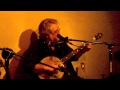 VIDEO: Where Are You Now, Dr Who? - Live - Marc Nerenberg (click to view) |
cockneybanjo - Posted - 11/15/2011: 00:05:03
nothing really to do with chords but I'm certainly in agreement with Oldwoodchuck's rant abou twhat I've also heard described as " the emotional incontinence of the facebook generation"
mbuk06 - Posted - 11/15/2011: 01:47:12
I agree with you Ben. Meaning in these original songs is so vital and the strong emotive connection easily lost or subverted. And having worked in the media I detect the behind-the-scenes fingerprints of scripted cruelty and cynicism all over those Idol programmes. Just my two cents...
must fret - Posted - 11/15/2011: 06:42:40
quote:
Originally posted by rendesvous1840
It's notated from 1st to 5th, so what you have is g,Eb,Bb,D,F. Not Dm, but a very jazzy EbMaj9.
Oh, you're right- misread the numbers. And yes! Nice jazz chord!
cockneybanjo - Posted - 11/15/2011: 09:09:04
quote:
Originally posted by mbuk06
I agree with you Ben. Meaning in these original songs is so vital and the strong emotive connection easily lost or subverted. And having worked in the media I detect the behind-the-scenes fingerprints of scripted cruelty and cynicism all over those Idol programmes. Just my two cents...
the thing which never ceases to astonish me, are the periodic headlines accusing or other of these programmes as being "fixed", how anyone could ever believe otherwise, or believe that the dross which parades across the stage was selected by a process of competitive selection, I cannot understand.
rendesvous1840 - Posted - 11/15/2011: 10:07:56
In a great many cases, these highly altered chords are not used in songs that remain a specific key, but often in Jazz/R&B/Pop/Ragtime/Dixieland songs which have key changes within the song. The key change may be written into the sheet music, or only hinted at using accidentals in the manuscript. How it's written is up to the composer, and either method is accepted as "correct". Folk music less often has the key change written in as such, and in a lot of cases, was not written down at all, just passed through oral tradition. I lot of the old songs, especially fiddle tunes, have key changes. Ragtime Annie, Pig Ankle Rag,and Flop-Eared Mule come readily to mind. Sometimes the key change last only one or two measures before reverting to the original key. For instance, the A major chord in a song that is otherwise in the key of G is a key change. The key of G includes Am, but not A major. This II major chord occurs a lot in Folk and Bluegrass music. It's used a lot in more "Modern Old Time" as bands move closer to BG and further from traditional OT. But highly altered chords, to my ear, detract from these songs. I've tried fitting some of these chords in while playing guitar at jams, but I don't care for the sound. I like the old way.
Paul
oldwoodchuckb - Posted - 11/15/2011: 11:47:08
rendesvous 1840
The II Major chord usually moves to the V Chord, and from there to the Tonic. This is a common Country (Big C - Nashville Country) cadence known as the Dominant of Dominant Cadence. The II Major chord is the V chord of the key of the original V chord - so essentially in "Your Cheatin' Heart" if you are playing it in C, when you hit the "You'll toss around and call my name" line you go up to the D Major (Dom of Dom) then to the G (Dom of Tonic) and land on the C (Tonic). You can consider it a key change but it is really more of an insertion of fancy harmony just to add colour to the tune.
Most of the Fiddle Tunes you list as Old Time with Key changes are actually Rags, but Flop Eared Mule is a tune originally from The Ukraine where the Dominant key change is common. Tunes like this might be the ancestors of the Cotillions (Richmond Cotillion, California Cotillion, Punchion Floor, etc) which became popular in the US in the mid 19th century. What came when is almost impossible to figure out because immigration was almost continuous throughout the 19th and early 20th century. I have a recording of a Ukranian immigrant group playing a tune almost identical to Flop Eared Mule (only one note is different) who recorded in NYC circa 1930 - yet Flop Eared Mule was known in this country for many decades by then. It had entered with the importing of Eastern European miners during the 19th Century.
The US is not the only place where Eastern European music has had an impact. Many "Welsh" fiddle tunes have Eastern European origins from the men imported from the east to dig out the coal for the beginnings of the industrial revolution. So Flop Eared Mule might have come to America with Welshmen who immigrated to work the coal mines of Pennsylvania during the Civil War.
rendesvous1840 - Posted - 11/15/2011: 17:08:40
The II-V-I is a common Jazz & Tin Pan Alley progression as well. It does go outside the base key, as the ii in any key is a minor chord. That is what I was illustrating. If you look at sheet music, you will usually find an accidental indicated in the melody for the measures where the II chord occurs. In these cases, it's not just for coloring, but to follow the chord based harmony of these accidentals. One example is San Antonio Rose, but as you said, it's very common. I wasn't aware of the Ukranian background of Flop-Eared Mule, that's pretty interesting. I find the stories behind the songs can fascinate me as much as listening to the songs them selves. But these were only given as examples of common tunes in the OT repertoire containing key changes. Some are considered 'rags", but I suspect Scott Joplin and other true Ragtime composers might disagree. Joplin had printed on his compositions 'Ragtime should never be played fast.' But some OT rags, and most, if not all, Bluegrass rags, are quite fast. Most of what we OT players call rags don't fit other accepted characteristics of "Ragtime." It's more than a name, or the word Rag in the title;even Alexander's Ragtime Band fails to fit the description.
All this is interesting to me, but I am probably carrying this discussion a long way from where it was heading originally. Sorry if I have stolen the thread.
Paul
Dexter - Posted - 11/16/2011: 12:54:55
quote:Say what???????????????...Just kidding, very eloquent Oldwoodchuck and others. I really enjoy these kind of discussions even though I don't understand half of them (being a new player and not much background in musicial theory). I like hearing the different opinions and history of songs and music. I also like to hear Marc's songs and playing. Much better than just trashing one brand of banjo over another, etc.
Originally posted by oldwoodchuckb
Music theory doesn't make things sound good, it is simply an attempt to label things so that guitar players can quickly and easily play those chump-chump chump-chump backgrounds while the sax and trumpet are soloing. This heavy backup can sometimes work well enough for certain types of jazz and pop music, but is often like adding concrete to folk music.
It sort of reminds me of what happened to Dave van Ronk's bass line for House of the Rising Sun. He just played the bass notes against the normal chords (Using his left thumb - Dave had HUGE hands) to produce a descant to the melody. It was light and unobtrusive. Young Bob Dylan, who was not yet at his musical peak and could not reach all the notes with his thumb, changed the line to a series of chord arpeggios and it started to wallow in self inflated pomposity. Still the Dylan recording was nothing compared to the leaden garbage that Eric Burdon and his Animals did creating the first of a long line of Heavy Lead Footed Rock Operas. This all lead up to the Sauropodian Heavy Metal stomping groups like Blue Cheer, Iron Butterfly, Led Zepplin, and Vanilla Fudge.
I had heard the original from Dave before it was recorded. He shelved plans to record it when Dylan stole it, and didn't end up recording it until the Animals track had been around for a while. By then, even his version felt the weight on the Head Banger era.
Over time Dave eventually returned to his original concept, and the last time I saw him (about a year before his death) he had recovered his original brilliant, light and graceful version from the wreckage. It is a shame he never got to record it again in a studio. I hope there are some live recordings of it floating around from that era.
Rising Sun is supposed to be the wail of a person slowly dying of VD (before the invention of penicillin) The "Rising Sun" of the title is the carving over the gate of the New Orleans pauper's hospital from the turn of the 20th century - not, as some believe, the sign over a bordello door. It is sung in the 1st person. It is a personal tragedy and a warning, not the grinding of ignorant armies who clash by night.
Original meanings of songs are too frequently turned onto this overwrought emotional oil spill these days, coating everything with a form of gooey death like the La Brea Tar Pits. Nowadays a lot of supposedly "folk" music sounds like the emotional binges of those pubescent Britneys and Justins and the carefully pitched primal screamers on those Idol talent shows.
Edited by - Dexter on 11/16/2011 12:57:14
Terms of Use | Privacy Policy | Privacy Consent (EU/GDPR Only)
Copyright 2026 Banjo Hangout. All Rights Reserved.


