
DVD-quality lessons (including tabs/sheet music) available for immediate viewing on any device.
Take your playing to the next level with the help of a local or online banjo teacher.
Weekly newsletter includes free lessons, favorite member content, banjo news and more.
Premier Sponsors


|
Please note this is an archived topic, so it is locked and unable to be replied to. You may, however, start a new topic and refer to this topic with a link: http://www.banjohangout.org/archive/402717
mjmiller3133 - Posted - 04/08/2025: 16:24:06
Hello,
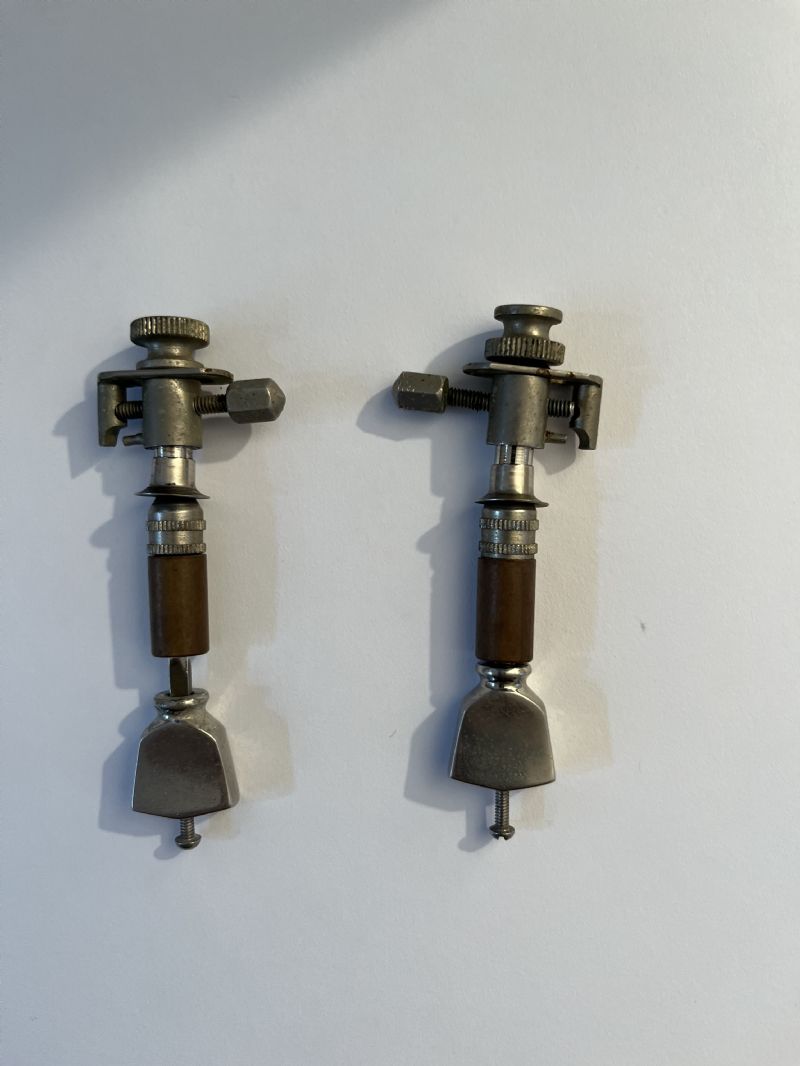
I have a set of D tuners that came with an old prewar Mastertone conversion banjo I bought recently. I understand they are cam tuners, but I'm not sure which type. Wondering if anyone knows what these are? See attached photo. I'm also looking for instructions on how to install them = they did not come installed on the banjo, and the seller didn't know much about them. The holes for the tuners are drilled and ready to go as far as I can tell.
Edited by - mjmiller3133 on 04/08/2025 16:36:09
Culloden - Posted - 04/08/2025: 18:14:47
These were made by Kluson. The earliest version looked exactly like these but had white plastic knobs. The pair you have are an early version from the late fifties but have the metal knobs. Yours also have machined cams and hexagon shaped adjustment screws. If they got stubborn to turn you could use a bracket wrench.
Around 1960 Kluson started stamping the cams out of sheet metal to save cost leaving the leading edge at the top of the cam square. They also started using knurled thumb screws to adjust the length of the cams.
I don't know how long into the sixties Kluson made these tuners. Keith tuners made these obsolete. In recent years a lot of banjo players have gone back to cam tuners. Some people like the sound of the strings being bent instead of stretched. Some kind of like the old clunky look of them. Whatever reason people have for liking them, they are a lot of fun to play with.ry
In the early to mid 1960s Gibson offered these very tuners as an upgrade for $25 extra.
Edited by - Culloden on 04/08/2025 18:20:49
The Old Timer - Posted - 04/08/2025: 19:05:25
Your tuners are missing key parts. Originally they also included 4 little short but stout pins, whether steel or plated brass I don't know. They also required drilling into the peghead face in two places for each tuner. On the G string, about 3 o'clock and 6 o'clock. On the B string about 9 o'clock and 6 o'clock. They were the "stops" that prevent the tuner from going "too far".
You'll notice at the bottom of each tuner's head-piece there is a little bitty pin sticking out horizontally from the shaft (not really the shaft, but it looks like it is). This delicate little pin would strike on the larger stouter pin set into the peghead, and stop the action of the cam.
Of course you can make or buy a pin to replace the ones missing from this set. Hunt for an old photo of a Gibson with these cams in the peghead and look for the position of the missing pins.
Klusons won't work without pins of some sort set into the peghead face.
I had two 1960s Gibsons and my dad installed Klusons in both of them. Mine were a bit later than yours, with stamped parts and thumbscrews instead of hex head adjusters.
mjmiller3133 - Posted - 04/08/2025: 19:23:58
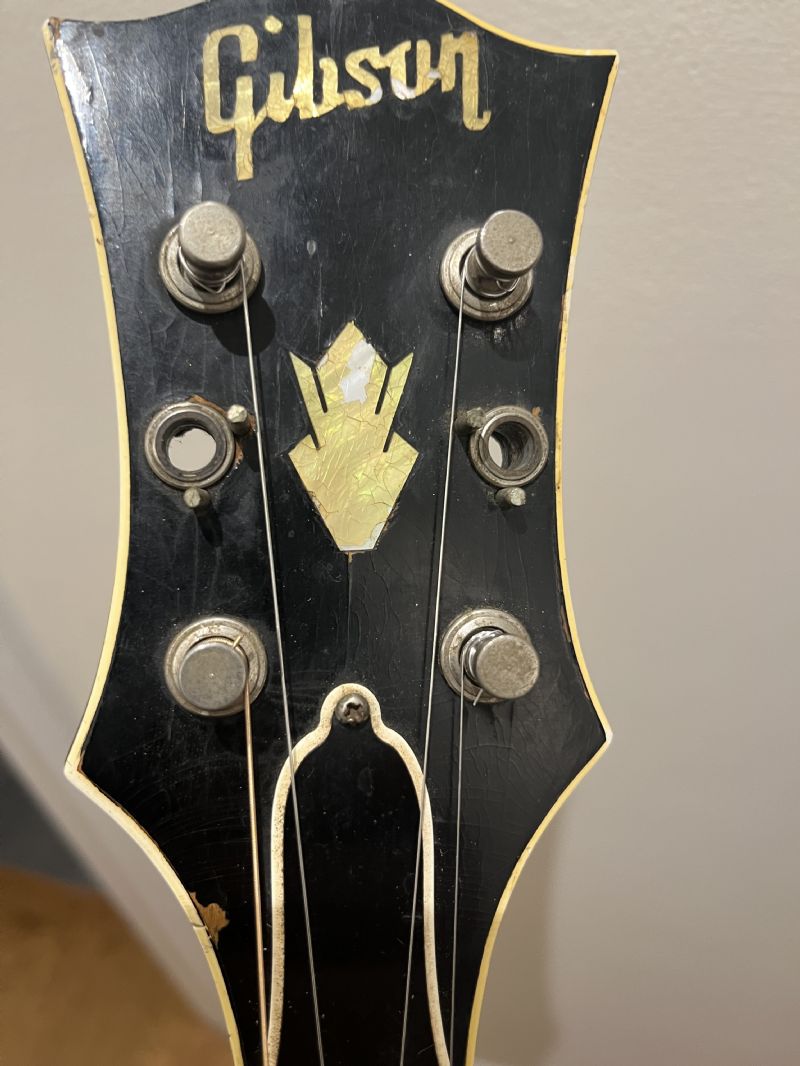
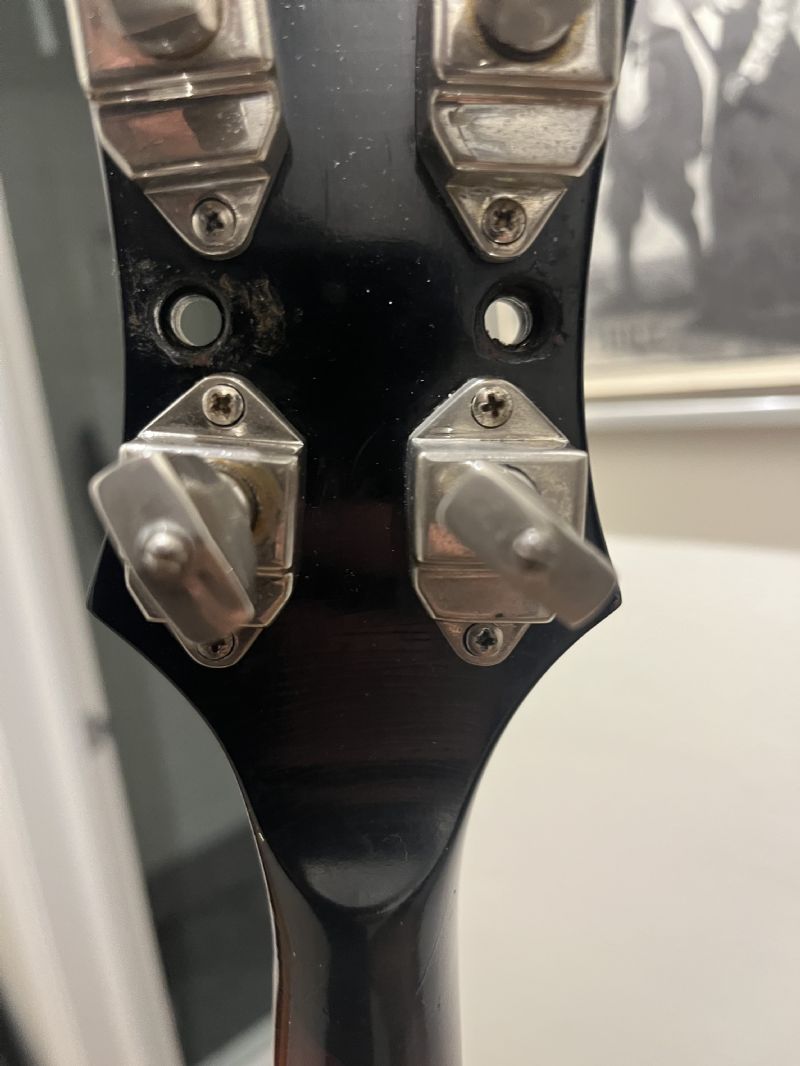
Thanks for this helpful reply, much appreciated. Do you know if it's possible to replace these with something else? I'm attaching two photos of the headstock. This particular banjo topic is brand new to me (as you probably can tell!)
Culloden - Posted - 04/08/2025: 21:31:18
Your peghead already has the stop pins that Dick was referring to. Take the screws out of the knobs and slide the tuners apart. Put the top part of each tuner through the face of the peghead so that the little pin sits between the pegs. Then reattach everything you removed.
Everything that came off the shaft will go on the bottom of the peghead. The silver bushings go in the holes, then the tapered metal pieces, then the black fiber pieces, and last, the knobs. Also, turn the knurled knob on the right-hand tuner over so the more significant section is on top.
To set the tuners, turn them to the lower position and tune the banjo to D tuning. Turn the tuners to the upper position and adjust the hex screws until the banjo is in G tuning. Then you can swing back and forth between tunings. They can be cantankerous to use at times, but they are the D tuners most associated with the Bow Tie era banjos.
If you really want to use a different kind of tuners, you might luck into a set of Hoppers or Burliles. Check the classified ads. Cheat-a-Keys won't work unless you change the regular tuning pegs. The same goes for The Mighty D Tuners.
Edited by - Culloden on 04/08/2025 21:35:22
Bill Rogers - Posted - 04/08/2025: 22:39:06
Burliles are clones of Pittmans. Either, imo, is the best of the cam tuners. Earl was using Pittmans before the advent of Kieth tuners. I’ve used both, and if I were equipping a banjo with D tuners, I’d choose the Pittman design. It’s more friendly if you use other tunings than G or D.
@Culloden
mjmiller3133 - Posted - 04/09/2025: 04:44:31
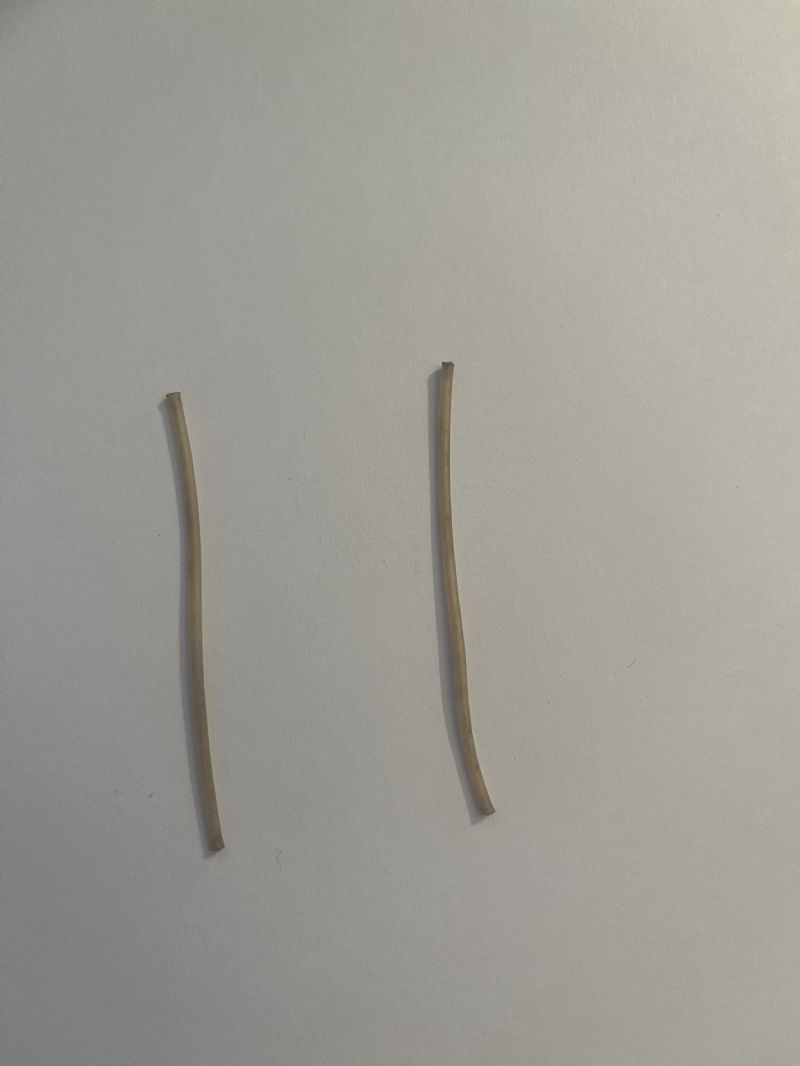
Thanks, Culloden - a couple more questions 1) The tuners also came with these small plastic sleeves (see photo attached). I think I read somewhere that these are sleeves to protect the strings from the pressure of the tuner. Correct? If so, I assume I should unwind the two strings and place these. 2) Since these have been sitting around for decades, wondering if I should lubricate them before installing to smooth the operation? If so, what would you recommend using?
Culloden - Posted - 04/09/2025: 06:05:37
It helps to use new strings. Run the strings through the tubing before you wind them around the tuner posts. The tubing keeps the strings from rubbing against the metal cams and wearing grooves.
In my experience, the best thing to use is Teflon tubing. I bought a roll on eBay, but it should be available at hardware stores or big box home improvement stores. Teflon is a lot more durable than rubber tubing. Since your rubber tubing is several decades old, I would be reluctant to use it.
RioStat - Posted - 04/09/2025: 06:35:17
quote:
Originally posted by mjmiller3133Hello,
I have a set of D tuners that came with an old prewar Mastertone conversion banjo I bought recently. I understand they are cam tuners, but I'm not sure which type. Wondering if anyone knows what these are? See attached photo. I'm also looking for instructions on how to install them = they did not come installed on the banjo, and the seller didn't know much about them. The holes for the tuners are drilled and ready to go as far as I can tell.
I see OldTimer and Mr. Harper have got you set up with the D-tuners, however, I have a question....you say that this is a "pre-war conversion", but is has what appears to be a genuine RB 250 "Bowtie" neck?
What does the rest of the banjo look like?
Is there a FON stamped into the inside of the rim?
mjmiller3133 - Posted - 04/09/2025: 07:12:17
quote:
Originally posted by RioStatquote:
Originally posted by mjmiller3133Hello,
I have a set of D tuners that came with an old prewar Mastertone conversion banjo I bought recently. I understand they are cam tuners, but I'm not sure which type. Wondering if anyone knows what these are? See attached photo. I'm also looking for instructions on how to install them = they did not come installed on the banjo, and the seller didn't know much about them. The holes for the tuners are drilled and ready to go as far as I can tell.I see OldTimer and Mr. Harper have got you set up with the D-tuners, however, I have a question....you say that this is a "pre-war conversion", but is has what appears to be a genuine RB 250 "Bowtie" neck?
What does the rest of the banjo look like?
Is there a FON stamped into the inside of the rim?
Hi - I'm attaching a couple more photos of the banjo. The number inside the rim is 8249 - 10. My understanding from the seller is that the banjo was made in 1926. He tells me that Gibson did the conversion in 1964.
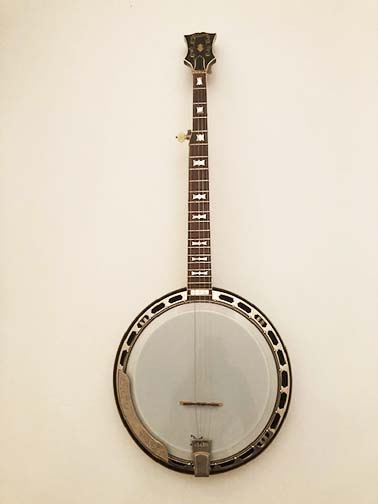
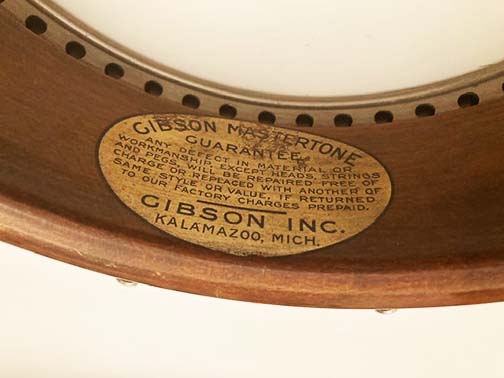
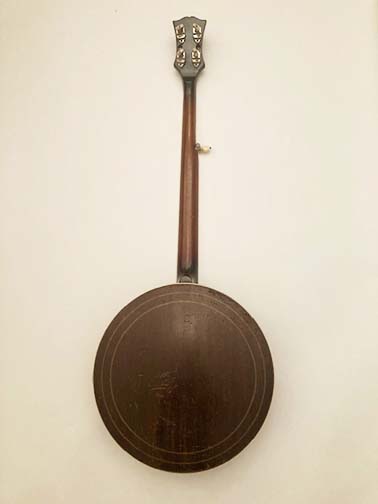
RioStat - Posted - 04/09/2025: 07:48:17
Thanks mjmiller3133 ! That rim number does place your banjo into the year 1926. Appears to be a TB4 "ball-bearing".
If that is an actual Gibson factory conversion, you probably have the only Bowtie RB 250 neck ever made, that has the heel cut for a tube-and-plate flange !
Nice banjo ! I like the tone of ball-bearing Gibsons.
Edited by - RioStat on 04/09/2025 07:49:44
mjmiller3133 - Posted - 04/09/2025: 09:02:08
quote:
Originally posted by RioStatThanks mjmiller3133 ! That rim number does place your banjo into the year 1926. Appears to be a TB4 "ball-bearing".
If that is an actual Gibson factory conversion, you probably have the only Bowtie RB 250 neck ever made, that has the heel cut for a tube-and-plate flange !
Nice banjo ! I like the tone of ball-bearing Gibsons.
Thanks, Scott! So interesting. I have the Jim Mills book on the history of the Mastertone, which I've just started reading. I have the impression there was quite a bit of variability at Gibson back in the day.
I had a local expert luthier/repair person do some setup work on the banjo, and also replaced the head. It was an old plastic material and we put on a nice-looking new synthetic head. He did comment on the ball bearings.
-- Mark
Terms of Use | Privacy Policy | Privacy Consent (EU/GDPR Only)
Copyright 2026 Banjo Hangout. All Rights Reserved.


