
DVD-quality lessons (including tabs/sheet music) available for immediate viewing on any device.
Take your playing to the next level with the help of a local or online banjo teacher.
Weekly newsletter includes free lessons, favorite member content, banjo news and more.
Premier Sponsors


|
Please note this is an archived topic, so it is locked and unable to be replied to. You may, however, start a new topic and refer to this topic with a link: http://www.banjohangout.org/archive/352201
arkred - Posted - 03/16/2019: 15:02:23
In 1963-64 I went to Chicago and visited the Old Town School of Folk Music. While in the office I saw an old Orpheum banjo that had the "surgery" done to it with the added frets. I picked it up and started playing it, but the strings were so rusty I couldn't do it. I asked the secretary about the banjo and she said she didn't know anything about it. That probably some student or former teacher left it there. The person who did the "surgery" did a good job except the neck was maple and the "splice" added was a darker wood like walnut or mahogany. I met one of the banjo teachers there named Les Hook who had a Pete Seeger Vega and he let me play that a few times before he had to go teach. I use the long neck banjo in my performances because the voice is getting lower with age, and I need the extra frets. Old '20's tuba phones are still available on the net, and custom long necks can be bought or home made. They sound much better than the fifties and sixties models that Vega made although the earlier P.S. Vega longnecks from the late fifties and early sixties before Martin made them still bring a premium price.
pastorharry - Posted - 03/16/2019: 15:43:17
banjohangout.org/forum/attachm...ID=109923
banjohangout.org/forum/attachm...ID=167038
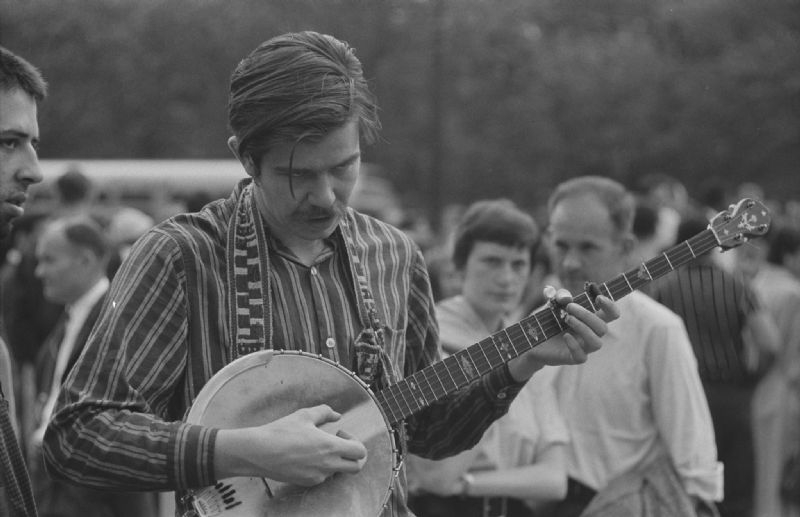
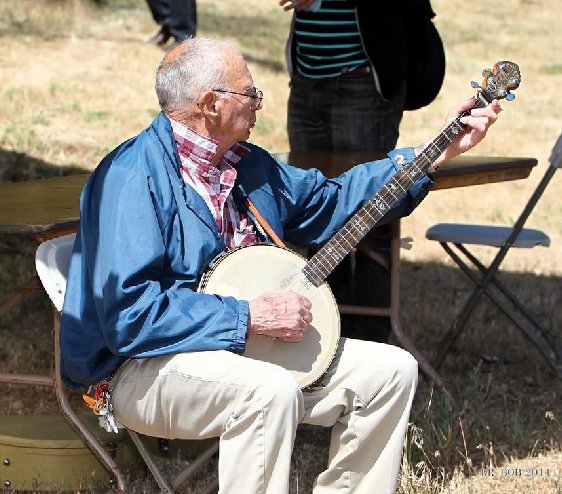
Here's 2 Orpheum Long Necks , one is my first teacher Ed Mann, from L.A. California, the 2nd is Dave Van Ronk...could be one of those?Martin bought Vega in 1970 and began making banjos, even some long necks...they were pretty good too ! The 59-61 Vega Long necks were the best, with dowelstick construction . After that they switched to the large hollow co-rods and allen screw neck adjustment assembly, which, to my mind was a failure, some will argue that, but that's my opinion. Sadly today long necks have a very small following and there are many out there that have been sitting , not selling. It's a buyers market today and they jst aren't fetching the prices they were even 5 to 10 years ago. Today it's all about 12 ' pots, short scales and scoops....maybe with red's help that will change ! Finally , here's a quick video of me with my '61 Pete Seeger. youtube.com/watch?v=AWr80-tX4S4
rudy - Posted - 03/16/2019: 16:06:23
I think there's a niche market for the long neck, and that's probably why you can buy a new one today.
The reason why they most likely fell out of favor may have been due to the large numbers that were sold as a result of the folk boom during Pete Seeger / Kingston Trio popularity. About 95% of the time I see a long neck being played it has a capo at the third fret. I can't help wondering how many of those banjos were purchased with good intent and then having the owner say "What was I thinking?".
I personally go for a shorter neck because a severe collarbone injury left me with pain when I use any instrument that requires me to extend my arm.
If the player needs the lower register for their vocal rage I think it's a great idea!
Ken LeVan - Posted - 03/16/2019: 18:33:34
I've played longnecks since 1962, having been inspired to play the banjo back then by the Kingston Trio, My first one was a converted Whyte Laydie shown below, with homemade scruggs tuners circa 1963:

Since then, I have made a bunch of them over the years including conversions of Vegas of various eras from the 20s to the 60s. Each has it's own personality.
I agree that it's a niche market and for those who like them, nothing else will do. Here's a smattering of some of the ones I have made or converted. Absent from the picture is a 1962 PS-5 Pete Seeger I recently acquired

reese158 - Posted - 03/16/2019: 18:39:11
Of course, Pete Seeger played a spliced Orpheum back in his Weavers days. Among the many discussions here about his banjoes, I don’t know if I’ve ever heard what happened to that one. Maybe he gave it to someone at the Old Town School after he made his famous lignum vitae longneck?
wesrichards - Posted - 03/16/2019: 19:40:39
I have a spliced neck Orpheum 1 with a 12-ish inch head. Plays nicely. Sounds so-so. Really odd-size J-hooks and nuts. Bought it from a mail order place in Utah a few years ago. Wasn't expensive.
kwl - Posted - 03/17/2019: 08:00:12
My first banjo was a Gibson RB175 as I was influenced by Pete Seeger and the Kingston Trio. After playing it for a few years I realized I had it capoed at the third fret all the time as my arms were too short to play by the nut. I eventually sold it as I purchased a RB250. I still miss the sound of the RB175.
mainejohn - Posted - 03/17/2019: 12:30:40
Longnecks did seem to enjoy a rebirth 10-15 years ago, but from what I've seen prices have fallen off since then. I think a lot of "old folkies" like me who couldn't afford the Vega PS-5 back in the late 50'searly 60's, were buying them in the early 2000's and now we have them and the younger open back players want the scooped necks and large pots. I made my own "Seeger tribute" longneck ten years ago, an attempt to copy Pete's iconic lignum vitae and it has been my daily player every since. And yes, when mine isn't capoed at the 3rd fret, it's most likely to be capoed at the 5th or higher. The upside is that I never have to go rummaging for a capo, as it's always on the neck! And to stay true to the OP, I wonder where that OT School of FM Orpheum ended up. I lived in the Chicago area back then...what a wonderful resource that place was, and still is.
arkred - Posted - 03/27/2019: 15:34:20
I still use the Elton spring type uke/banjo capo on my long necks with the famous "hot water bottle" red tubing I found on ebay. I put a small strip of elastic with two eyelets hooked on to the capo arm, and then the spring over that. It keeps the spring from tearing off the neck's finish.
arkred - Posted - 03/27/2019: 15:45:50
I like to take my long neck banjo to bluegrass festivals just to hear the dyed in the wool bluegrassers say, "By Gawd, Earl would never play one". If you look at Earl's latest addition of his banjo book you'll see him sitting on a couch with a fellow playing a long neck that looks like an ODE. The fellow next to Earl is playing a bowtie RB Gibson. I think it's on page 13+or- of the book. Hmmmm.
mikehalloran - Posted - 03/27/2019: 21:51:24
quote:
Originally posted by reese158Of course, Pete Seeger played a spliced Orpheum back in his Weavers days. Among the many discussions here about his banjoes, I don’t know if I’ve ever heard what happened to that one. Maybe he gave it to someone at the Old Town School after he made his famous lignum vitae longneck?
Nope.
Pete played an Orpheum neck on a Tubaphone pot in The Weavers. Early publicity pictures show it standard length. Later pictures show it had been extended 3 frets. This neck broke at a party, so the story goes. That is the pot that acquired the lignum vitae neck.
Pete probably extended the neck himself. This is not the neck extended 2 frets by John D’Angellico which was his Whyte Laydie. That banjo was stolen or lost before the Orpheum/Vega was put into use.
The location of that banjo is well known. Pete donated it to the Rock and Roll Hall of Fame in 2014. He offered it on eBay to raise funds for Haitian relief but, when the bidding reached the stratosphere, it rubbed him the wrong way and he cancelled the auction.
Edited by - mikehalloran on 03/27/2019 21:58:17
mikehalloran - Posted - 03/27/2019: 22:09:33
Over the years, various people have claimed to own the pieces of the broken neck or the supposed “original” neck from that Tubaphone pot (which one — the original 5 string or original plectrum?).
I have no idea if any of these were real. The conversation always changed when I expressed interest in seeing, perhaps to purchase.
Edited by - mikehalloran on 03/27/2019 22:15:36
exvagabond - Posted - 03/28/2019: 05:13:04
quote:
Originally posted by rudyI think there's a niche market for the long neck, and that's probably why you can buy a new one today.
The reason why they most likely fell out of favor may have been due to the large numbers that were sold as a result of the folk boom during Pete Seeger / Kingston Trio popularity. About 95% of the time I see a long neck being played it has a capo at the third fret. I can't help wondering how many of those banjos were purchased with good intent and then having the owner say "What was I thinking?".
I personally go for a shorter neck because a severe collarbone injury left me with pain when I use any instrument that requires me to extend my arm.
If the player needs the lower register for their vocal rage I think it's a great idea!
exvagabond - Posted - 03/28/2019: 05:18:20
I have always wondered about that. Look at the album covers from the "folk scare." Capoed longnecks everywhere. What was the point? Trend-chasing?
mikehalloran - Posted - 03/28/2019: 06:03:20
quote:
Originally posted by exvagabondI have always wondered about that. Look at the album covers from the "folk scare." Capoed longnecks everywhere. What was the point? Trend-chasing?
Playing with the rest of the band. For some, it was the look, no doubt.
My capo was all over the place but, on many songs, stayed in my pocket. C tuning uncapo’d give a nice low A that is comfortable for my voice. Yea, you can tune down but it just doesn’t sound the same as a .026” stainless steel wound string tuned to A. Those who wonder, “why long necks?” will never get that.
Likewise, I preferred a .020” wound 3rd. My plain strings were .012” 1st & 5th with a .014” or .015” 2nd.
Edited by - mikehalloran on 03/28/2019 06:06:19
rudy - Posted - 03/28/2019: 06:03:24
quote:
Originally posted by exvagabondI have always wondered about that. Look at the album covers from the "folk scare." Capoed longnecks everywhere. What was the point? Trend-chasing?
At any given point in history the popularization of products comes from folks who admire a select group of artists or a particular flavor of the day in musical culture. It's the reason I purchased a very expensive Lowden guitar many years ago, so I have direct knowledge of how this works.
As related above, many of the folk groups were using long necks (Pete Seeger's influence?) so there ended up being a market.
Ken Levan makes great long necks, check out his photos he posted above. There is shot or two of an uncapoed neck, but almost all of his banjo photos show the neck with capo in place. Nothing wrong with that, it simply demonstrates that the capoed third is ubiquitous with the long neck banjo.
As Mike points out, it is useful for a select few, but that's not how you see a long neck normally played. There's always the "just in case I want to sing in a lower range" argument, but there are drawbacks to a banjo that will be played in standard keys with a capo slapped on it.
Edited by - rudy on 03/28/2019 06:07:03
stanger - Posted - 03/28/2019: 07:14:48
quote:
Originally posted by exvagabondI have always wondered about that. Look at the album covers from the "folk scare." Capoed longnecks everywhere. What was the point? Trend-chasing?
The long neck was a singer's banjo. The extra frets, with the use of a capo that could slide quickly, made them perfect for singing in all the keys. The long neck also allowed the keys to have some bass in them, which is also good for a singer.
A regular 5-string when capoed to the keys of B, F, A, E and others requires the capo to be placed on higher frets only, so there comes a point where the banjo's sound is pitched quite high. This pitch could interfere with the high harmony in a singing group.
That was the reason for their invention, but trend-chasing did have a lot to do with their popularity. Most of the early folk singers who played the banjo professionally, in groups like the Kingston Trio, Limelighters, Brothers Four, etc. weren't virtuoso players. Using a banjo gave them all some old-time authenticity, and the music they made, which was almost entirely vocal, was, by and large, simple enough to make it accessible to beginners to sing.
And all of the early folk groups essentially copied the first and most successful commercial group, the Weavers. Pete Seeger was the banjoist in the Weavers, and he invented the long neck. So in the early 50s, when the Weavers were making all their hits that were copied a few years later by the younger guys, the long neck was the banjo to have.
That's how the folk boom boomed. Kids could learn popular songs quickly, and the banjo made a group of guitar players a folk group, not just a bunch of guitar players. The long neck was a big part of the proper look for an amateur folk group. It had the right distinctive look of the times.
As an instrument in the hands of a really good player, the long neck has other advantages than just the appearance. Playing in the key of F, capoed on the first fret, the banjo had 2 full octaves, something a regular 5-string lacked. If the banjo was tuned to G open-necked, there are over 2 full octaves available. The finger stretches might be long on the low frets, but a lot of complicated music could be played that was next to impossible to play on a regular neck.
The downside of the long necks are they are unwieldy in a group unless the banjoist is always on the left side of a lineup, and they are often very neck-heavy, especially as open backs. In a case, they're harder to load and carry around, and the long neck makes the connection to the pot more fragile than a regular neck.
Their popularity came quite similarly to how the Gibson Mastertone became the banjo to have to play bluegrass. Seeger was extremely influential to the other folkies in New York. where the folk boom began, and Pete sent his banjo to Vega to have a new long neck made for it. When he left the Weavers, his replacement, Eric darling, ordered a banjo like his from Vega, and Pete's sister Peggy, who was also well known, ordered another.
Eric played the banjo on a lot of recording sessions for the Kingson Trio and other groups, so they all bought Vegas, all as custom orders. Eventually, Vega realized there was sales potential in them, and Vega began advertising their long necks in the popular music magazines of the time. Sing Out! was particularly influential, and that magazine was the first place most folks first saw pictures of a Vega longneck. Once Pete Seeger endorsed them, they were the banjo that was a must-have, pretty much like bluegrass players wanted a banjo just like Earl Scruggs' Mastertone.
regards,
stanger
exvagabond - Posted - 03/28/2019: 07:32:16
quote:
Originally posted by mikehalloranquote:
Originally posted by exvagabondI have always wondered about that. Look at the album covers from the "folk scare." Capoed longnecks everywhere. What was the point? Trend-chasing?
Playing with the rest of the band. For some, it was the look, no doubt.
My capo was all over the place but, on many songs, stayed in my pocket. C tuning uncapo’d give a nice low A that is comfortable for my voice. Yea, you can tune down but it just doesn’t sound the same as a .026” stainless steel wound string tuned to A. Those who wonder, “why long necks?” will never get that.
Likewise, I preferred a .020” wound 3rd. My plain strings were .012” 1st & 5th with a .014” or .015” 2nd.
I agree, and would probably agree more if I could hear more music composed/improvized specifically for longnecks. Seems to me that a lot of potential is being lost.
rudy - Posted - 03/28/2019: 09:54:57
quote:
Originally posted by exvagabondquote:
Originally posted by mikehalloranquote:
Originally posted by exvagabondI have always wondered about that. Look at the album covers from the "folk scare." Capoed longnecks everywhere. What was the point? Trend-chasing?
Playing with the rest of the band. For some, it was the look, no doubt.
My capo was all over the place but, on many songs, stayed in my pocket. C tuning uncapo’d give a nice low A that is comfortable for my voice. Yea, you can tune down but it just doesn’t sound the same as a .026” stainless steel wound string tuned to A. Those who wonder, “why long necks?” will never get that.
Likewise, I preferred a .020” wound 3rd. My plain strings were .012” 1st & 5th with a .014” or .015” 2nd.
I agree, and would probably agree more if I could hear more music composed/improvized specifically for longnecks. Seems to me that a lot of potential is being lost.
I think a lot of the folks interested in lower tunings are simply going for cello and baritone banjos which are now being manufactured by Goldtone and others.
Players cite that these banjos make lower ranges available without the long stretches necessary to play a standard "long neck". They can then use a capo for higher tunings. I believe Bela Fleck worked with Goldtone to develop a banjo that overcame what he saw as shortcomings in the traditional longneck.
exvagabond - Posted - 03/28/2019: 10:49:36
"I think a lot of the folks interested in lower tunings are simply going for cello and baritone banjos which are now being manufactured by Goldtone and others."
That was going to be my next Q. I've heard Bela Fleck on the cello and baritone, and that is the sound I had in mind.
Joe Connor - Posted - 03/28/2019: 11:18:00
Great thread. Lots of good information. Just a few points:
1. I have to respectfully disagree with Mike Stanger. Erik Darling never played on a Kingston Trio album. The only back-up banjo player they ever used was Glen Campbell in 1962-63 when he played a six-string banjo on a couple of cuts (Rev. Mr. Black and Desert Pete).
2. Mike, didn't Pete Seeger write that he got his Vega Tubaphone pot when he stopped in the Vega factory (Pete always pronounced it Veega) and someone gave it to him? When you think about it, no one ever did more than Pete to popularize the Vega brand.
3. The long-neck is a vocalist's banjo. Don't forget that Pete spent much of the 1950s beating the blacklist by traveling hither and yon and playing for anyone who would have him. He played solo and usually with just a banjo accompaniment, so he needed the versatility of the long-neck.
4. As for why folk-group banjo players gravitated to the long-neck, what other high-quality open-back banjos were available in 1959-61? Don't get me wrong, Vega banjos of that era are great banjos, but there weren't too many choices for people playing professionally back then. (My go-to banjo is a 1959 Vegaphone with a resonator and Tubaphone tone ring).
5. Does anyone know what year Pete had his first long-neck made?
6. As for the long-neck market, I can remember reading the Mandolin Bros. Vintage news in the 1980s and early 1990s and marveling at how the price for vintage PS-5s seemed to jump every month. In retrospect, as was pointed out in an earlier post, it was fueled by Baby-Boom folkies with a little disposable income. The prices are still pretty high, mostly north of $3,000. You have to wonder if (or, maybe, when) the prices are going to really drop, now that we Baby Boomers are no longer in acquisition mode.
Edited by - Joe Connor on 03/28/2019 11:21:51
tucsonsean - Posted - 03/28/2019: 17:28:04
My first banjo was a Vega PS-5. Interesting story (at least to me). I was living in South Carolina in the late 80's and married a fiddler. We wanted to start an old-time group. I had played guitar for years, but guitar players were easy to find. So I decided to learn banjo. I wasn't sure where to look for an open-back banjo, but someone suggested Bill's Picking Parlor in West Columbia. Back then, Bill's was Bluegrass Central (you were often likely to see Snuffy Jenkins at the Saturday jams). I went there anyway. When I asked Bill if he had any open-back banjos, he snorted derisively, but said he had one and he'd love to get rid of it. He brought out the PS-5 in a worn chipboard case; it looked almost new. When I asked him what he'd want for it, he said, "Heck, you got 300 bucks?" Nice story--except for the ending. The new age old-timers were as derisive of my long neck as the Bluegrassers. So, the next time we went to KY to visit my wife's family, I took the banjo to Homer Ledford, and he fashioned a standard neck, lifting the inlay from the long neck so it still looked like a Vega. It was all ok in the end; I ended up selling the re-necked Vega to a guy for twice what I originally paid for it. These days I play a 60's era longneck Christy that I got from a member here (Paul, shopthefolk).
Edited by - tucsonsean on 03/28/2019 17:30:08
mikehalloran - Posted - 04/02/2019: 23:35:25
John D’Angellico added two frets to Pete’s Whyte Laydie in 1942. This banjo was stolen from the back of his car in 1949.
The Vega pot acquired the lignum vitae neck in 1955. After a few attempts, Jimmy D’Aquisto installed the ebony fretboard (to cover a couple of prior fretting attempts) and fretted it correctly.
Joel Hooks - Posted - 04/03/2019: 05:28:32
quote:
Originally posted by stangerquote:
Originally posted by exvagabondI have always wondered about that. Look at the album covers from the "folk scare." Capoed longnecks everywhere. What was the point? Trend-chasing?
As an instrument in the hands of a really good player, the long neck has other advantages than just the appearance. Playing in the key of F, capoed on the first fret, the banjo had 2 full octaves, something a regular 5-string lacked. If the banjo was tuned to G open-necked, there are over 2 full octaves available. The finger stretches might be long on the low frets, but a lot of complicated music could be played that was next to impossible to play on a regular neck.
F is one of the "natural keys" of the regular banjo-- C, G, F, and their relative minors.
A 22 fret regular 5 string banjo in standard tuning has a gamut of three octaves in the key of C. That is why 22 frets became standard in the late 1890s. The feeling was that for an instrument to be "legitimate" it had to be capable of at least three octaves in the natural (or home) key.
Playing in the key of F in standard tuning you get two full octaves (see link).
archive.org/details/TheImprove.../page/n29
Do you mean that you can use a capo to play in F using the same fingering/position as playing in the key of G?
stanger - Posted - 04/03/2019: 13:54:34
quote:
Originally posted by Joel Hooksquote:
Originally posted by stangerquote:
Originally posted by exvagabondI have always wondered about that. Look at the album covers from the "folk scare." Capoed longnecks everywhere. What was the point? Trend-chasing?
As an instrument in the hands of a really good player, the long neck has other advantages than just the appearance. Playing in the key of F, capoed on the first fret, the banjo had 2 full octaves, something a regular 5-string lacked. If the banjo was tuned to G open-necked, there are over 2 full octaves available. The finger stretches might be long on the low frets, but a lot of complicated music could be played that was next to impossible to play on a regular neck.
F is one of the "natural keys" of the regular banjo-- C, G, F, and their relative minors.
A 22 fret regular 5 string banjo in standard tuning has a gamut of three octaves in the key of C. That is why 22 frets became standard in the late 1890s. The feeling was that for an instrument to be "legitimate" it had to be capable of at least three octaves in the natural (or home) key.
Playing in the key of F in standard tuning you get two full octaves (see link).
archive.org/details/TheImprove.../page/n29
Do you mean that you can use a capo to play in F using the same fingering/position as playing in the key of G?
Yup.
All you really need is to learn the 2 most common tunings, dropped C and open G to play in all keys on the long neck. Since both those tunings are almost identical, there's no need to learn open tunings in keys like F.
it simplifies things a lot for a singer, and the long neck also keep the tonal range lower, closer to the range of a guitar, so the banjo doesn't end up sounding like a ukulele when capoed to some keys. Like the rhythm guitar, the banjo becomes the lower supporting voice for a singer. This is one reason why John Hartford chose to tune his regular banjos 2 or 3 steps low. He played a Pete Seeger Vega long neck early in his career, and that banjo may have given him the idea.
For an instrumentalist who doesn't sing much, the advantage of providing a low-voiced banjo sound to a group can also be a good thing. The banjo can become an unusual sound, less familiar to the ear than a regular banjo.
Since a long neck can be tuned to any lower than standard tuning at the 3rd fret, when one is played open, the tone can go down into the cello-bass range, so a long neck could substitute for either of those instruments in a band while lending the propulsion only a banjo has to the band's sound.
They are unwieldy, but they're quite useful.
regards,
stanger
mikehalloran - Posted - 04/05/2019: 23:45:26
Hedy West made albums with solo banjo accompaniment. She also played a Vega PS-5 but her style was unique — she could get a guitar-like sustain to her chords that didn’t sound like anyone else.. Her first 2 Folkways albums are favorites of mine.
Here’s a link to her first two Folkways albums. Vol 1 includes her original version of 500 Miles (before it was adapted by Bobby Bare, PP&M and countless others). It’s still in regular rotation on my play lists.
Edited by - mikehalloran on 04/05/2019 23:56:21
stanger - Posted - 04/06/2019: 00:55:50
quote:
Originally posted by mikehalloranHedy West made albums with solo banjo accompaniment. She also played a Vega PS-5 but her style was unique — she could get a guitar-like sustain to her chords that didn’t sound like anyone else.. Her first 2 Folkways albums are favorites of mine.
Here’s a link to her first two Folkways albums. Vol 1 includes her original version of 500 Miles (before it was adapted by Bobby Bare, PP&M and countless others). It’s still in regular rotation on my play lists.
Hedy wrote 500 Miles, and I saw her perform it live. The way she sang that song was a lot more crisp and somewhat faster than all the other syrupy renditions of it, and the emotions in her version felt authentic instead of sappy.
Hedy grew up in rural North Carolina, so the revival of folk music was no revival for her. It was the music she had heard all her life as it had never vanished. So her singing and playing was authentic to the past, at a time when most of the music wasn't.
All the songs she wrote were combined fragments of other songs she heard when young. She would half-remember a few words from one song and put it to a half-remember melody of another, and stitch it up into a piece herself. Sometimes her lyrics came from just a few words someone said that caught her ear.
She was a very intelligent lady who I always thought left performing far too soon, but it was her choice.
I corresponded with her a little bit a year or two before her death, and learned she never actually quit; she moved around quite a lot, going from North Carolina to New York to California, then on to London, where she married and lived for a long time, then coming back to Stony Brook, NY, to live. She traveled some more after spending time teaching at Stony Brook College, then back to Europe, and then, in her last years, moved twice more to Princeton, NJ, then finally to Philadelphia.
Cancer ruined her voice, so she gradually gave up singing before it claimed her. In her last email to me, she was excited about the 'releasement' of her old records after they had been digitalized and cleaned up by Vanguard. I never heard anyone ever use that word before or since.
regards,
stanger
stanger - Posted - 04/06/2019: 01:13:46
Hedy knew her way about a banjo, for sure.
This is her singing Little Sadie.
youtube.com/watch?time_continu...WUDU_GEL4
Hedy was the real deal. That video shows why she knocked all the New York kid folksinger's socks off when she arrived.
regards,
stanger
Edited by - stanger on 04/06/2019 01:16:30
stanger - Posted - 04/06/2019: 01:22:26
Here's Hedy singing 500 Miles. This was recorded in Newport in 1964, the same year I saw her perform.
youtube.com/watch?v=mnYKp9R86nI
If you didn't notice, I'm a big fan. I was a fan from the first minute I saw her sing and play.
regards,
stanger
mikehalloran - Posted - 04/06/2019: 06:35:18
I, too, swapped email with her a bit though we never met face to face.
I taught my pick-up folk band her version of 500 Miles on July 3, 2005 at a club in San Bruno, strapping on my PS-5 to do so. I told the audience a little about Ms West saying, “You’ve never heard it like this.” It turned into a nice jam and was the highlight of the evening.
I was preparing an email to tell her about it the next day when I saw in my news feed that she had passed away on the 3rd. A fitting tribute as it turned out.
My long time touring band reunited to play a few gigs and celebrate our 40th anniversary a few weeks ago. There’s talk about a revival but if we don’t do some fresh (to us) material, I’m not interested. The original version of 500 Miles is high on my list. We’ll see...
Terms of Use | Privacy Policy | Privacy Consent (EU/GDPR Only)
Copyright 2026 Banjo Hangout. All Rights Reserved.


