
DVD-quality lessons (including tabs/sheet music) available for immediate viewing on any device.
Take your playing to the next level with the help of a local or online banjo teacher.
Weekly newsletter includes free lessons, favorite member content, banjo news and more.
Premier Sponsors


|
Please note this is an archived topic, so it is locked and unable to be replied to. You may, however, start a new topic and refer to this topic with a link: http://www.banjohangout.org/archive/204616
vrteach - Posted - 04/15/2011: 12:06:34
A few days ago I wrote to J-Walk asking when the next open date was (saying that "I was in the mood") and he replied that as it happened the the scheduled person had called in sick. So here I am.
I've decided to tackle the tune "Monymusk", very often called "Money Musk" and sometime other variations of the word(s), for example "Moniemusk", "Money Mush," etc.
I'm going to start off with a few different renditions which show a range of versions that are gathered under the Monymusk title. (Generally, this post is a bit rambling because I'm pulling in a bunch of sources, and not necessarily organizing them!)
Jamie Laval, in this great YouTube clip, plays Monymusk in several iterations; Strathspey, Strathspey in a different key, two-part reel, and maybe-more-than-two-part reel with fancy bits added and greatly speeded up.
youtube.com/watch?v=X9oko4z9ziM
In the new world, Monymusk and an associated dance were quite popular in the 19th century, and Paul Gifford, in his history of the hammered dulcmer, show the tune showing up as common across New England, the Atlantic States and into the Midwest. Along the way, it pretty much completely morphed from Strathspey to reel or breakdown, and often gathered added parts. I think that it is most commonly played in A, but out in the wild it shows up in all sorts of keys.
Here is a recording of the late Henry Reed, the old time fiddler from Glen Lyn, Virginia playing Monymusk as recorded by Alan Jabbour in the late 1960s not long before Reed died.

“Money Musk” was a popular melody as well as a country dance in America by the 1790’s. American published versions of the music appear beginning in 1796 by B. Carr in Evening Amusements (Philadelphia), and both tune and dance were widely published after that, indicating enormous popularity in America in the last decade of the 18th century into the next. Manuscript versions are also numerous: one appears in Ann Winnington’s music manuscript book (No. 29), c. 1810—the frontispiece in the MS. indicates Winnington resided in New York (although she may have removed at some point to England). Elisabeth Crawford (Massachusetts) penned the dance figures in her 1794 commonplace book that contained the rules of grammar alongside 12 other country dance figures. Southington, Connecticut, musician Joel Allen copied “Money Musk” into his music copybook of around 1800, as did Thomas Cushing around 1805 and Silas Dickinson (Amherst, Massachusetts) around 1800. Onondaga, New York, fluter Daniel Henry Huntington copied it into his manuscript “Preceptor for the Flute” in 1817, as did Newburyport, Massachusetts, musician Samuel Morse in 1811. William Patten (Philadelphia, Pa.) noted it in his copybook from around 1800, as did Cherry Valley, New York, fiddler George White, around 1790. In fact, the country dance "Money Musk” has remained a New England staple for two centuries, although one phrase of the original music has been dropped, while the dance measures stayed the same (thus "cramming 32 measures of dance in to 24 measures of music" note Tony Parkes/Steve Woodruff). In some New England dance circles this dance was traditionally danced immediately after the break, where, for just one example, presumably this was so when it was danced in August, 1914, at the 150th anniversary celebration of the founding of the town of Lancaster, N.H. (it was listed on a playbill preserved in the town history). Peter Yarensky remembers that it used to be the first dance after the break for years at New Hampshire dances, and that “some people would line up for Money Musk before the break even began…” By the 1970’s the tune dance was considered a “chestnut” and it is rarely performed today in New England. Howe (c. 1867) and Ford (1940, pg. 214) also print versions of the contra dance, though without source references. Paul Gifford remembers seeing the dance on a surviving card from Abraham Lincoln’s Inaugural Ball. The melody appears in George P. Knauff's Virginia Reels, volume I (1839) under the title "Killie Krankie," a title that was actually the title of the dance that "Money Musk" was associated with at the time (In northern Ireland the tune is still known as “Killiecrankie Highland.”). The melody was cited as having commonly been played for Orange County, New York, country dances in the 1930's (Lettie Osborn, New York Folklore Quarterly), and it appears in a repertoire list of Mainer Mellie Dunham (an elderly fiddler who was Henry Ford's champion fiddler in the late 1920's). It was also once popular in coastal areas of the South, as attested to in the following passage from A Contribution to the History of the Huguenots of South Carolina (1887) by Samuel Dubose and Frederick Porcher. It describes a country dance in Craven County, South Carolina in the early 1800’s:
Edited by - vrteach on 04/15/2011 15:00:56
 Monymusk | 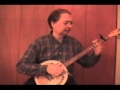 VIDEO: Monymusk (click to view) |
ramjo - Posted - 04/15/2011: 14:28:05
Thank you for yet another fascinating TOTW seminar! I'm also glad you learned to use the video recorder because I thoroughly enjoyed your performance. Great variety of versions. I had always thought of the tune "Harvest Home" as close to Monymusk, but now I see that it might be just because I was hearing the Henry Reed strain of it. And of course, that comparison is rather dumb since one is Irish and the other Scottish. So thanks to TOTW for helping me to think this through.
PS It appears your link for the Henry Reed version isn't working correctly, so I'm putting it here again. http://memory.loc.gov/afc/afcreed/130/13035b11.mp3
blanham - Posted - 04/15/2011: 14:35:33
Nice job putting together this tune of the week in just a few days (and very nice new video)! I recorded Money Musk a few months back when I was going through the Miles Krassen book. I wish I'd had all this info back then, but at least I did know about the Henry Reed sources (I think there are 3 old recordings). You've inspired me to brush up on it, and I have been having fun playing along with the Erynn Marshall recording, and found that the Krassen version fits perfectly.
Here's how I recorded it last year:
Chapter2i - Money Musk |
WGE - Posted - 04/15/2011: 14:50:11
An excellent addition to the TOTW series. Jamie Lavel's fiddle versions blew me away. I knew I had seen something about this before and I found Krassen's tab that is very nice. This tune goes wonderfully with both Cold Frosty Morning and Campbell's Farewell to Red Gap. I shall learn it promptly.
vrteach - Posted - 04/15/2011: 14:55:02
Thanks ramjo for the link fix, I'll make sure that the one in my post works right. EDIT: I had included a leading space in the URL when I made the link into an actual link. For some reason the new editor has it's own criteria on what is or is not a link. My one in the first post now works.
I really like that version from the Krassen book, blanham. I should have included it in my post above. I actually opened up my Krassen for this TOTW (and was surprised that I still had the little floppy record inside), but I figured out that the version there was different enough from what I was hearing (and learning from) in Billy Mathews' version that I decided not to work much with it.
Mathews' version is obviously based on the Reed version, ultimately. But it has been "Ozarkified" (or maybe "Billyfied) so it is a bit more melodic/major. Still, it is interesting that Krassen includes it in his chapter of "modal" tunes, but plays it out of standard A tuning. I've got tunes like that, June Apple and Devil in the Haystack. With Devil in the Haystack, I just learned that in the past few years. When I first worked it out I immediately went to A-Modal tuning, but recently I was with folks who started in with it when I was still in standard A, so I tried it and it worked better for me.
Anyway, that is a great version of the tune, thanks for adding it.
WGE, yes, isn't that a great sampler--of a single tune!
Edited by - vrteach on 04/15/2011 15:09:10
mgoers - Posted - 04/16/2011: 12:21:28
This is a great fiddle tune. Haven't learned it yet. Shame on me! Thanks for the post!
Penchaser - Posted - 04/16/2011: 12:51:05
I have always enjoyed Stephen Wade's version of Money Musk. Here is a link to Amazon where you can hear a short sample:
amazon.com/Dancing-Home-Stephe...mp;sr=8-2
Bob
Edited by - Penchaser on 04/16/2011 12:52:07
dbrooks - Posted - 04/16/2011: 14:13:58
One of the callers at our contra dance has asked the band to learn "Money Musk." I think the version he wants is very close to Jamie Laval's version, though it's in A only and doesn't change keys as Laval does. I have found a 4-part version that matches the music he gave us and have tabbed it out. Our fiddler expects to use only three parts to match the dance of the same name that the caller wants to use. That's the current plan; we'll see how it works out. I have some work to do to get it up to dance tempo.
David
WGE - Posted - 04/17/2011: 04:22:10
Krassen has a discussion of Henry Reed's approach to this tune. He implies that Reed's version departs from the older Scots variants and that it alternates between major and modal, and as a result the use of A tuning vs A modal tuning works best for him. David, I can see how it will take some time to get up to quick reel tempo, I guess a strathspey wouldn't work at the contra dance?
J-Walk - Posted - 04/19/2011: 17:28:33
vrteach sez:
One example would be "Wooliver's Money Musk" derived from Missouri fiddler Roy Wooliver and interpreted by John Hartford on "Hamilton Ironworks". I could not find a version of that to post, maybe someone could help.
Here's a jam recording of Wooliver's Money Musk. That's the amazing Mr. Dan Levenson on fiddle. Recorded earlier this year in Ajo, Arizona.
It seems to have very little in common with the normal Money Musk -- but I think I prefer it.
Wooliver's Money Musk |
banjosnapper - Posted - 04/19/2011: 19:39:54
Thanks for the fabulous information. That was great. I have played that tune, but did not know any of the background on it.
Here are some versions I have done.
This one uses the title "Highland Fling" and I got it from a Dobson Banjo Book of 1882.
youtube.com/user/giggletoot?fe...O4iTOEZe4
This one is from Briggs' 1855
youtube.com/user/giggletoot?fe...BBIf4CX9k
This one is from from Converse 1865
youtube.com/user/giggletoot?fe...icguH-Qv8
I'll be tuning in for more as you offer it. The Jamie Laval connection was great.
Edited by - banjosnapper on 04/19/2011 19:42:38
vrteach - Posted - 04/21/2011: 10:41:49
Penchaser: That Stephen Wade version is mighty nice, thanks for pointing it out.
WGE: The "hogfiddle" blog that I link to above has the following text quoted from Alan Jabbour:
Some very interesting comments by Alan Jabbour in Fiddle Tunes of the Old Frontier: The Henry Reed Collection that I need to go back to: "Henry Reed recorded "Money Musk" four times; it was a project of sorts for him to get it assembled in all its possible parts. The tune--or at least its first two strains--is a Scottish reel from the end of the eighteenth century. [details omitted here] Henry Reed's version is a rarity in the Upper South, and it is all the more extraordinary for adding extra strains that turn the piece into a complex and challenging set piece. His first two strains are always the usual strains of "Money Musk," but following Upper South predilections he begins with the highest strain, and his second strain (the usual first strain) is distinctive in rising to the octave rather than descending to the lower tonic. His third and fourth strains (in this performance) are unique to his performance. ..."
I also found that there is a 1929 version by "Dad" Williams available on HonkingDuck: honkingduck.com/mc/listen/dad-...oney-musk
J-Walk: I'm glad to be able to hear the Wooliver's version. I think that may be what my fiddle-friend, Steve Staley, plays. He learned it from his collegues who were traveling in Missouri 20-30 years ago. Steve also reckons that Money Musk was generally a contest tune, and that is partly why there are so many variations. Each fiddler would want to personalize and fancy-up their version.
Banjosnapper: Tim! Thanks so much for adding the different versions based on the 19th-century tutors. Those are marvelous.
Edited by - vrteach on 04/21/2011 10:47:35
Terms of Use | Privacy Policy | Privacy Consent (EU/GDPR Only)
Copyright 2026 Banjo Hangout. All Rights Reserved.


