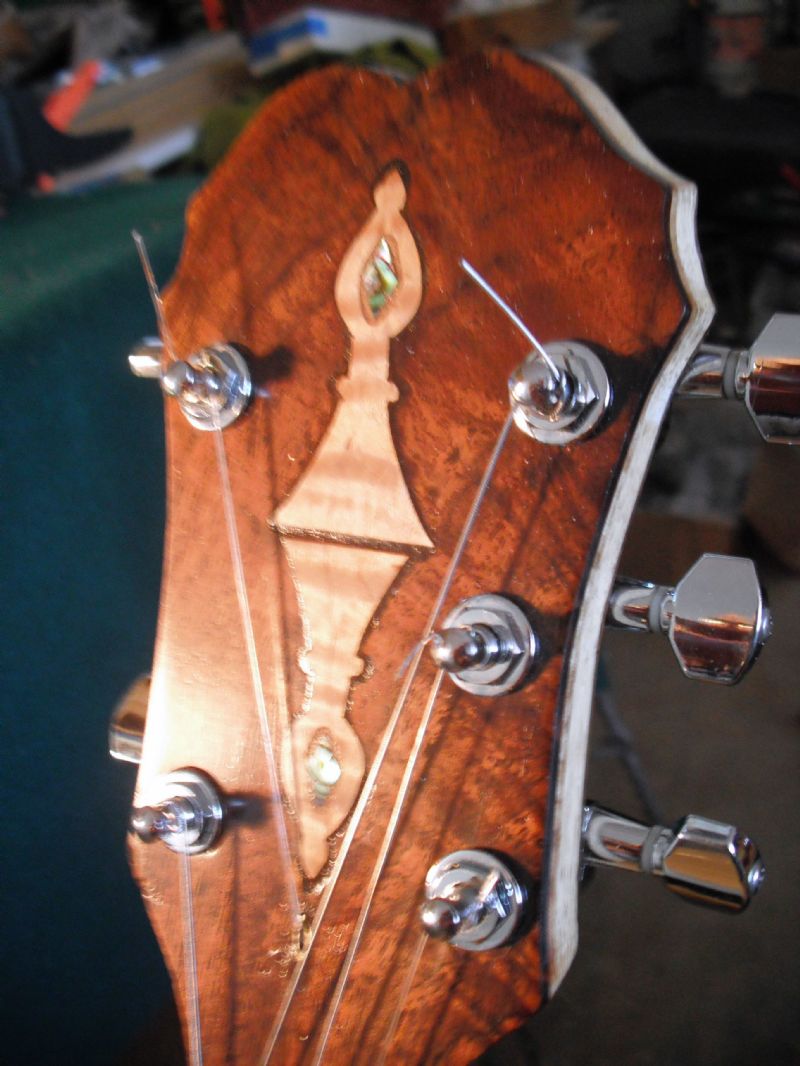
I've been asked about making a banjo with a tunneled 5th string and nylgut or nylon strings. This would be a first for me if it happens, as I have so far only made tunnels from a stainless steel surgical tubing with a 2mm outside diameter, and an inside diameter that looks too small for a synthetic string to pass through. I'm wondering what size tubing might be appropriate, and if there is a problem with using a tube that is bigger than it needs to be, and also how I can go about cleaning up the ends of the tunnel well enough to make sure there are no burrs that would cut through the string. If anyone has any experience with this combination of design attributes I'll be grateful for any advice.

I may be overlooking an obvious reason why this wouldn't work, as I have no experience of building banjos, but I wonder if a length of small diameter nylon tubing would work. A very brief look at a few supplier's websites, shows a wide range of diameters available, one of which would probably be correct for the 5th string. I can't imagine that a slightly 'loose fit' would create a problem.

quote:
Originally posted by Zachary HoytI've been asked about making a banjo with a tunneled 5th string and nylgut or nylon strings. This would be a first for me if it happens, as I have so far only made tunnels from a stainless steel surgical tubing with a 2mm outside diameter, and an inside diameter that looks too small for a synthetic string to pass through. I'm wondering what size tubing might be appropriate, and if there is a problem with using a tube that is bigger than it needs to be, and also how I can go about cleaning up the ends of the tunnel well enough to make sure there are no burrs that would cut through the string. If anyone has any experience with this combination of design attributes I'll be grateful for any advice.
I built a tunneled fifth neck using the micro tubing as you mentioned on one of my open back builds. It originally had steel strings but I later switched to nylon and left them on. I don't remember the size of the tubing I used, might've been the same as you mentioned, but the inner diameter was plenty big enough for the Nylgut string (medium tension classic set, probably around a .019" for the fifth). I chamfered the inner edges of the tubing at either end, and didn't have any problems with string breakage. Though with the thicker diameter you would have to keep any bends to a minimum.
My first tunneled neck was on a gourd banjo, and I didn't use tubing, but cut a channel in the neck to bring it to the peghead, being slotted, however for the most part for nylon strung banjos, I cut a channel an 1/8" or a little more from the edge of the fingerboard using a small 1/8" half-round chisel knife on the underside of the fingerboard a little more than the thickness of the string, and cut a corresponding semicircle cut in the bottom of the nut to allow the string to pass through to the peghead along a trough in the peghead face above the nut, whether on a slothead or solid headstock. At the entry hole on the fingerboard end, I just drill and file the hole at a slant aligning with the channel. When I glue the fingerboard on, I use a thick nylon string and run it through the slot a few times to clean any squeezed glue that entered the channel until it comes clean, and then leave it in place until the glue cures. This method works better for me than the tubing unless I was doing it on a banjo being strung with steel, then I would use tubing.
Edited by - Noah Cline on 10/16/2026 21:06:17
I've used 3/32" copper tubing and took an old wound guitar string to smooth out the edges on each end. I had one that I strung with nylon strings and it worked well. You might consider copper tubing if you have doubts about the steel. The idea about the nylon tubing might work as well. I use Teflon tubing on the strings that my D tuners bend on my bluegrass banjos. It's pretty indestructible, so that might be another option to try.
I just finished a banjo doing this, and had the same concerns. I used 3/32 brass tubing and also used an old wound guitar string to smooth any burrs. I had to bend the tubing slightly to come up through the fingerboard, so kept a length of wire in the tube to prevent kinks. I also kept some guitar string protruding from the tube while applying finish to prevent clogs. I was still a little nervous about the Nylguts, but so far all is well.
Good luck!
Thank you all very much for the advice. Using brass makes sense to me as it will be easier to deburr than stainless on such a small sized hole. The only hesitation I have had about it is wondering if someone will someday put a steel string through the tunnel which will eventually wear through the brass tubing, as some folks on here years ago said can happen. I guess that's not my concern, though, as long as I tell the customer who may be ordering the banjo about the limitations of brass tubing. Teflon is also interesting, and I had not realized it was a thing that exists in tubing form. I also had not known of anyone doing a tunnel without a metal tube, so there are lots of ideas here that are new to me.
Just state that if the owner puts steel strings on it the warranty will be reduced by 150 years.
I've used brass tubing on all my tunneled 5th string banjos. Steel or nylon hasn't caused any issues in 10-15 years.
I do run the tunnel under a separate piece of fingerboard making replacement easy if I ever want to or need to. The tube sits in a groove cut in the top of the neck blank giving access to the tube when the small piece of fingerboard is removed.
Have not had to replace one in 15 years of doing it this way.
I also used 3/32” brass tubing, but the owner insisted on putting some nylon clothesline down through there. I would not work with him again.
5/32” is also available if you have any doubts.
Terms of Use | Privacy Policy | Privacy Consent (EU/GDPR Only)
Copyright 2026 Banjo Hangout. All Rights Reserved.