


A gold plated maple Sierra, for only $10K. Good investment?

It's a beautiful banjo that appears to have been manufactured with flawless craftsmanship. I doubt, however, that I would like the sound of the instrument.
In fifty years, will it become a coveted, and extremely valuable pre-Iran war banjo? Who knows?

quote:
Originally posted by RB3It's a beautiful banjo that appears to have been manufactured with flawless craftsmanship. I doubt, however, that I would like the sound of the instrument.
In fifty years, will it become a coveted, and extremely valuable pre-Iran war banjo? Who knows?
I like Sierras. The new ones sound much better than the Standard I had years ago, and they look really good. It's really the price that bowled me over.
quote:
Originally posted by Brian MurphyGood investment?
No.
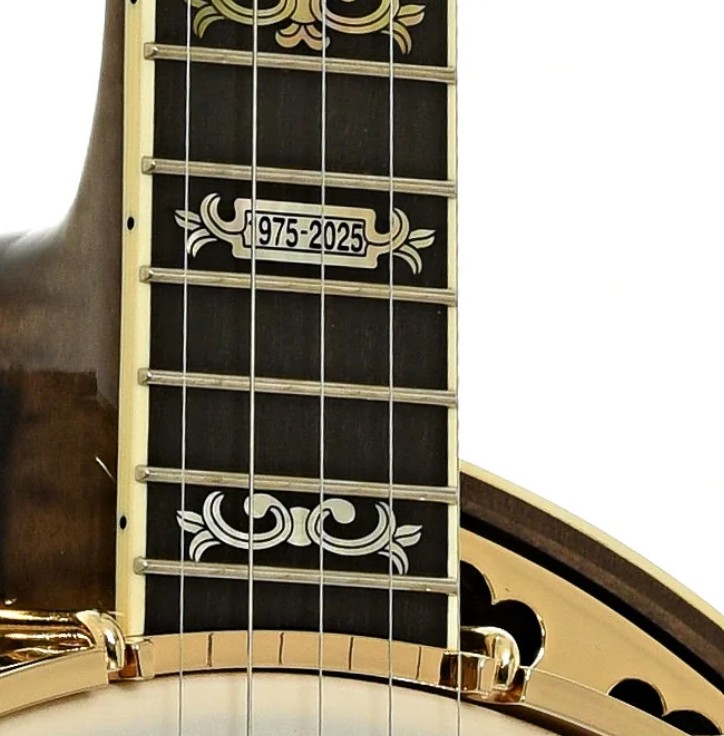
From the Deering website a regular Sierra brand new is $3400. Versus the regular model, the 50th has a bound neck and gold hardware, plus a commemorative 19th fret inlay. Possibly more highly figured wood on neck and reso? Buyer would need to determine if those differences are worth about 3x the price of the regular one.
Absolutely worth the price. The banjo is an investment for the present and future.
I'd probably rather have that than spend 10k on a prewar "Gibson" with a counterfeit neck and warped metalwork, but I'd also rather have 9k extra in the bank and a $1000 banjo than either.
Once people see instruments as investments I can only chuckle when they lose money. It's a silly game.
That's stupid! Why didn't they just make one and charge $100,000. I would be much much rarer.
If it was a reasonable price there would be a lot more than 10 of them put out for sale. At $10.000 it will probably take a long time for the 10 to sell. I suppose it’s just a promotion that all comes down to marketing.
quote:
Originally posted by Brian MurphyA gold plated maple Sierra, for only $10K. Good investment?
Banjos are like art. Buy them if you like them, but their future value is unpredictable. These are aesthetic investments, not financial ones.
CrazyCatLazy,
In 1996, I purchased a vintage instrument. Because of the largess of the good friend from whom I purchased it, the price was about 40% below the market price at the time. Within less than ten years, the market value of the instrument was more than eight times my purchase price. I'd like to think that I was a cunning trader, but the reality is that I was just lucky. The instruments can be good investments.
quote:
Originally posted by banjobob36Absolutely worth the price. The banjo is an investment for the present and future.
And how many shares of SpaceX have you bought?
It might be argued that VERY FEW of the current high end "collectible" instruments being built, especially banjos, will ever be a "good investment." I personally know a fellow who bought a prewar flathead Gibson back in (let's say the mid 70's) for about 20K. He later sold it, I believe in the mid to late 90's, for 80K!! That would, by anyone's standards, have to be considered a good investment. We are all aware of folks who have bought instruments for such and such a price and some years later, sold it for several to many times the original price paid for it. Having said that, we are also aware of folks who bought an instrument for XXXX and 5, 10, 20 years later, sold it for less than they paid, OR, a bit better scenario, they sold it for exactly what they paid. Some might say they still did quite well because they had the use and enjoyment of the instrument for 20 years; and "didn't lose a dime" when they sold it. Of course there have been particular time periods, and particular instruments, that did very well against "investment standards." Are we currently in a time period where the best instruments now being built will ever be a good investment? Truth of the matter is, NO ONE KNOWS! That's quite often the mystery of a good investment. Only time will tell!
quote:
Originally posted by GStumpHaving said that, we are also aware of folks who bought an instrument for XXXX and 5, 10, 20 years later, sold it for less than they paid, OR, a bit better scenario, they sold it for exactly what they paid. Some might say they still did quite well because they had the use and enjoyment of the instrument for 20 years; and "didn't lose a dime" when they sold it.
Well, there's that inflation thing. Maybe they "didn't lose a dime", but that dime was definitely worth less 5, 10, 20 years later.
quote:
Originally posted by GStumpIt might be argued that VERY FEW of the current high end "collectible" instruments being built, especially banjos, will ever be a "good investment." I personally know a fellow who bought a prewar flathead Gibson back in (let's say the mid 70's) for about 20K. He later sold it, I believe in the mid to late 90's, for 80K!! That would, by anyone's standards, have to be considered a good investment. We are all aware of folks who have bought instruments for such and such a price and some years later, sold it for several to many times the original price paid for it. Having said that, we are also aware of folks who bought an instrument for XXXX and 5, 10, 20 years later, sold it for less than they paid, OR, a bit better scenario, they sold it for exactly what they paid. Some might say they still did quite well because they had the use and enjoyment of the instrument for 20 years; and "didn't lose a dime" when they sold it. Of course there have been particular time periods, and particular instruments, that did very well against "investment standards." Are we currently in a time period where the best instruments now being built will ever be a good investment? Truth of the matter is, NO ONE KNOWS! That's quite often the mystery of a good investment. Only time will tell!
Just about every old banjo, guitar, widget, etc. that is now worth multiple times of what it sold for was made to be used for its intended purpose and not sold as a collectible and especially not advertised as such. I stay away from "special editions" or anything worded to to make it seem like it is going to be worth a lot more because so few were made. In th earrly 70's when I first started collecting pocket knives, it seemed like every week Case would come out with a few "collectors edition", made in limited quantities. For the next year the prices of these knives would shoot way up in value followed by years that you could hardly give them away. Thank goodness I learned my lesson fairly quickly.
I don't look at it and see a $10k banjo. The only truly unique thing about the banjo is the exquisite #19 inlay. Behold:
quote:
Originally posted by RB3CrazyCatLazy,
In 1996, I purchased a vintage instrument. Because of the largess of the good friend from whom I purchased it, the price was about 40% below the market price at the time. Within less than ten years, the market value of the instrument was more than eight times my purchase price. I'd like to think that I was a cunning trader, but the reality is that I was just lucky. The instruments can be good investments.
Cool story, I never implied it's not possible to turn a profit on an instrument, I just said I chuckle when it fails.
Certainly exploiting the good will of a friend is an excellent start to profiteering ;)
quote:
Originally posted by CrazyCatLazyquote:
Originally posted by RB3CrazyCatLazy,
In 1996, I purchased a vintage instrument. Because of the largess of the good friend from whom I purchased it, the price was about 40% below the market price at the time. Within less than ten years, the market value of the instrument was more than eight times my purchase price. I'd like to think that I was a cunning trader, but the reality is that I was just lucky. The instruments can be good investments.
Cool story, I never implied it's not possible to turn a profit on an instrument, I just said I chuckle when it fails.
Certainly exploiting the good will of a friend is an excellent start to profiteering ;)
I don't think anyone was exploited in this case and since the banjo is still in his hands no one has profited from it, other than the enjoyment of owning and playing it!
CrazyCatLazy
You know nothing of the circumstances surrounding my acquisition of the instrument. I consider your suggestion that I exploited the good will of a friend for purposes of profiteering to be an insult.
My friend approached me with the opportunity to purchase the instrument. He was someone who was far more knowledgeable than I was about the instrument and its market value. At the time, I had no interest or desire to obtain such an instrument. It was offered to me at a price, and there was no negotiation. It was simply an offer that I couldn't refuse.
If I had 10k to invest, it wouldnt be in a banjo, when i spend 10k on a banjo, it wouldnt be for a new one. Theres no way this holds its value. none, whatsoever. Some banjos may be good investments, if you get a great deal and its on an old gibson. This has a few problems going for it, first of, its over priced to begin with. Secondly it falls into the made to be collectable market, and things that are made to be collectable, rarely are actually collectable.
Edited by - kyleb on 06/15/2026 08:10:20
Not to pile on Deering - I own a few nice ones and like them - but the company periodically runs these limited edition banjos that are the closest thing to a new car in the banjo world...Soon as you drive them off the lot, they're worth 1/2 (at best!) of what you paid for them retail. I'm sure this one is a very nice banjo and Deering gets good wood and good engravers - although I shudder at the inlay work they do now with CNC and the laser 'pearl' engraving. Unless you're buying heavily discounted used banjos, or happen to strike at the right moment as mentioned above - banjos are not terribly good investments. They are a lovely obsession and sometimes you can make some money on them but more frequently (and I'd say ideally) you get to be a caretaker for a while and play something cool and hopefully you or your descendants can get some value out of them down the line. As the greatest (and most discerning) collector of old time banjos once told me, "I wish I'd bought Martin guitars that whole time I was buying old banjos."
quote:
Originally posted by banjobob36Absolutely worth the price. The banjo is an investment for the present and future.
That's funny!
And right now I need a good laugh.
Thank you!
Edited by - Mark Douglas on 06/15/2026 15:05:17
Here's another new USA-made beautiful bluegrass banjo for sale. This one is a step above the deering and thousands less.
banjohangout.org/classified/115609
Terms of Use | Privacy Policy | Privacy Consent (EU/GDPR Only)
Copyright 2026 Banjo Hangout. All Rights Reserved.


